Powis Castle
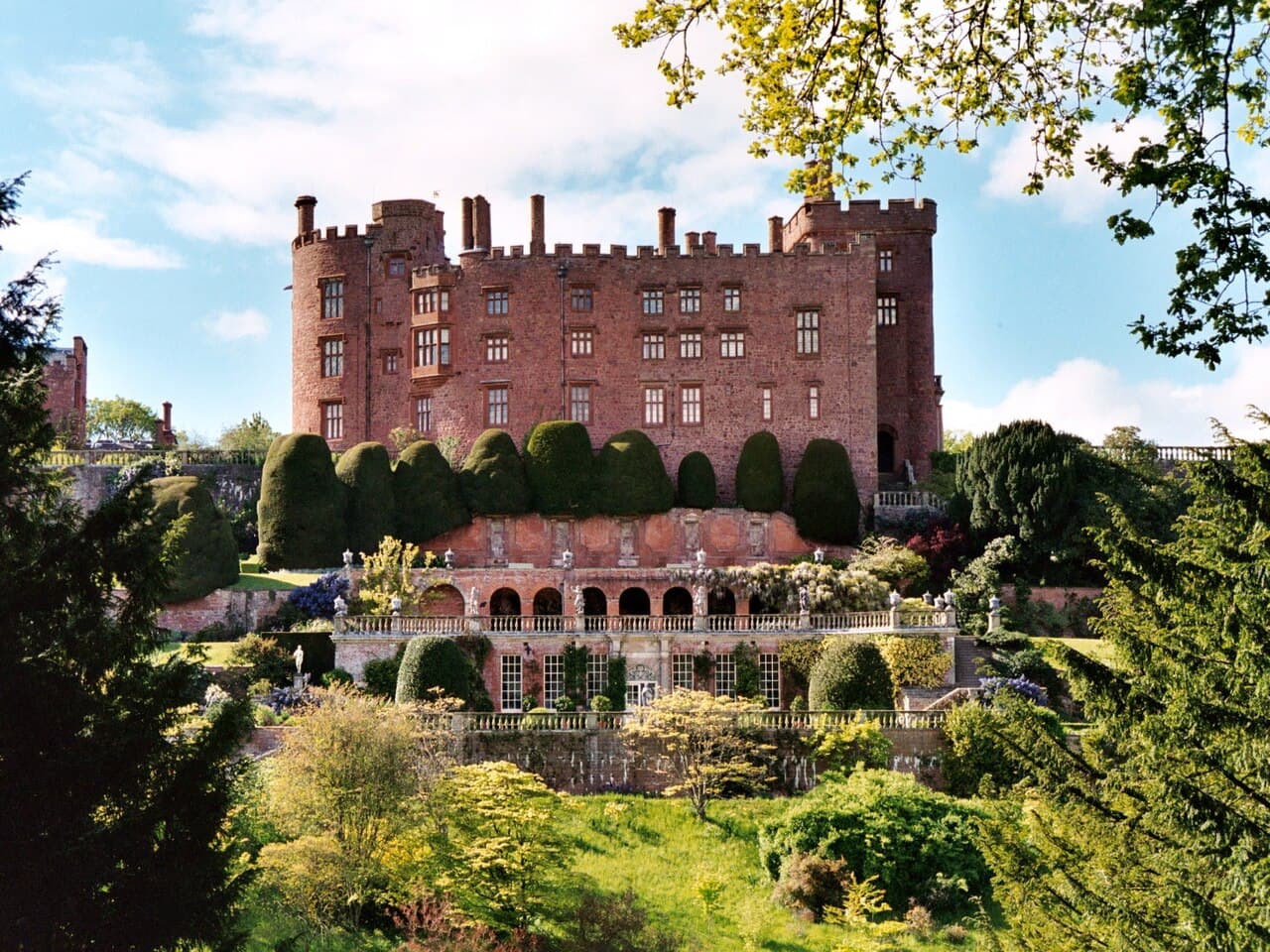
Powis Castle stands as a remarkable example of a medieval fortress transformed into a grand country mansion, nestled near Welshpool in Wales. Built in the 13th century by the Welsh prince Gruffydd ap Gwenwynwyn, it is one of the few castles in the Welsh Marches constructed by a native Welsh ruler rather than Norman invaders. This castle uniquely combines military architecture with aristocratic refinement, reflecting centuries of continuous occupation and adaptation.
The castle's strategic location atop a rocky ridge overlooking the surrounding landscape provided natural defenses, with steep slopes to the south-east and north-west. Over time, the castle evolved from a stronghold with an inner ward and outer bailey into an elegant residence surrounded by extensive formal gardens, terraces, and parkland that are considered among the most important in Wales.
Early history and medieval origins
The origins of Powis Castle are closely tied to the turbulent history of the Kingdom of Powys Wenwynwyn. The initial fortifications likely date back to around 1200, with the oldest surviving structure being a tower at the north-east end of the inner ward. Early architectural elements suggest the presence of a shell keep and a gateway tower, indicative of typical medieval defensive designs.
Throughout the 13th century, Powis Castle was a focal point in the struggle for control between Welsh princes and English forces. The castle was destroyed in 1274 during conflicts with Llywelyn ap Gruffudd, but Gruffydd ap Gwenwynwyn, allied with Edward I of England, was permitted to rebuild it. This reconstruction included the imposing south-west gateway and the completion of the outer ward in stone, marking the castle's transition into a formidable fortress.
Dynastic significance and ownership transitions
After Gruffydd's death, the castle passed to his son Owain (Owen de la Pole), who was elevated to the peerage as the first Lord of Powis. The lordship then passed to Owain's daughter Hawys Gadarn, known as 'The Lady of Powis', who married Sir John Charlton in 1309. The Charlton family maintained ownership until the late 16th century, when the castle was acquired by Sir Edward Herbert in 1587.
The Herbert family, staunch Catholics and royalists, transformed Powis Castle from a military fortress into an aristocratic residence. During the English Civil War, the castle was seized by Parliamentarian forces in 1644 but was restored to the Herberts after the monarchy was reinstated in 1660. The family undertook significant rebuilding, including the addition of a grand staircase, state ballroom, and servants' quarters.
Architectural evolution and features
Powis Castle's architecture is a palimpsest of styles and periods, reflecting over seven centuries of continuous use. The medieval core includes the square keep and curtain walls, while later additions introduced Renaissance and Baroque elements. The castle's grand staircase, built between 1673 and 1685, is attributed to architect William Winde and features a ceiling painting by Antonio Verrio depicting Catherine of Braganza.
The state bedroom from the 1660s preserves a rare wooden balustrade enclosing the bed alcove, inspired by the etiquette of the court of Louis XIV at Versailles. The long gallery, constructed after 1587 by Sir Edward Herbert, showcases a distinctive T-shaped plan and houses classical Roman sculptures, including a rare marble cat and snake statue likely brought from Italy.
The Clive Museum, located in the North Range, displays an extensive collection of Indian artifacts acquired by Robert Clive, including Tipu Sultan's painted chintz state tent, jeweled throne finials, and cannons flanking the castle entrance. These exhibits highlight the estate's colonial connections and enrich its cultural heritage.
Interior decoration and collections
The castle interiors are renowned for their artistic richness, featuring ceiling murals by Antonio Verrio and Gerard Lanscroon, along with an impressive collection of family portraits dating from the Elizabethan and Jacobean periods. Carolean-era furnishings complement these decorative schemes, providing insight into the evolving tastes of the Herbert family.
Gardens and landscape design
Powis Castle's gardens are celebrated as one of the finest surviving examples of an English Baroque garden in Britain. Originally laid out between the 1670s and 1705 by master builder William Winde and French gardener Adrian Duvall, the gardens occupy six formal terraces carved from the rocky hillside.
Today, four terraces remain, each approximately 150 meters long, featuring distinctive elements such as yew hedges, an aviary terrace adorned with shepherd statues by sculptor John Nost, and an orangery terrace with a lead peacock statue relocated from Clive's Surrey estate. The Apple Bank terrace is particularly notable for its design and planting.
The original water garden, inspired by Dutch patterns and fountains from the Château de Saint-Germain-en-Laye in France, was dismantled by 1809 following advice from landscape designer William Emes. Its fountains were replaced by the Great Lawn, although some statues from the water garden survive elsewhere on the estate.
In the early 20th century, Countess Violet Herbert made significant enhancements, relocating the kitchen garden and glasshouses, introducing formal layouts at the base of the terraces, and creating a fountain garden and croquet lawn, further enriching the estate's leisure and aesthetic appeal.
Historical significance and legacy
Powis Castle is a Grade I listed building and a rare example of a Welsh-built medieval fortress that has been continuously occupied and adapted into a grand aristocratic residence. Its layered architecture and extensive gardens reflect the complex history of Welsh-English relations, royalist loyalties, and aristocratic life from the Middle Ages through the modern era.
The castle's connection to notable historical figures, including the Welsh princes of Powys, the Herbert family, and the Clive family of India, enriches its cultural significance. The estate's preservation under the National Trust ensures that its architectural and horticultural heritage remains accessible to the public, offering insight into centuries of Welsh history and aristocratic culture.
Visitors today can explore the castle's richly decorated interiors, extensive collections, and magnificent gardens, experiencing the evolution of a fortress into a stately home that embodies the historical and cultural tapestry of Wales.
Frequently asked questions (FAQ)
- How do I get to Powis Castle?
- Powis Castle is located just outside Welshpool in the United Kingdom. It is easily accessible by car, with ample parking available on site, and is also served by public transport, including buses from nearby towns.
- What is the historical significance of Powis Castle?
- Powis Castle has a rich history dating back to the 13th century and has been the seat of the Herbert family for over 400 years. The castle showcases a blend of medieval and Renaissance architecture and is recognized for its beautiful gardens, which are considered some of the finest in Wales.
- When was Powis Castle built?
- Construction of Powis Castle began in the late 13th century, around 1280, and it has undergone various renovations and expansions over the centuries. The castle has evolved from a defensive fortress to a stately home, reflecting the changing architectural styles of its time.
- Can I visit the gardens at Powis Castle?
- Yes, the gardens at Powis Castle are open to visitors and are a highlight of the site. They feature terraced gardens, a variety of plants, and stunning views of the surrounding countryside, making them a perfect spot for a leisurely stroll.
- Why is Powis Castle a popular tourist destination?
- Powis Castle is popular for its impressive architecture, historical significance, and beautifully maintained gardens. Visitors are drawn to its rich history and the opportunity to explore the extensive grounds and exhibits that showcase the castle's heritage.
- Is it possible to take guided tours of Powis Castle?
- Yes, guided tours are available at Powis Castle, providing insight into its history and architecture. These tours are led by knowledgeable guides who can share fascinating stories about the castle and its former inhabitants.
- What are the opening hours for Powis Castle?
- Powis Castle is typically open to visitors from 10:00 AM to 5:00 PM, with extended hours during the summer months. It is advisable to check the official website for any seasonal changes or special event timings before your visit.
- What are the ticket prices for Powis Castle?
- Ticket prices for Powis Castle vary depending on age and whether you are a member of the National Trust. Generally, adult tickets are around £12, with discounts available for children and families, so be sure to check for the latest pricing on the official website.
- When is the best time to visit Powis Castle?
- The best time to visit Powis Castle is during the spring and summer months when the gardens are in full bloom and outdoor activities are plentiful. However, autumn also offers beautiful scenery with changing leaves, making it a great time for photography and exploring the grounds.
- Is Powis Castle accessible for visitors with disabilities?
- Yes, Powis Castle is committed to accessibility and offers facilities for visitors with disabilities. There are wheelchair-accessible paths throughout the gardens and assistance available for navigating the castle itself.
Photo gallery

Information
Website
Visit websiteSources & official resources
Verify the information above using these authoritative references.
Loading map...
Visitor reviews
No reviews yet. Been here? Write the first review and help other travelers!
Write the first reviewVisited this castle? Share your experience
Your review helps other travelers and adds first-hand knowledge to our encyclopedia.