Montfort Castle
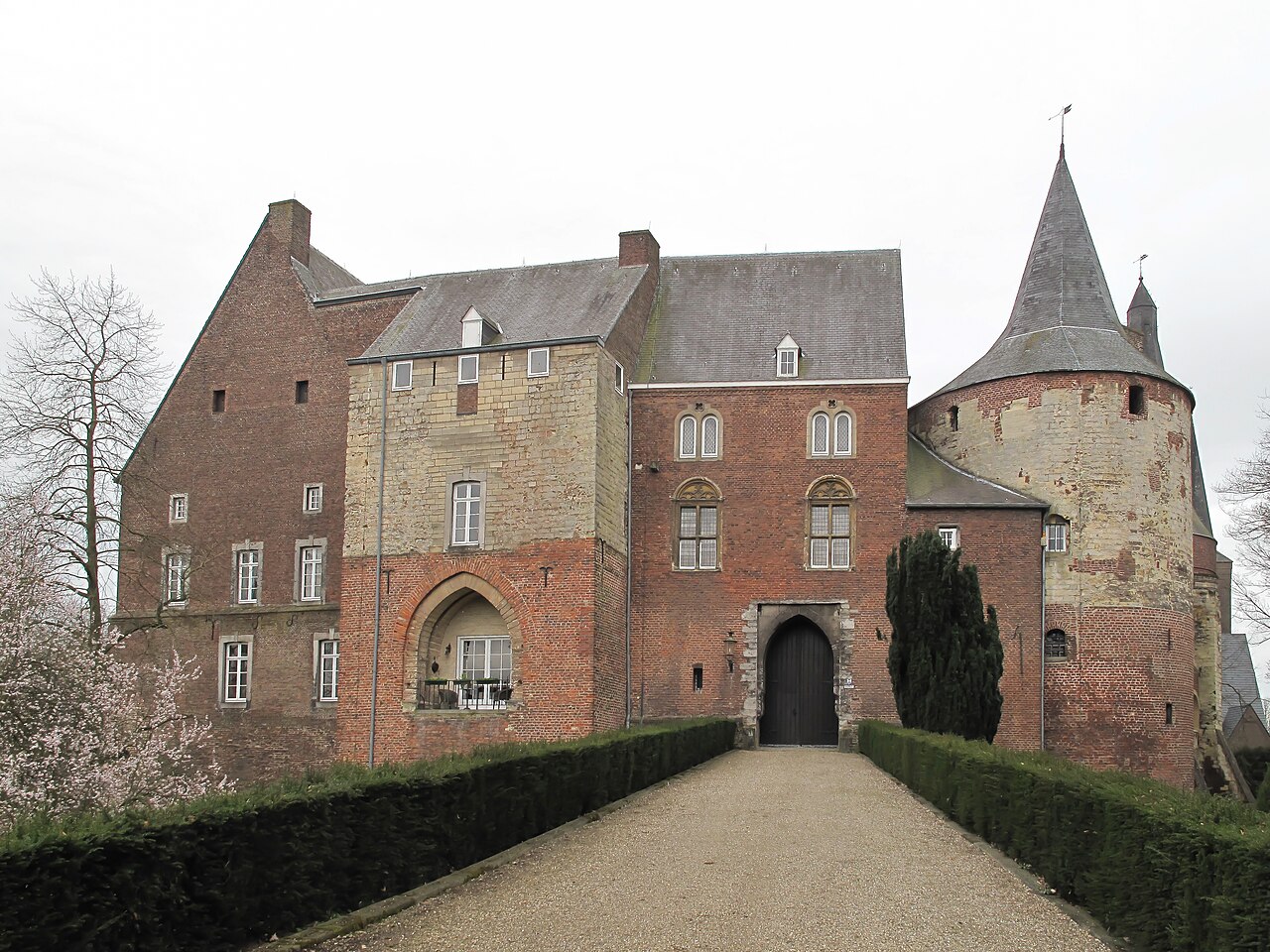
Montfort Castle, locally known as Kasteel Montfort, is a remarkable medieval fortress located next to the village of Montfort in the province of Limburg, Netherlands. This hill castle stands on a naturally elevated mound in the Fleetbeek valley, a strategic site chosen for its defensive advantages amid surrounding marshlands and watercourses. The castle's origins trace back to the mid-13th century, when Hendrik III of Guelders initiated its construction around 1251, replacing or expanding an earlier fortification. Completed circa 1267, the castle was built primarily of natural stone, featuring an irregular polygonal ground plan designed to maximize defense.
Early construction and architectural innovations
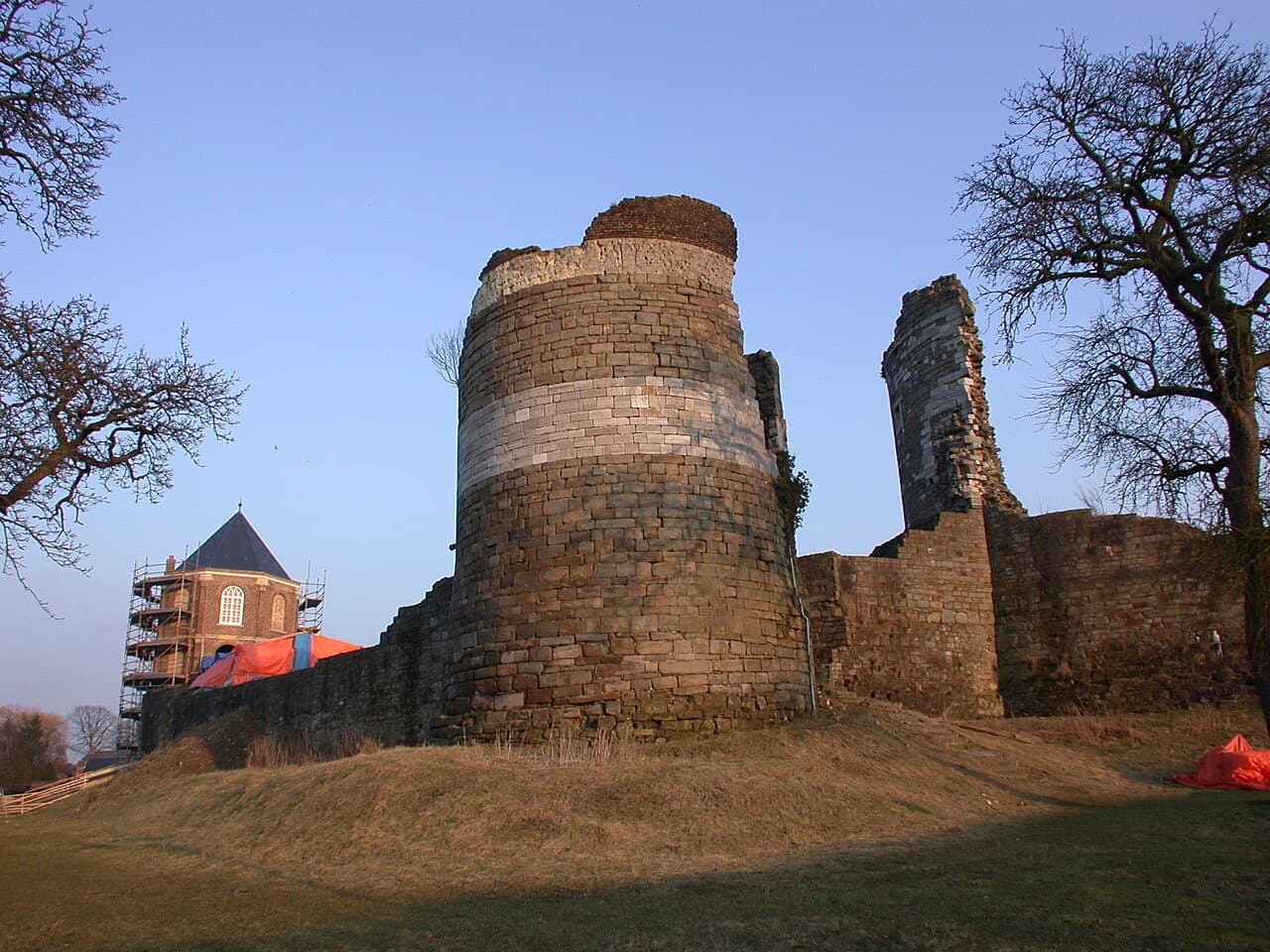
The initial structure of Montfort Castle consisted of a curtain wall enclosing a courtyard, with two round towers on the northern corners and two open bastions on the southern corners. This layout reflects a transitional castle design, combining elements of round and square fortifications. The ground inside the walls was raised above the surrounding marshy terrain to remain dry during fluctuating water levels, and the entire castle was moated, enhancing its defensibility.
One of the castle's most distinctive features is the grauwert tower, a unique "beak-shaped" keep added in 1285 by Count Reinoud I of Guelders. Positioned adjacent to the entrance gate, this tower's outward-facing wall is sharply pointed to deflect projectiles, a defensive innovation unparalleled in the Benelux region. The tower was formidable, with walls up to 3.5 meters thick and a diameter of approximately 12 meters. Ironically, Reinoud I was imprisoned in this very tower by his son from 1320 until his death in 1326.
Fortification enhancements and strategic importance
Under the rule of Count Reinald II of Guelders in the early 14th century, Montfort Castle underwent significant expansion and strengthening. Between 1342 and 1343, extensive renovations introduced residential and industrial buildings within the castle walls, particularly along the north and east sides. This period also saw the integration of large quantities of brickwork, fired on-site, blending with the original stone construction to enhance structural resilience.
The castle served as a critical southern bastion for the Dukes of Guelders, marking the frontier of their territory. Its strategic value was underscored during the Limburg Succession War and subsequent conflicts. Montfort was besieged multiple times, notably by Charles the Bold's forces between 1473 and 1477 and again in 1493. The castle sustained considerable damage during these sieges and further suffered during the 1543 assault by Emperor Charles V's troops.
Adaptations to artillery and decline
Responding to the evolving nature of warfare, particularly the advent of artillery, Montfort Castle's defenses were modernized around 1550. A new square bastioned wall replaced earlier fortifications, encircling the entire castle and accompanied by a double moat. These bastions were designed to absorb and deflect cannon fire, reflecting Renaissance military architectural principles. Repairs between 1632 and 1643 maintained these defenses, but by the late 17th century, the castle's military importance waned.
Between 1685 and 1687, the outer defensive works were dismantled and sold, the moats filled in, and the mound partially excavated to reveal the curtain wall foundations. The grauwert tower was deliberately destroyed, and the castle fell into ruin. Over the following centuries, locals scavenged the site for building materials, accelerating its decay.
19th-century additions and modern preservation efforts
In the 19th century, the castle site attracted renewed interest. Industrialist Jan Willem Burghoff acquired the ruins in 1837 and constructed an octagonal hunting pavilion around 1850 atop the remains of the northeast tower. This brick structure, possibly designed by renowned architect Pierre Cuypers, added a Romantic-era element to the medieval ruins but later fell into neglect.
The 20th century marked a turning point for Montfort Castle's conservation. In 1952, the ruins were sold to the Valkenburg Castle Association, which initiated preservation efforts. Subsequent ownership by Stichting Kasteel Montfort led to extensive restoration from the late 1970s through the early 1980s, including stabilizing the ring wall and corner towers such as the White Tower, which served as the main gate.
Starting in the early 2000s, further restoration focused on the hunting pavilion and the castle's vaulted cellars. Archaeological excavations in 2011 uncovered ten smaller vaulted storage cellars beneath the castle, restored using original-style monastery bricks and reclaimed marl blocks. These spaces now feature lighting and a panoramic glass roof, allowing public access and interpretation.
Restoration efforts also targeted the southeast tower, which contains a 3.5-meter-deep well essential for the castle's water supply. The surrounding landscape has been reshaped to revive the historic wetland environment, including the excavation of marsh ponds and the recreation of a French garden based on 18th-century designs.
Architectural significance and visitor experience
Montfort Castle occupies a compact area of approximately 50 by 50 meters, with a polygonal ground plan that was advanced for its time. Its layered construction of natural stone and brickwork, the uniquely shaped grauwert tower, and the integration of Renaissance bastioned defenses illustrate the castle's evolution in response to changing military technologies and political circumstances.
Today, the castle ruins offer visitors a rich historical and architectural experience. The partially rebuilt structures, museum exhibits, and accessible vaulted cellars provide insight into medieval life and defensive strategies. The surrounding landscape restoration enhances the site's ambiance, making Montfort Castle a recommended destination for those interested in Dutch medieval heritage and castle architecture.
Frequently asked questions (FAQ)
- How do I get to Montfort Castle?
- Montfort Castle is located at Huysdijk 4 in Montfort, Limburg, Netherlands. It is accessible by car and public transport, with parking available nearby.
- What is the historical significance of Montfort Castle?
- Montfort Castle was a key medieval stronghold built in the 13th century, serving as the southern bastion of the Dukes of Guelders. It features unique defensive architecture like the beak-shaped Grauwert tower.
- When was Montfort Castle built and by whom?
- The castle was constructed starting around 1251 by Hendrik III of Guelders and completed circa 1267, replacing an earlier fortification on the site.
- Can I visit the interior and the museum at Montfort Castle?
- Yes, Montfort Castle has a small museum and partially restored interiors including vaulted cellars open to visitors. Guided tours are available during opening hours.
- What architectural styles are represented at Montfort Castle?
- The castle exhibits a mix of medieval stone construction, 14th-century brickwork, and Renaissance bastioned fortifications, along with a 19th-century hunting pavilion.
- Is Montfort Castle suitable for children and families?
- Yes, the castle grounds and museum are family-friendly, offering educational exhibits and safe walking paths around the ruins and restored areas.
- What are the opening hours and ticket prices for Montfort Castle?
- Montfort Castle is open daily from 10:00 to 17:00 between April and October. Admission costs €5 for adults and €3 for children.
Photo gallery

Information
Opening hours
10:00-17:00, daily from April to October
Ticket prices
€5 adult, €3 child
Current owner
Stichting Kasteel Montfort
Website
Visit websiteAddress
Huysdijk 4, Montfort, Netherlands
Sources & official resources
Verify the information above using these authoritative references.
Loading map...
Visitor reviews
No reviews yet. Been here? Write the first review and help other travelers!
Write the first reviewVisited this castle? Share your experience
Your review helps other travelers and adds first-hand knowledge to our encyclopedia.