Horn Castle
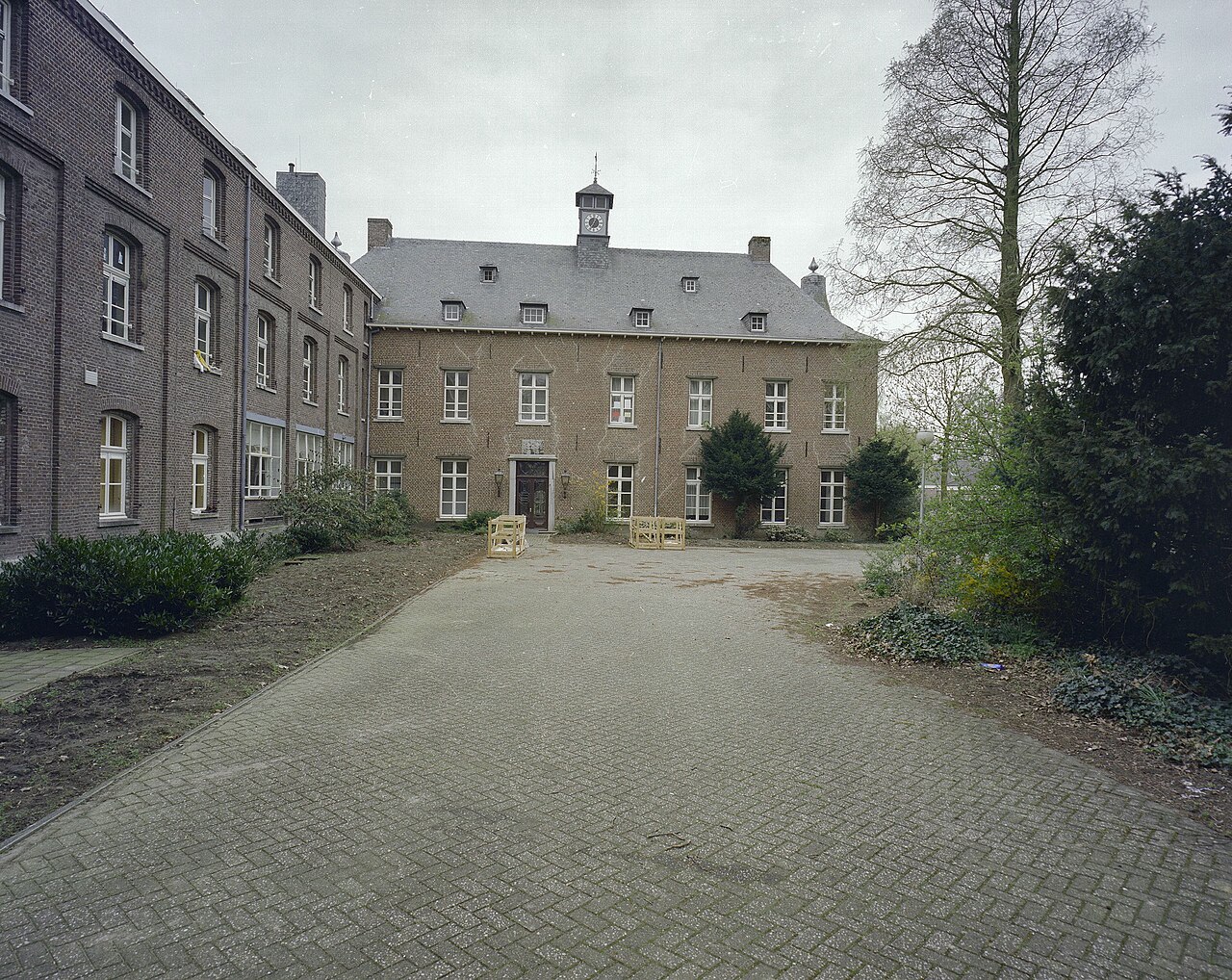
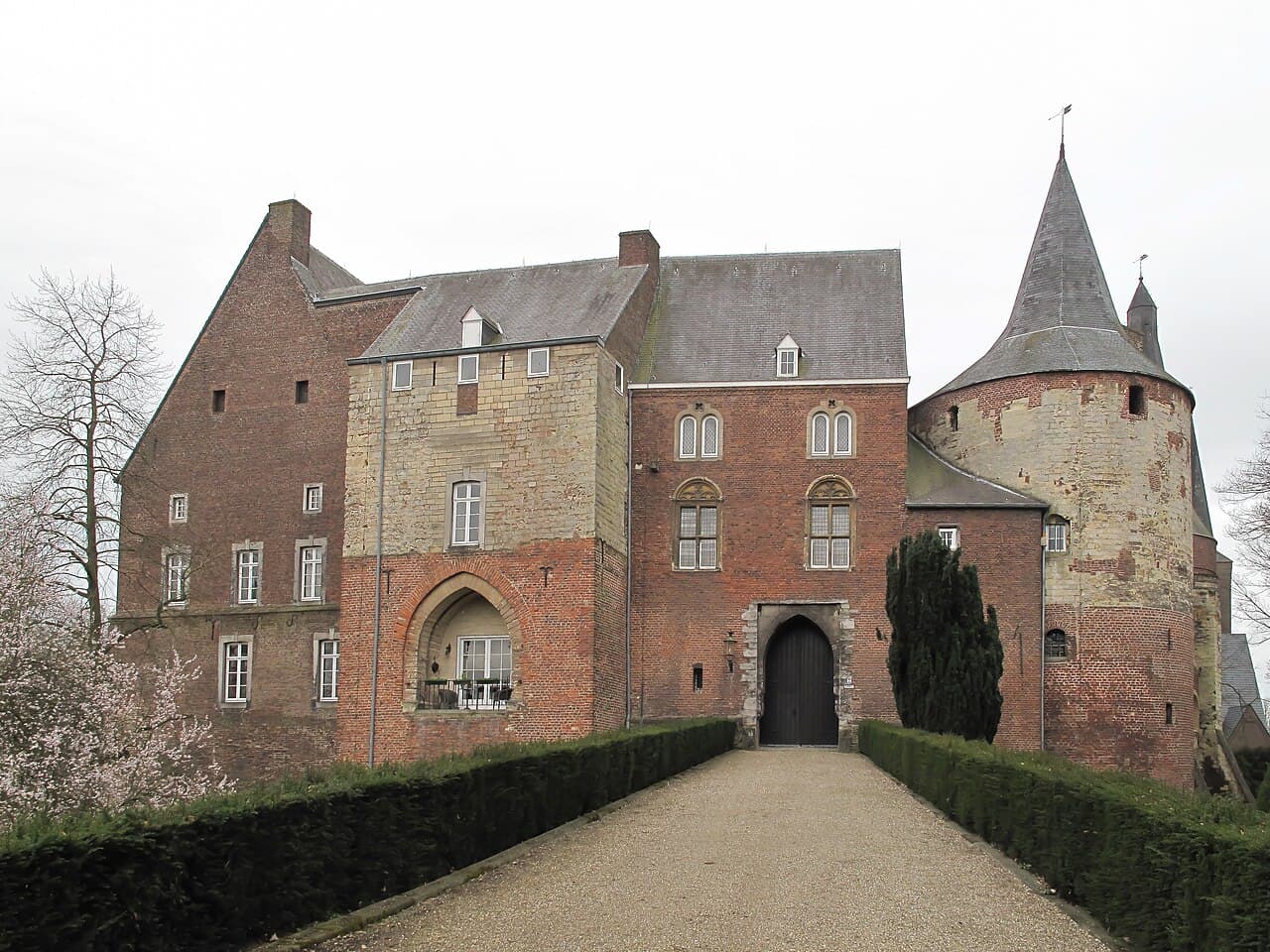
Horn Castle, locally known as Kasteel Horn, is situated adjacent to the village of Horn in the province of Limburg, Netherlands. This castle represents a significant example of a late medieval motte castle with a rich history spanning from the 13th century through various phases of architectural evolution and restoration.
Historical origins and early construction
The name "Horn" has been documented since the 12th century, but the castle itself dates from the early 13th century, making it a product of the High Medieval period. It was strategically constructed near an earlier bed of the river Meuse, providing natural defensive advantages. The castle's original design was an irregular oval plan featuring four projecting round towers and a distinctive square gate tower that projected outward from the main defensive walls.
The ring wall of the castle was initially built with a wall walk supported by round arches, allowing defenders to patrol and defend the perimeter effectively. In the 13th century, this ring wall was elevated with an additional marl stone wall, creating a second wall walk atop the original, enhancing the castle's defensive capabilities. Concurrently, most of the towers and the living quarters were raised to improve both fortification and residential comfort.
Architectural development in the 15th century
The 15th century saw significant rebuilding and expansion at Horn Castle. The living quarters were extended, which led to the removal of the two southern towers. The gate tower was integrated into the living quarters, and a new gate was constructed adjacent to it, which remains the castle's main entrance today.
This period coincided with the elevation of the Lords of Horn to the rank of counts, reflecting the castle's growing political and social importance. The architectural modifications of this era reflect both defensive needs and the desire for more comfortable noble residences.
Ownership and historical events in the 16th century
In the 16th century, Horn Castle came under the ownership of the Montmorency family, a prominent noble house. The castle's then-owner, Philips de Montmorency, was a notable supporter of William the Silent during the Dutch Revolt against Spanish rule. In 1568, Philips de Montmorency was executed by beheading in Brussels, marking a significant historical event connected to the castle's legacy.
Decline and restoration in modern times
Following the French era and the widespread destruction of Dutch castles by invading forces, Horn Castle fell into ruin. By the 19th century, it was largely dilapidated and uninhabitable.
However, around 1850, efforts were made to restore the castle for habitation. During this restoration, many of the original lower arches were altered or broken open, and the living quarters were fitted with Neo-Gothic doors and windows, reflecting 19th-century architectural tastes rather than medieval authenticity.
In 1948, the castle suffered fire damage but underwent restoration in 1954 to repair the affected structures. Today, Horn Castle remains a privately owned residence and is not open to public visitation.
Architectural features and significance
Horn Castle's architecture is notable for its combination of medieval defensive elements and later modifications. The castle's motte and bailey design is somewhat late for this type, illustrating the adaptation of traditional fortification styles into the High Medieval period.
The irregular oval ground plan with projecting round towers and a square gate tower provided a layered defense system. The dual ring walls with wall walks allowed defenders to repel attackers effectively. The 15th-century expansions reflect the transition from purely military fortifications to more comfortable noble residences, integrating living quarters with defensive structures.
The Neo-Gothic restorations of the 19th century, while not historically original, contribute to the castle's current aesthetic and reflect the era's romanticized view of medieval architecture.
Location and accessibility
Located at Kasteelstraat 6 in the village of Horn, the castle is nestled in the Limburg region of the Netherlands. Despite its historical and architectural significance, Horn Castle remains private property and is not accessible to the public. Visitors can view the castle from nearby public areas, appreciating its silhouette and setting within the Dutch landscape.
Frequently asked questions (FAQ)
- When was Horn Castle originally built?
- Horn Castle was constructed in the early 13th century, although the name 'Horn' dates back to the 12th century.
- What architectural style characterizes Horn Castle?
- Horn Castle features medieval defensive architecture typical of a late motte and bailey castle, with later Neo-Gothic restorations from the 19th century.
- Is Horn Castle open to the public?
- No, Horn Castle is privately owned and not accessible for public visits, but it can be viewed from the surrounding village area.
- What significant historical events are associated with Horn Castle?
- Philips de Montmorency, a 16th-century owner and supporter of William the Silent, was executed in 1568, linking the castle to the Dutch Revolt.
- What major restorations has Horn Castle undergone?
- The castle was restored around 1850 with Neo-Gothic modifications and again in 1954 after fire damage in 1948.
Photo gallery

Information
Address
Kasteelstraat 6
Loading map...
Visitor reviews
No reviews yet. Been here? Write the first review and help other travelers!
Write the first reviewVisited this castle? Share your experience
Your review helps other travelers and adds first-hand knowledge to our encyclopedia.