Horn Castle
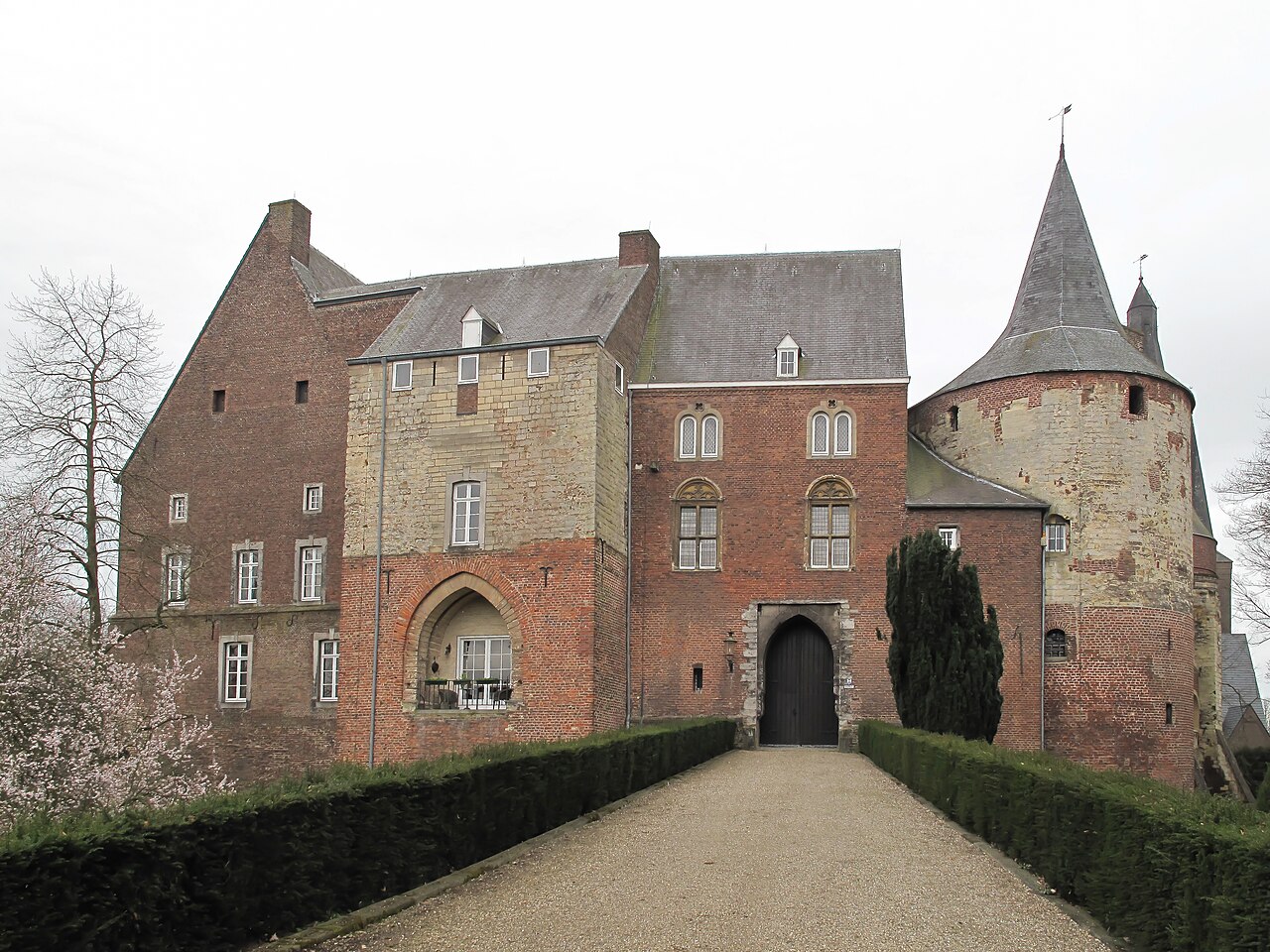
Horn Castle, locally known as Kasteel Horn, is a remarkable example of a late medieval motte castle situated near the village of Horn in the province of Limburg, Netherlands. Its strategic location near a former bed of the river Maas highlights its historical importance in regional defense and control of waterways. The castle's name appears as early as the 12th century, but the existing structure dates primarily from the early 13th century, making it a significant monument of medieval fortification in the area.
Architectural design and early construction
The castle's layout is characterized by an irregular oval plan featuring four protruding round towers and a prominent square gate tower, which also projects outward. This design reflects the defensive priorities of the period, combining strong vertical elements with a robust curtain wall system. The ring wall originally included a wall walk on round arches, allowing defenders to patrol and defend the perimeter effectively.
During the 13th century, the castle underwent significant enhancements. The ring wall was heightened with a marl railing and a second wall walk was constructed above the original, improving the defensive capabilities and surveillance potential of the fortress. Concurrently, most of the towers and lodgings were built, establishing the core structural elements that define Horn Castle's silhouette today.
Fifteenth-century reconstruction and expansion
In the 15th century, Horn Castle experienced a major reconstruction that altered its layout and function. The lodgings were extended, which led to the removal of the two southern towers, indicating a shift towards more comfortable residential spaces within the castle. The gate tower was integrated into the lodgings, and a new gate was constructed adjacent to it, which remains the castle's current entrance.
This period also marked a significant social development, as the Lords of Corno were proclaimed counts, reflecting the castle's elevated status and the importance of its owners in regional nobility.
Ownership and historical events in the 16th century
During the 16th century, Horn Castle came under the ownership of the Montmorency family, a notable noble lineage. One of its most famous owners, Philips de Montmorency, was a supporter of William the Silent and played a role in the Dutch Revolt against Spanish rule. Tragically, in 1568, Philips was executed by beheading in Brussels, a pivotal event reflecting the turbulent political climate of the time.
Decline, restoration, and current status
The French era brought widespread destruction to many Dutch castles, and Horn Castle was reduced to a ruin during this period. However, around 1850, efforts were made to restore the castle for residential use. Unfortunately, these renovations included opening most of the lower arches and installing neogothic doors and windows, which altered the castle's original medieval character.
In 1948, a fire caused significant damage, but the castle underwent a restoration in 1954 to preserve its structure. Today, Horn Castle remains a large and imposing structure, albeit privately owned and not accessible to the public.
Architectural significance and heritage
Horn Castle's combination of a motte and bailey layout with its irregular oval plan and multiple towers exemplifies the evolution of castle architecture from the early to late medieval periods. Its ring wall with dual wall walks and the integration of residential lodgings during the 15th century illustrate the shift from purely military fortifications to more comfortable noble residences.
The castle's history is deeply intertwined with the political and social changes in the Netherlands, particularly during the Dutch Revolt and the subsequent periods of conflict and restoration. Its survival through destruction and adaptation demonstrates the resilience of such medieval structures and their ongoing cultural significance.
Frequently asked questions (FAQ)
- Is Horn Castle open to the public?
- Horn Castle is privately owned and is not open to the public for tours or visits.
- When was Horn Castle originally built?
- Horn Castle was constructed in the early 13th century, with its name appearing as early as the 12th century.
- What architectural style characterizes Horn Castle?
- Horn Castle features a mixed architectural style, combining elements of medieval motte-and-bailey design with later neogothic renovations from the 19th century.
- What significant changes occurred during the 15th century reconstruction?
- In the 15th century, the castle's lodgings were extended, two southern towers were removed, and a new gate was built, reflecting a shift towards residential comfort.
- Who was Philips de Montmorency and what is his connection to Horn Castle?
- Philips de Montmorency was a 16th-century owner of Horn Castle and a supporter of William the Silent; he was executed in 1568 during the Dutch Revolt.
Information
Current owner
Private owner
Loading map...
Visitor reviews
No reviews yet. Been here? Write the first review and help other travelers!
Write the first reviewVisited this castle? Share your experience
Your review helps other travelers and adds first-hand knowledge to our encyclopedia.