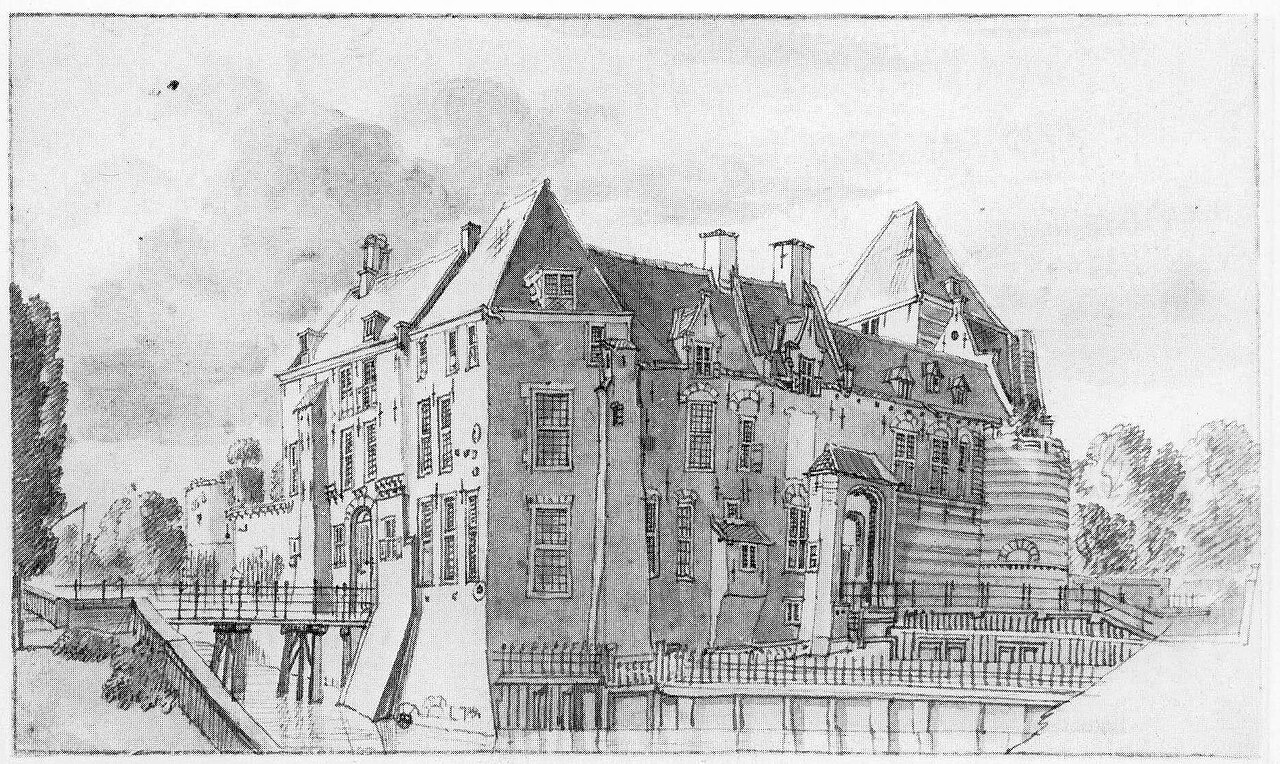
Montfoort Castle

Montfoort Castle in Utrecht, Netherlands
Montfoort, Utrecht, Netherlands
High Medieval (11th–13th c.)
Partially Preserved

Montfoort Castle, locally known as Kasteel Montfoort, is situated in the heart of the town of Montfoort in the province of Utrecht, Netherlands. This castle is a significant medieval site with origins tracing back to the 12th century, established by Bishop Godfried van Rhenen of Utrecht. The castle was strategically built to protect the bishopric from the neighboring County of Holland. Its name, originally Mons Fortis, meaning "Strong Mountain," likely refers to the artificial hill or motte upon which the castle was constructed, a common defensive feature in medieval fortifications.

Historical background and founding

The foundation of Montfoort Castle in the High Medieval period reflects the turbulent political landscape of the region during the 12th century. The bishopric of Utrecht was a powerful ecclesiastical principality, and Montfoort Castle served as a military stronghold guarding its borders against external threats, particularly from the County of Holland. The castle's strategic location in the center of the town highlights its importance in controlling local trade routes and territorial defense.

Architectural layout and features

Historical drawings from the 16th and 17th centuries, including a notable depiction by R. Roghman circa 1647, show that Montfoort Castle originally had an irregular oval shape. The castle complex included a motte—an artificial hill—providing a raised defensive position. Surrounding the castle was a bailey or courtyard enclosed by curtain walls with towers for defense. The bailey's entrance gate and a section of the curtain wall with a tower still survive today, offering a glimpse into the castle's fortified perimeter.

Remnants and current condition

Unfortunately, much of the original castle structure no longer exists. The castle was completely destroyed in 1672 during the Franco-Dutch War when the French invading army razed it. Presently, only a small remnant of the castle remains on the south side of the bailey, across the road from the bailey itself. The surviving parts of the bailey date mostly from the 15th century, indicating later medieval modifications to the site.

Later uses and preservation

In the early 20th century, the buildings on the bailey were repurposed as a girls' reform school. Today, the site has been adapted for modern use and houses a restaurant, which is freely accessible to visitors. The castle grounds provide a cultural and historic atmosphere for guests, preserving the legacy of Montfoort Castle within the town center.

Significance and heritage

Montfoort Castle holds a key place in the medieval history of Utrecht and the Netherlands. Despite its partial ruinous state, the castle's remaining gatehouse, curtain walls, and tower serve as tangible links to the region's feudal past and the military architecture of the High Medieval period. The castle's history of destruction and adaptation illustrates the changing political and social landscape of the Netherlands from the Middle Ages through the early modern era.

Frequently asked questions (FAQ)

What is the historical significance of Montfoort Castle?
Montfoort Castle, built in the 14th century, is a remarkable example of medieval architecture in the Netherlands. It served as a stronghold for the local nobility and played a crucial role in the defense of the region during various conflicts.
When was Montfoort Castle constructed?
Montfoort Castle was constructed in the early 14th century, with its origins dating back to around 1300. The castle has undergone several renovations over the centuries, reflecting various architectural styles.
Can I visit Montfoort Castle?
Yes, Montfoort Castle is open to visitors, allowing them to explore its rich history and beautiful grounds. Guided tours are available to provide an in-depth understanding of the castle's significance and architecture.
What are the opening hours for Montfoort Castle?
Montfoort Castle is typically open to visitors from 10 AM to 5 PM, Tuesday through Sunday. It's recommended to check the official website for any seasonal changes or special events that may affect opening hours.
Is it possible to hold events at Montfoort Castle?
Yes, Montfoort Castle is available for various events, including weddings, corporate gatherings, and private functions. The picturesque setting and historical ambiance make it a unique venue for special occasions.
What are the ticket prices for visiting Montfoort Castle?
Ticket prices for Montfoort Castle are generally affordable, with discounts available for children and seniors. It's best to check the official website for the most current pricing and any special offers.
When is the best time to visit Montfoort Castle?
The best time to visit Montfoort Castle is during the spring and early autumn when the weather is pleasant, and the gardens are in full bloom. This period also tends to have fewer crowds, allowing for a more enjoyable experience.
Are there any nearby attractions to visit along with Montfoort Castle?
Yes, visitors can explore several nearby attractions, including the charming town of Montfoort, with its quaint streets and local shops. Additionally, the surrounding countryside offers beautiful walking and cycling paths for those looking to enjoy nature.
How do I get to Montfoort Castle?
Montfoort Castle is easily accessible by car and public transport. If traveling by train, the nearest station is Montfoort, from which it is a short walk to the castle.

Information

Hill Castle

Address

Kasteelplein, Montfoort, Netherlands

Loading map...

Visitor reviews

No reviews yet. Been here? Write the first review and help other travelers!

Write the first review

Visited this castle? Share your experience

Your review helps other travelers and adds first-hand knowledge to our encyclopedia.

Write a review

(5/5)

0/2000 characters

Your review will be visible after admin approval

Nearby castles

6.2 km

Woerden Castle

Woerden, Netherlands

Woerden Castle, locally known as Kasteel van Woerden, is a prominent medieval fortress located in the city of Woerden in the province of Utrecht, Netherlands. This castle holds significant historical and architectural value due to its strategic location and its evolution from Roman times through the Middle Ages to the present day. The site of Woerden Castle has a deep-rooted history dating back to the Roman Empire. Originally, the location was home to a Roman castellum called Castellum Laurum, part of the limes—the fortified northern border of the Roman Empire. This castellum was initially constructed in the 40s AD as a military outpost to defend the empire's frontier. It was destroyed during the Batavian rebellion in 69 AD but was swiftly rebuilt in 70 AD. The Romans maintained control of the site until around 402 AD, with a brief interruption between 275 and 300 AD. Archaeological excavations in the city center of Woerden have uncovered remains of Roman buildings and a Roman cargo ship, underscoring the site's long-standing military and commercial importance. Medieval origins and strategic importance The current Woerden Castle was constructed in the High Medieval period, around 1159, by Bishop Godfrey van Rhenen of Utrecht. This construction replaced earlier fortifications and was intended to strengthen the bishopric's defenses against the neighboring County of Holland. The castle's location was of critical strategic importance, situated near the border between the bishopric and the county, making it a focal point in regional conflicts. The castle was rebuilt and expanded in 1407 under the direction of John III, Bishop of Liège, who was also the Duke of Bavaria-Straubing. This reconstruction emphasized military functionality, as the castle was designed solely for defense rather than as a noble residence. Its walls reach thicknesses of over 3.5 meters in some sections to withstand siege weaponry and artillery fire. A remarkable feature of Woerden Castle is the presence of artillery corridors beneath the structure, unique in the Netherlands, which allowed defenders to move and operate cannons safely during attacks. Architectural features and military adaptations Woerden Castle exemplifies the military architecture of the High Medieval and early Late Medieval periods. The thick stone walls and robust defensive structures reflect the castle's primary role as a fortress. Originally, it featured tall towers that provided vantage points for surveillance and defense. However, as military threats diminished over the centuries, these towers were partially dismantled and are now less than half their original height. The castle's defensive design includes a moat and fortified gatehouses, which controlled access to the interior courtyard. The presence of a pit prison in the northwest tower is notable; it was used to confine unruly prisoners during the castle's later use as a prison until the 19th century. Historical events and later uses Throughout its history, Woerden Castle has witnessed numerous military events. In 1672, during the Franco-Dutch War, French forces attempted to destroy the castle as they advanced through the Netherlands. However, the local population prevented this by stealing the fuse intended to ignite the gunpowder, saving the castle from destruction. Following its military use, the castle served as a prison until the 19th century. The harsh conditions of the pit prison in the northwest tower are a reminder of this period. In the 20th century, the castle was incorporated into military barracks and used primarily for storage. Unfortunately, this period saw poor maintenance, leading to significant decay of the structure. Restoration and modern function Recognizing the cultural and historical importance of Woerden Castle, a comprehensive renovation was undertaken in 1989. This restoration aimed to preserve the castle's architectural integrity while adapting it for contemporary use. In the 1990s, the castle was leased to an ICT company that used it as office space, although this tenancy was relatively short-lived. Subsequent renovations have transformed Woerden Castle into a venue for events and private functions. While it is not generally open to the public for tours, visitors can access the castle when attending events or by special invitation. The castle's preservation as a well-preserved medieval fortress with unique features such as its artillery corridors and pit prison offers valuable insight into Dutch military architecture and history. Architectural style and classification Woerden Castle is classified as a hill castle, constructed primarily for military defense rather than residential comfort. Its architectural style reflects the High Medieval period with later adaptations. The robust stone walls, defensive towers, and underground artillery passages are characteristic of medieval fortifications designed to withstand sieges and artillery assaults. The castle's evolution from a Roman military site to a medieval fortress underscores its continuous strategic significance. Its preservation allows scholars and visitors alike to explore centuries of military architectural development and regional history in the Netherlands.

High Medieval (11th–13th c.)
Details
6.8 km
IJsselstein Castle — Netherlands castle

IJsselstein Castle

IJsselstein, Netherlands

IJsselstein Castle, locally known as Kasteel IJsselstein, is a historic hill castle situated in the town of IJsselstein in the province of Utrecht, the Netherlands. Its origins are closely intertwined with the development of the town itself, located near the banks of the IJssel river. Although the exact date of the castle's initial construction remains unknown, historical records reveal the presence of a Lord of IJsselstein as early as 1144, with the castle first mentioned explicitly in 1279. The medieval origins and early history The castle's early history is marked by its strategic importance and turbulent events. In 1297, Gijsbrecht van Amstel, the Lord of IJsselstein, notably refused to surrender his castle to the Count of Holland. This defiance led to Gijsbrecht's imprisonment and a protracted siege of the castle lasting a year. Remarkably, the castle was defended during this siege by Gijsbrecht's wife, Berta, alongside a small garrison of soldiers. The castle was eventually returned to Gijsbrecht in 1309. Later, in 1349, the castle endured another siege, this time by the Bishop of Utrecht, lasting five weeks. The resilience of the castle's defenses was further tested in 1356 when the bailey was briefly captured by a group of townspeople from Utrecht, who set fire to the buildings before being driven out. Destruction and rebuilding in the 15th and 16th centuries The castle and the town of IJsselstein faced significant upheaval in the early 15th century. In 1417, Willem van Egmond took control of the castle, prompting a siege by allies of Jacqueline, Countess of Hainaut. Following Willem's surrender, the Countess ordered the demolition of the entire castle and the town walls. The destruction was thorough; in 1418, she commanded the demolition of all houses in the town except for religious buildings. The lands were restored to the Van Egmond family in 1421. Reconstruction efforts began around 1470, and by 1480, the castle was once again defensible. However, the castle's fortifications were tested in 1510-1511 when it was besieged by troops from the city of Utrecht; during this conflict, two towers were severely damaged. Between 1527 and 1532, the castle underwent significant enlargement, including the construction of several buildings and the notable stair tower that still stands today, known as the Loyer tower. This tower, along with part of the moat, represents the surviving elements of the castle. Architectural historians attribute the design of the tower to the prominent Belgian architect Rombout II Keldermans, renowned for his work in the Renaissance style. Later history and decline In 1558, IJsselstein Castle came under the ownership of the Dutch Royal family, the House of Orange. Despite this prestigious association, the castle gradually fell into disrepair starting in the 17th century. During the period of French occupation from 1795 to 1798, the castle was repurposed as housing for soldiers of the French army. Following the occupation, the castle was left vacant for several years, occasionally rented out and sold twice. The final blow came in 1888 when the castle was almost entirely demolished, sparing only the Loyer tower. Today, this tower is incorporated into the local city museum, serving as a tangible link to the castle's rich past. Architectural features and significance IJsselstein Castle was originally a hill castle, constructed to take advantage of the elevated terrain near the IJssel river, which provided natural defensive benefits. The castle's layout included a bailey, defensive walls, and multiple towers, typical of medieval fortifications in the region. The surviving Loyer tower is a stair tower characteristic of the Renaissance architectural style, reflecting the influence of Rombout II Keldermans. Its robust masonry and design elements illustrate the transition from purely military fortifications to more residential and representational architecture during the Renaissance period. The partial moat that remains also highlights the castle's defensive measures, which were standard for the time to protect against siege warfare. IJsselstein Castle today Currently, the castle exists primarily through the preserved Loyer tower, which is integrated into the city museum of IJsselstein. This museum offers visitors insight into the castle's history as well as the broader historical context of the town and region. The castle's story, marked by sieges, destruction, and rebuilding, reflects the complex political and military history of the Utrecht province and the Netherlands at large. The remaining tower stands as a monument to the castle's enduring legacy and the architectural heritage of the Renaissance period in Dutch castle construction.

Renaissance (15th–17th c.)
Details
7 km

Vliet Castle

Oudewater, Netherlands

Vliet Castle, locally known as Huis te Vliet, is a medieval castle ruin located near the village of Oudewater in the province of Utrecht, the Netherlands. It stands on the southern bank of the Hollandsche IJssel river within the Vlietpolder, west of Oudewater. The castle is primarily recognized today by the simple remains of its north-facing keep, which rises approximately 9.5 meters high. This ruin is a rare surviving fragment of what once was a more extensive fortified complex. Founding and early history Vliet Castle was founded in the late 13th century, with its origins closely tied to the turbulent political landscape of medieval Holland. The probable founder was Gerrit van den Vliet, brother of Herman VI of Woerden. Herman was implicated in the assassination of Count Floris V of Holland in 1296, an event that led to the banishment of his family. Gerrit, however, was not involved in the murder and managed to reconcile with Floris's successor, Count Willem II, who restored his family's possessions around Oudewater. Gerrit van den Vliet died in 1314, leaving the castle and its lands in the hands of his descendants. Architectural features and layout Very little is known about the detailed architectural history of Vliet Castle. The surviving fragment is part of the north face of the keep, which would have served as the fortified residence and last defensive stronghold within the castle complex. The keep's walls are robust, constructed in the typical High Medieval style of the 13th century, with thick masonry designed to withstand sieges and attacks. The castle originally included a bailey, an enclosed courtyard typically surrounded by defensive walls and ancillary buildings. Remains of the bailey were discovered recently during agricultural works by a local farmer, providing some insight into the castle's former extent. Historical records from 1770 indicate that both the keep and bailey were once surrounded by a complete moat, a common defensive feature of medieval castles designed to deter attackers and prevent undermining of the walls. Later history and decline In 1497, the then-owner Jan van Vliet requested permission from Philip the Handsome (Philips de Schone) to relocate his prisoners to nearby cities. This request may suggest that the castle was no longer suitable as a prison, possibly due to deterioration or a conversion into a more comfortable manor house. The castle remained under the ownership of the Van Woerden van Vliet family until 1624. The exact timeline and reasons for the castle's decline and ruin are unclear. By the mid-17th century, around 1647, the castle was already depicted as a ruin in drawings by the artist Roelant Roghman. There is no detailed historical record of any siege or destruction that led to this state, and the castle is scarcely mentioned in the broader history of Oudewater and its surroundings. Current condition and access Today, Vliet Castle remains a simple ruin consisting mainly of the keep's north wall fragment. It is situated on private farmland, which means it is not accessible to the public. Despite its modest remains, the site holds archaeological significance, especially with the recent discovery of the bailey's foundations. The castle's location on the Hollandsche IJssel river and its historical connection to the van Vliet family contribute to its cultural heritage value within the region. While it lacks the grandeur of larger castles, its survival as a High Medieval structure offers insight into the defensive architecture and feudal history of the Utrecht province during the 13th century.

High Medieval (11th–13th c.)
Details