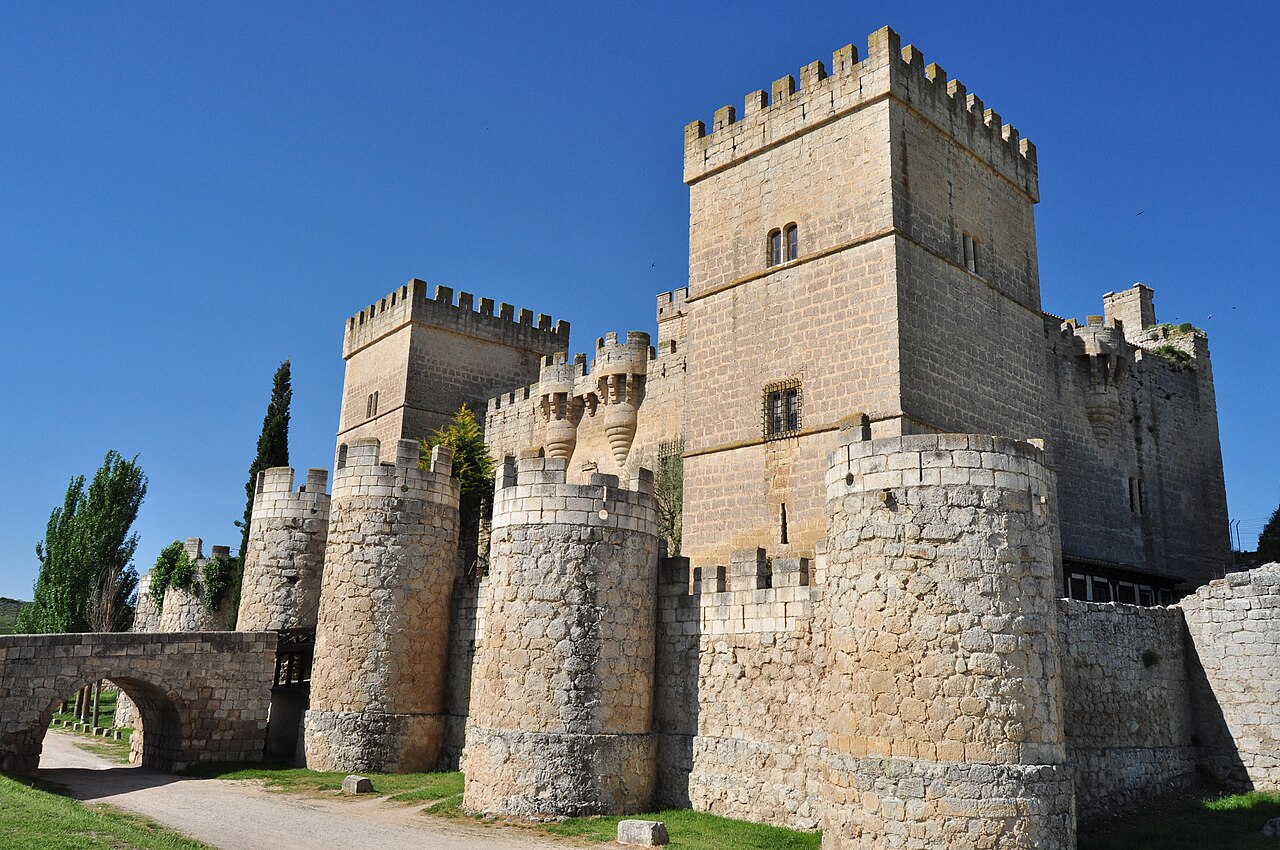
Montealegre Castle
Montealegre Castle, located in the village of Montealegre de Campos in the province of Valladolid, Spain, stands as a remarkable example of medieval military architecture. This hill castle was strategically positioned on the western end of a large hill, providing commanding views over the surrounding Tierra de Campos region. Its location was vital for defense, marking the southern border of the Kingdom of León and later playing a key role in the Kingdom of Castile's frontier defense.
The origins of Montealegre Castle trace back to the 12th century, with the earliest known mention in 1173 when Rodrígo Gutiérrez was appointed lord of Montealegre. At this time, the castle was part of a network of fortresses including Ampudia, Belmonte, and Medina de Rioseco, designed to protect the southern border of León. The castle was significantly revamped in the late 13th century, around 1297, by Alfonso Tello Pérez de Meneses, a prominent nobleman appointed lord of Montealegre by King Alfonso VIII. This reconstruction gave the castle much of its present form and fortified its role as a defensive stronghold.
Architectural features and design
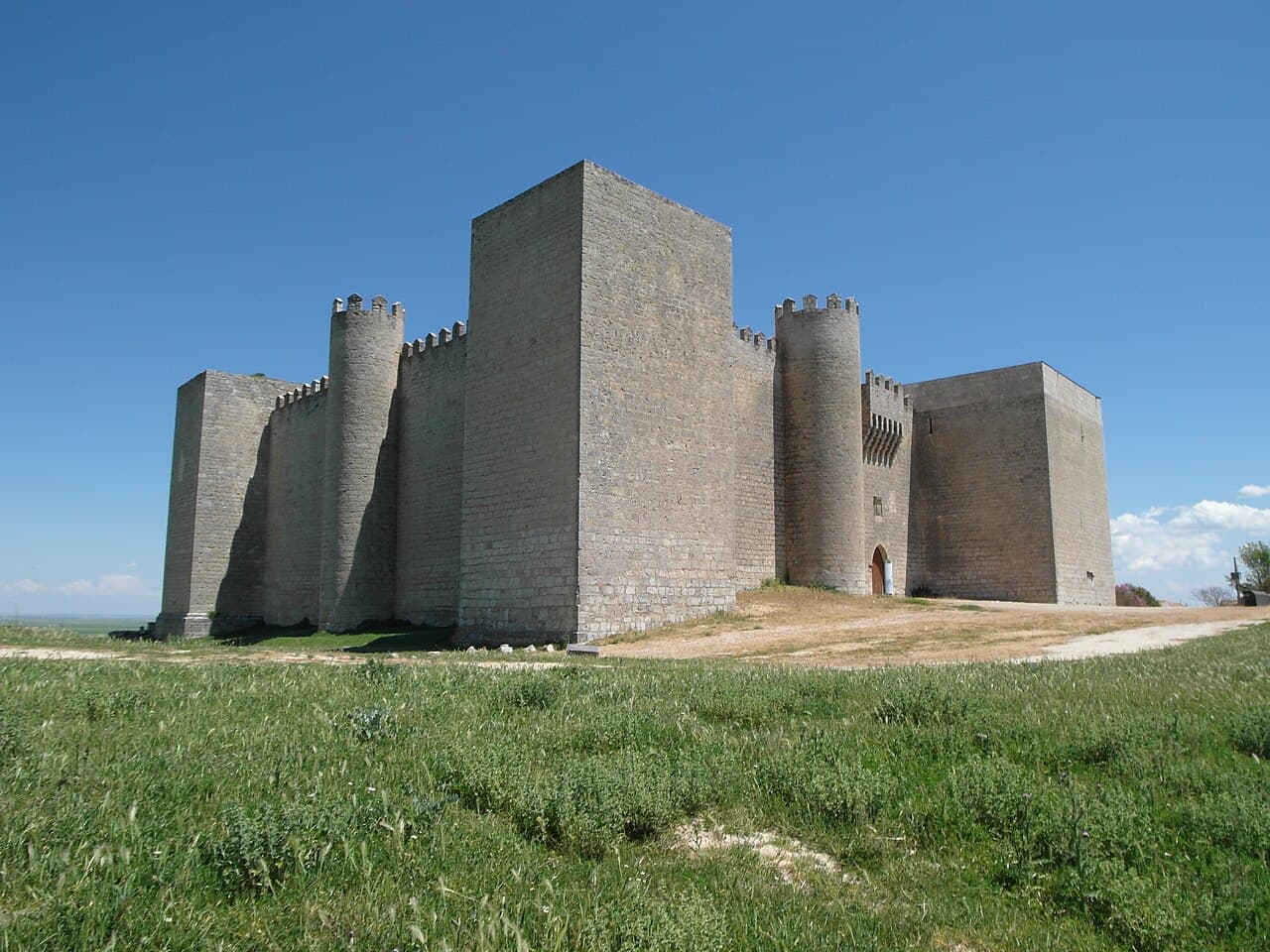
The castle's layout is characterized by a slightly trapezial ground plan, fortified by massive stone walls that rise between 18 and 24 meters high and measure up to 4 meters thick. The fortress is distinguished by its four corner towers: three rectangular and one pentagonal, the latter serving as the keep (torre del homenaje). This pentagonal tower was historically the tallest structure within the castle but was partially dismantled in the late 18th century to provide stone for local infrastructure projects such as the Canal de Castilla.
In addition to the corner towers, the curtain walls are punctuated by slender circular towers that enhance the castle's defensive capabilities. The walls are crowned with battlements, though some sections are incomplete due to centuries of stone removal. The main entrance features a modest gate surmounted by the coat of arms of the House of Albuquerque, topped by a machicolation—a projecting gallery with openings for dropping projectiles or boiling substances on attackers.
The castle's interior once included a courtyard (corte) surrounded by timber-framed buildings. These structures served multiple purposes: stables and storage on the ground floor, with living quarters for guards on the upper floors. A continuous camino de ronda or wall walk runs along the upper portions of the walls, allowing defenders to move rapidly around the perimeter during sieges.
Historical significance and ownership
Montealegre Castle has a rich history intertwined with the noble families and political conflicts of medieval Spain. Initially associated with the Meneses family, the lordship passed through various hands, including the Military Order of Santiago and the House of Albuquerque. The castle was granted several privileges under King Alfonso X, the Wise, and later became part of the Lordship of Alburquerque.
During the reign of King Pedro I of Castile, known as Pedro the Cruel, the castle was besieged in 1354 while its lord, Don Juan Alfonso de Alburquerque, was absent. The siege was famously repelled by the castle's lady, Doña Isabel de Meneses, demonstrating the fortress's formidable defenses. The castle was never taken by force, attesting to its strength and strategic design.
In the 16th century, the castle again became a focal point during the War of the Communities (1520–1522), when the Castilian comuneros revolted against Emperor Charles V. The rebels attempted to capture Montealegre but failed, resorting to treachery to gain entry. The castle's ownership later passed to the Manuel family, who maintained one of the most significant Jewish communities in the province within the town.
In 1626, the lordship was elevated to a marquisate by King Philip IV, granted to Martín de Rojas y Guzmán, a member of the Guzmán family. The Marquess de Montealegre placed his coat of arms above the castle's entrance, a symbol of his authority and the castle's noble status.
Later history and modern use
Montealegre Castle's military importance declined in the modern era. In the late 18th century, parts of the castle, including the keep, were dismantled to provide stone for civil engineering projects such as the Canal de Castilla. By the early 20th century, the castle faced the threat of near demolition when it was purchased with the intent to sell its stones for railway construction. Fortunately, this plan was abandoned, preserving the structure.
During the Spanish Civil War and the decades following, the castle was repurposed as a grain silo, which led to the complete dismantling of its interior. In the 1960s, it served as a filming location for the movie "El Cid," starring Charlton Heston, highlighting the castle's enduring cultural significance.
Recent restoration efforts in the 21st century have revitalized Montealegre Castle, transforming it into a cultural center focused on medieval history and architecture. Although the interior remains largely inaccessible to the public, the restored exterior and battlements offer visitors spectacular views of the surrounding countryside and nearby castles such as Ampudia, Torremormojón, and Belmonte, underscoring the region's dense network of medieval fortifications.
Architectural influences and style
Montealegre Castle exemplifies the adoption of Mediterranean-Arab castle design principles in European military architecture during the 13th century. Its functional and horizontal appearance contrasts with the more vertical Gothic styles seen elsewhere, emphasizing strong, thick walls and robust towers designed for practical defense rather than ornamentation.
The castle's combination of rectangular, pentagonal, and circular towers reflects a sophisticated understanding of fortification techniques, maximizing defensive coverage and minimizing blind spots. The presence of a machicolation above the main gate is a hallmark of medieval military architecture, enabling defenders to protect the entrance effectively.
Visiting Montealegre Castle today
Currently, Montealegre Castle is partially restored with its exterior walls and towers well preserved, while the interior remains dismantled and inaccessible to visitors. The castle lies on a prominent hilltop, offering panoramic views of the surrounding Valladolid region and the vast plains of Tierra de Campos.
Visitors can appreciate the castle's imposing silhouette and architectural details from the outside, including the distinctive towers and battlements. The site serves as a cultural landmark, reflecting the turbulent history and architectural heritage of medieval Castile. Nearby towns and castles provide additional opportunities for exploring the rich medieval landscape of this part of Spain.
Frequently asked questions (FAQ)
- What is the historical significance of Montealegre Castle?
- Montealegre Castle, dating back to the 11th century, played a crucial role in the defense of the region during the Reconquista. Its strategic location allowed it to oversee important trade routes and protect the territory from invasions. Today, it stands as a monument to the rich history of medieval Spain.
- When was Montealegre Castle built?
- Montealegre Castle was constructed in the 11th century, with its origins tied to the turbulent times of the Christian reconquest of the Iberian Peninsula from Muslim rule. The castle has undergone various modifications and restorations over the centuries, reflecting the architectural styles of different eras.
- Can I visit Montealegre Castle?
- Yes, visitors are welcome to explore Montealegre Castle. The site offers guided tours that delve into its fascinating history and architecture, making it a great destination for history enthusiasts and families alike.
- What are the opening hours for Montealegre Castle?
- Montealegre Castle is typically open to visitors from 10:00 AM to 6:00 PM, although hours may vary seasonally. It is advised to check the official website or contact local tourism offices for the most current information before planning your visit.
- How much does it cost to enter Montealegre Castle?
- Admission to Montealegre Castle is reasonably priced, typically around €5 for adults and reduced rates for children and seniors. Group discounts may also be available, making it an affordable outing for families and educational groups.
- Is Montealegre Castle accessible for visitors with disabilities?
- Montealegre Castle strives to be accessible to all visitors, with efforts made to accommodate those with mobility challenges. However, due to the castle's historical nature, some areas may have limitations, so it is recommended to inquire in advance for specific accessibility options.
- What is the best time to visit Montealegre Castle?
- The best time to visit Montealegre Castle is during the spring and early autumn months when the weather is mild and pleasant. These seasons also offer fewer crowds compared to the peak summer months, allowing for a more enjoyable experience.
- Are there any nearby attractions to visit alongside Montealegre Castle?
- Yes, the area surrounding Montealegre Castle is rich in history and culture. Nearby attractions include the charming village of Montealegre de Campos and several scenic hiking trails that showcase the beautiful Spanish countryside.
Photo gallery

Information
Website
Visit websiteAddress
Calle Nicolas Rodriguez, Montealegre de Campos, Valladolid, Spain
Sources & official resources
Verify the information above using these authoritative references.
Loading map...
Visitor reviews
No reviews yet. Been here? Write the first review and help other travelers!
Write the first reviewVisited this castle? Share your experience
Your review helps other travelers and adds first-hand knowledge to our encyclopedia.