The Castle of Villalba de los Alcores is a significant medieval fortress located on a prominent hill within the municipality of Villalba de los Alcores in Spain. This hill castle played a pivotal role in the turbulent frontier zone between the kingdoms of León and Castilla during the Middle Ages. Its strategic position allowed it to serve as a crucial defensive stronghold, forming part of an interconnected network of fortresses designed to secure the region against invasions and local conflicts.
The earliest documentary evidence of Villalba dates back to June 10, 1140, when Infanta-Queen Sancha Raimúndez granted the territory to the Order of Saint John, a religious military community known for their role in the Crusades and frontier defense. This order likely initiated the first fortifications, including the castle's foundational walls and towers, to consolidate control over the area. However, their tenure was brief, as they returned the domain a year later. Subsequently, in 1194, King Alfonso VIII of Castilla donated Villalba to the noble Meneses family, who are credited with either constructing or significantly renovating the castle, as evidenced by the heraldic emblems found within the structure.
Historical significance and ownership
The castle's history throughout the 13th and 14th centuries is marked by its involvement in regional power struggles and military engagements. It endured a notable siege in 1217 during conflicts involving King Enrique I and Alfonso Téllez de Meneses. In the mid-14th century, the fortress was seized by King Pedro I during his disputes with Infante Enrique, underscoring its strategic importance. The 15th century brought further turmoil when Rodrigo Alonso Pimentel, Count of Benavente, took control in 1469 and later sponsored extensive reconstruction efforts to strengthen the castle’s defenses.
During the war of 1475 against Portugal, the castle briefly came under the control of Alfonso V as part of a ransom agreement, only to be reclaimed by Rodrigo Alonso Pimentel after hostilities ceased. Over the following centuries, ownership passed through several noble families, including the Acuña, Vivero, Velasco, and Osorno houses. The Counts of Castilnovo held the castle until 1860, when it was sold to Cipriano de Rivas. The site also served as a prison for French royal hostages in 1528 and was linked to Juana la Loca in the early 16th century, adding to its layered historical narrative.
Architectural layout and fortifications
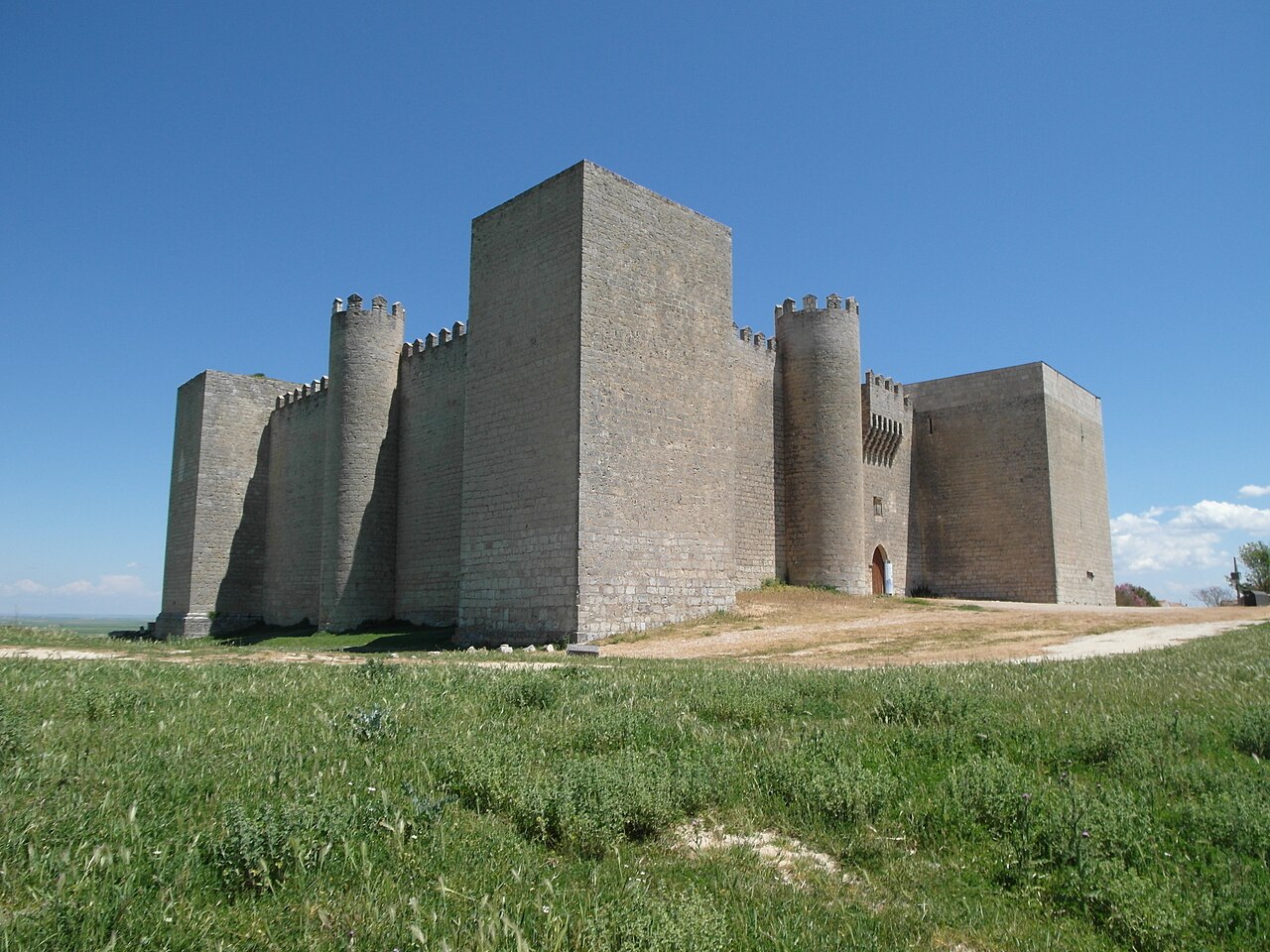
The castle complex comprises multiple fortified enclosures characterized by curved defensive walls and a series of towers constructed primarily from ashlar stone blocks. Its architectural evolution spans several centuries, from the 12th to the 16th century, reflecting changing military technologies and defensive needs.
Outer defenses and entrance
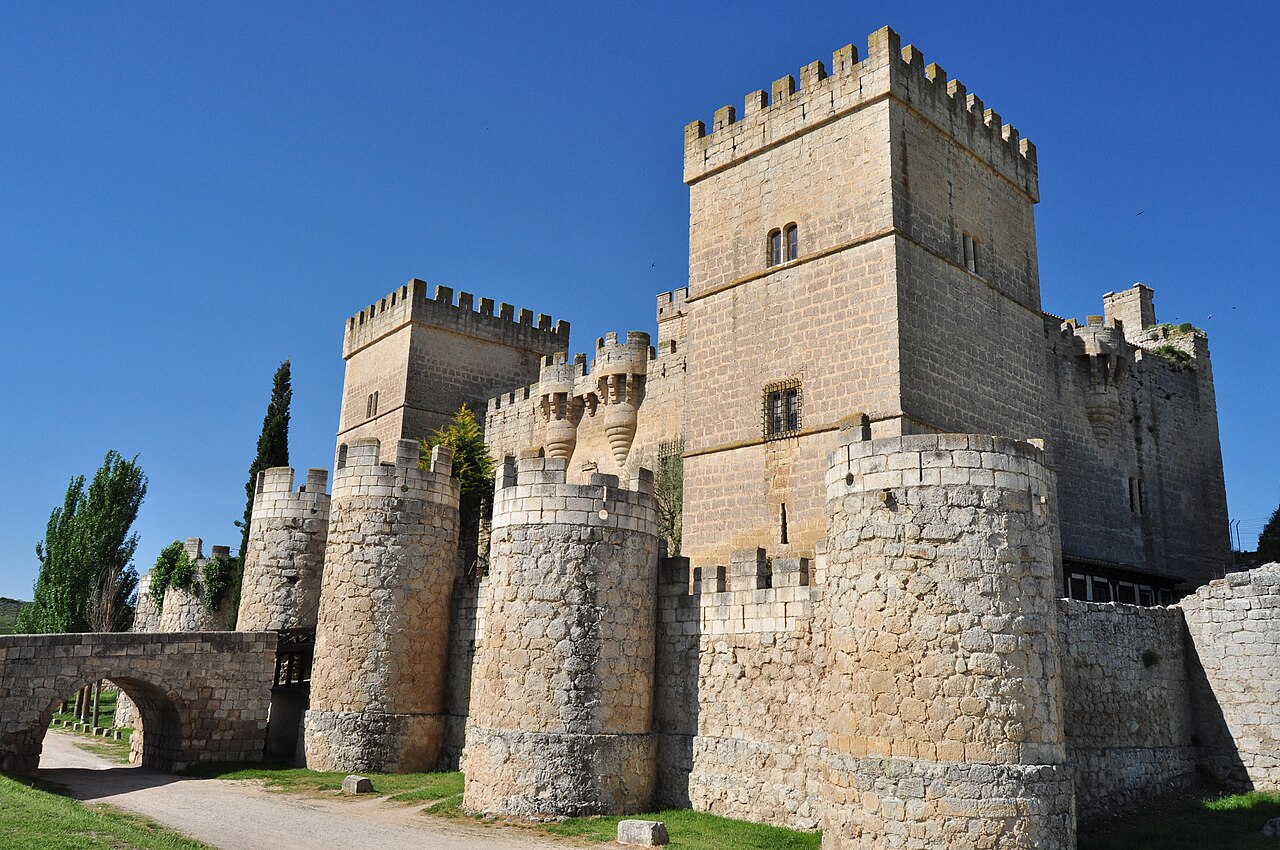
The first enclosure is defined by a curved wall reinforced by several towers, originally topped with decorative battlements. Access is granted through a pointed arch gateway leading into a small courtyard that housed guardhouses and was protected by an earth embankment. A narrow passage connects this area to a second gate embedded in a curtain wall, creating a secondary enclosure.
Secondary wall and main courtyard
This secondary curtain wall features a large stretch topped with corbels—stone supports that once held projecting defensive platforms—and is flanked by two battlement-topped cylindrical towers. Between these towers, a lowered archway provides access to the main courtyard, also known as the plaza de armas, which served as the fortress’s central gathering and defensive space.
The keep and internal structures
The dominant feature of the main courtyard is the keep or torre del homenaje, the tallest tower in the complex. It is distinguished by a Byzantine-style window adorned with slender columns and intricately carved capitals framing a semicircular arch, an architectural influence likely introduced by Crusaders. The keep’s entrance consists of an elliptical vaulted passage with two gates: the first secured by a heavy iron grille with thick bars, and the second by a large portcullis, a heavy gate that could be lowered to prevent entry.
Inside, the keep contains three stacked galleries. The lowest gallery, supported by robust Gothic arches resting on massive piers reminiscent of Saxon design, likely served as storage, detention cells, and service areas. The middle gallery housed soldiers stationed within the tower, while the highest gallery was reserved for the castellans and their attendants. Architectural modifications in these upper rooms date to the 15th and 16th centuries, reflecting military upgrades during that period.
Military adaptations and artillery features
A notable late medieval addition is the so-called "gunpowder tower", an elliptical vaulted chamber equipped with a hatch to raise supplies and munitions directly to the battlements above. This feature illustrates the castle’s adaptation to the introduction of artillery in the 16th century.
The castle’s curtain walls, numbering four in total, are supported by eight large, tall square towers. These towers once featured sturdy corbels supporting elegant battlements, similar to those on the cylindrical towers and nearby town fortifications. The outer walls are pierced with various types of loopholes and embrasures, designed to allow defenders to fire weapons such as crossbows, arquebuses, muskets, and early artillery while remaining protected. The discovery of two large cannons among the ruins confirms the castle’s use of artillery technology during the early modern period.
Throughout its history, the castle’s thick walls were periodically reinforced, sometimes doubling the original masonry thickness, indicating phases of intense fortification. In later years, parts of the structure were repurposed for non-military functions, including storage and cheese curing, activities that continued until the early 21st century.
Current condition and access
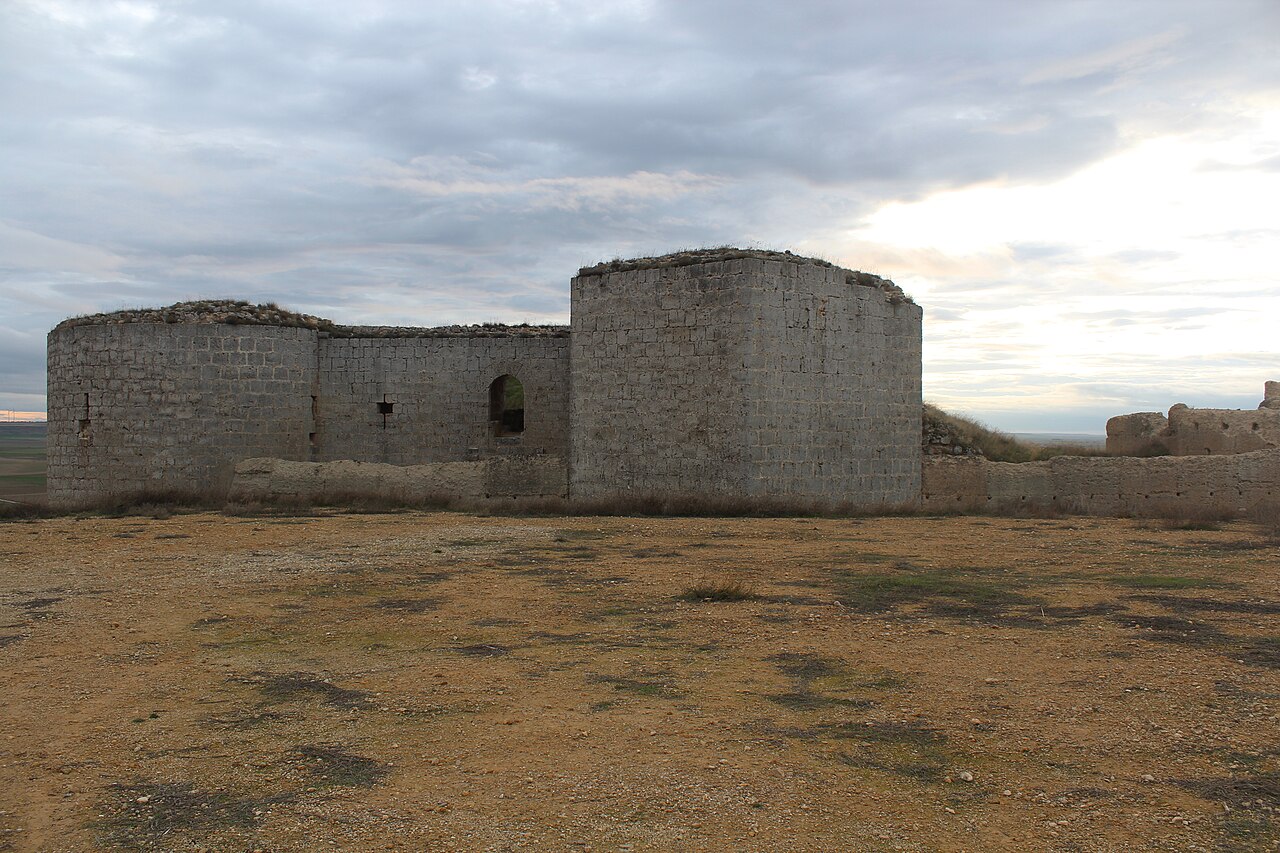
Today, the Castle of Villalba de los Alcores is partially in ruins but remains a powerful testament to its long military and noble history. While the exterior is accessible to visitors, the interior is closed due to the fragile state of the remaining structures. The castle is privately owned, and its surviving elements offer valuable insight into the evolution of medieval fortifications and noble residences in Spain.
Frequently asked questions (FAQ)
- How do I get to the Castle of Villalba de los Alcores?
- The Castle of Villalba de los Alcores is located in the province of Valladolid, Spain. You can reach it by car via the A-62 motorway, with ample parking available nearby. Public transport options are limited, so driving or taking a taxi is recommended for convenience.
- What is the historical significance of the Castle of Villalba de los Alcores?
- The Castle of Villalba de los Alcores dates back to the 15th century and served as a strategic military fortress during various conflicts in Spain. Its architecture reflects the defensive style of the period, showcasing the historical importance of the site in regional power struggles. Today, it stands as a testament to the rich history of the area.
- When was the Castle of Villalba de los Alcores built?
- The construction of the Castle of Villalba de los Alcores began in the late 15th century, around 1470. It was built during a time of frequent territorial disputes, which necessitated strong fortifications in the region. The castle has since endured various renovations but retains many elements from its original structure.
- Can I visit the Castle of Villalba de los Alcores?
- Yes, visitors are welcome to explore the Castle of Villalba de los Alcores. Guided tours are available to provide insights into its history and architecture. It's advisable to check in advance for any special events or restrictions that may affect accessibility.
- Is it possible to access the castle grounds for free?
- Access to the castle grounds is generally free; however, there may be a small fee for guided tours or specific events. It's best to verify the current policy before your visit. Enjoying the castle's exterior and surrounding views does not usually incur any charges.
- What are the opening hours for the Castle of Villalba de los Alcores?
- The opening hours for the Castle of Villalba de los Alcores vary depending on the season. Typically, it is open from 10 AM to 6 PM from Tuesday to Sunday, but it's recommended to check the official website for any seasonal changes or holiday hours before planning your visit.
- What is the best time to visit the Castle of Villalba de los Alcores?
- The best time to visit the Castle of Villalba de los Alcores is during the spring and early autumn when the weather is mild and pleasant. Visiting during these seasons allows for a comfortable experience while exploring the castle and its surroundings. Additionally, fewer tourists may be present compared to the peak summer months.
- Are there any nearby attractions to visit along with the castle?
- Yes, there are several nearby attractions worth visiting, including the charming village of Villalba de los Alcores and other historical sites in the Valladolid region. You can also explore local parks and hiking trails that offer beautiful views of the landscape. These additions can enhance your overall experience in the area.
- What are the ticket prices for the Castle of Villalba de los Alcores?
- Ticket prices for the Castle of Villalba de los Alcores vary depending on whether you opt for a guided tour or self-exploration. Generally, entrance fees are modest, making it an accessible destination for all visitors. It's advisable to check the castle's official website or contact them directly for the most current pricing information.
Information
Loading map...
Visitor reviews
No reviews yet. Been here? Write the first review and help other travelers!
Write the first reviewVisited this castle? Share your experience
Your review helps other travelers and adds first-hand knowledge to our encyclopedia.