Montalto Dora Castle
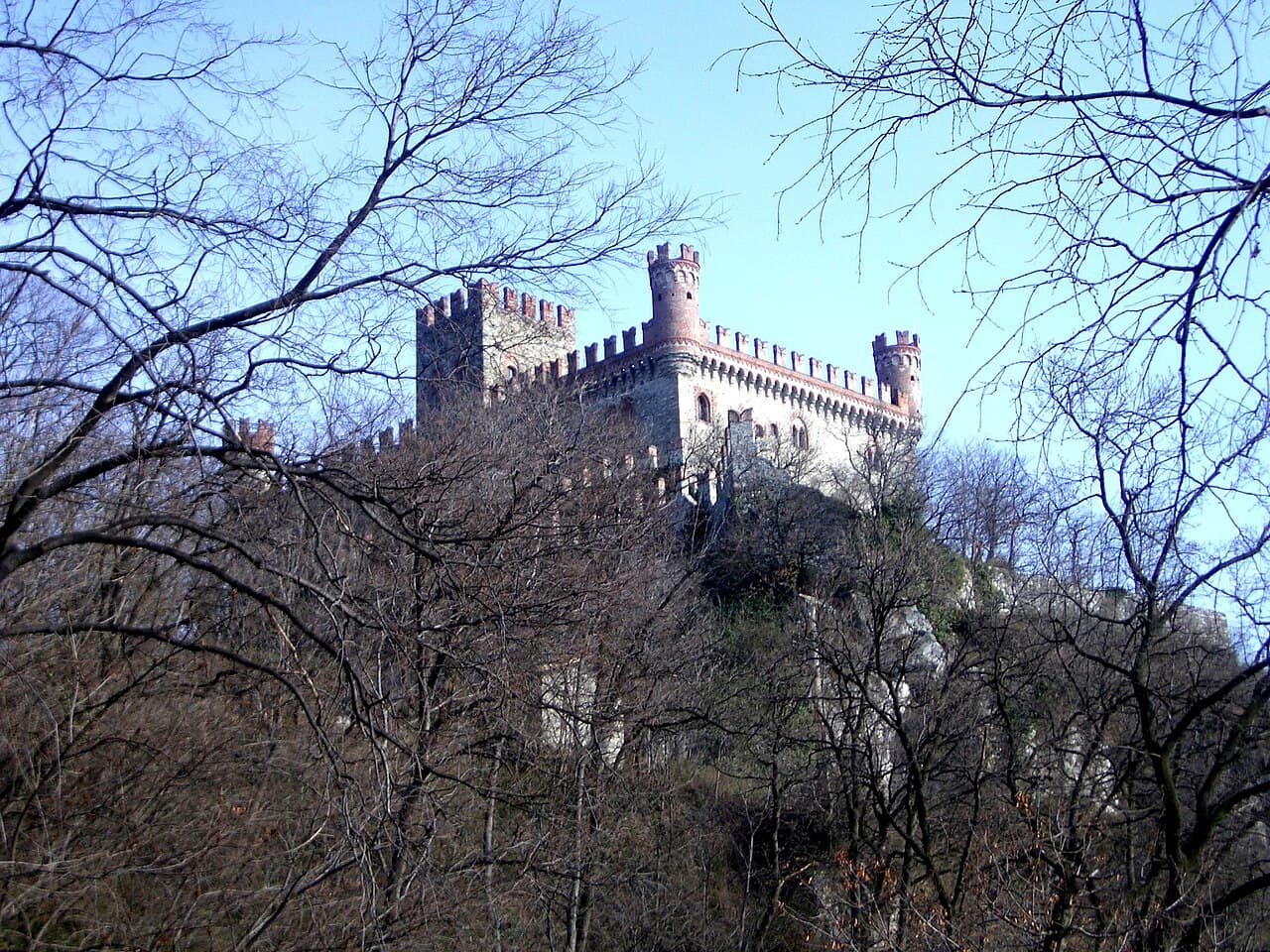
Montalto Dora Castle stands as a remarkable example of a high medieval hill castle in the Piemonte region of Italy. Constructed in the first half of the 12th century, it was initially documented around 1140 under the name castrum monsalti. Strategically located atop Monte Crovero at 405 meters above sea level, the castle overlooks the Lake Pistono and the surrounding Ivrea morainic amphitheater, commanding views over the valley and controlling access to important routes such as the Via Francigena, a major medieval pilgrimage path.
The castle’s original function was primarily defensive, featuring an initial tower and curtain wall that formed a fortified stronghold. Over the centuries, especially during the 14th and 15th centuries, the structure underwent significant expansions and fortification enhancements. These modifications aimed to strengthen its defensive capabilities in response to evolving military technologies and regional conflicts. The castle’s layout today reflects these medieval developments, showcasing a robust irregular quadrangular plan enclosed by two concentric defensive walls.
Historical ownership and political significance
Throughout its history, Montalto Dora Castle was held by various noble families and was closely tied to regional political powers. Initially, it fell under the jurisdiction of the Bishopric of Ivrea, which granted the entire valley as a fief to the lords of Settimo Vittone in the 12th century. By the 14th century, the castle became part of the possessions of the House of Savoy, a powerful dynasty that played a crucial role in shaping the region’s history. In 1403, the Savoy granted the castle as a fief to the de Jordano family of Bard, with the counts Enrico continuing construction and fortification efforts.
The castle’s strategic importance is underscored by its involvement in military conflicts, including the 1641 siege of Ivrea during the war between the Duchy of Savoy and French forces led by the Marquis d'Harcourt. This siege resulted in the dismantling of the castle’s interior, although the imposing external walls largely survived, preserving the fortress’s commanding presence.
Architectural features and layout
Defensive structures
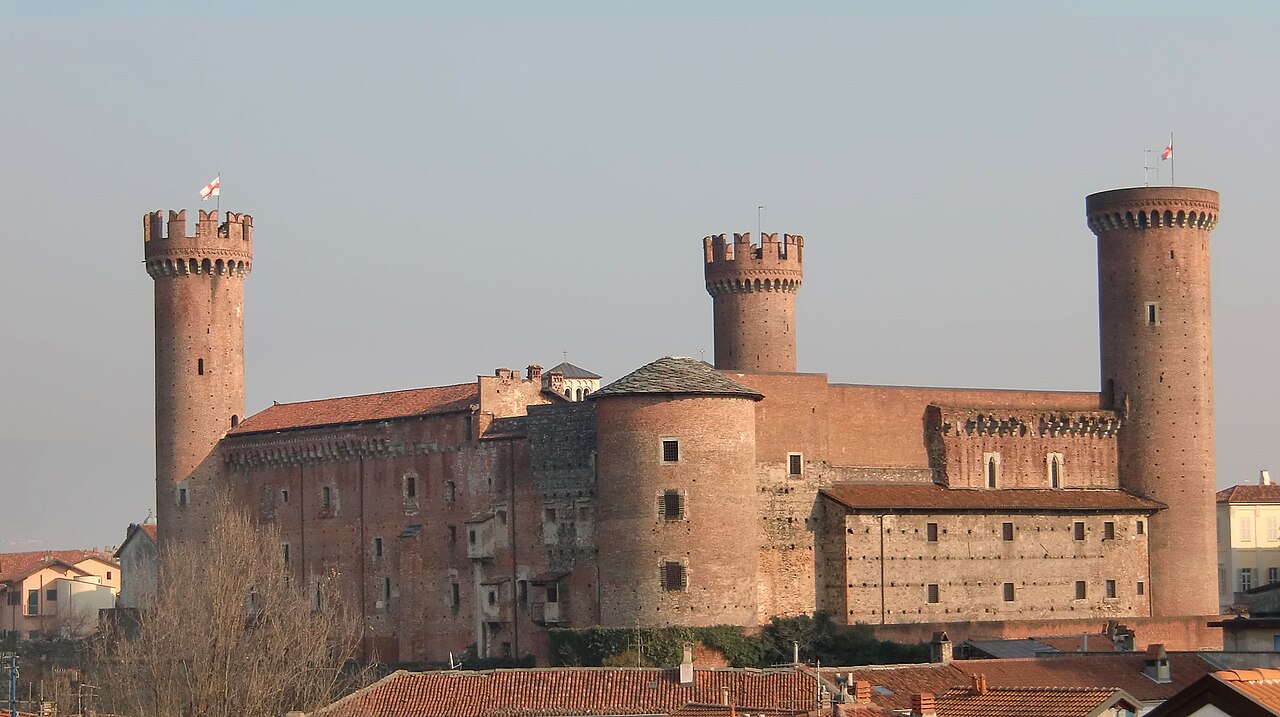
Montalto Dora Castle is characterized by its formidable defensive architecture. The castle is enclosed by two concentric walls, with the inner wall reaching approximately 14 meters in height and extending along a perimeter between 150 and 175 meters. This wall is crowned by 142 crenellations—merlons that provided cover and firing positions for defenders—and includes a patrol walkway about 160 meters long, allowing guards to move swiftly along the battlements.
The fortress is anchored by four round towers at its corners, enhancing its defensive strength and providing vantage points for surveillance and archery. The northern side features a large square keep (mastio), which served as the castle’s last line of defense and a secure refuge during attacks.
Internal structures and chapel
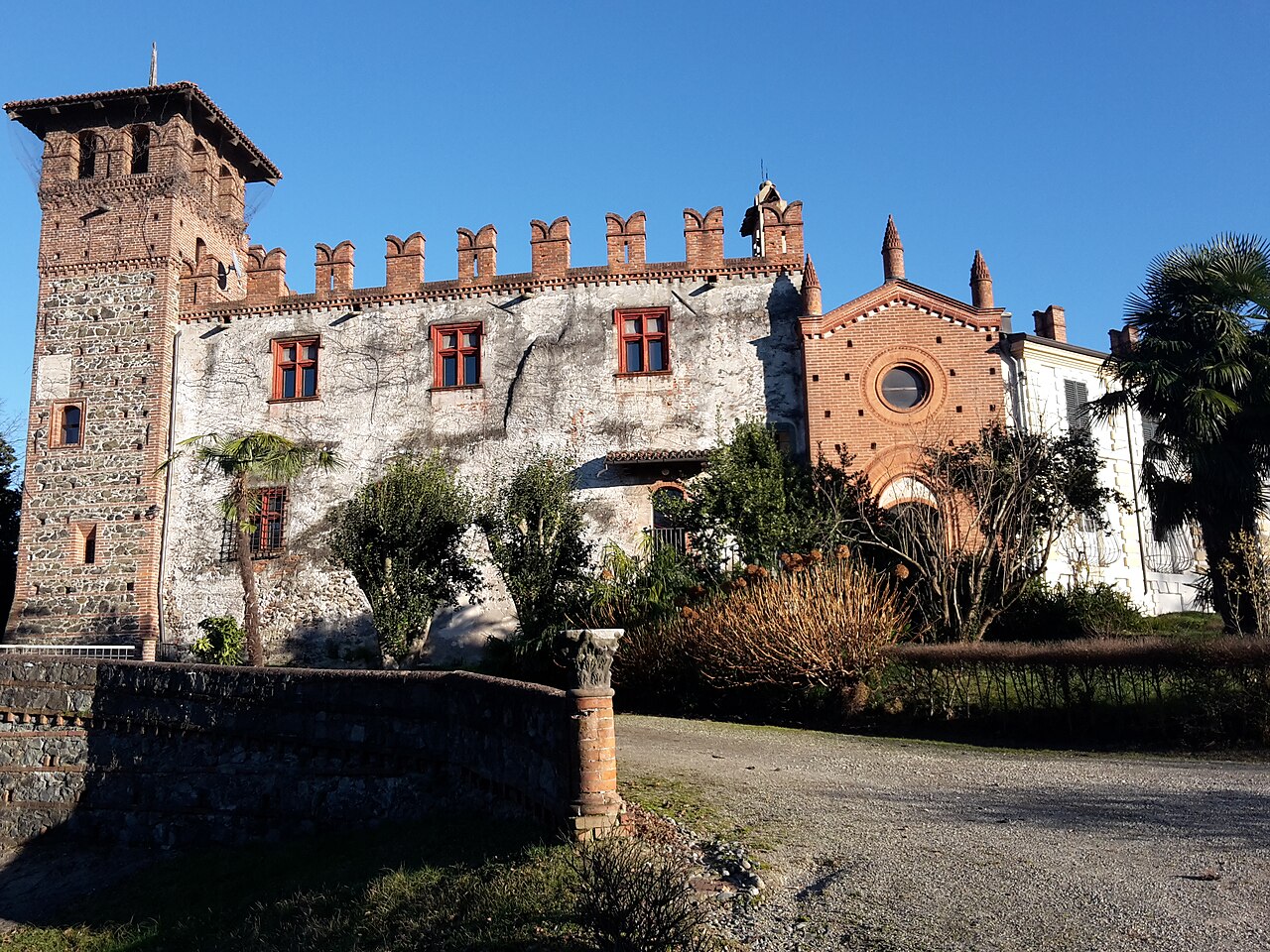
Within the castle walls lies a courtyard containing several important buildings. A low-lying structure likely served as a guard post, offering a protected position for sentries. Adjacent to this is a small castle chapel dedicated to Our Lady of Grace, known as the castrense chapel. This chapel is notable for its 15th-century frescoes attributed to the artist Giacomino da Ivrea. The frescoes include a depiction of Saint Christopher on the southern façade, revered as the protector of pilgrims on the Via Francigena, as well as images of female saints such as Saint Margaret, Saint Liberata with the infant saints Gervasius and Protasius, and Saint Lucy. Inside, a fresco of the Madonna nursing the Child adds to the chapel’s spiritual significance.
A well situated between the chapel and guard post ensured a reliable water supply, essential for sustaining the castle’s inhabitants during sieges and daily life.
Later history and restoration efforts
Following its military use, the castle changed hands several times. In the early 18th century, it came into the possession of the Vallesa family, who maintained ownership until the early 19th century. After the Vallesa lineage ended, the castle was acquired by Count Severino of the Casana barons, who initiated restoration and enhancement projects to preserve the fortress.
In the late 19th century, renowned architects Carlo Nigra and Alfredo d’Andrade, known for their work on the Borgo Medioevale in Turin, undertook comprehensive restoration efforts at Montalto Dora Castle. Their work not only conserved the castle but also influenced the design of other medieval revival projects in the region.
In the 20th century, the castle came under the ownership of the Allioni of Brondello family in 1963. Between 1965 and 1985, they carried out extensive restorations of the buildings within the walls and enhanced the surrounding parkland. Recent owners have continued functional restorations and improvements to both the castle’s interior and exterior spaces, as well as the park’s vegetation, ensuring the site remains a vibrant historical landmark.
Cultural significance and modern use
Montalto Dora Castle has served not only as a military fortress and noble residence but also as a cultural icon in the region. Its architectural features and historical legacy have made it a valuable heritage site, attracting scholars, tourists, and film productions. The castle notably appeared in the 2012 film Dracula 3D directed by Dario Argento and the 2006 RAI television adaptation of La freccia nera, showcasing its atmospheric medieval ambiance.
As of 2024, the castle was reported to be on the market, drawing international interest, including from American actor Johnny Depp. This attention highlights the castle’s enduring appeal as a symbol of medieval architecture and Italian history.
Visitor information and accessibility
Visitors to Montalto Dora Castle can explore its extensive defensive walls, towers, and the inner courtyard, including the chapel with its remarkable frescoes. The castle’s elevated position offers panoramic views of the Piemonte landscape and the Lake Pistono. While the castle remains a private property, restoration efforts have made many areas accessible for cultural events and guided tours. Visitors are encouraged to check local tourism resources for current opening hours and ticket information.
Frequently asked questions (FAQ)
- How do I get to Montalto Dora Castle?
- Montalto Dora Castle is accessible by car or public transport. If you're traveling by train, the nearest station is Ivrea, from where you can take a local bus or taxi to reach the castle.
- What is the historical significance of Montalto Dora Castle?
- Montalto Dora Castle dates back to the 12th century and played a crucial role in the defense of the region. It was strategically positioned to control the surrounding valleys and served as a residence for various noble families throughout its history.
- When was Montalto Dora Castle built?
- Construction of Montalto Dora Castle began in the 12th century, with significant modifications made in subsequent centuries. Its architecture reflects the military needs of the time as well as the evolving styles of medieval fortifications.
- Can I visit Montalto Dora Castle?
- Yes, Montalto Dora Castle is open to visitors. Guided tours are available, allowing you to explore its rich history and stunning architecture while learning from knowledgeable guides.
- Why is Montalto Dora Castle a popular tourist attraction?
- Montalto Dora Castle attracts visitors for its impressive architecture, panoramic views of the surrounding landscape, and rich historical background. The combination of scenic beauty and historical intrigue makes it a must-visit for history enthusiasts and travelers alike.
- Is it possible to access all areas of Montalto Dora Castle?
- While many areas of Montalto Dora Castle are accessible to visitors, some sections may be restricted due to preservation efforts. It’s best to check with the staff during your visit for the most up-to-date information on accessible areas.
- What are the opening hours for Montalto Dora Castle?
- Montalto Dora Castle is typically open to visitors from April to October, with varying hours depending on the day of the week. It's advisable to check the official website or contact the castle directly for the latest opening hours before your visit.
- What is the best time to visit Montalto Dora Castle?
- The best time to visit Montalto Dora Castle is during the spring and early autumn months when the weather is mild and pleasant. These seasons also offer fewer crowds, allowing for a more enjoyable experience.
- Are there any nearby attractions to visit while at Montalto Dora Castle?
- Yes, nearby attractions include the charming town of Ivrea, known for its historic architecture and vibrant culture. Additionally, the surrounding countryside offers beautiful hiking trails and stunning views of the Alpine landscape.
- What are the ticket prices for visiting Montalto Dora Castle?
- Ticket prices for Montalto Dora Castle are generally affordable, with discounts available for students and seniors. Family packages may also be offered, making it a great outing for visitors of all ages.
Photo gallery

Photo by Laurom•Public domain
Information
Website
Visit websiteSources & official resources
Verify the information above using these authoritative references.
Loading map...
Visitor reviews
No reviews yet. Been here? Write the first review and help other travelers!
Write the first reviewVisited this castle? Share your experience
Your review helps other travelers and adds first-hand knowledge to our encyclopedia.