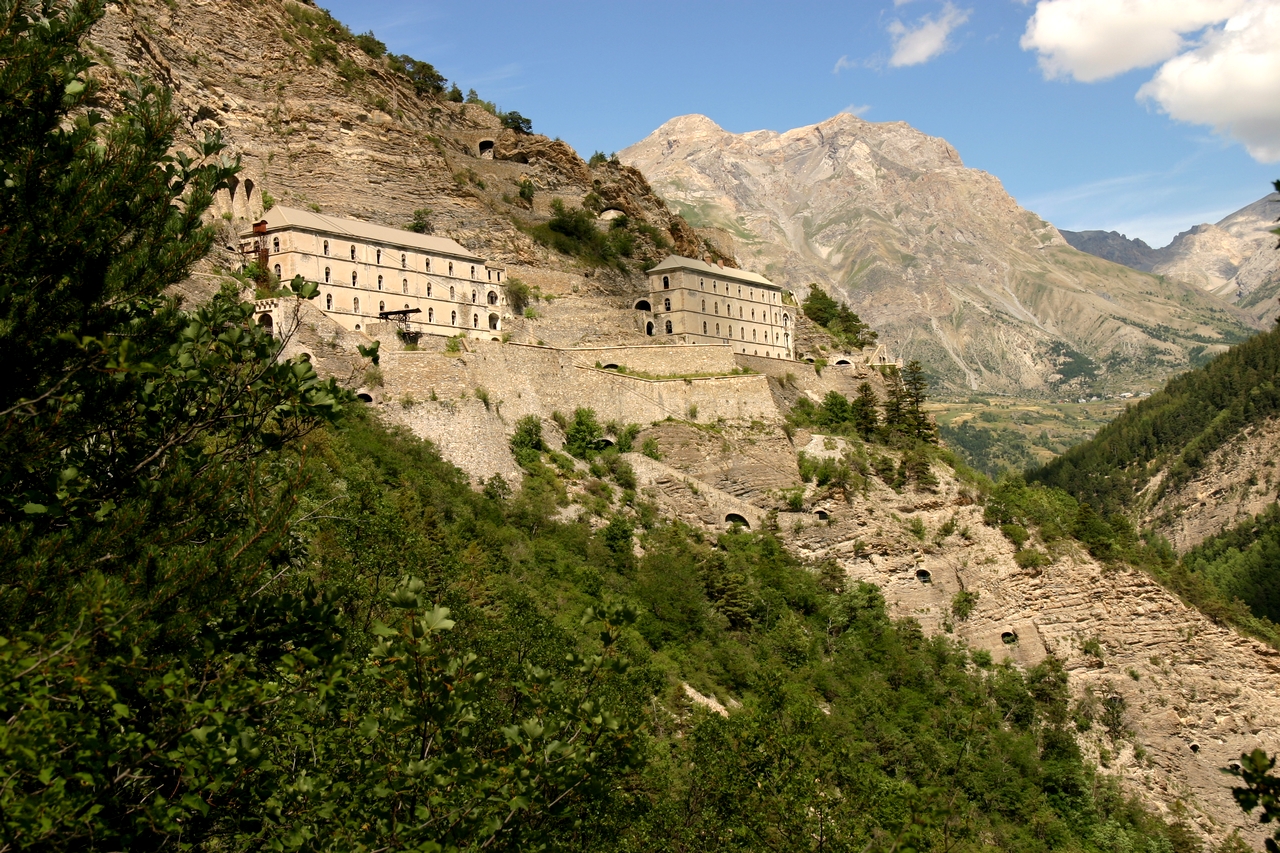
Mont-Dauphin Fortress
Mont-Dauphin fortress stands as a remarkable example of 17th-century military architecture designed by the renowned French military engineer Sébastien Le Prestre de Vauban. Constructed in 1692 during the Renaissance period, this fortress was strategically positioned on the Plateau de Mille-Aures in southeastern France to defend the frontier against invasions by the Duchy of Savoy. Its location atop a high, roughly quadrilateral hill with steep cliffs on three sides made it naturally defensible, requiring fortifications only on the most accessible northern approach.
Strategic location and initial construction
Following the Savoyard invasions of Provence in 1691 and 1692, King Louis XIV commissioned Vauban to strengthen France's border defenses. Vauban selected the Plateau de Mille-Aures because it overlooked the two main invasion routes used by the Savoyard forces. The site was previously uninhabited, allowing Vauban to design a fortress with an integrated town within its walls, a common practice in his fortification projects to support the garrison and civilian population.
The fortress's design features a bastioned trace with three arrow-headed bastions and two demi-lunes on the northern side, where the terrain was most accessible. To the south, where the site was protected by natural cliffs and steep slopes, Vauban planned smaller bastions and a single entrance protected by a demi-lune. This demi-lune remains today, slightly skewed from the wall due to later modifications in the 18th century.
Architectural features and fortification elements
Mont-Dauphin's fortifications exemplify Vauban's classic bastioned fortress style, optimized for defense and efficient use of terrain. The fortress includes:
- Arrow-headed bastions that provide overlapping fields of fire and eliminate blind spots.
- Demi-lunes (ravelins) that protect the main walls and gates from direct artillery fire.
- Deep ditches and revetted ramparts designed to impede attackers and absorb artillery impacts.
- Underground passages connecting outworks such as the lunette d'arçon, an advanced northern defense added in the 18th century.
- Barrack buildings constructed within the walls to house troops and support the fortress's garrison.
The fortress's construction faced challenges, notably the difficulty in sourcing sufficient stone to revet the ditches and ramparts, which delayed completion. Moreover, the diminishing threat from Savoy reduced the immediate strategic importance of Mont-Dauphin, although it was reinforced after a French defeat nearby in 1745.
Development and modifications in the 18th century
Throughout the 18th century, Mont-Dauphin underwent several enhancements. While ambitious plans for additional layers of defense drawn up in 1747 were never realized, the lunette d'arçon was constructed as an advanced work to strengthen the northern approach. This lunette is notable for its connection to the main fortress via an underground passage, allowing secure troop movements and supply lines during a siege.
The barracks within the fortress expanded over time, reflecting the continued military use of the site. Despite the reduced threat from Savoy, Mont-Dauphin remained a key defensive position in the region.
Preservation and heritage status
Today, Mont-Dauphin fortress is exceptionally well preserved, offering a clear view of Vauban's fortification principles and Renaissance military architecture. Its walls, bastions, gates, and internal structures remain largely intact, providing valuable insight into 17th and 18th-century fortress design.
In 2008, Mont-Dauphin was inscribed as a UNESCO World Heritage Site as part of the collective designation known as the Fortifications of Vauban. This recognition highlights its cultural and historical significance as part of France's military heritage and Vauban's enduring legacy.
Visiting Mont-Dauphin fortress
Visitors to Mont-Dauphin can explore the fortress's extensive ramparts, bastions, and the integrated town within the walls. The site offers panoramic views of the surrounding valleys and mountains, illustrating the strategic advantage of its location. Interpretive signage and guided tours provide detailed information about the fortress's history, architecture, and role in regional defense.
Mont-Dauphin remains a prime example of Vauban's military engineering and the evolution of fortress design during the Renaissance and early modern periods. Its preservation allows historians, architects, and tourists to appreciate the complexity and ingenuity of historic fortifications.
Frequently asked questions (FAQ)
- What is the historical significance of Mont-Dauphin Fortress?
- Mont-Dauphin Fortress was built in the 17th century under the orders of King Louis XIV as part of a network of fortifications to protect France's southeastern borders. Designed by the military engineer Vauban, it exemplifies the innovative military architecture of the period and has been recognized as a UNESCO World Heritage site.
- When was Mont-Dauphin Fortress constructed?
- Construction of Mont-Dauphin Fortress began in 1693 and was completed in 1698. It was strategically built to oversee and control the surrounding regions and to serve as a stronghold during times of conflict.
- Can I visit Mont-Dauphin Fortress year-round?
- Yes, Mont-Dauphin Fortress is open to visitors throughout the year, although specific opening hours may vary by season. It’s recommended to check the official website for the most current visitor information and availability.
- What are the opening hours for Mont-Dauphin Fortress?
- The fortress typically opens at 10 AM and closes at 6 PM during the tourist season, but hours may be reduced in the off-season. It’s advisable to verify the current hours before planning your visit.
- Is it possible to access Mont-Dauphin Fortress with public transportation?
- Yes, Mont-Dauphin Fortress is accessible via public transportation, including regional buses that connect to nearby towns. Be sure to check local schedules for the best routes to reach the fortress.
- What is the best time to visit Mont-Dauphin Fortress?
- The best time to visit Mont-Dauphin Fortress is during the spring and early autumn when the weather is mild and ideal for exploring the outdoor grounds. Additionally, these seasons often feature fewer tourists compared to the peak summer months.
- Are there any nearby attractions to explore while visiting Mont-Dauphin?
- Yes, nearby attractions include the scenic Queyras Regional Natural Park, which offers stunning landscapes and hiking opportunities. Additionally, the charming village of Mont-Dauphin itself is worth exploring, offering quaint shops and local cuisine.
- What are the ticket prices for Mont-Dauphin Fortress?
- Tickets for Mont-Dauphin Fortress are generally affordable, with discounts available for students, seniors, and children. It’s best to check the official website for the latest pricing and any special events that may have differing rates.
- How do I get guided tours at Mont-Dauphin Fortress?
- Guided tours of Mont-Dauphin Fortress are available and can be booked in advance through the official website or at the entrance. These tours provide in-depth insights into the fortress’s history and architecture, making for an enriching experience.
Information
Website
Visit websiteSources & official resources
Verify the information above using these authoritative references.
Loading map...
Visitor reviews
No reviews yet. Been here? Write the first review and help other travelers!
Write the first reviewVisited this castle? Share your experience
Your review helps other travelers and adds first-hand knowledge to our encyclopedia.