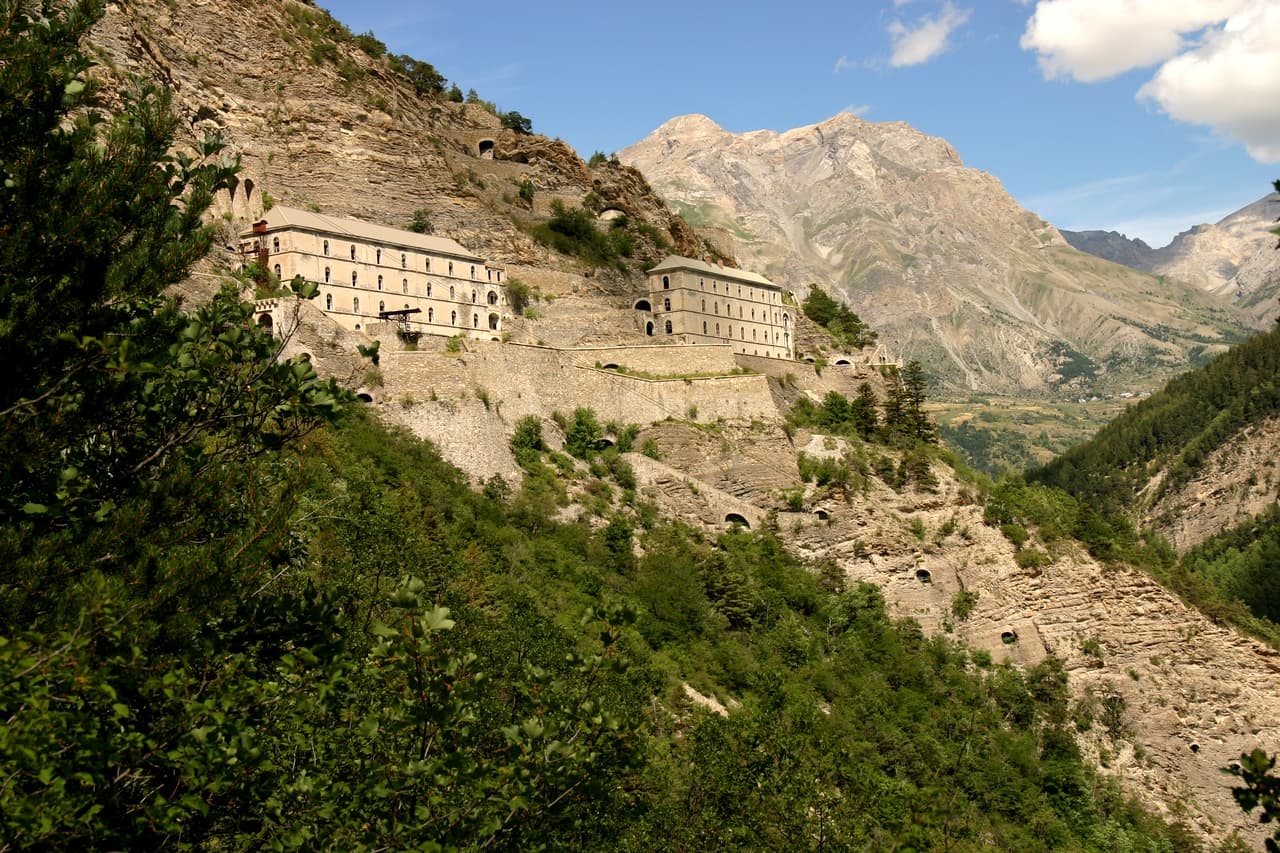
Fort de Tournoux
Fort de Tournoux is a remarkable bastioned fortress complex located in the Ubaye Valley of the French Alps, near the village of La Condamine-Châtelard. Constructed beginning in 1843 and developed through the early 20th century, the fortification was part of France's strategic military efforts to defend its southeastern borders against potential invasions from Italy and the former Duchy of Savoy. The fort’s design and scale earned it the nickname the "Military Versailles of the 19th century", a testament to its imposing presence and complex layout.
Historical context and strategic importance
During the 19th century, France faced geopolitical tensions with neighboring states, particularly with the Kingdom of Italy after its unification in 1861 and the annexation of Savoy to France in 1860. The mountainous terrain of the Ubaye Valley was a critical defensive line. The French military sought to establish a stronghold that could control the valley's access routes and withstand artillery bombardment, leading to the construction of Fort de Tournoux.
The fort was part of a broader network of Alpine fortifications designed to protect France’s eastern frontiers, complementing the famous Maginot Line defenses constructed later in the 20th century. Its location on a steep mountainside allowed it to dominate the valley and control key roads and passes.
Architectural design and fortification features
Fort de Tournoux is a complex ensemble of interconnected fortifications, including multiple batteries, defensive walls, and living quarters. The fort’s layout resembles a vertical village clinging to the mountain, with structures built on several levels connected by stairways and tunnels. This terraced design maximizes the use of the rugged terrain for defense and observation.
The fortifications include thick stone walls reinforced with concrete, bastions equipped with artillery emplacements, and defensive ditches. The complex also features underground galleries and storage rooms for ammunition and supplies, allowing the garrison to withstand prolonged sieges.
The architectural style reflects the 19th-century military engineering principles, emphasizing functionality and robustness over aesthetic considerations. The fort’s appearance is often compared to a Tibetan monastery due to its tiered construction and remote mountain setting.
Defensive structures and artillery
The fort’s batteries were designed to house heavy artillery pieces capable of covering the approaches to the Ubaye Valley. These included muzzle-loading and later breech-loading cannons, positioned to provide overlapping fields of fire. The bastions allowed defenders to fire along the walls, preventing attackers from finding blind spots.
Additional defensive features included caponiers and counterscarp galleries, which enabled infantry to defend the fort’s ditch and prevent enemy sappers from undermining the walls.
Construction phases and evolution
The initial construction phase began in 1843, focusing on establishing the main fort structure and essential defensive works. Over the following decades, the fort was expanded with additional batteries and modernized to incorporate advances in artillery technology and fortification methods.
By the early 20th century, Fort de Tournoux had become a sophisticated military installation capable of housing a sizeable garrison and artillery force. Its layered defenses and strategic position made it a formidable obstacle in the event of an invasion.
Military use and historical significance
Throughout its operational history, Fort de Tournoux served as a key defensive position during periods of tension between France and Italy. While it never saw significant combat, the fort was maintained as a deterrent and a symbol of French military preparedness in the Alps.
During World War II, the fort was briefly involved in the conflict as the region saw fighting between French and Italian forces. Its strategic location continued to be valued, although advances in warfare eventually rendered such static fortifications less effective.
Current condition and heritage status
Today, Fort de Tournoux is classified as a well-preserved bastioned fortress. Many of its structures remain intact, including the main fort, batteries, and connecting galleries. The site is accessible to visitors who can explore its extensive network of tunnels, walls, and defensive works.
The fort is recognized for its historical and architectural significance as an example of 19th-century military engineering adapted to mountainous terrain. It attracts historians, military enthusiasts, and tourists interested in Alpine fortifications and French military history.
Visiting Fort de Tournoux
The fort is located near La Condamine-Châtelard in the Provence-Alpes-Côte d'Azur region of France. Visitors can explore the site on guided tours that explain the fort’s history, architecture, and role in regional defense. The rugged mountain setting offers scenic views of the Ubaye Valley and surrounding Alps.
Frequently asked questions (FAQ)
- What is the historical significance of Fort de Tournoux?
- Fort de Tournoux was built in the 19th century as part of France's defensive fortifications. It played a crucial role in protecting the region during various military conflicts, showcasing the strategic importance of the Alps. Today, it stands as a testament to military architecture and the history of the area.
- When was Fort de Tournoux constructed?
- Construction of Fort de Tournoux began in 1878 and was completed in 1884. This fortification was part of a series of forts designed to defend the French borders in the Alpine region. Its strategic location and robust design reflect the military engineering of the time.
- Can I visit Fort de Tournoux?
- Yes, Fort de Tournoux is open to visitors, offering guided tours that provide insight into its history and architecture. However, it is advisable to check the official website or contact local tourism offices for the latest visiting information and any seasonal restrictions.
- What are the opening hours for Fort de Tournoux?
- Fort de Tournoux typically opens from late spring to early autumn, with specific hours varying by day. Generally, it is open from 10 AM to 5 PM. Always verify current hours before planning your visit, as they may change seasonally.
- Is it possible to access Fort de Tournoux by public transport?
- Accessing Fort de Tournoux via public transport can be challenging due to its remote location. Visitors are encouraged to check local bus services or consider driving to ensure convenient access. Alternatively, guided tours might offer transportation as part of their package.
- What is the best time to visit Fort de Tournoux?
- The best time to visit Fort de Tournoux is during the summer months, from June to September, when the weather is typically mild and more favorable for exploring. Additionally, this period coincides with the fort's operating season, allowing visitors to fully experience the site.
- Are there any nearby attractions to Fort de Tournoux?
- Yes, the area surrounding Fort de Tournoux offers several attractions, including picturesque hiking trails and charming villages. Visitors can explore the natural beauty of the Alps or visit other historical sites in the region. This makes it an excellent base for a day of exploration.
- What are the ticket prices for visiting Fort de Tournoux?
- Ticket prices for Fort de Tournoux are generally affordable, with discounts available for children, students, and seniors. Admission fees contribute to the preservation of the site and its facilities. It is recommended to check the official website for the most current pricing details before your visit.

Information
Current owner
Municipality
Loading map...
Visitor reviews
No reviews yet. Been here? Write the first review and help other travelers!
Write the first reviewVisited this castle? Share your experience
Your review helps other travelers and adds first-hand knowledge to our encyclopedia.



