Monsanto Castle
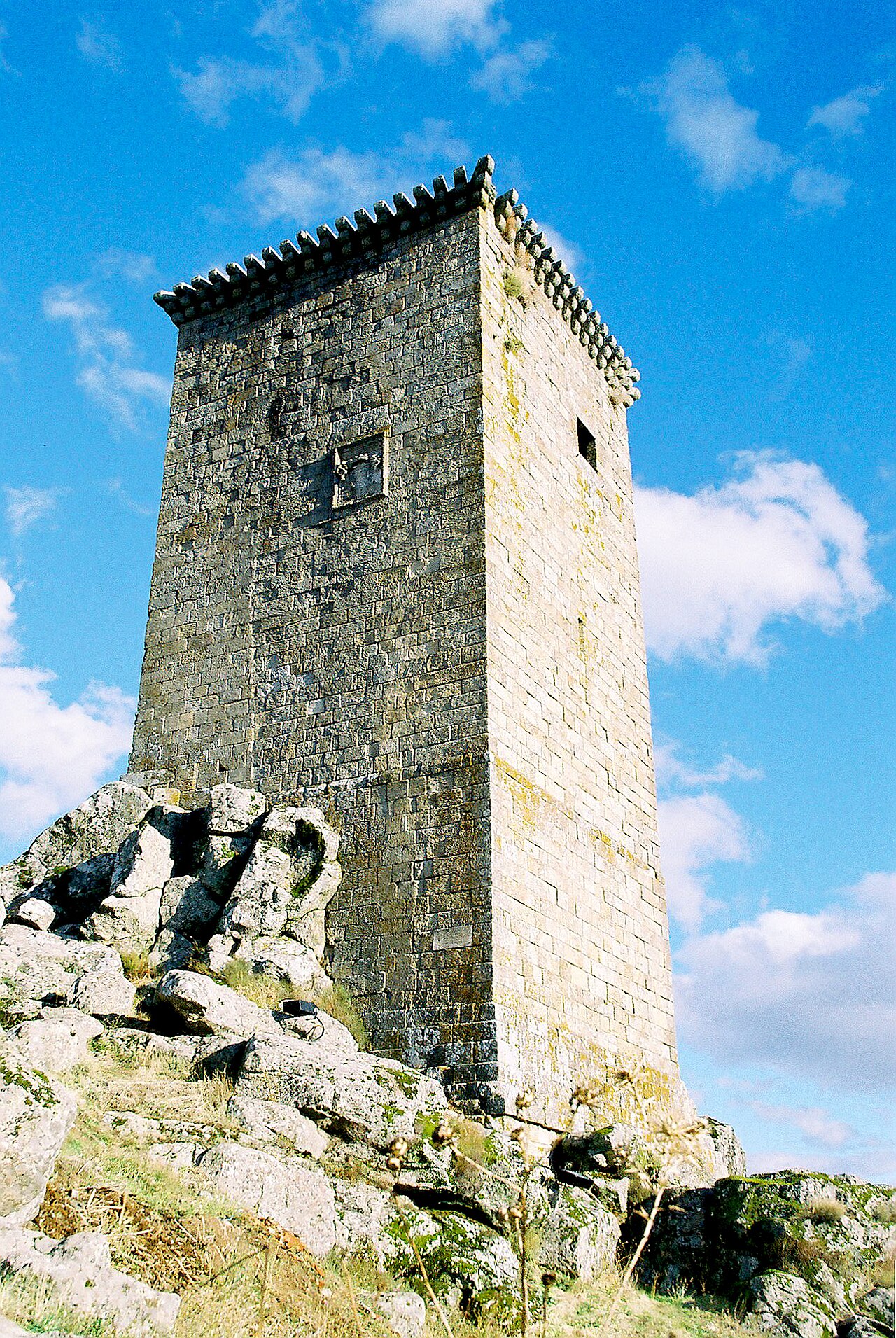
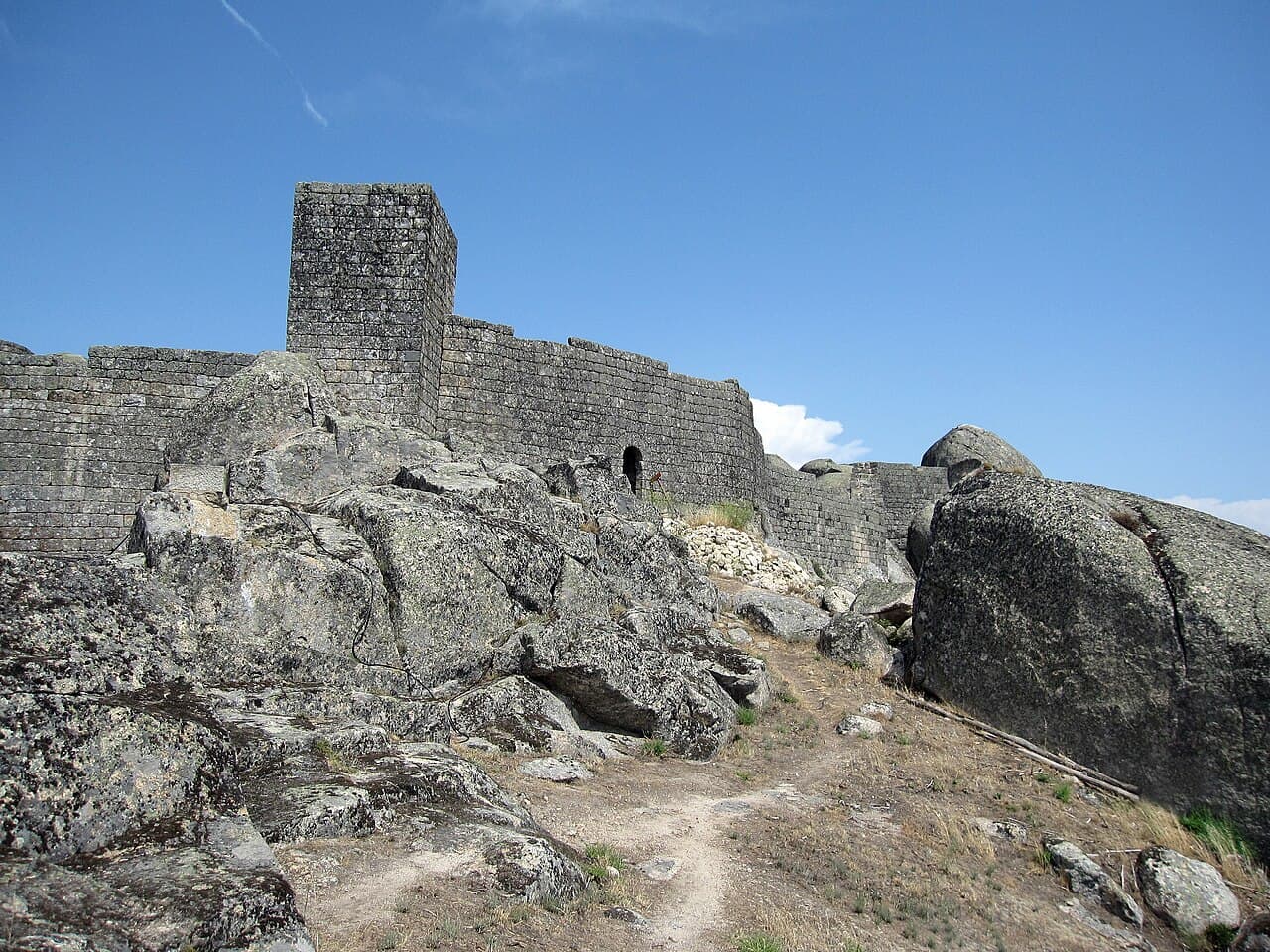
Monsanto Castle stands as a majestic hilltop fortress in the municipality of Idanha-a-Nova, within the Castelo Branco region of Portugal. Perched atop a granite hill rising approximately 758 to 785 meters above sea level, the castle commands sweeping views over the surrounding valleys and mountain ranges such as Serra da Gardunha and Serra da Estrela. This strategic vantage point underscores its historical significance as a defensive stronghold through multiple centuries.
The site of Monsanto Castle likely hosted fortified settlements since prehistory, evidenced by rock-cut tombs and anthropomorphic graves nearby. Local legend attributes the initial establishment of a castro on the hilltop to the Roman praetor Lucius Aemilius Paullus in the 2nd century BCE, although no archaeological evidence confirms Roman military construction here. The hill was successively occupied by Visigoths and Arabs between the 5th and 11th centuries, reflecting its enduring strategic importance in the region.
Medieval origins and templar construction
The current stone fortress traces its origins to the high medieval period, specifically the 12th century. In 1171, King Afonso I of Portugal granted the area of Monsanto to D. Gualdim Pais, Master of the Knights Templar, who established the medieval castle as part of a defensive chain protecting the kingdom's borders against incursions from the Kingdom of León and the Almohad Caliphate. A year later, the castle passed to the Order of Santiago under legal proceedings, with commandership reserved for certain leaders. Royal charters, or forais, issued by Afonso Henriques in 1174 and confirmed by his successor Sancho I in 1190, formalized Monsanto's settlement and administrative status.
13th and 14th century expansions
During the 13th and 14th centuries, the castle underwent extensive rebuilding and enlargement under the reigns of Kings Dinis and Fernando. These works reflected the fortress's continued military and political significance. The castle's defenses were reinforced, and architectural features such as multiple towers, a keep, gates, and a cistern were established. The castle's layout adapted organically to the rugged terrain, resulting in an irregular polygonal plan with three successive lines of defensive walls.
Political turmoil and decline
During the Portuguese crisis of 1383–1385, Monsanto initially sided with Queen Beatrice but eventually aligned with John I, who emerged victorious. Following this period, the castle began to decline in military importance and fell into some disorder. However, in 1476, King Afonso V ordered reconstruction efforts including the addition of a barbican and reinforcement of the well's defenses, notably a large 15-meter chamber associated with the Castro family.
Early modern adaptations and military significance
By the early 16th century, detailed surveys such as those by Duarte de Armas for his Book of Fortresses documented Monsanto Castle's features, including two main gates, four towers, a keep, and a cistern. The Torre do Pião (lookout tower) was already in ruins by this time. The urban nucleus within the castle included the parishes of São Miguel and São Salvador, supported by an alcalde.
In the late 16th and 17th centuries, the castle was adapted to accommodate artillery warfare. Earthworks, batteries, and cannon emplacements were constructed, along with fortification walls protecting the surrounding colony. These modifications were part of broader military efforts during the Restoration War and subsequent conflicts.
Sieges and 18th-century fortifications
In 1704, during the War of Spanish Succession, Franco-Spanish forces under the Duke of Berwick captured Monsanto Castle, but it was soon liberated by Portuguese forces led by the Marquess of Minas. Following this, reconstruction of fortifications was ordered by William, Count of Schaumburg-Lippe, to strengthen defenses against future invasions. Similar alterations were made in 1801, including the construction of artillery slopes for cannon deployment.
19th-century military use and damage
Major Eusébio Furtado was responsible for installing a military garrison in 1813, undertaking significant works such as demolishing five towers to improve artillery platforms and building three batteries. However, in 1815, an explosion in the powder magazine caused partial destruction of the castle. Further damage occurred in 1831 when a cliff collapse destroyed an exterior wall. By this time, the Chapel of Santa Maria was already in ruins.
Architectural features and layout
The fortress comprises three walled courtyards enclosed by an outer irregular wall that surrounds two inner lines of walls. These walls feature staircases providing access to the adarve—a walkway along the battlements—which notably lacks merlons or crenellations. The main entrance, facing north, is a vaulted gateway flanked by a tower with a false door on its southern side.
Outside the main gate stands the Casa do Guarda (guardhouse), a rectangular chamber with an arched eastern door. Above the archway is an undeciphered inscription, flanked by a coat-of-arms and an armillary sphere, symbolizing Portugal's Age of Discoveries.
Four towers protrude externally from the curtain walls: two rectangular towers on the northern wall, one similar tower on the east, and a square tower on the south with stair access to the adarve. The Torre do Pião, a lookout tower outside the walls, stands on elevated ground overlooking the ruins of the Church of São Miguel; only its first course of stonework remains.
Within the enclosure is a cistern adjacent to a cliff, constructed with two full arches and lacking a cover. Nearby is a rectangular walled battery area with four cannon emplacements and two ramps, illustrating the castle's adaptation to artillery. An irregular oblong segment with a full-arched door integrates a square tower topped with a geodetic marker, indicating later surveying use.
Defensive structures beyond the castle
Additional fortifications in the nearby São Salvador neighborhood include the Gates of Santo António and Espírito Santo, a bulwark or artillery battery, and walls adjoining the Chapel of Santo António and the cemetery. The Gate of Santo António features a lintel doorway, three small openings, a royal coat-of-arms, and a small parapet. A square guard tower with a straight lintel door stands adjacent. The Gate of Espírito Santo has a full arch exterior and a straight lintel interior, flanked by two openings and an attached guard post.
Chapels and religious heritage
Within the castle walls stands the Chapel of Nossa Senhora do Castelo, with a rectangular plan consisting of two conjoined rectangular spaces. Its western façade is framed by Tuscan pilasters and features a hollowed arch doorway with protruding stones, topped by a gabled roofline with cornice. Small windows and simple doors appear on the side elevations.
Near the chapel are three trapezoidal tombs carved directly into granite and a group of anthropomorphic rock-cut graves, testifying to ancient funerary practices. The ruins of the Chapel of São João lie on the eastern side of the castle, identifiable by a finely crafted arch in good condition.
The Romanesque Church of São Miguel, now roofless and reduced to ruins, exhibits architectural remnants of two rectangular sections aligned longitudinally. Its west façade contains a full-arch entrance with four archivolts and features imposing towers with capitals carved in zoomorphic motifs. The northern wall has three arcosolia—arched burial niches—with decorative cornices adorned with spheres and geometric shapes, and a doorway combining a full arch outside with a straight lintel inside. The interior preserves vestiges including a rectangular altar, fragments of a baptismal font shaped like a chalice, column bases, and scattered granite pieces. A triumphal arch supported by posts carved with armillary spheres stands at the altar’s entrance. The church’s bell tower is set atop a granite cliff, with twin-arched openings.
Cultural significance and preservation
The castle is closely linked to the local Festa da Santa Cruz, a traditional festival commemorating a legendary siege where defenders cleverly used a calf and grain to simulate abundant provisions, successfully deterring besieging forces. This folklore highlights the castle's role not only as a military fortress but also as a symbol of resilience and community identity.
After the dissolution of Monsanto's municipality in 1853, the castle's military role diminished, though the 12th Infantry Regiment was stationed there from 1887. Restoration and archaeological efforts began in 1940, with substantial repairs and consolidation continuing through the mid-20th century and into the 1980s. The castle has been protected as a National Monument since 1948, ensuring the preservation of its rich historical and architectural heritage.
Today, Monsanto Castle remains an evocative ruin, its walls and towers bearing witness to centuries of Portuguese history. Its unique combination of medieval military architecture, early modern artillery adaptations, and religious structures provides valuable insight into the region's complex past. Visitors can explore the castle's extensive fortifications, chapels, and archaeological remains while enjoying panoramic views of the surrounding landscape.
Frequently asked questions (FAQ)
- What is the historical significance of Monsanto Castle?
- Monsanto Castle, located in Idanha-a-Nova, Portugal, is a remarkable example of medieval military architecture. Built during the 12th century, it played a crucial role in the defense against the Moors and is a symbol of Portuguese national identity.
- When was Monsanto Castle built?
- The construction of Monsanto Castle began in the 12th century during the Reconquista period, with significant developments continuing into the 13th century. Its strategic location on a rocky outcrop provided a vital defensive advantage in its early years.
- What are the opening hours for Monsanto Castle?
- Monsanto Castle is generally open to visitors from 9 AM to 7 PM during the spring and summer months, and from 9 AM to 5 PM in the fall and winter. However, it is advisable to check the official website for any seasonal changes or special holiday hours before your visit.
- Can I access Monsanto Castle with a wheelchair?
- The castle’s terrain presents challenges for wheelchair users due to its steep paths and uneven surfaces. While some areas may be accessible, it is recommended to contact the site in advance to understand the best options for visiting.
- What is the best time to visit Monsanto Castle?
- The best time to visit Monsanto Castle is during the spring (April to June) or autumn (September to October) when the weather is mild. These seasons also tend to be less crowded, allowing for a more enjoyable exploration of the castle and its surroundings.
- Are there any nearby attractions to visit while at Monsanto Castle?
- Yes, visitors can explore the charming village of Monsanto, known for its unique granite houses and stunning landscapes. Additionally, the beautiful natural park of Serra da Estrela and the ancient Roman ruins of Idanha-a-Velha are also nearby attractions worth visiting.
- How much are the ticket prices for Monsanto Castle?
- Admission to Monsanto Castle is typically free, allowing visitors to explore the grounds and enjoy panoramic views without any charge. However, for guided tours or special events, there may be a fee, so it’s advisable to check in advance.
Photo gallery

Information
Loading map...
Visitor reviews
No reviews yet. Been here? Write the first review and help other travelers!
Write the first reviewVisited this castle? Share your experience
Your review helps other travelers and adds first-hand knowledge to our encyclopedia.