Castle of Penha Garcia
The Castle of Penha Garcia stands as a remarkable testament to the layered history of Portugal's eastern frontier. Located in the municipality of Idanha-a-Nova, this hill castle occupies a strategic position on the southern slope of the Penha Garcia peak, part of the Ramiro mountain range within the Malcata mountain system. Overlooking the right bank of the Pônsul River valley, it commands extensive views across the plains toward the Feitoso valley and its dam, underscoring its historical role as a defensive stronghold guarding the borderlands.
The origins of the site predate the medieval fortress, tracing back to prehistoric times when it was established as a Neolithic fortified settlement, commonly referred to as a castro. This early occupation highlights the long-standing strategic importance of the location. Subsequently, the area came under Roman influence, likely due to the proximity of gold mining activities in the Pônsul River valley. Such mining operations persisted well into later periods, reflecting the region's economic as well as military significance.
Medieval construction and military significance
The construction of the medieval castle is attributed to the reign of King Sancho I of Portugal during the late 12th and early 13th centuries. This period was marked by the ongoing Reconquest of the Iberian Peninsula, with the castle serving as part of a comprehensive defensive network designed to protect the kingdom's eastern border from incursions by the neighboring Kingdom of León and to defend against southern Muslim forces. The castle's military purpose was thus deeply intertwined with the geopolitical conflicts of the era.
In 1220, King Afonso II granted control of the castle and its lands to the Order of Santiago, a prominent military-religious order charged with the defense and repopulation of frontier territories. This transfer underscored the strategic importance of Penha Garcia as a frontier fortress. Later, in 1256, the settlement received a Foral charter from King Afonso III, modeled after the administrative framework of Penamacor, which facilitated the development and governance of the area.
Ownership of the castle changed hands in 1303 when King Dinis transferred it to the Order of the Templars, represented by their leader Vasco Fernandes. The Templars were renowned for their military prowess and role in the defense of Christian territories. Following the dissolution of the Templars in the early 14th century, the castle passed to the Order of Christ, which continued the military and administrative functions in the region.
Later history and decline
During the 16th century, the castle returned to royal possession as the Crown consolidated control over the military orders. This era is notably marked by the castle's depiction in Duarte de Armas's Livro das Fortalezas around 1509, a significant historical record illustrating Portugal's fortifications. King Manuel I reaffirmed the settlement's status with a renewed Foral charter in 1510, emphasizing its continuing administrative importance.
From the 17th century onward, control shifted to secular nobility, specifically the Counts of São Vicente da Beira. The castle also functioned as a refuge for fugitives until Queen Maria I abolished this role in 1790. The dissolution of the municipality in 1836 marked the beginning of the castle's gradual decline, exacerbated by damage from treasure seekers over subsequent years. Although not officially classified as a protected heritage site, recent efforts have been made to stabilize and preserve the remaining structures.
Architectural features and remains
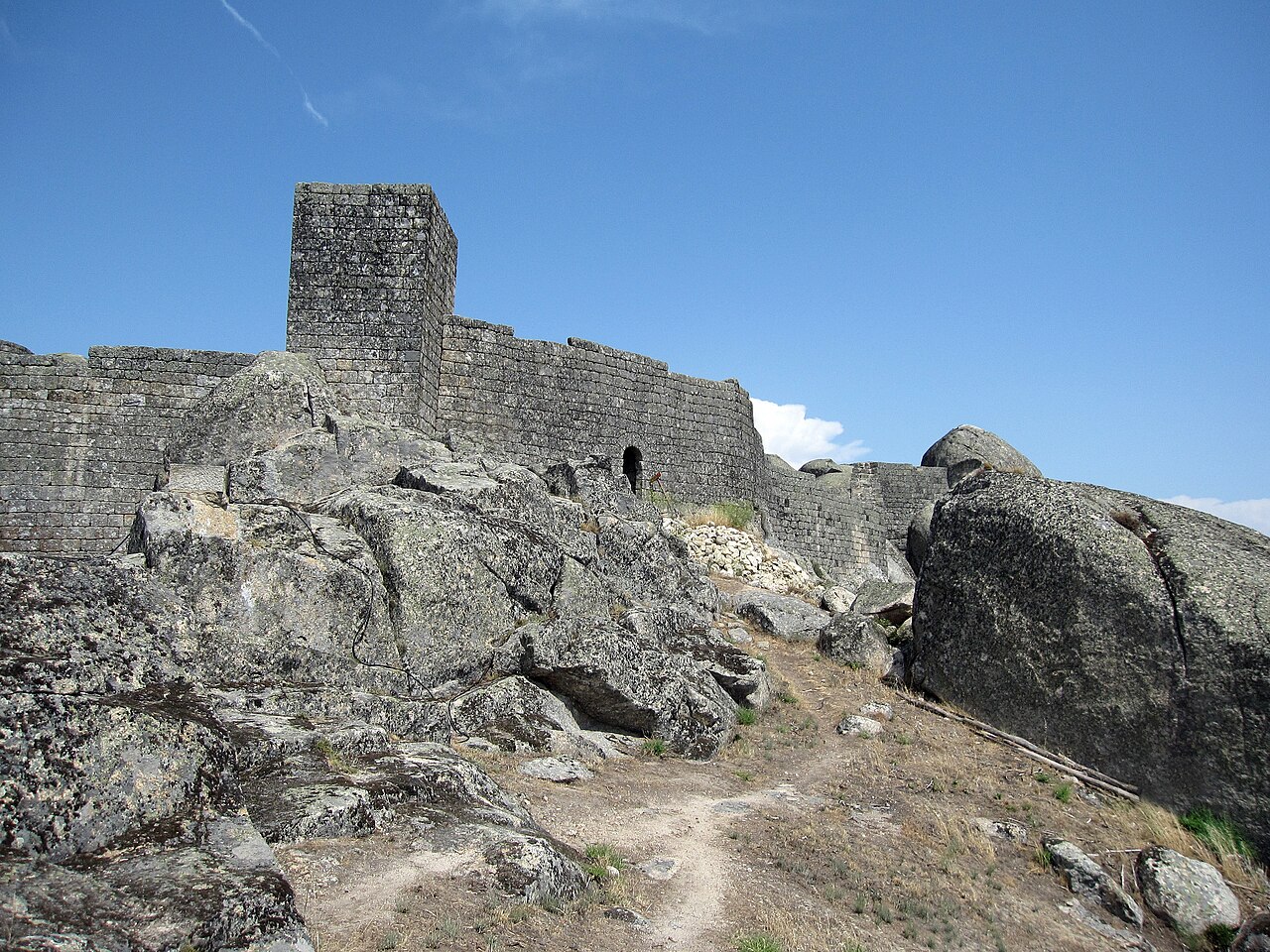
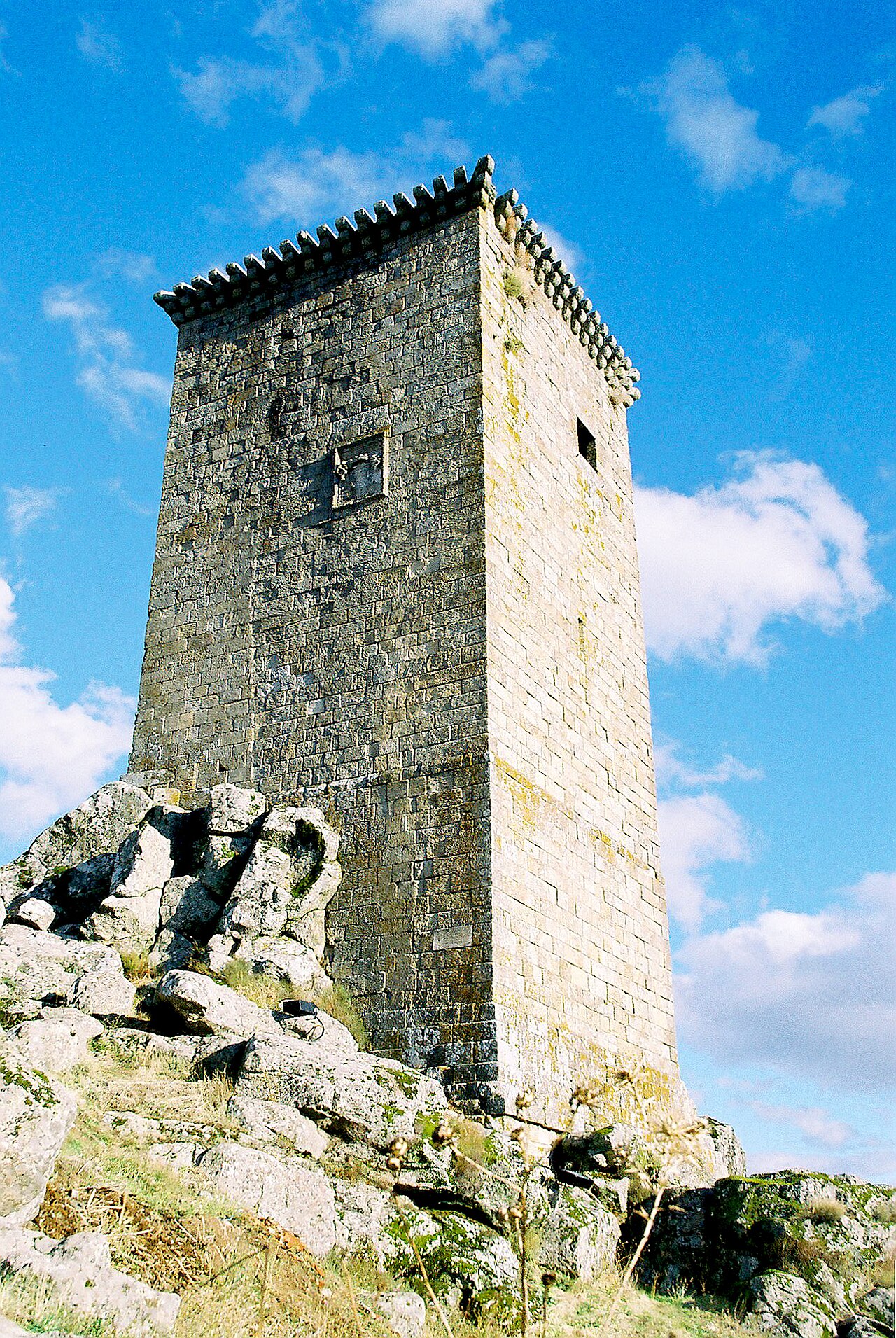
The castle's remains primarily consist of robust stone masonry walls typical of medieval Portuguese fortifications. These surviving sections of the medieval walls have been the focus of restoration work aimed at preserving their structural integrity. The walls once formed a defensive enclosure that leveraged the natural topography of the Ramiro mountain range for enhanced protection and surveillance.
While detailed decorative elements or inscriptions have not been documented, the fortress's design reflects practical military architecture of the High to Late Medieval period. The castle's elevated position provided commanding views essential for early warning and defense against potential invaders.
Within the adjacent village, a historic smoothbore cannon is preserved, representing later military technology and providing a tangible link to the castle's enduring martial legacy.
Local legends and cultural significance
Local tradition enriches the castle's historical narrative with the legend of D. Garcia, a castle governor or alcaide. According to the story, D. Garcia abducted D. Branca, the daughter of the governor of nearby Monsanto. As punishment, he was subjected to amputation of his left arm as a form of legal surety known as "penhor de justiça." This tale adds a layer of cultural heritage to the site, with the alcaide's spirit said to continue watching over the surrounding lands.
The castle's proximity to Monsanto hill links it to broader regional histories and folklore, underscoring its place within the cultural landscape of eastern Portugal. These oral histories complement the archaeological and architectural significance of the site, making the Castle of Penha Garcia an important landmark for both historical study and cultural tourism.
Visiting the castle today
Today, visitors to the Castle of Penha Garcia can explore the preserved sections of the medieval walls and enjoy panoramic views of the surrounding valleys and mountains. The site offers a unique opportunity to connect with Portugal's medieval frontier history and the enduring legacy of its military orders.
While the castle is not extensively developed as a tourist site, ongoing preservation efforts aim to maintain its remains and promote awareness of its historical importance. Nearby attractions include the picturesque village of Penha Garcia and the natural beauty of the Pônsul River valley, making it a worthwhile destination for those interested in history, architecture, and nature.
Frequently asked questions (FAQ)
- When was the castle of Penha Garcia built?
- The castle was constructed during the late 12th and early 13th centuries, primarily under the reign of King Sancho I of Portugal.
- What is the historical significance of the castle?
- The castle played a crucial role in defending Portugal's eastern border during the Reconquest, serving as a military stronghold against the Kingdom of León and southern Muslim forces.
- Can visitors see the remains of the castle today?
- Yes, visitors can explore the partially restored medieval stone walls and enjoy panoramic views of the surrounding valleys and mountains.
- What legends are associated with the castle?
- Local legend tells of D. Garcia, a castle governor who abducted D. Branca, leading to his punishment by amputation and a spirit said to watch over the area.
- Is the castle protected as a heritage site?
- The castle is not officially classified as a protected heritage site, but recent preservation efforts have been undertaken to stabilize and maintain its remains.
Information
Loading map...
Visitor reviews
No reviews yet. Been here? Write the first review and help other travelers!
Write the first reviewVisited this castle? Share your experience
Your review helps other travelers and adds first-hand knowledge to our encyclopedia.