Castle of Penamacor
The Castle of Penamacor stands as a prominent hill castle in the municipality of Penamacor, Portugal, embodying centuries of military, civic, and judicial history. Its origins date back to the late 12th century, constructed under the reign of King Sancho I as part of the medieval Portuguese kingdom's efforts to fortify its borders. Situated on a rocky hill approximately 573 meters above sea level, the castle overlooks the confluence of two small rivers feeding into the Pônsul River, strategically utilizing the natural terrain for defense.
The site was originally an ancient fortified settlement known as a castro, which King Sancho I granted to D. Gualdim Pais, the Master of the Knights Templar in Portugal, around 1189. This transfer marked the beginning of formal castle construction, which was closely linked to the issuance of a foral (royal charter) to Penamacor in 1199 and its confirmation in 1209, establishing the village's early administrative status within the kingdom.
Medieval foundations and early expansions
Initial fortifications likely consisted of stone walls adapted to the irregular oval shape of the hilltop, following the natural contours to maximize defensive advantage. The castle's early development reflected the strategic importance of Penamacor as a frontier settlement during the high medieval period.
During the reign of King Dinis around the turn of the 14th century, the castle underwent significant expansion. A second ring of walls was added to enclose the growing town, accompanied by the construction of a new keep tower and reinforced urban defenses. These enhancements strengthened Penamacor's military capacity amid ongoing regional conflicts.
Later medieval fortifications and governance
In the late 14th and early 15th centuries, under the reigns of King Ferdinand I and King John I, the castle's defenses were further bolstered with the addition of a barbican to protect the main entrance. This outer defensive structure improved security against siege tactics common in the period. The establishment of a couto (territorial jurisdiction) in 1379 highlighted the growing administrative importance of Penamacor.
The 15th century saw Penamacor's elevation in status when King Afonso V created a countship, appointing D. Lopo de Albuquerque as its first count. This noble title underscored the castle's role as a center of governance and military power.
Architectural highlights of the keep tower
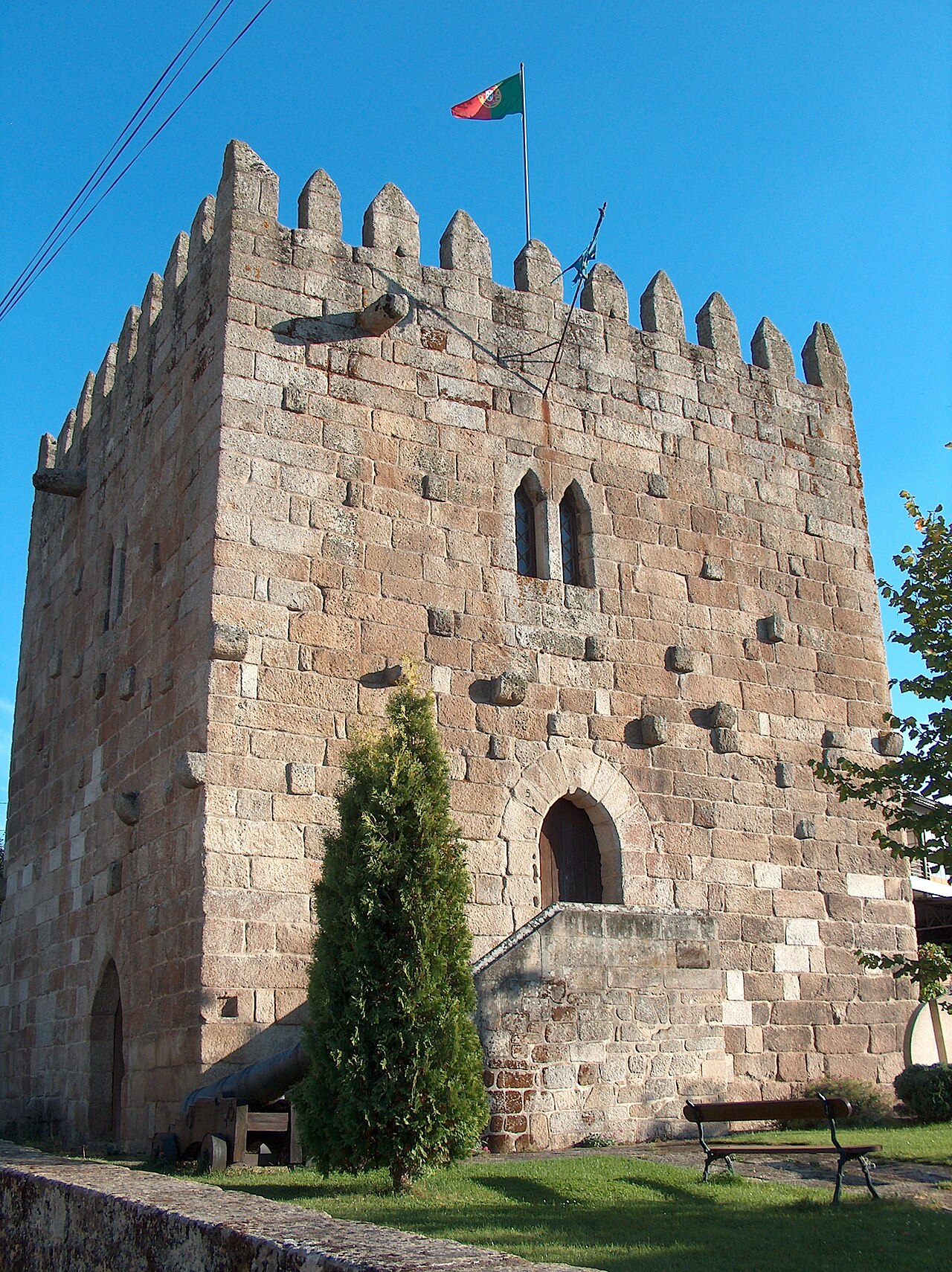
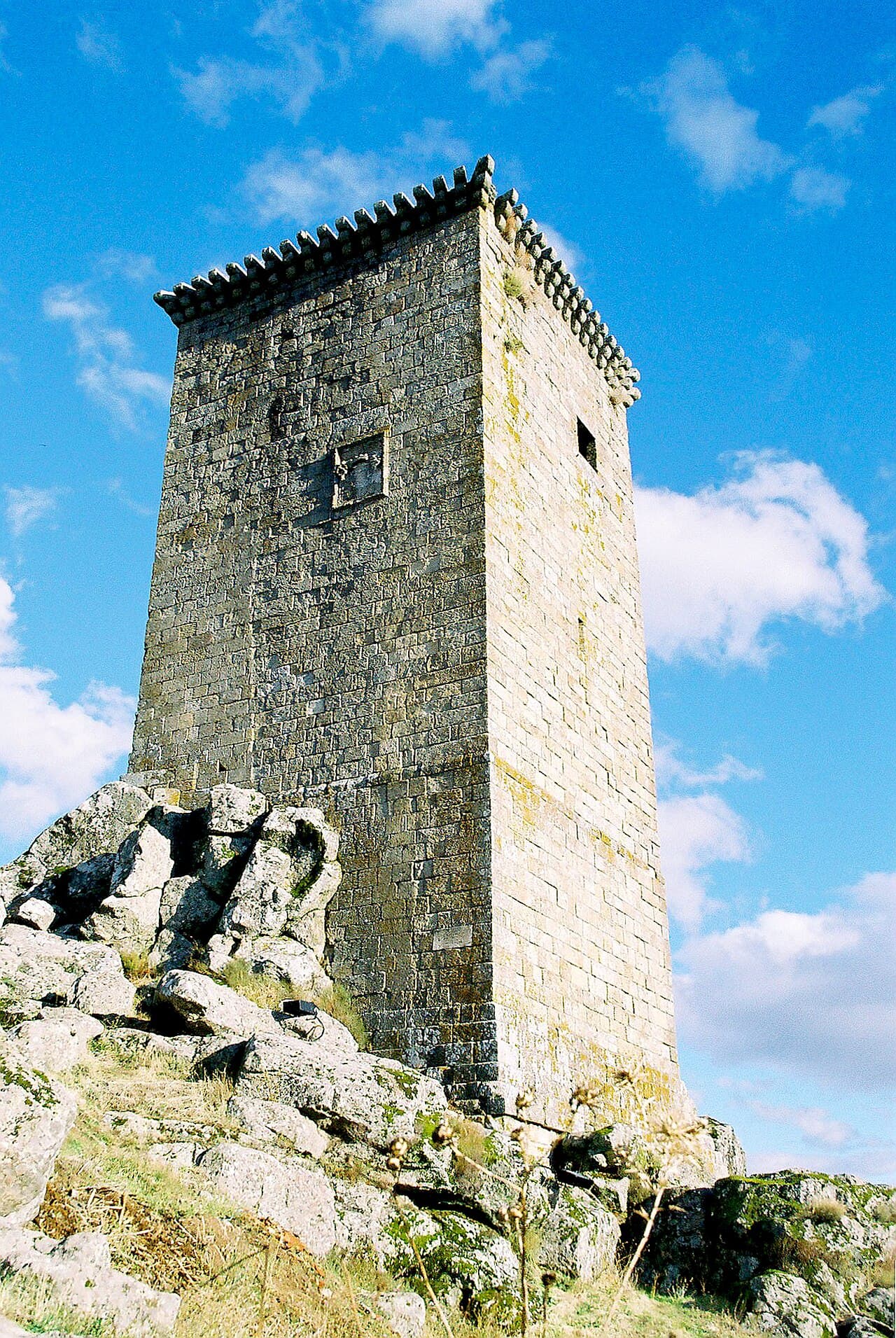
One of the castle's most distinctive features is its principal keep tower, constructed during the early 16th century under King Manuel I. Master mason João de Ortega supervised the build, which incorporated advanced military architectural elements for the time. The tower is a rectangular, three-story structure featuring machicolations—openings between corbels used to drop projectiles on attackers—and circular support elements that were unusual in Portuguese castle design.
The tower's facades are richly detailed: the northern side displays a royal coat-of-arms flanked by armillary spheres, symbols associated with the Age of Discoveries and King Manuel I's reign. The southern face retains triple-arched corbels supporting machicolations. Embrasures and decorative blind registers adorn other sides, while a smaller bell or clock tower with a pyramidal roof crowns the structure. The interior is divided into two levels with wooden floors, and access is controlled by a removable staircase, a defensive feature to hinder attackers.
17th-century modernization and military adaptations
During the Portuguese Restoration Wars in the 17th century, the castle was modernized to meet evolving military needs. Six bastions were added to the curtain walls, designed to withstand artillery fire and improve defensive coverage. These bastions include the ones connected to the House of the Câmara and the Convent of Santo António, as well as the Redoubt of the Cavalaria and the Redoubt of Outeiro. The renovations were overseen by the Marquess of Castelo Melhor, reflecting the castle's continued strategic relevance.
Civil and judicial structures within the castle complex
Beyond military functions, the castle complex housed important civic buildings. The House of the Câmara, dating from 1568, is a two-story rectangular building with a tiled roof. Its northern facade features an arched entrance and stone-framed windows adorned with Penamacor's coat-of-arms and armillary spheres, emphasizing its municipal significance. The rear facade includes a double-arched doorway and municipal coats-of-arms, highlighting its administrative role.
A 16th-century pillory stands nearby, symbolizing the castle's role in local justice and public order. The castle also contained a royal palace, a municipal hall, and a jail accessible from the outer walls, illustrating the multifunctional nature of the fortress.
Decline and archaeological rediscovery
The castle's military importance waned after the removal of its garrison in 1834. Subsequently, many parts fell into disrepair, with stones repurposed for local construction. The Gate of Santo António was demolished in 1867 during this period of neglect. A catastrophic explosion in 1739 destroyed the keep tower when it was used as a powder magazine, causing significant internal damage.
Modern archaeological investigations beginning in 2003 have uncovered human remains and artifacts such as a 15th-century ceramic dish, enriching knowledge of the castle's long history. In 2012, the castle was officially recognized as a national monument, ensuring its preservation and appreciation.
Architectural remains and layout today
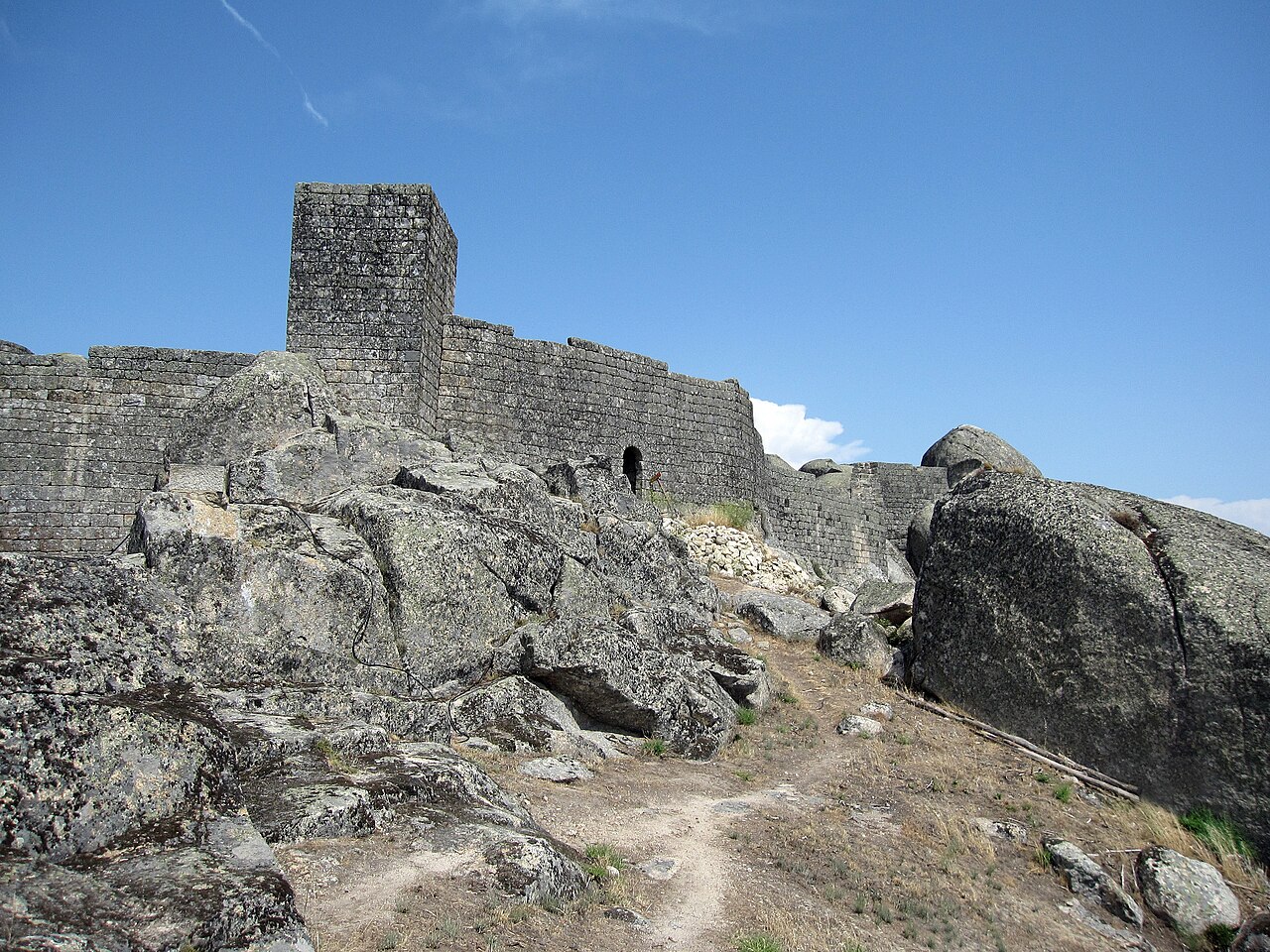
Today, the castle's remains reveal a complex layering of defensive and civic architecture. Fragments of the enclosing walls survive, including a section between the House of the Câmara and the keep tower, and parts of the southern fortifications. The keep tower remains a dominant feature, with its distinctive battlements, embrasures, and decorative elements.
The castle's irregular oval enclosure follows the natural hilltop contours, typical of medieval fortifications designed to exploit the landscape. Defensive walls include merlons and cruciform-shaped gunports with cylindrical corbels, allowing for effective defense with firearms. Historical records describe a courtyard with three large two-story buildings arranged around patios, including a cistern known as the Poço d’El Rei, which was filled in during the 20th century.
Early 16th-century drawings by Duarte de Armas depict the castle as a polygonal enclosure with battlemented walls and a smaller lookout tower outside the main enclosure, emphasizing its comprehensive defensive design.
Cultural significance and local lore
The Castle of Penamacor is not only a military and administrative landmark but also a site of cultural memory. A notable episode in the 16th century involved an impostor claiming to be King Sebastian I, who was arrested and punished within the castle, highlighting its role as a center of authority and justice.
Today, the castle stands as a testament to Portugal's medieval and early modern history, reflecting the evolution of military architecture and regional governance. Its preservation as a national monument invites visitors to explore its rich heritage and appreciate its architectural and historical significance.
Visitors to the castle can experience the layered history visible in its surviving walls, towers, and civic buildings, gaining insight into the strategic importance of Penamacor throughout the centuries.
Frequently asked questions (FAQ)
- How do I get to the Castle of Penamacor?
- The Castle of Penamacor is located in the town of Penamacor in the Centro region of Portugal. It is accessible by car and local roads, with parking available nearby. Visitors can also explore the castle on foot from the town center.
- What is the best time to visit the castle?
- The castle is open daily from 09:00 to 18:00. Spring and early autumn offer pleasant weather and fewer crowds, making these seasons ideal for visiting. Summer can be warm, so early morning visits are recommended.
- Is the castle accessible for visitors with mobility issues?
- The castle is situated on a rocky hill with uneven terrain and some steep paths, which may pose challenges for visitors with limited mobility. While some areas are accessible, others require careful navigation. Visitors should wear appropriate footwear and consider their physical abilities.
- What are the main architectural features of the castle?
- Key architectural features include the rectangular three-story keep tower with machicolations, embrasures, and decorative blind registers. The castle also has remnants of enclosing walls with merlons, six bastions from the 17th-century renovations, and civic buildings such as the House of the Câmara and a 16th-century pillory.
- Can I visit the interior of the keep tower?
- Access to the keep tower's interior is limited due to preservation concerns and safety. Visitors can view the tower from the outside and appreciate its architectural details, but entry inside is generally restricted.
- Are there any guided tours available at the castle?
- Guided tours may be available through local tourism offices or cultural organizations in Penamacor. These tours provide detailed historical and architectural insights. Visitors should check availability in advance.
Photo gallery

Information
Opening hours
09:00-18:00, daily
Ticket prices
Free
Current owner
Portuguese government
Website
Visit websiteSources & official resources
Verify the information above using these authoritative references.
Loading map...
Visitor reviews
No reviews yet. Been here? Write the first review and help other travelers!
Write the first reviewVisited this castle? Share your experience
Your review helps other travelers and adds first-hand knowledge to our encyclopedia.