Monopoli Castle
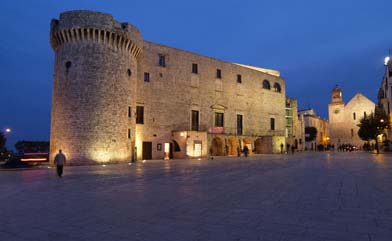
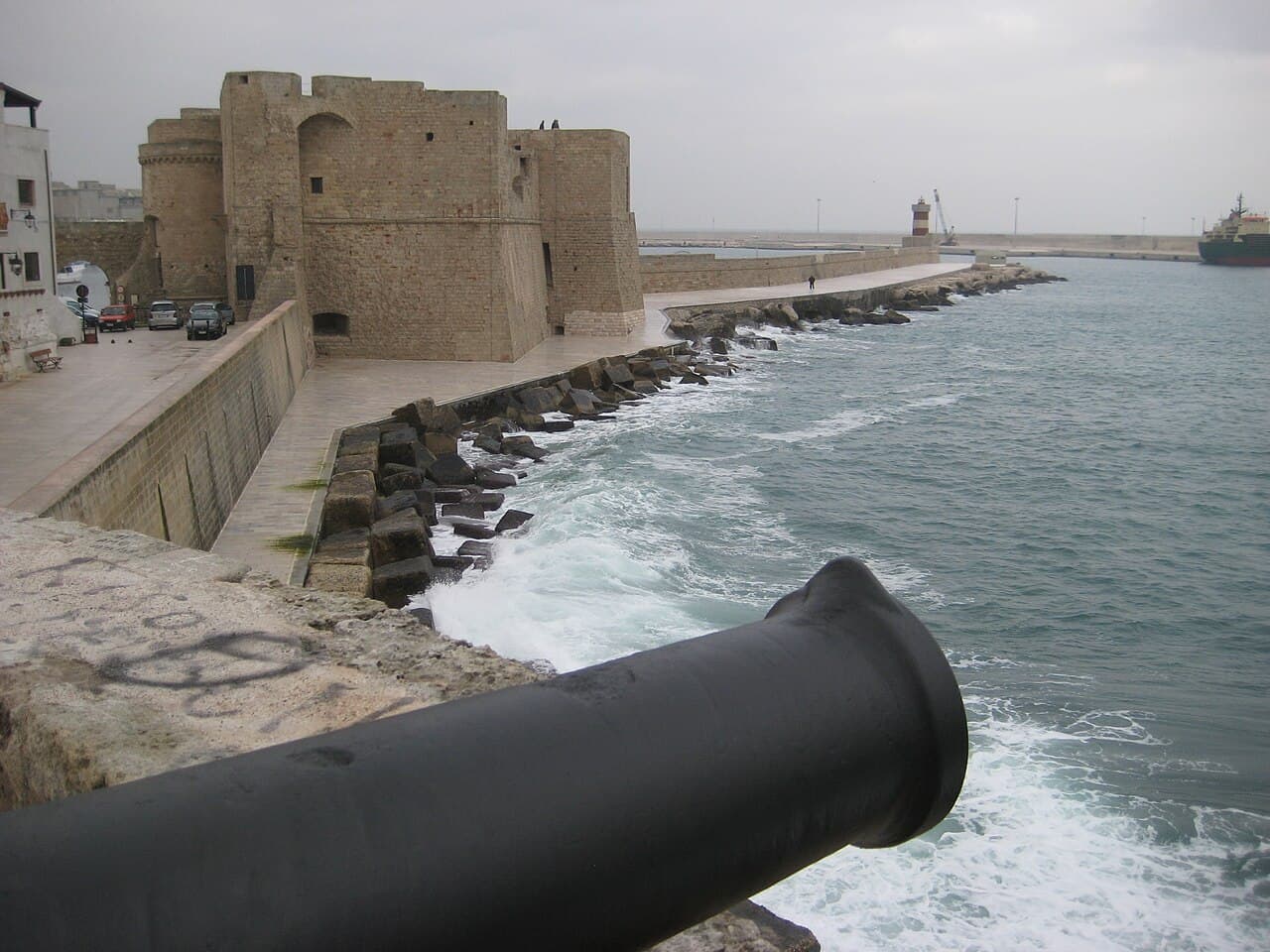
The Castle of Monopoli stands as a remarkable example of Renaissance military architecture intertwined with a rich tapestry of ancient and medieval history. Located on a strategic peninsula along the Adriatic coast in Monopoli, Italy, this fortress was originally constructed as a coastal stronghold and later transformed into a noble residence. Its commanding position surrounded by the sea underscores its historic role in the defense of the town and the wider Apulia region.
The castle’s origins are deeply rooted in antiquity, with the site initially fortified by the Messapians during the 5th century BCE. These early fortifications laid the groundwork for subsequent Roman enhancements, including the construction of a monumental gate in the 1st century BCE. This gate, featuring two-story guardhouses topped by octagonal towers, is still partially visible beneath the Renaissance fortress, illustrating the site's continuous military importance across centuries.
During the late 10th century, the area also gained religious significance with the establishment of the church of San Nicola in Pinna and an adjoining monastery. This church, characterized by its single nave, central dome, and Romanesque stone corbels, reflects architectural styles typical of rural churches from the 11th to 12th centuries. The church was integrated into the castle complex, serving monastic functions during the medieval period.
Renaissance construction and military significance
The present form of the Castle of Monopoli dates primarily to the 16th century, when it was commissioned under the rule of the Spanish Empire. In 1552, Emperor Charles V ordered the construction of a new fortress as part of a comprehensive coastal defense system to protect the Apulian coastline from Ottoman incursions and pirate attacks. This initiative was overseen by the viceroy Don Pedro Álvarez de Toledo, who reinforced the existing fortifications and incorporated earlier structures such as the Roman gate and the church into the new design.
The castle exhibits a pentagonal layout marked by five bastions at its corners, a characteristic feature of Renaissance military architecture designed to optimize defense against artillery. The fortress includes a large cylindrical keep added in 1660 under the direction of the Duke of Atri Giovanni Geronimo Acquaviva. This keep serves as the main entrance and is notable for its substantial cannon embrasures, which allowed for effective coastal defense.
Architectural features and adaptations
The castle’s walls are pierced by numerous embrasures from the rooftops down to the waterline, enabling strategic placement of cannons to cover both the harbor and open sea approaches. Inside, the armory contains four cannon openings at water level, housing smoothbore Neapolitan howitzers from the early 19th century, each weighing approximately 1,400 kilograms. These artillery pieces highlight the fortress’s continued military relevance well into the modern era.
The main entrance originally featured a drawbridge on the southwest side, leading to the cylindrical tower. Adjacent to this tower, well-preserved sections of ancient walls connect the Renaissance fortress to its earlier historical phases, emphasizing the layered construction of the site.
Historical transformations and uses
Throughout its history, the Castle of Monopoli underwent several significant transformations. In the early 17th century, renovations softened its strictly military character, introducing residential elements that reflected its use as a noble residence. This dual function is evident in the more refined architectural details facing the town, contrasting with the fortress-like sea-facing walls designed for defense.
In the 19th century, the castle’s purpose shifted dramatically when it was repurposed as a district prison. This period, lasting until 1969, is marked by grim episodes involving imprisonment, torture, and executions, contributing to local legends of hauntings and a darker aura surrounding the fortress.
Following decades of neglect, restoration efforts began in the late 20th century, led by engineer Francesco Selicato and architect Domenico Capitano. These works, supported by detailed archaeological studies conducted by Angelo Papio, revealed the complex stratigraphy of the site and preserved its multifaceted heritage.
Archaeological discoveries and cultural significance
Excavations between the 1990s and 2010, directed by Dr. Miranda Carrieri and the Soprintendenza Archeologica di Puglia, uncovered the site's extensive historical layers, from prehistoric embankments and Messapian walls to Roman and medieval structures, culminating in the Renaissance fortress. These findings underscore the castle’s importance as a palimpsest of regional history.
Today, the castle serves as the Archaeological Museum of Monopoli, hosting exhibitions that highlight the town’s maritime history and cultural heritage. The Museo del Mare, established in 2010 within the castle, presents artifacts and narratives related to Monopoli’s seafaring traditions, including intriguing anecdotes such as coral fishing beneath the castle walls during the 18th century and the life of notable figures like Colonel Martino Coquemont.
Structural remains and architectural details
The castle’s pentagonal shape with its five bastions exemplifies Renaissance military design adapted for coastal defense. The extensive cannon embrasures and the robust cylindrical keep reflect the strategic emphasis on artillery defense. The juxtaposition of ancient Roman gates and Messapian walls beneath the Renaissance structure illustrates a remarkable continuity of fortification at this site.
The church of San Nicola in Pinna, integrated into the castle complex, retains Romanesque features such as stone corbels and a central dome, offering a glimpse into the religious architecture of medieval Apulia. Its connection to the Roman guardhouses demonstrates the adaptive reuse of earlier buildings within the fortress.
Restoration efforts have preserved these diverse elements, allowing visitors to appreciate the castle not only as a military monument but also as a cultural and historical landmark that encapsulates multiple eras of Italian history.
Frequently asked questions (FAQ)
- When was the castle of Monopoli originally built and by whom?
- The castle's current Renaissance structure was commissioned in 1552 by Emperor Charles V and overseen by Viceroy Don Pedro Álvarez de Toledo, incorporating earlier fortifications from Roman and Messapian periods.
- What architectural styles are visible in the castle of Monopoli?
- The castle showcases a mix of architectural styles, including Renaissance military design, Roman elements such as the monumental gate, and Romanesque features in the church of San Nicola in Pinna.
- Can visitors explore the archaeological museum inside the castle?
- Yes, the castle houses the Archaeological Museum of Monopoli, including the Museo del Mare, which presents the maritime history and cultural heritage of the region.
- What are some notable features of the castle's fortifications?
- Notable features include a pentagonal layout with five bastions, a large cylindrical keep with cannon embrasures, and extensive artillery openings covering both the harbor and sea approaches.
- How has the castle of Monopoli been used throughout its history?
- Initially a defensive fortress, it later served as a noble residence, then as a district prison in the 19th and 20th centuries, before being restored and converted into a museum and cultural venue.
Photo gallery

Information
Sources & official resources
Verify the information above using these authoritative references.
Loading map...
Visitor reviews
No reviews yet. Been here? Write the first review and help other travelers!
Write the first reviewVisited this castle? Share your experience
Your review helps other travelers and adds first-hand knowledge to our encyclopedia.