Monnow Bridge
Monnow Bridge in Monmouth, Wales, stands as a remarkable example of medieval bridge construction combined with defensive architecture. This unique structure, spanning the River Monnow, is one of only two surviving fortified bridges in the United Kingdom, celebrated for its exceptional historical and architectural significance.
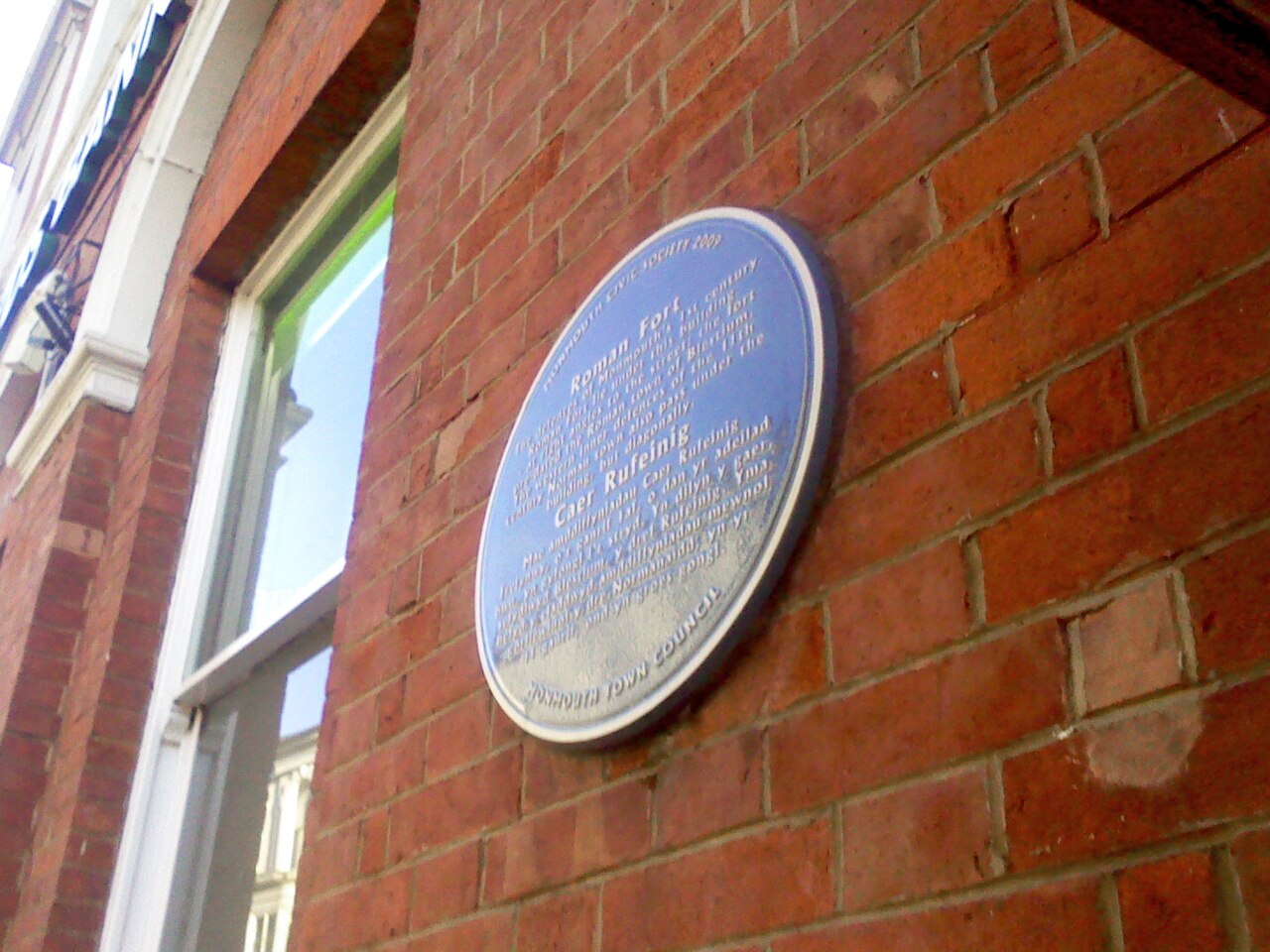
The site of Monnow Bridge has been important since Roman times, when the nearby area hosted the Roman fort of Blestium. Although the adjacent River Wye was likely bridged during the Roman occupation, the River Monnow itself was originally crossed by a ford. The first bridge here was a timber structure, built between 1123 and 1169, as scientific wood dating confirms. This early wooden bridge may have suffered damage during a battle near Monmouth in 1233, though the exact details remain debated by historians.
By the late 13th century, the timber bridge was replaced with the stone bridge that largely endures today. While no precise records survive, tradition and architectural analysis suggest the stone construction was completed around 1272. This transition to stone marked an important development in the bridge's durability and defensive capabilities.
Architectural features of the bridge and gatehouse
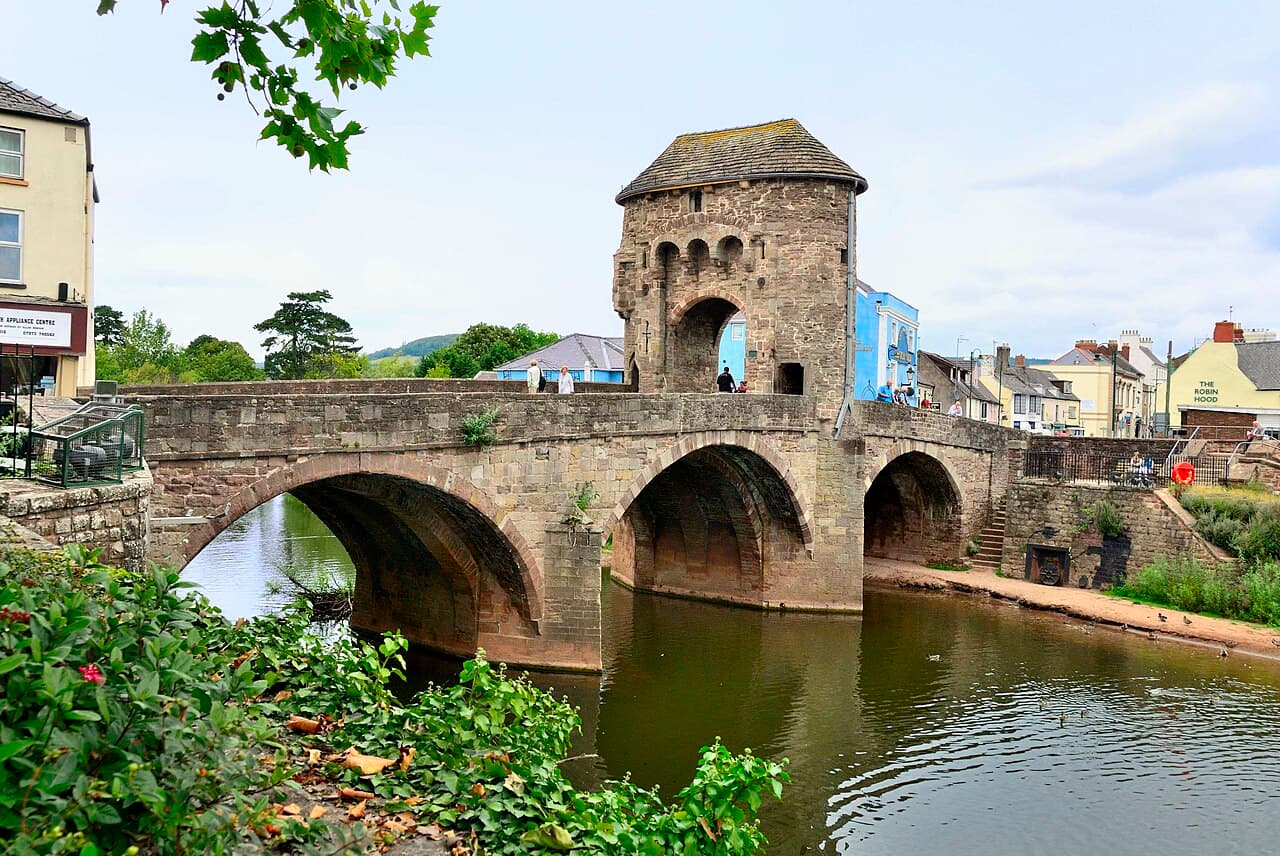
The bridge extends approximately 34.8 meters (110 feet) across the river and is about 7.3 meters (20 feet) wide. It comprises three stone arches supported on piers, two of which stand in the riverbed. These piers feature pointed cutwaters designed to reduce the force of water and debris, a common medieval engineering technique. The construction primarily used Old Red Sandstone, sourced locally within a 16-kilometer radius, showcasing the medieval practice of utilizing nearby materials. The underside of the arches includes ribbing for structural reinforcement.
Dominating the bridge is the Monnow Gate, a gatehouse rising about 11 meters (36 feet) above the deck. It is elliptical in plan and occupies the central section of the bridge itself, an uncommon feature among fortified bridges, as gatehouses were typically located on the riverbank rather than mid-river. The gatehouse features a main gateway originally secured by a portcullis, with grooves for this heavy grille still visible. Flanking the main arch are two pedestrian passageways added in the 19th century to accommodate foot traffic separately from vehicles.
The gatehouse's western face is notable for its defensive architecture, including three machicolations above the gateway. These openings allowed defenders to drop stones or boiling liquids on attackers below. Above these are murder holes within the roof structure, enabling defenders to target enemies from above. These features date back to the 14th century. The eastern facade is less ornate, showing signs of extensive rebuilding, including a centrally placed round-headed window and lacking the defensive details seen on the western side.
Internally, the gatehouse contains a single elongated room approximately 10 meters long and 3 meters wide, with an attic space above. The roof was reconstructed in 1832, replacing the original medieval flat roof that had battlements and a walkway for defenders. A stone spiral staircase once provided access to upper levels but was replaced by a wooden staircase during later renovations. Historical illustrations indicate the presence of a chimney at roof level, though no fireplace is recorded. The gatehouse also originally included a garderobe, a medieval toilet facility.
During the 19th century, the gatehouse underwent significant modifications including the installation of metal tie rods on the exterior to prevent structural failure, which remain visible today. Repairs also involved replacing worn stone with squared Old Red Sandstone blocks, restoring a cross-shaped arrowslit on the western wall, and adding guttering for rainwater drainage. Decorative corbels were added during this period and have been conserved.
Historical significance and uses
The addition of the gatehouse around the end of the 13th century or start of the 14th century coincided with the construction of Monmouth's defensive walls, funded by murage taxes authorized by Edward I in 1297 and renewed in 1315. The bridge and gatehouse served multiple roles: as a defensive barrier protecting the town, a toll collection point, a local jail, storage for munitions, and a lookout post. Scholars now agree that the bridge's function was dual-purpose, combining military defense with toll gathering.
During the English Civil War in the 1640s, Monnow Bridge was a site of conflict when Royalist forces attempted to retake Monmouth in 1645. The gatehouse continued as a toll point and was later transformed in the 19th century into a residence with timber additions, though part of it remained a lock-up for prisoners. The bridge was also known for annual confrontations between local gangs, a tradition banned in 1858.
Major conservation efforts took place between 1889 and 1902 to address erosion and structural threats. In 1900, ownership transferred from the Duke of Beaufort to Monmouthshire County Council. The construction of a new road bridge nearby in the early 21st century allowed the historic bridge to be pedestrianised in 2004. Further restoration followed, and the gatehouse reopened to limited public access in 2014.
Artistic and cultural impact
Since the late 18th century, Monnow Bridge has inspired many artists, including the renowned painters J.M.W. Turner and John Sell Cotman. Its picturesque setting and unique fortified structure have made it a subject of artistic and cultural interest. The bridge is protected as a scheduled monument and a Grade I listed building, acknowledging its outstanding heritage value. It was also noted on a UNESCO advisory list in 1996 as a potential World Heritage site, highlighting its exceptional status among medieval bridges worldwide.
Preservation and current status
Today, Monnow Bridge remains a well-preserved example of medieval civil and military architecture. Its combination of a stone bridge with a centrally placed fortified gatehouse is unique in Britain. The bridge's structure, including its arches, piers, and defensive features, continues to be maintained carefully. The gatehouse's interior, though altered over centuries, offers visitors a glimpse into its multifaceted historical functions.
The pedestrianisation of the bridge has enhanced its accessibility and conservation, allowing visitors to appreciate its architectural details without the wear of vehicular traffic. The gatehouse's reopening has provided opportunities for educational tours and cultural events, further cementing Monnow Bridge's role as a vital link to medieval history and heritage in Wales.
Frequently asked questions (FAQ)
- How do I get to Monnow Bridge in Monmouth?
- Monnow Bridge is located in the town center of Monmouth, Wales. It is easily accessible by car, with parking nearby, and within walking distance from local bus stops.
- What is the historical significance of Monnow Bridge?
- Monnow Bridge is one of the only two surviving fortified medieval bridges in the UK, serving both defensive and toll collection purposes since the 13th century.
- Can I visit inside the gatehouse?
- Yes, the gatehouse reopened to limited public access in 2014. Visitors can explore the interior during guided tours or special events.
- When was Monnow Bridge pedestrianised?
- The bridge was pedestrianised in 2004 after a new road bridge was built nearby, enhancing preservation and visitor experience.
- Is there an admission fee to visit Monnow Bridge?
- Visiting Monnow Bridge and the gatehouse is free of charge, making it accessible to all visitors interested in medieval architecture.
- What architectural style is Monnow Bridge?
- Monnow Bridge features Gothic architectural elements typical of late medieval defensive structures, including machicolations and a portcullis.
Photo gallery

Information
Opening hours
Daily, 9:00-17:00
Ticket prices
Free
Current owner
Monmouthshire County Council
Website
Visit websiteSources & official resources
Verify the information above using these authoritative references.
Loading map...
Visitor reviews
No reviews yet. Been here? Write the first review and help other travelers!
Write the first reviewVisited this castle? Share your experience
Your review helps other travelers and adds first-hand knowledge to our encyclopedia.