Blestium
Blestium, also known as Blestio in the Antonine Itinerary (Iter XIII), was a small Roman fort and industrial centre located in the province of Britannia Superior during the Roman occupation of Britain. It is identified with the site of the modern town of Monmouth in southeast Wales, positioned strategically at the confluence of the River Monnow and the River Wye. This location provided natural defensive advantages and access to important waterways.
Historical context and significance
The fort of Blestium was established in the 1st century AD as part of the Roman military infrastructure designed to control and administer the surrounding region of Britannia Superior. The fort's primary role was to secure the area and serve as a base for Roman forces operating in the region. It also functioned as a centre for the extraction and processing of iron, a critical resource for the Roman military and economy.
The presence of ironworking facilities indicates that Blestium was more than a purely military installation; it was an important industrial site contributing to the Roman supply chain. The fort and its associated settlement would have supported a community of soldiers, workers, and their families.
Archaeological evidence and location
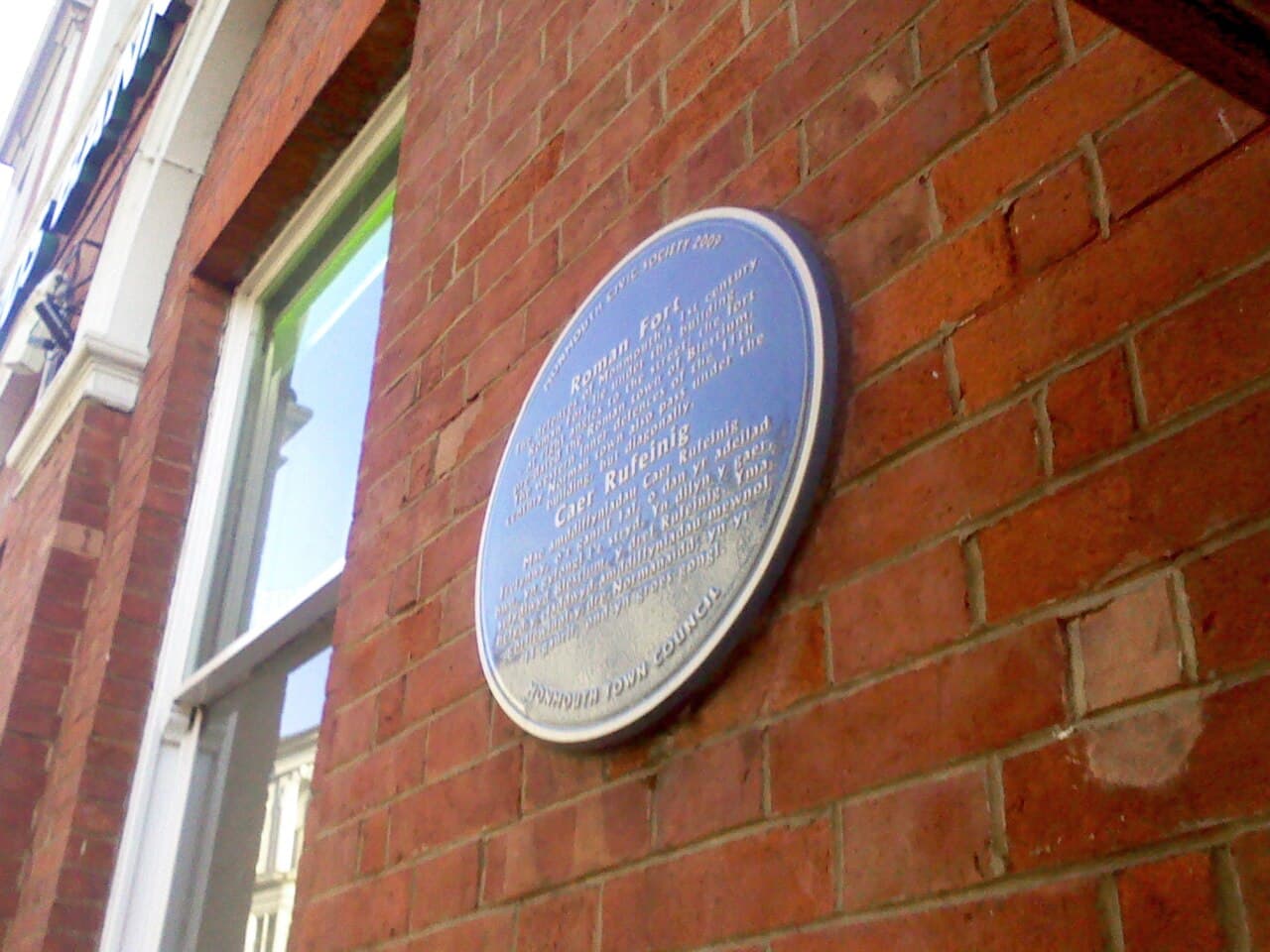
The exact remains of Blestium are not extensively preserved above ground, but archaeological investigations have identified its location within the modern town of Monmouth. A plaque on a bank building in Monnow Street commemorates the fort's historical position. Excavations have revealed traces of Roman military architecture and ironworking remains, confirming the site's dual function.
The fort was likely constructed as a hill castle type, utilizing the natural elevation near the river confluence to enhance its defensive capabilities. The rivers themselves would have served as natural barriers and facilitated transport and trade.
Roman military architecture and industrial features
Typical of Roman forts of the period, Blestium would have been enclosed by defensive walls and ditches, with gates controlling access. Inside, barracks, storage buildings, and workshops would have been arranged systematically. The ironworking facilities included furnaces and smithing areas, essential for producing tools, weapons, and other metal goods.
While the fort's above-ground structures have not survived intact, the archaeological footprint provides insight into the layout and function of the site. The combination of military and industrial uses highlights the strategic importance of Blestium within Roman Britain's network of forts and resource centres.
Legacy and modern significance
Today, Blestium is recognized as an important Roman archaeological site within Wales, contributing to our understanding of Roman military and industrial activities in the region. The identification of the site with Monmouth links the ancient past with the present-day town, which has grown around the historic location.
The site is not a castle in the medieval sense but represents an early military fortification that laid foundations for later settlement development. Its preservation status is limited to archaeological remains, with no substantial standing structures visible.
Frequently asked questions (FAQ)
- What is Blestium and where is it located?
- Blestium was a Roman fort and ironworking centre located at the site of modern Monmouth in southeast Wales, near the River Monnow and River Wye.
- When was Blestium built and what was its purpose?
- Blestium was built in the 1st century AD as a Roman military fort and industrial site for ironworking in the province of Britannia Superior.
- Are there visible remains of Blestium today?
- There are no substantial standing structures of Blestium; the site is recognized through archaeological remains and a commemorative plaque in Monnow Street.
- Can visitors access the archaeological site of Blestium?
- The site lies within the modern town of Monmouth, and while there are no dedicated visitor facilities, the location can be explored on foot, especially around Monnow Street.
- Why was Blestium important in Roman Britain?
- Blestium served both military and industrial functions, securing the region and producing iron goods essential for the Roman army and economy.

Information
Address
Monnow Street, Monmouth, Wales, United Kingdom
Loading map...
Visitor reviews
No reviews yet. Been here? Write the first review and help other travelers!
Write the first reviewVisited this castle? Share your experience
Your review helps other travelers and adds first-hand knowledge to our encyclopedia.