Monmouth Castle
Monmouth Castle is a significant Norman fortress located in the town of Monmouth, Monmouthshire, Wales. Established between 1066 and 1069 by William FitzOsbern, a close ally of William the Conqueror, it was strategically positioned on a natural ridge overlooking the confluence of the River Monnow and River Wye. This location allowed it to control the border between England and Wales, a turbulent frontier in the High Medieval period. Originally constructed as an earth and timber ringwork fortress, it was one of the earliest Norman military installations in the Welsh Marches and was recorded in the Domesday Book of 1086, underscoring its early importance.
Early construction and architectural evolution
The initial castle design followed the typical Norman practice of using earthworks and timber palisades to quickly establish control. Before 1150, these wooden defenses were replaced or supplemented with stonework, marking a transition to a more permanent and defensible structure. The addition of a Great Tower or keep was a key feature, modeled in part on the nearby Chepstow Castle, serving both defensive and residential purposes.
Development under the Earls of Lancaster
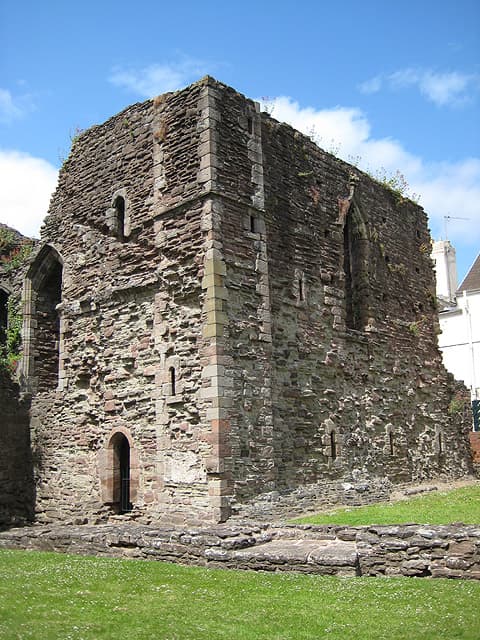
In 1267, the castle came into the possession of Edmund Crouchback, Earl of Lancaster and son of King Henry III. He undertook significant redevelopment, including the construction of a new Great Hall, which became the main residential and administrative center. His grandson, Henry of Grosmont, the first Duke of Lancaster, further enhanced the castle in the early 14th century by installing large decorated windows in the upper parts of the Great Tower and adding a new roof. These improvements reflected a shift from purely military functions to increased comfort and status, blending defensive features with domestic architecture.
Monmouth Castle in royal and political history
The castle played a notable role in the royal history of England and Wales. It was a favored residence of Henry Bolingbroke, who later became King Henry IV. His son, the future King Henry V, was born at Monmouth Castle in 1386 to Bolingbroke’s wife, Mary de Bohun. The castle also served as a prison for King Edward II before his transfer to Berkeley Castle, highlighting its strategic importance.
Defensive features and town fortifications
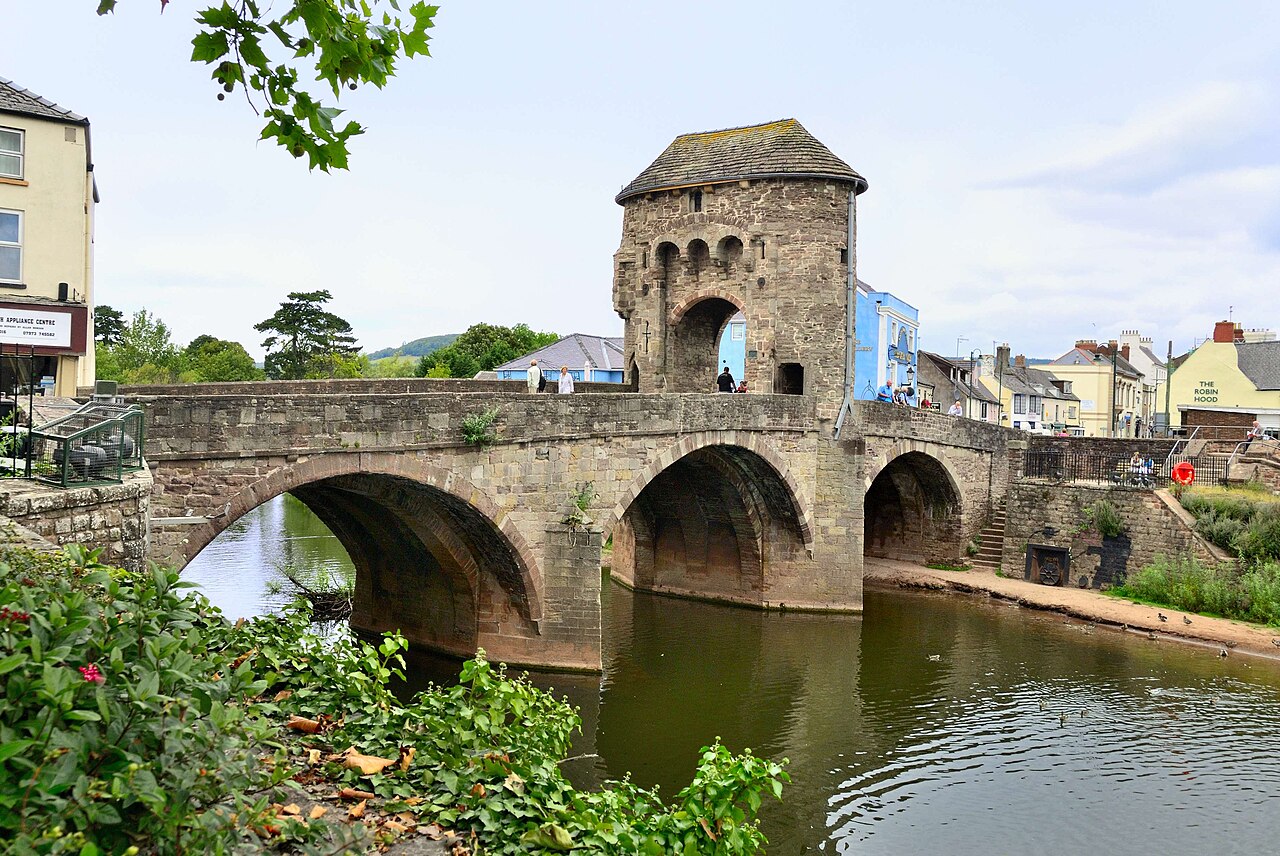
As the town of Monmouth grew around the castle, its defenses were expanded to include a fortified town wall and a fortified bridge across the River Monnow, constructed at the end of the 13th century. These additions protected the settlement and reinforced the castle’s control over the area. The castle’s outer bailey gradually transformed into a marketplace, now known as Agincourt Square, reflecting the evolving role of the fortress in civic life.
Later history and decline
During the English Civil War, Monmouth Castle changed hands three times, ultimately falling to the Parliamentarians in 1645. Oliver Cromwell visited the castle in 1646 and ordered its slighting to prevent further military use. The demolition began in 1647, targeting the round tower and other key structures, leading to a partial collapse that left the castle largely in ruins.
Post-medieval developments
In 1673, Great Castle House was constructed by Henry Somerset, 1st Duke of Beaufort, on the site of the demolished round tower. This building served judicial functions, hosting the Courts of Assize until 1725. Over time, additional buildings such as Castle House and Great House were erected within the castle precincts.
Modern use and preservation
Since 1875, the site has been continuously occupied by the Royal Monmouthshire Royal Engineers Militia, the senior Territorial Army regiment, making it one of the few British castles still in military use. The regiment’s museum is housed in the stable block adjacent to Great Castle House, showcasing the history of the unit from 1539 to the present day.
Current condition and heritage status
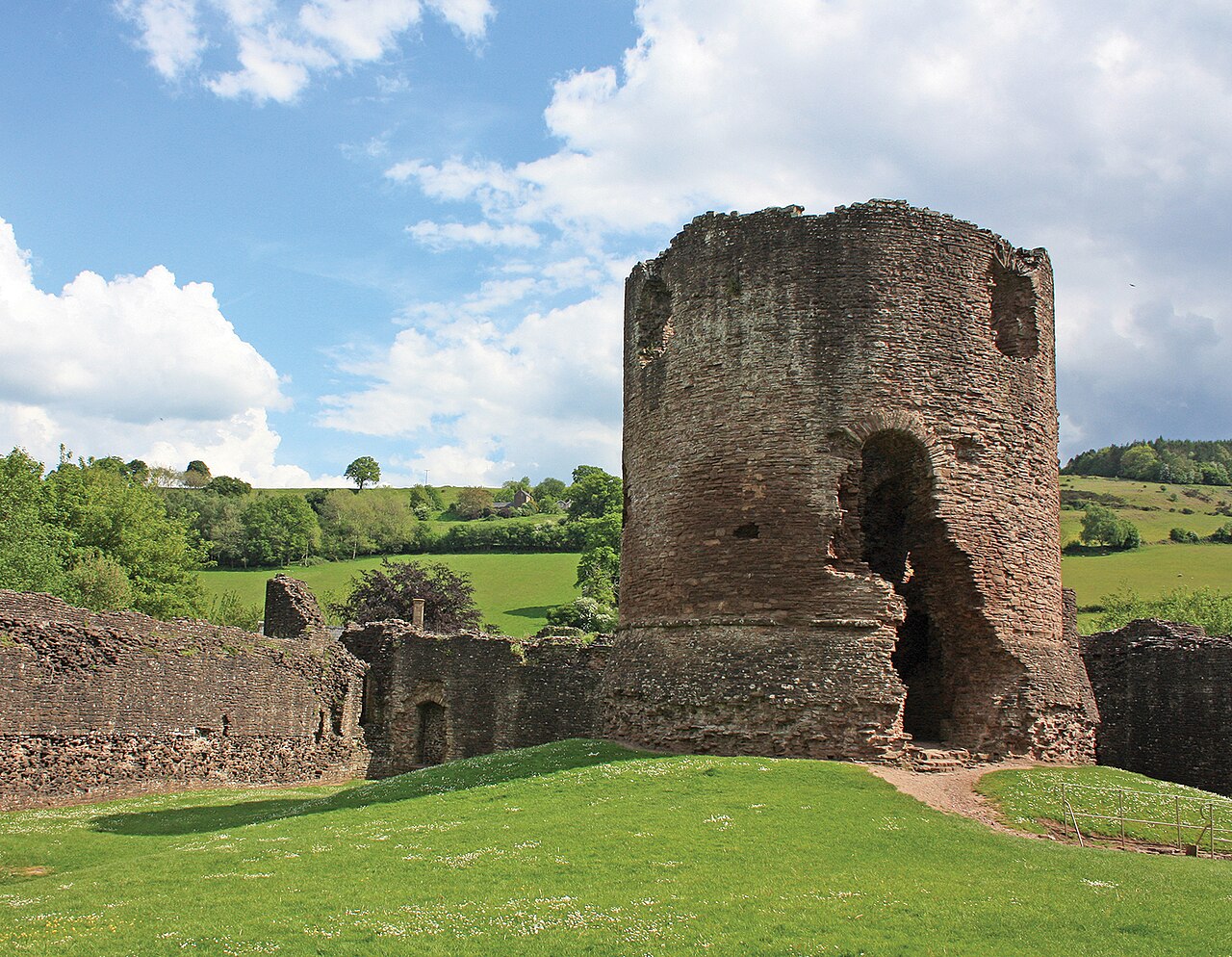
Today, Monmouth Castle survives as ruins with visible remains including parts of the Great Tower, fragments of the Great Hall, and sections of the surrounding walls. The castle is a Grade I listed building and a scheduled monument protected by Cadw, the Welsh Government’s historic environment service. The site’s combination of medieval ruins and later historic buildings offers valuable insights into the architectural and social history of this border fortress.
Architectural features and layout
The castle’s original ringwork design utilized the natural topography to create a defensible enclosure. The Great Tower was the focal point, a multi-storey stone keep with defensive battlements and residential chambers. The large decorated windows added in the 14th century introduced Gothic elements that softened the fortress’s austere military character.
Defensive structures
Surrounding walls and the fortified bridge were integral to controlling access and defending the town. The bridge, spanning the River Monnow, was a crucial checkpoint for trade and military movements. The castle’s position on a hill enhanced its visibility and defensive advantage over the surrounding landscape.
Residential and administrative spaces
The Great Hall built by Edmund Crouchback was the administrative heart, hosting courts and official functions. Later adaptations reflected the castle’s evolving role from a military fortress to a noble residence and judicial center.
Frequently asked questions (FAQ)
- What is the historical significance of Monmouth Castle?
- Monmouth Castle is a significant historical site as it was built in the 11th century by the Normans and played a crucial role in the defense against Welsh uprisings. It is also known as the birthplace of Henry V, which adds to its importance in British history. The castle's remains and its historical context provide insight into medieval military architecture and the feudal system.
- When was Monmouth Castle built?
- Monmouth Castle was constructed in 1067 by William FitzOsbern shortly after the Norman Conquest of England. The castle has undergone various modifications and restorations over the centuries, reflecting the changing architectural styles and needs of its occupants. Today, visitors can explore the remnants that showcase its long and varied history.
- Can I visit Monmouth Castle year-round?
- Yes, Monmouth Castle is open to visitors throughout the year, although opening hours may vary by season. It's advisable to check the official website for the most current visiting hours and any special events that may be taking place. This ensures you have the best experience when planning your visit.
- What are the opening hours for Monmouth Castle?
- Monmouth Castle typically opens at 10 AM and closes at 5 PM, with extended hours during the summer months. However, these hours can change due to holidays or special events, so it's best to verify in advance. Planning your visit around these hours will help you make the most of your time at the castle.
- Is it possible to access Monmouth Castle with a wheelchair?
- Monmouth Castle has made efforts to improve accessibility for all visitors, including those with mobility challenges. While some areas may have uneven terrain due to the castle's historical nature, there are paths and facilities designed to assist wheelchair users. It's recommended to contact the castle in advance for specific accessibility information.
- What are the ticket prices for visiting Monmouth Castle?
- The ticket prices for Monmouth Castle are generally reasonable, with discounts available for children, seniors, and families. Children under a certain age may even enter for free, making it an affordable outing for families. Always check the official website for the latest pricing and any special promotions.
- When is the best time to visit Monmouth Castle?
- The best time to visit Monmouth Castle is during the spring and summer months when the weather is pleasant, allowing for a comfortable exploration of the grounds. Additionally, during these seasons, various events and activities may be hosted at the castle, enhancing the visitor experience. However, visiting in the fall can also provide a unique atmosphere with beautiful autumn foliage.
- What nearby attractions are there to visit in Monmouth?
- In addition to Monmouth Castle, visitors can explore the stunning Monnow Bridge, the only remaining wooden gatehouse in England, and the picturesque River Wye. The area's natural beauty offers opportunities for walking and cycling, while the local shops and cafes provide a delightful place to relax. These attractions make Monmouth a charming destination for a full day out.
Photo gallery

Information
Website
Visit websiteSources & official resources
Verify the information above using these authoritative references.
Loading map...
Visitor reviews
No reviews yet. Been here? Write the first review and help other travelers!
Write the first reviewVisited this castle? Share your experience
Your review helps other travelers and adds first-hand knowledge to our encyclopedia.