Mongchontoseong
Mongchontoseong (Korean: 몽촌토성; Hanja: 夢村土城) is a significant ancient earthen rampart located within the modern Olympic Park in Seoul, South Korea. Dating back to the Baekje period in the 3rd century, it represents one of the key fortifications of the early Korean kingdoms. Mongchontoseong is part of the larger defensive complex known as Wiryeseong, which also includes Pungnaptoseong.
Historical context and significance
The Baekje kingdom was one of the Three Kingdoms of Korea, and Mongchontoseong served as a crucial military and administrative center during its early development. Constructed in the early medieval period, the fortress played a vital role in protecting the capital region from invasions and served as a base for controlling the surrounding territory.
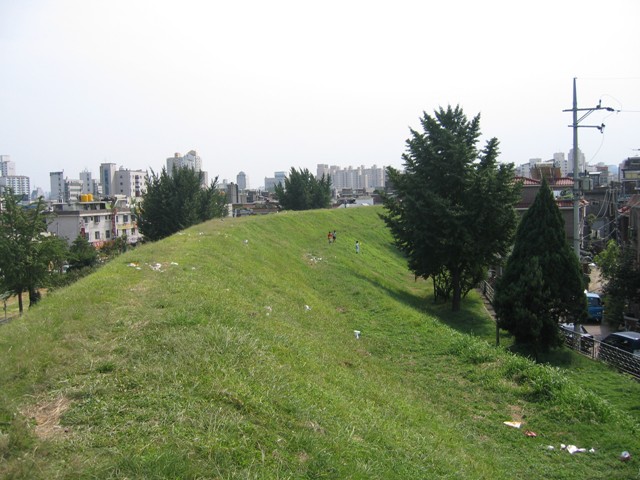
The site is notable for its well-preserved earthen ramparts, which reflect the defensive strategies of the time. Mongchontoseong's walls were originally topped with a wooden palisade and surrounded by a moat, enhancing its defensive capabilities against enemy forces.
Architectural features and construction
The fortress walls of Mongchontoseong extend approximately 2.7 kilometers (1.7 miles) in length, enclosing a substantial area. The walls stand about 6 to 7 meters (20 to 23 feet) high, constructed primarily from compacted earth. This type of fortification was typical of Korean defensive architecture during the Baekje period, relying on natural materials and earthworks rather than stone.
The earthen walls were reinforced with a palisade made of wooden stakes, which would have provided additional protection against attackers. Surrounding the base of the walls was a moat, which served both as a physical barrier and a deterrent to siege equipment.
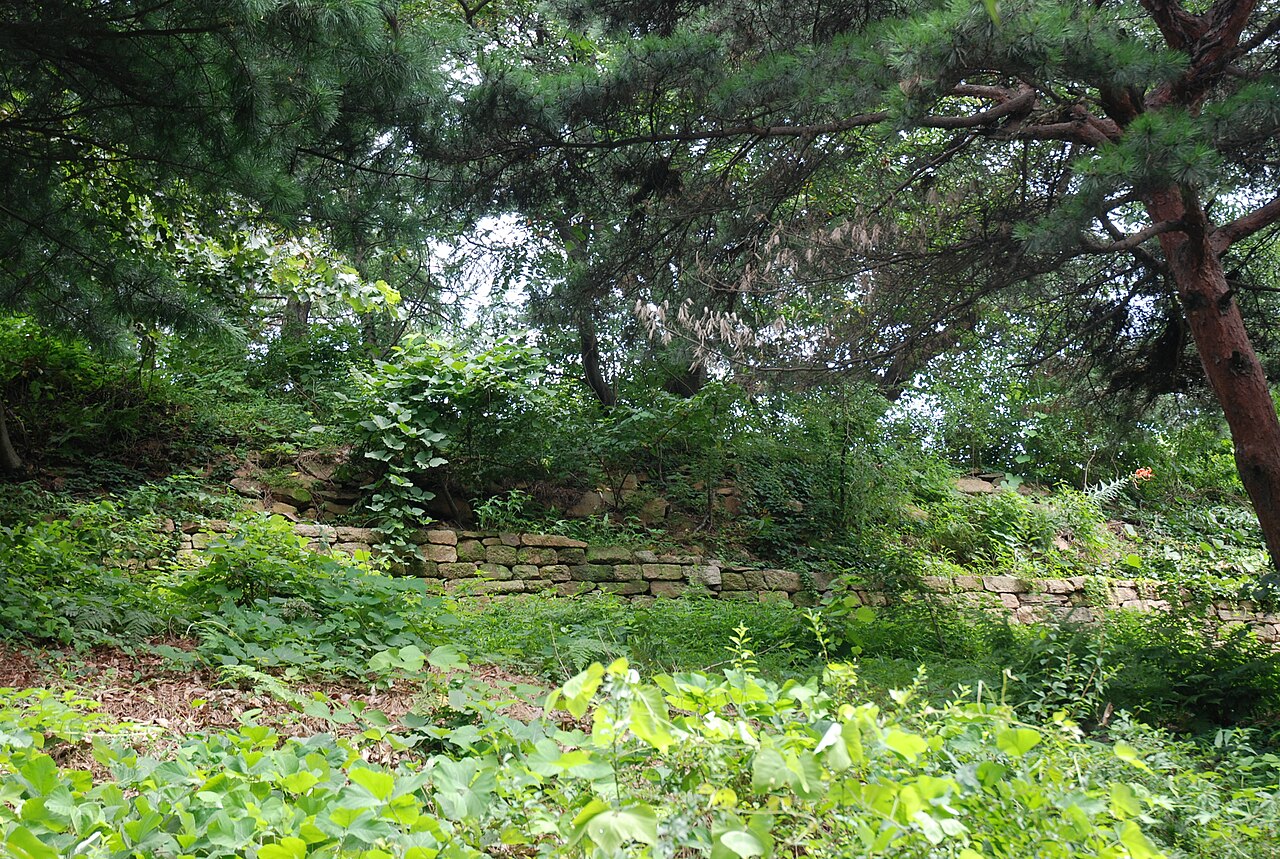
Excavations have revealed details about the construction techniques, including layering of soil and the use of rammed earth methods to create sturdy and durable walls. The fortress's layout suggests careful planning to maximize defensive strength and control over the surrounding landscape.
Moat and defensive systems
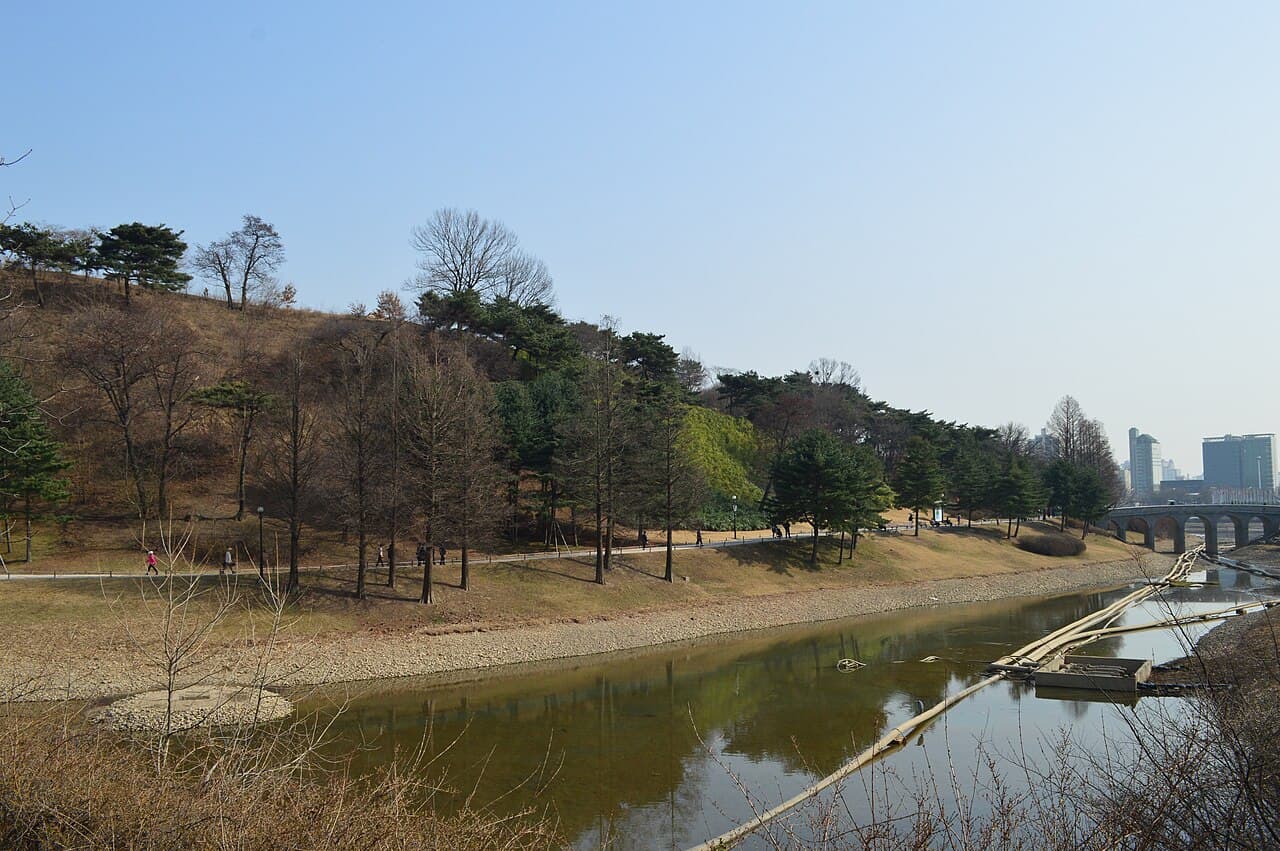
The moat encircling Mongchontoseong was an essential component of its defense. It likely filled with water during rainy seasons, making direct assaults on the walls more difficult. The combination of the moat and the palisade atop the walls created a formidable obstacle for invading forces.
Archaeological discoveries and modern significance
Prior to the development of the 1988 Summer Olympics facilities, extensive archaeological excavations were conducted at Mongchontoseong. These investigations uncovered artifacts and structural remains that have provided valuable insights into Baekje-era fortifications and daily life within the fortress.
During the 1988 Olympics, the site was used for the running section of the modern pentathlon, linking the ancient fortress with contemporary international sporting events. Today, Mongchontoseong is preserved as an archaeological site within Olympic Park, serving as a cultural and historical landmark for visitors and scholars alike.
Preservation and public access
Although the fortress remains are classified as ruins, the site is well-maintained and accessible to the public. Informational displays and pathways allow visitors to explore the ramparts and understand the fortress's historical context. Mongchontoseong offers a unique opportunity to experience Korea's ancient military architecture within a modern urban setting.
Relationship with Wiryeseong and Baekje heritage
Mongchontoseong is part of the larger Wiryeseong complex, which was the early capital area of the Baekje kingdom. Alongside Pungnaptoseong, it formed a network of fortifications that protected the political and economic center of Baekje during its formative centuries.
This connection underscores Mongchontoseong's importance not only as a military structure but also as a symbol of Baekje's cultural heritage. The site contributes to understanding the kingdom's urban planning, defense strategies, and regional influence.
Frequently asked questions (FAQ)
- How do I get to Mongchontoseong in Seoul?
- Mongchontoseong is located within Olympic Park in Seoul, accessible by Seoul's public transportation system including subway and buses. The nearest subway station is Olympic Park Station on Line 5.
- What is the historical significance of Mongchontoseong?
- Mongchontoseong served as a key military fortress during the Baekje period in the 3rd century, protecting the early capital region and forming part of the Wiryeseong defensive complex.
- Can I walk along the ancient walls of Mongchontoseong?
- Yes, visitors can explore the remains of the earthen ramparts and walk along designated paths that trace the fortress walls, offering views of the moat and surrounding parkland.
- When is the best time to visit Mongchontoseong?
- Spring and autumn are ideal times to visit Mongchontoseong due to mild weather and pleasant scenery in Olympic Park, enhancing the experience of the historical site.
- Is there an entrance fee to visit Mongchontoseong?
- Visiting Mongchontoseong is free of charge as it is part of the public Olympic Park, making it accessible to all visitors year-round.

Information
Address
Olympic Park, Seoul, South Korea
Loading map...
Visitor reviews
No reviews yet. Been here? Write the first review and help other travelers!
Write the first reviewVisited this castle? Share your experience
Your review helps other travelers and adds first-hand knowledge to our encyclopedia.