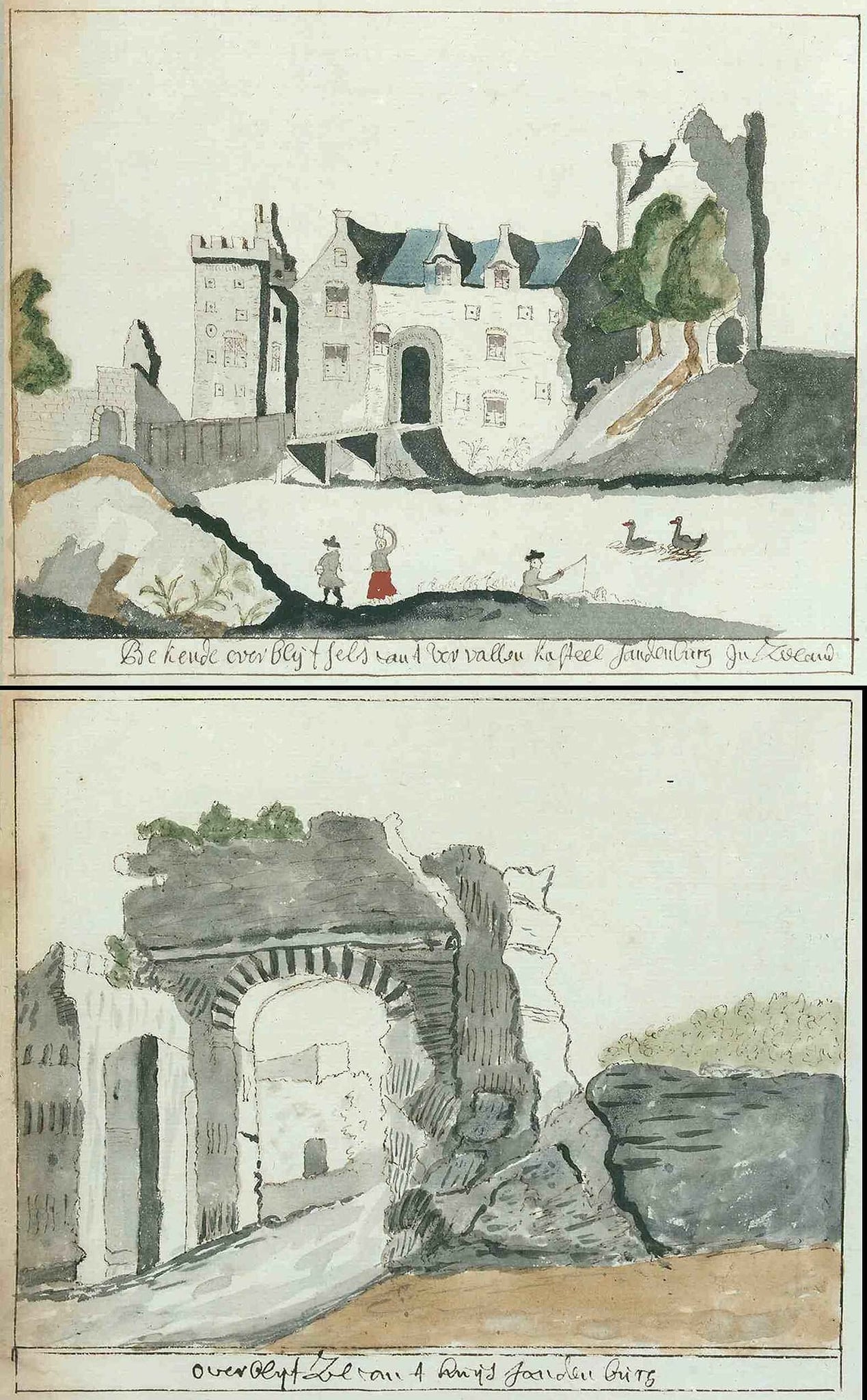
Moermond Castle
Moermond Castle, locally known as Slot Moermond, is a remarkable example of a Renaissance-era moated castle located in the village of Renesse, within the province of Zeeland in the Netherlands. This castle holds a rich history that spans several centuries, marked by multiple phases of construction, destruction, and restoration, reflecting the evolving architectural styles and historical circumstances of the region.
The origins and early history of Moermond Castle
The site of Moermond Castle has hosted three distinct castles over the centuries. The first castle was constructed between 1229 and 1244 by Costijn van Zierikzee. This initial fortress was strategically positioned just east of the current moat, serving as a defensive stronghold in the medieval landscape. In 1297, the castle endured a prolonged siege lasting several months, culminating in its complete destruction. This event marked a significant moment in the castle's history, reflecting the turbulent political and military conflicts of the era.
Rebuilding and changes in the 14th and 15th centuries
The second castle was erected around 1330 by Aernoud van Haamstede. This iteration was built on the same moated islet as the present castle, indicating the strategic importance of the location. Although the reasons remain uncertain, the second castle disappeared by the end of the 15th century. Notably, parts of its walls are still visible today in the garden of the current castle, providing tangible links to its medieval past. The oldest core of the present castle likely served as the gate building of this second structure, preserving elements of its architectural heritage.
The Renaissance rebuilding and architectural features
The present Moermond Castle was constructed in 1513 by Jacob van Tuyll, the Lord of Serooskerke, Welland, and Moermond. He rebuilt and enlarged the old gate building of the previous castle, thereby initiating the Renaissance phase of the castle's architecture. This period is characterized by the incorporation of Renaissance design elements, which marked a departure from the purely defensive medieval style towards a more residential and representational aesthetic.
Over the centuries, the castle changed hands multiple times through sale, with each owner contributing modifications or additions. These successive alterations have resulted in a complex architectural fabric that blends medieval defensive features with Renaissance residential comforts, reflecting the castle's evolving role from fortress to noble residence.
Impact of natural disasters and restoration efforts
In 1953, Moermond Castle suffered extensive damage due to the North Sea Flood, which left the castle submerged under approximately 2 meters of water for several months. This catastrophic event caused significant deterioration to the structure and its interiors. Between 1957 and 1960, comprehensive archaeological excavations and restorations were undertaken to preserve and stabilize the castle. These efforts were crucial in safeguarding Moermond Castle's historical and architectural legacy for future generations.
Modern use and preservation
Following restoration, the castle ceased to be a private residence. In 1962, it was repurposed as an Outward Bound School, promoting outdoor education until the school's departure in 1994. Subsequently, the castle served as a conference center before its transformation into a hotel and reception venue in the early 21st century. Today, Moermond Castle welcomes guests as a hotel, allowing visitors to experience its historic ambiance firsthand while enjoying modern hospitality amenities.
Architectural highlights and cultural significance
The castle is surrounded by a moat, a defining feature that underscores its defensive origins. The combination of medieval remnants and Renaissance architectural elements creates a unique aesthetic that illustrates the castle's long history. Its location in Zeeland, a province known for its waterways and historic fortifications, further enhances its cultural importance.
Moermond Castle stands as a testament to the region's feudal history, architectural evolution, and resilience in the face of natural disasters. Its adaptation from a medieval fortress to a Renaissance residence and finally to a modern hospitality venue exemplifies the dynamic life cycle of historic castles in the Netherlands.
Frequently asked questions (FAQ)
- How do I get to Moermond Castle?
- Moermond Castle is located in Renesse, Netherlands, and can be easily reached by car or public transport. If you're traveling by car, there is parking available nearby. For public transport, check the local bus schedules, which provide access to Renesse from major cities in the region.
- What is the historical significance of Moermond Castle?
- Moermond Castle dates back to the 13th century and has played a crucial role in the history of Zeeland. Originally built as a fortified manor, it has witnessed various historical events and changes in ownership, reflecting the region's rich heritage. Today, it stands as a testament to medieval architecture and history.
- When was Moermond Castle built?
- Moermond Castle was constructed in the 13th century, with significant architectural developments occurring over the centuries. Its design has evolved, incorporating various styles that showcase the historical influences of different eras. Visitors can appreciate the castle's blend of medieval and later architectural features.
- Can I explore the grounds of Moermond Castle?
- Yes, visitors are welcome to explore the grounds of Moermond Castle. The castle offers a picturesque setting for a leisurely stroll, with beautiful gardens and scenic views of the surrounding area. However, access to the interior may be limited depending on specific events or guided tours.
- Why is Moermond Castle a popular tourist destination?
- Moermond Castle attracts visitors for its rich history, stunning architecture, and beautiful surroundings. Its strategic location near the coast of Zeeland makes it an ideal stop for those exploring the region. Additionally, the castle often hosts events and exhibitions that enrich the visitor experience.
- Is it possible to visit Moermond Castle year-round?
- Yes, Moermond Castle welcomes visitors throughout the year, although opening hours may vary by season. It’s advisable to check the official website for the latest information on opening days and times. This ensures you can plan your visit accordingly and make the most of your experience.
- What are the ticket prices for visiting Moermond Castle?
- Ticket prices for Moermond Castle can vary depending on the season and any special events taking place. Generally, entrance fees are modest, making it an affordable attraction for families and history enthusiasts. Discounts may also be available for children, seniors, and groups.
- What is the best time to visit Moermond Castle?
- The best time to visit Moermond Castle is during the spring and summer months when the gardens are in full bloom and the weather is pleasant. However, autumn also offers a beautiful backdrop with colorful foliage. Consider visiting during weekdays to avoid crowds and enjoy a more peaceful experience.
- Are there any nearby attractions to Moermond Castle?
- Yes, Moermond Castle is located close to several other attractions, including the beautiful beaches of Renesse and the charming village center. Visitors can also explore nature reserves and cycling paths in the area. This makes it easy to combine a visit to the castle with other enjoyable activities.
Information
Website
Visit websiteSources & official resources
Verify the information above using these authoritative references.
Loading map...
Visitor reviews
No reviews yet. Been here? Write the first review and help other travelers!
Write the first reviewVisited this castle? Share your experience
Your review helps other travelers and adds first-hand knowledge to our encyclopedia.