Sabbinge Castle

Sabbinge Castle in Oud-Sabbinge, Netherlands
Oud-Sabbinge, Zeeland, Netherlands
Late Medieval (14th–15th c.)
Partially Preserved

Sabbinge Castle is a historic fortress located in the village of Oud-Sabbinge in the Netherlands. Constructed initially around 1250, it represents a significant example of a late medieval castle in the Zeeland region. Although the castle was destroyed in 1321, it was promptly rebuilt, preserving its role as a fortified residence and symbol of local power.

Historical context and significance

The castle's origins date back to the mid-13th century, a period marked by numerous feudal conflicts and territorial disputes in the Low Countries. Sabbinge Castle was strategically positioned to oversee and control the surrounding lands and waterways of the Zeeland province. Its construction reflects the typical defensive needs of the era, combining residential and military functions.

Throughout its history, Sabbinge Castle has witnessed various phases of conflict and reconstruction. The destruction in 1321 likely resulted from regional warfare or feudal strife, common in the turbulent political landscape of medieval Europe. The subsequent rebuilding ensured the castle's continued importance as a noble seat and defensive stronghold.

Architectural features and style

The castle embodies characteristics of late medieval architecture, with robust stone walls and fortified elements designed for defense. While detailed records of its original layout are limited, typical features of castles from this period in the Netherlands include a central keep or tower, curtain walls, and possibly a moat.

The rebuilding after 1321 may have incorporated improvements in fortification techniques, adapting to evolving military technology such as the use of heavier siege engines. The castle's structure would have balanced residential comfort with defensive capabilities, including battlements and narrow windows for archers.

Layout and defensive structures

Sabbinge Castle likely featured a courtyard surrounded by defensive walls, with a gatehouse controlling access. The presence of water defenses, such as a moat or natural water barriers, was common in Zeeland castles due to the region's low-lying geography. These features enhanced the castle's resilience against attackers.

Later history and current status

Over the centuries, Sabbinge Castle's military importance diminished as warfare evolved and centralized state power increased. It transitioned more into a noble residence and estate center. Today, the castle remains privately owned, and its preservation reflects ongoing interest in maintaining historical heritage sites in the Netherlands.

Although not widely open to the public, Sabbinge Castle contributes to the cultural landscape of Oud-Sabbinge and Zeeland. Its survival offers valuable insights into medieval fortification practices and regional history.

Visiting Sabbinge Castle and surrounding area

While the castle itself is privately owned and access may be limited, visitors to Oud-Sabbinge can appreciate the surrounding historic village and Zeeland's characteristic lowland scenery. The area's waterways and dikes provide a picturesque setting that complements the castle's medieval origins.

Nearby attractions include other historic sites and natural reserves, making the region appealing for those interested in Dutch history and landscape.

Frequently asked questions (FAQ)

What is the historical significance of Sabbinge Castle?
Sabbinge Castle, located in Oud-Sabbinge, Netherlands, dates back to the early 14th century and is a prime example of medieval architecture. It has played a crucial role in the region's history, serving as a noble residence and a defensive stronghold during various conflicts.
When was Sabbinge Castle built?
Construction of Sabbinge Castle began around 1325, making it one of the oldest castles in the Netherlands. Over the centuries, it has undergone various renovations and restorations, reflecting the architectural styles of different eras.
What are the opening hours for Sabbinge Castle?
Sabbinge Castle is typically open to visitors from 10 AM to 5 PM, Wednesday through Sunday. It's advisable to check the official website for any seasonal variations or special closures before planning your visit.
Can I take guided tours of Sabbinge Castle?
Yes, guided tours are available at Sabbinge Castle, providing visitors with in-depth insights into its rich history and architectural features. These tours are led by knowledgeable guides who can answer questions and share fascinating stories about the castle.
Is it possible to access Sabbinge Castle with a wheelchair?
Sabbinge Castle strives to accommodate all visitors, but accessibility may be limited due to its historic structure. It's best to contact the castle administration in advance to inquire about specific accessibility options and available facilities.
What is the best time to visit Sabbinge Castle?
The best time to visit Sabbinge Castle is during the spring and early autumn when the weather is pleasant and gardens are in full bloom. Additionally, visiting during weekdays can help you avoid larger crowds, allowing for a more enjoyable experience.
Are there any nearby attractions to visit when at Sabbinge Castle?
Yes, there are several nearby attractions, including the picturesque village of Oud-Sabbinge and beautiful natural parks. Visitors can also explore other historic sites and local museums that highlight the region's heritage and culture.
How much do tickets cost for Sabbinge Castle?
Ticket prices for Sabbinge Castle are generally affordable, with discounts available for children, students, and seniors. It's advisable to check the official website for the latest pricing details and any special offers.

Information

Lowland Castle

Current owner

Private owner

Loading map...

Visitor reviews

No reviews yet. Been here? Write the first review and help other travelers!

Write the first review

Visited this castle? Share your experience

Your review helps other travelers and adds first-hand knowledge to our encyclopedia.
Write a review

(5/5)

0/2000 characters

Your review will be visible after admin approval

Nearby castles

9.7 km
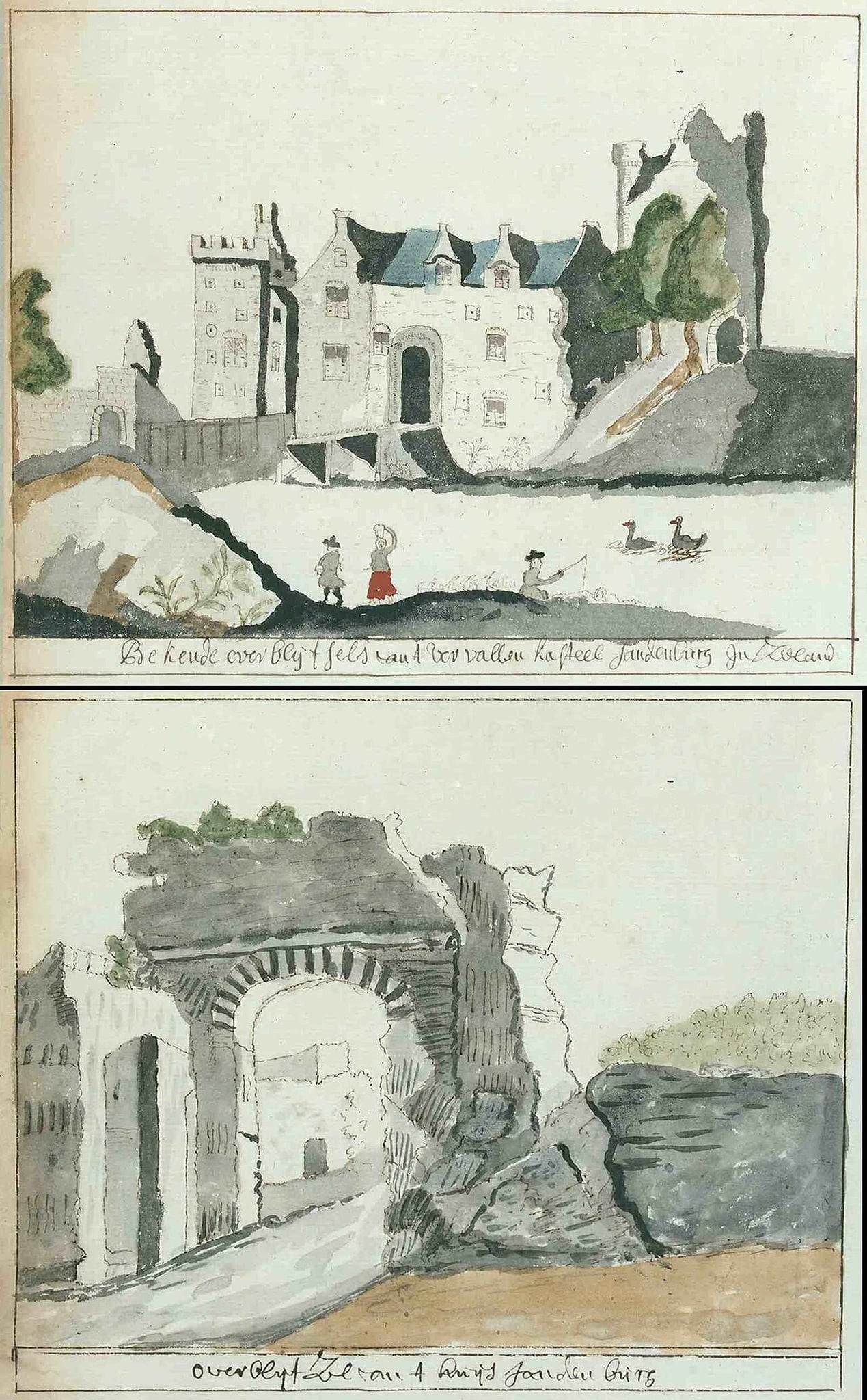
Zandenburg — Netherlands castle

Zandenburg

Veere, Netherlands

Zandenburg was a prominent medieval castle located just south of the town of Veere in the Netherlands. Although the castle itself no longer stands above ground, its historical significance endures through the archaeological ruins that remain visible as foundations below the surface. These remnants offer valuable insights into the castle's former structure and the defensive strategies employed during its period of use. Historical significance and location The castle of Zandenburg played a notable role in the medieval history of the Zeeland region. Positioned strategically near Veere, it was part of the defensive network protecting the area from both land-based and maritime threats. The castle's location south of Veere allowed control over important trade routes and access to waterways, which were vital for commerce and military movements during the Late Medieval period. Architectural characteristics and layout While no above-ground structures survive, archaeological investigations have revealed the layout of Zandenburg's foundations. The castle was likely constructed as a water castle, a common type in the Netherlands, utilizing surrounding water bodies as natural defenses. Its design would have included moats, curtain walls, and possibly a central keep or residential buildings within the fortified perimeter. Defensive features The use of water defenses was a hallmark of castles in this region, and Zandenburg's moat system would have been integral to its protection. The castle's walls were probably reinforced with towers at key points to provide vantage points for archers and to strengthen the fortification against siege warfare prevalent in the Late Medieval era. Destruction and current condition Zandenburg eventually fell into disuse and was destroyed, with no visible ruins remaining today. The site is classified as archaeological ruins, with only the underground foundations preserved. These remains have been studied to understand the castle's historical footprint and architectural style, but the lack of standing structures limits the visual impression of its former grandeur. Archaeological research and heritage value Excavations at the Zandenburg site have provided valuable data on medieval castle construction in the Zeeland region. The findings contribute to the broader understanding of water castles in the Netherlands and their adaptation to the local landscape. The site is important for historians and archaeologists studying medieval fortifications and regional history. Visiting the site Today, visitors to the area near Veere can explore the general location of Zandenburg, though no castle structures are visible above ground. Interpretive signs and local museums may provide additional context about the castle's history and significance. The site is accessible for those interested in medieval history and archaeology, offering a glimpse into the past through its preserved foundations.

Late Medieval (14th–15th c.)
Details
10 km

Zandenburg Castle

Veere, Netherlands

Zandenburg Castle, also known as Sandenburgh, was a significant medieval fortress located near the town of Veere in the province of Zeeland, Netherlands. Established around 1280 by Wolfert I of Borselen, it served as the seat of the powerful Lords of Borselen and played a pivotal role in regional politics and maritime affairs for several centuries. The foundation and early history of Zandenburg Castle The castle was founded in the late 13th century, a period marked by feudal consolidation and territorial disputes in the Low Countries. Wolfert I of Borselen dedicated the castle to Floris V, Count of Holland, indicating its strategic and political importance within the County of Holland's sphere of influence. The castle was built as a rectangular moated fortress, typical of late medieval defensive architecture, and was likely constructed on or near an existing motte, a raised earthwork that provided a strong defensive position. Its location near a small harbor catalyzed the development of the town of Veere in the following decades, highlighting the castle's role not only as a military stronghold but also as a center of trade and administration. Architectural features and layout Zandenburg Castle was characterized by its rectangular plan surrounded by a moat, a common defensive feature in the Low Countries designed to hinder attackers and protect the castle from siege engines. The presence of a round moated hill adjacent to the main castle site suggests the original motte, a typical feature of early medieval fortifications, which may have been incorporated into or superseded by the later stone structures. The castle complex would have included fortified walls, towers, living quarters, a chapel, and service buildings, arranged around a central courtyard. The chapel was a notable feature, serving both religious functions and as a symbol of the lord's status. The castle's prominence in the 15th and 16th centuries The 15th century marked the zenith of Zandenburg Castle's importance. The Lords of Borselen were influential nobles within the Burgundian Netherlands, and the castle was a hub of political and military activity. In 1437, Henry II of Borselen hosted Philip the Good, Duke of Burgundy, underscoring the castle's status as a noble residence of considerable standing. Henry's son, Wolfert VI of Borselen, further elevated the castle's prestige through his marriage to Mary Stewart, Countess of Buchan, linking the castle to Scottish royalty. Wolfert VI was appointed Admiral of the Burgundian Netherlands in 1466, reflecting the family's maritime influence. The castle welcomed Charles the Bold, Duke of Burgundy, on two occasions, in 1451 and 1470, emphasizing its role as a center of Burgundian power. The Burgundian and Habsburg periods In 1485, Wolfert VI was stripped of his offices by Maximilian I of Austria, Holy Roman Emperor, following his support for Flemish revolts. After Wolfert's death in 1486, the castle passed to the House of Burgundy through the marriage of his daughter Anna to Philip of Burgundy-Beveren. The 16th century saw the castle maintain its prominence as a noble court within the Habsburg Netherlands. Despite suffering a fire in 1505, which destroyed part of the castle, it was promptly rebuilt, demonstrating its continued importance. The castle hosted several notable figures, including Philip I of Castile in 1500, Charles V, Holy Roman Emperor in 1515 and 1540, and Philip II of Spain in 1556. Successive Admirals of the Netherlands from the Burgundy-Beveren line—Philip, his son Adolf, and grandson Maximilian II—resided at Zandenburg, reinforcing its maritime and political significance. Decline and destruction The castle's decline began after the death of Maximilian II of Burgundy in 1558 without an heir. Neglect led to its deterioration. During the early stages of the Eighty Years' War, the nearby town of Veere sided with William the Silent, Prince of Orange. The castle was garrisoned by French troops who, in 1572, demolished the chapel and several ruined sections of the castle. The salvaged stones were repurposed to fortify Veere, signaling the castle's reduced military role. By the 19th century, only ruins remained. In 1812, the last remnants of Zandenburg Castle were demolished, and the site was converted to farmland. Today, no visible structures survive, but archaeological traces and historical records preserve its legacy. Historical significance and legacy Zandenburg Castle played a crucial role in the political and maritime history of Zeeland and the Burgundian and Habsburg Netherlands. It was a center of noble power, maritime administration, and regional governance from the late 13th century through the 16th century. The castle's connections to prominent historical figures and events reflect its importance in the medieval and early modern periods. Although no physical remains exist today, the site of Zandenburg Castle remains an important cultural heritage location. Its history is intertwined with the development of Veere and the broader geopolitical shifts in the Low Countries during the late medieval and Renaissance eras.

Late Medieval (14th–15th c.)
Details
13.3 km

Middelburg Abbey Church

Middelburg, Netherlands

Middelburg Abbey Church in the city of Middelburg, Netherlands, represents a significant medieval religious complex with a complex history marked by destruction and reconstruction. Founded in 1127 as a Premonstratensian abbey, it was originally part of a larger monastic community that played an important role in the religious and cultural life of the region during the High Medieval period. Historical background and foundation The abbey was established in the early 12th century, reflecting the growth of monastic orders such as the Premonstratensians across Europe. Its foundation in 1127 situates it firmly within the High Medieval era, a time when monastic institutions were centers of learning, agriculture, and spiritual life. The abbey's initial buildings would have included a church, cloisters, dormitories, and other monastic facilities designed to support the religious community. Destruction and rebuilding phases The abbey complex suffered significant damage from two major fires, one in 1492 and another in 1568. These fires destroyed most of the original monastic buildings, necessitating extensive rebuilding efforts. Despite these setbacks, parts of the abbey survived or were reconstructed, leading to the present-day remains. Architectural features and surviving structures Today, the site comprises two adjacent churches: the Koorkerk and the Nieuwe Kerk. The Koorkerk, dating from the 14th century, is the former abbey church and retains Gothic architectural elements typical of that period. The Nieuwe Kerk was built in the 16th century, reflecting the architectural transitions of the late medieval period into the Renaissance. Koorkerk abbey church The Koorkerk served as the main church of the abbey and exhibits characteristic Gothic features such as pointed arches, ribbed vaults, and large windows that would have once been filled with stained glass. Its construction in the 14th century aligns with the flourishing of Gothic architecture in the Low Countries. Nieuwe Kerk The Nieuwe Kerk was constructed in the 16th century, a period of religious and political upheaval in the Netherlands. It reflects a more austere architectural style compared to the ornate Gothic of the Koorkerk, indicative of changing tastes and religious practices during the Reformation era. The Lange Jan tower A defining feature of the Middelburg Abbey complex is the octagonal Lange Jan tower, known in English as "Tall John." Originally built in the 14th century, this tower has been a prominent landmark in Middelburg for centuries. Standing at an impressive 91 meters tall, it dominates the city skyline. The tower has endured multiple fires over the centuries, leading to several reconstructions. Despite these challenges, it remains a symbol of the city's historical and architectural heritage. The tower's height and slender octagonal design make it a notable example of medieval ecclesiastical architecture in the Netherlands. Due to the dense urban surroundings, photographing the Lange Jan tower can be difficult, but its presence remains unmistakable in Middelburg's cityscape. Cultural and heritage significance Middelburg Abbey Church and its surviving structures are important cultural landmarks. They reflect the religious history of the region and the architectural evolution from the High Medieval Gothic to the early modern period. The site attracts visitors interested in medieval architecture, Dutch history, and ecclesiastical heritage. Today, the churches and tower serve not only as historical monuments but also as venues for cultural events and community gatherings, maintaining their relevance in contemporary Middelburg.

High Medieval (11th–13th c.)
Details

