Mithymna Castle
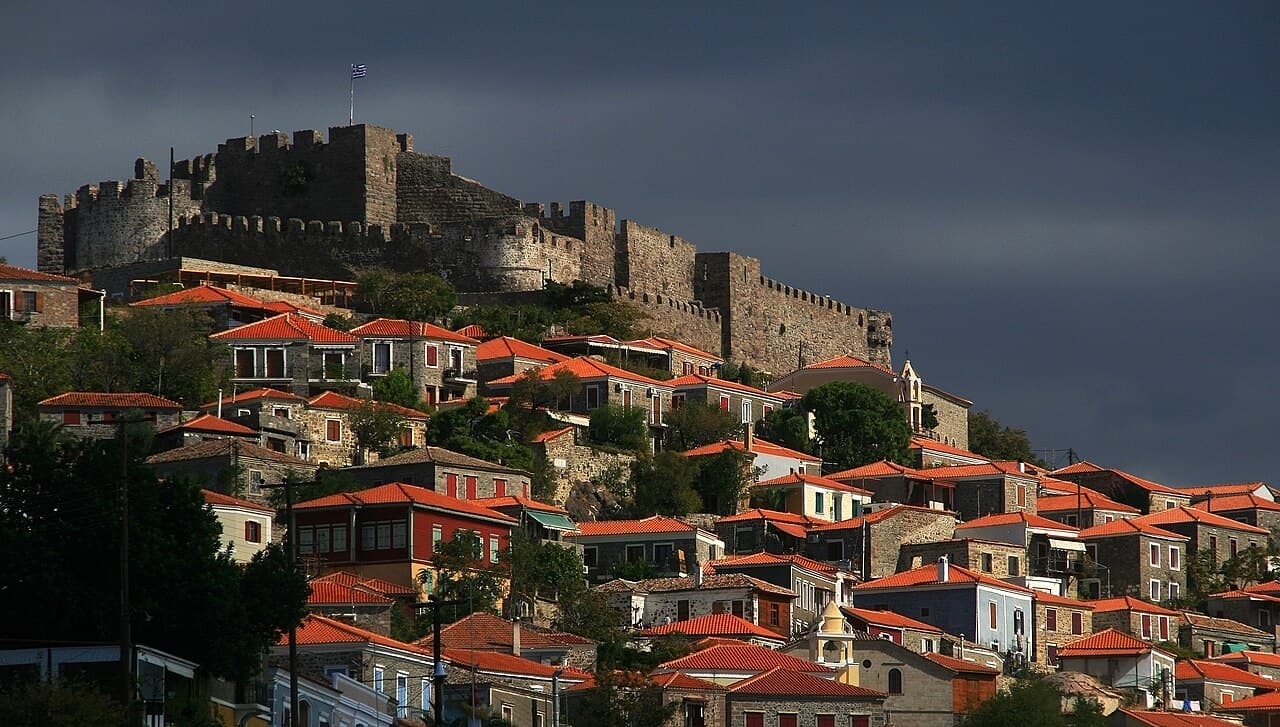
Mithymna Castle stands as a remarkable example of layered historical fortifications on the northern coast of Lesbos, Greece. Perched atop a commanding hill overlooking the town of Mithymna, this hill castle embodies centuries of strategic military architecture, reflecting the diverse cultural influences of the ancient Greeks, Byzantines, Venetians, Genoese, and Ottomans. Its origins trace back to the ancient city of Methymna, where the site initially served as the acropolis—the fortified high point of the settlement.
The castle's earliest defensive structures likely date to antiquity, with archaeological evidence pointing to fortifications from the classical Greek period. During the Byzantine era, substantial building efforts were undertaken, possibly under Emperor Justinian I in the 6th century, to reinforce the site against increasing threats. This early Byzantine fortress laid the foundation for the complex fortifications that would evolve over the following centuries.
Medieval transformations and the venetian period
In the early 12th century, specifically from 1128, the castle came under the control of the Venetians, who constructed a new fortress on the site of the earlier Byzantine and ancient remains. Their work was part of a broader strategy to secure maritime trade routes and coastal strongholds in the Aegean Sea. The Venetian fortress incorporated robust defensive walls and towers designed to withstand sieges and naval assaults.
Genose reconstruction and fortification
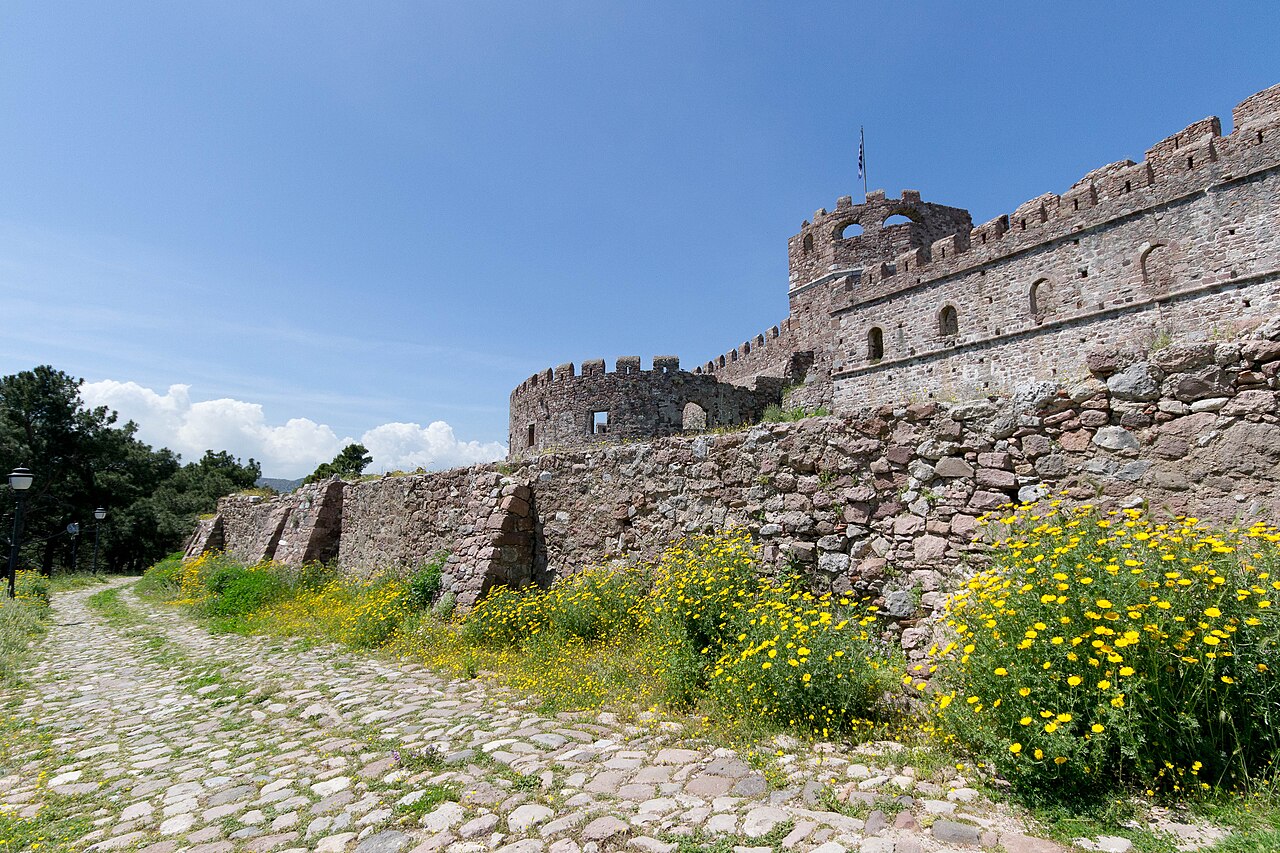
By the late 13th century, the Genoese seized control of the castle, marking a significant phase in its architectural evolution. After likely suffering damage during conflicts, the Genoese undertook a major rebuilding project in 1373, strengthening the castle's defenses to meet the demands of contemporary warfare. Their reconstruction introduced an irregular polygonal layout encompassing approximately 5,000 square meters, with ten towers of varying shapes—including both square and round forms—connected by curtain walls forming the main defensive perimeter.
Ottoman occupation and modifications
The Ottoman Empire captured Lesbos and Mithymna Castle in 1462, incorporating the fortress into their extensive military network. The Ottomans carried out repairs and expansions in two distinct phases. The first phase closely imitated the Genoese masonry style, maintaining the structural integrity and appearance of the existing fortifications. The second phase introduced construction using smaller stones bonded with abundant mortar and brick fragments, reflecting Ottoman architectural techniques. These modifications included the addition of outer walls and a new entrance featuring a pointed arch lintel with an inscription, characteristic of Ottoman design.
Despite continuous use by Ottoman garrisons into the 18th century, the castle gradually fell into disrepair. By 1789, reports described the fortress as significantly deteriorated. Modern conservation efforts in the late 20th and early 21st centuries have sought to preserve the castle's remains and highlight its historical significance.
Architectural features and layout
The castle's irregular polygonal plan measures roughly 70 to 80 meters on each side, encompassing an area close to 5,000 square meters. The fortifications include ten towers, both square and round, strategically placed to maximize defensive coverage. The highest point of the castle is the acropolis (akrópyrgos) located at the northeastern corner, serving as the fortress's stronghold and lookout.
The main entrance, dating back to ancient times, lies beneath the acropolis and is fortified by a trio of towers: two projecting forward towers known as propylaea and a central tower called the mesopyrgion positioned between them. One forward tower contains a secondary middle entrance with a cannon platform above, protected by a low outer wall that also includes a more recent external entrance.
Byzantine and genose gates
A notable interior gate on the northwest side dates from the Byzantine period. This entrance is marked by a heavy wooden door reinforced with metal elements and accessed via a stone-paved path. The path begins under a vaulted passage with transverse ribs—arched supports crossing the ceiling—and continues outside, originating from the Genoese-era middle gate constructed in the 14th century.
Ottoman entrance and inscriptions
On the southwest flank, an entrance from the Ottoman period features a pointed arch lintel bearing an inscription, reflecting Ottoman architectural influence and their contribution to the castle's access points.
Interior structures and materials
Within the castle courtyard lie the remains of three buildings that once served as guard barracks, alongside a two-room structure used as an armory and gunpowder magazine. Central to the enclosure is a vaulted underground cistern from the Byzantine period, notable for its arched roof and essential role in water storage during sieges.
The castle's walls incorporate spolia—reused building materials from an earlier 5th-century Doric temple. These include architectural fragments such as triglyphs and column drums, repurposed as construction stone. The masonry prominently features volcanic rocks from the surrounding hill, including red-brown basalt and grey trachyte. The name "Molyvos" for the medieval settlement derives from the Greek word molybdos, meaning lead or grey, referencing the color of the local stone.
Historical significance and legends
Throughout its history, Mithymna Castle functioned as a crucial defensive stronghold against a variety of raiders and invading forces, including Arabs, Saracens, Rus', Venetians, Catalans, Genoese, and Turks from the 9th to the 15th centuries. A notable legend from the 15th century recounts how the daughter of a Genoese commander donned armor to inspire the defenders so effectively that the Ottoman attackers abandoned their siege.
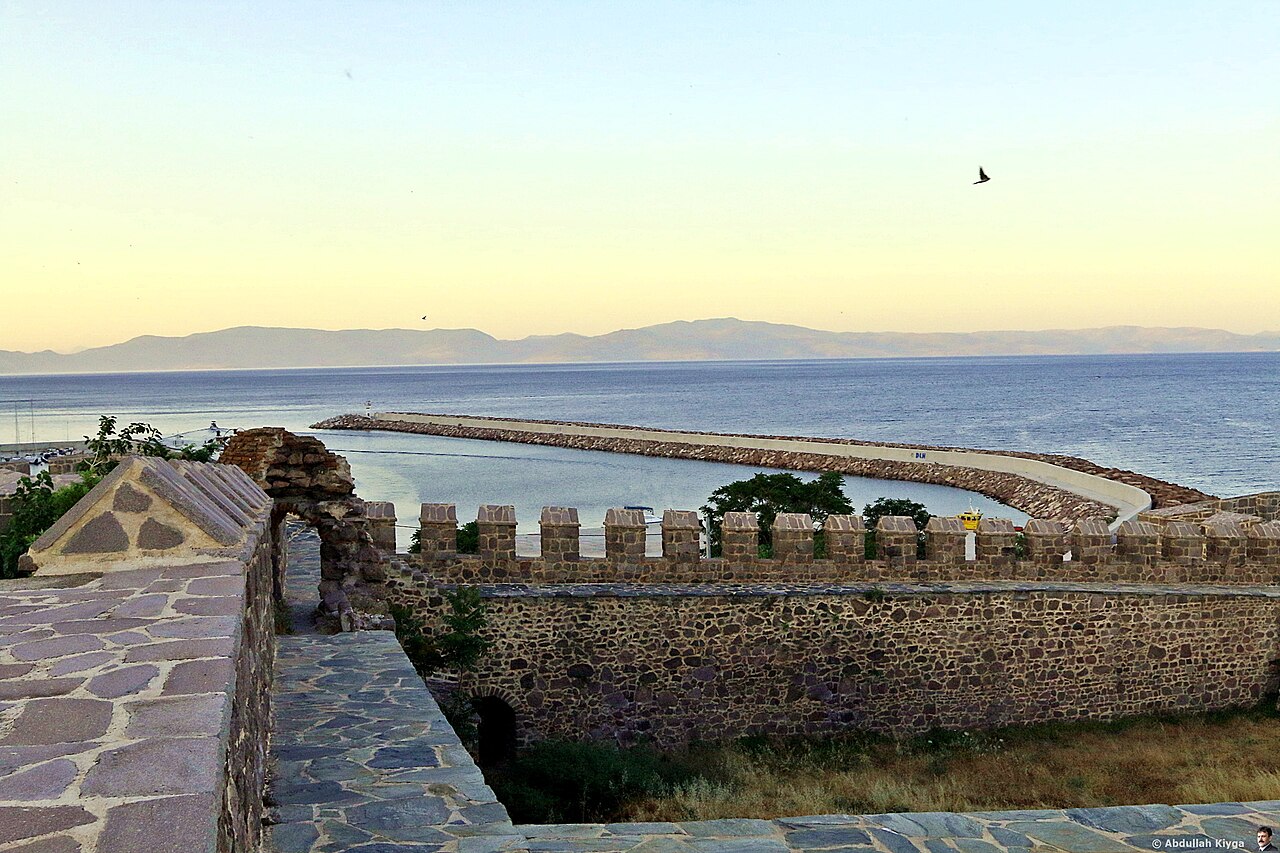
The castle's commanding position atop the hill offers panoramic views of the town below, emphasizing its historical role as a center of control and defense. Today, Mithymna Castle stands as a testament to the island's rich cultural heritage and the complex interplay of Mediterranean powers over the centuries.
Modern preservation and tourism
Recent conservation and restoration efforts have aimed to stabilize and preserve the castle's remains, allowing visitors to explore its extensive fortifications and appreciate its historical layers. The site is accessible to tourists interested in medieval architecture, Byzantine history, and the strategic significance of Lesbos in the Aegean region.
Visitors can explore the castle's towers, gates, and courtyard, gaining insight into the military engineering techniques employed by successive rulers. The castle's integration of ancient, Byzantine, Genoese, and Ottoman elements makes it a unique destination for those interested in the evolution of fortress design across centuries.
Frequently asked questions (FAQ)
- How do I get to Mithymna Castle?
- Mithymna Castle is located on a hill overlooking the town of Mithymna on Lesbos island, Greece. Visitors can reach the castle by walking up from the town center via marked paths leading to the entrance.
- What historical periods are represented in Mithymna Castle's architecture?
- Mithymna Castle features architectural elements from the ancient Greek, Byzantine, Venetian, Genoese, and Ottoman periods, reflecting its long and varied history.
- Is Mithymna Castle open to visitors year-round?
- Yes, Mithymna Castle is open daily from 08:00 to 19:00, allowing visitors to explore the site throughout the year.
- Are there guided tours available at Mithymna Castle?
- While there may not be official guided tours on site, local guides and informational signage provide valuable historical context for visitors exploring the castle.
- What unique features can I see inside Mithymna Castle?
- Visitors can explore the castle's ten towers, Byzantine vaulted cistern, various gates including the Genoese and Ottoman entrances, and the remains of guard barracks and armory buildings.
Photo gallery

Information
Opening hours
08:00-19:00, daily
Ticket prices
Free
Current owner
Municipality of Lesbos
Loading map...
Visitor reviews
No reviews yet. Been here? Write the first review and help other travelers!
Write the first reviewVisited this castle? Share your experience
Your review helps other travelers and adds first-hand knowledge to our encyclopedia.