Behramkale Castle
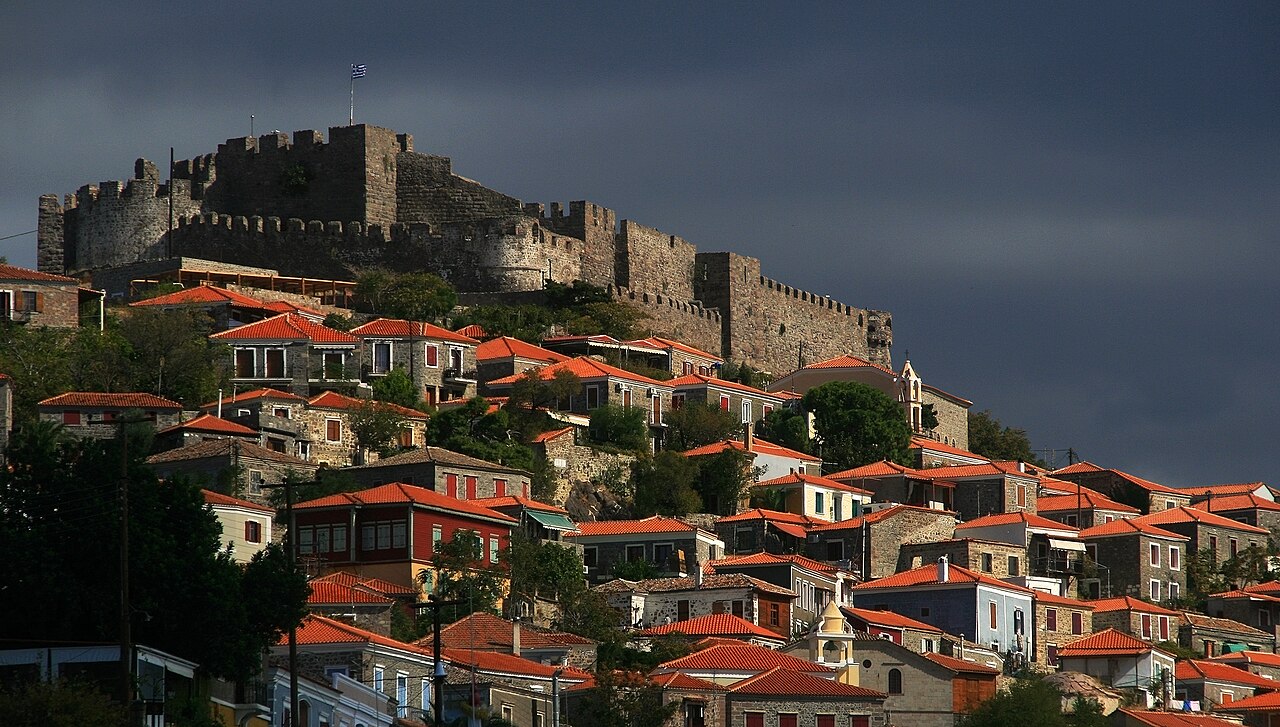
Behramkale Castle, locally known as Behram Kale, is a historic fortress located in the village of Behramkale in the Çanakkale province of Turkey. This castle occupies the acropolis of the ancient Greek city of Assos, a site with a rich history dating back to the 10th century BC. The village itself is often still called Assos, reflecting the enduring legacy of the ancient city beneath the castle.
The ancient city of Assos and its acropolis
Assos was founded in the early 1st millennium BC, becoming a significant cultural and religious center in the region. The city reached its peak of prosperity during the 4th century BC, a period marked by the presence of the renowned Greek philosopher Aristotle, who lived here for three years. The city also holds a notable place in early Christian history, having been visited by Luke the Evangelist and Paul the Apostle around 55 AD.
The acropolis itself is situated atop a 234-meter-high crag, providing a commanding view of the surrounding landscape and the Aegean Sea. This elevated position was strategically important for defense and religious purposes. The most prominent structure on the acropolis was the Temple of Athena, of which some ruins still remain today. This temple was a central place of worship and a symbol of the city’s ancient Greek heritage.
Byzantine fortifications and castle transformation
During the Byzantine period, the ancient acropolis was transformed into a fortified castle. A new fortification wall was constructed around the old acropolis, incorporating several towers to enhance its defensive capabilities. These additions effectively turned the site into a castle, known today as Behramkale Castle.
In addition to the walls and towers, the Byzantines carved several cisterns into the rock to collect and store water. These cisterns were crucial for sustaining the inhabitants during sieges and droughts. Remarkably, these cisterns remained in use by the local villagers until the 1950s, demonstrating the lasting utility of Byzantine engineering.
Historical context and Ottoman conquest
Assos and its acropolis were under the control of the Byzantine commander Makhron during the late Byzantine era. The site’s strategic importance made it a target during the expansion of the Ottoman Empire. In the second half of the 14th century, during the reign of Sultan Murad I, Ottoman forces conquered Assos, incorporating the castle and the surrounding area into their growing empire.
Following the Ottoman conquest, the city of Assos declined further, eventually becoming a small village. Despite this decline, the castle and the remnants of the ancient city have remained significant historical landmarks.
Architectural features and current condition
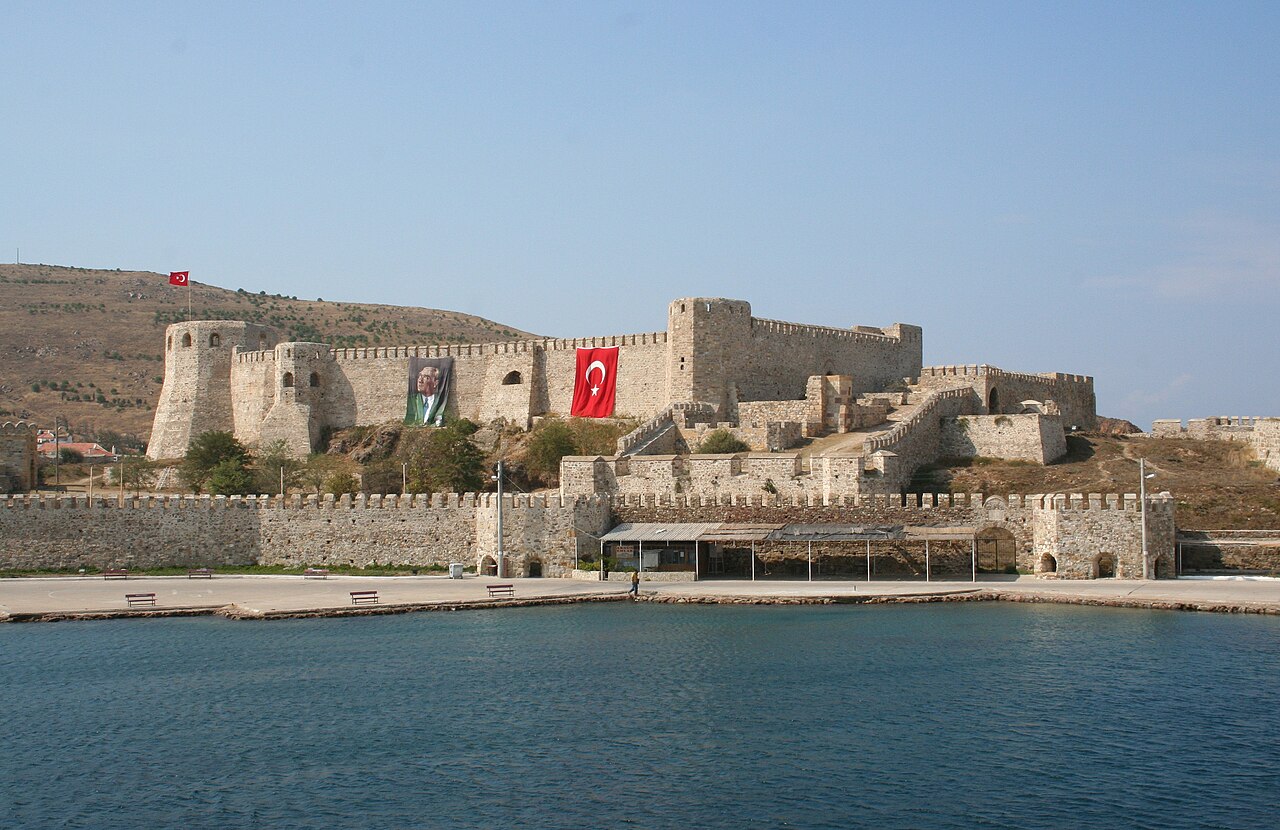
Today, Behramkale Castle stands as a partially preserved Byzantine fortress. While much of the original castle walls and towers have deteriorated over the centuries, visitors can still observe substantial sections of the fortification. The remains of the Temple of Athena on the acropolis add an important classical element to the site.
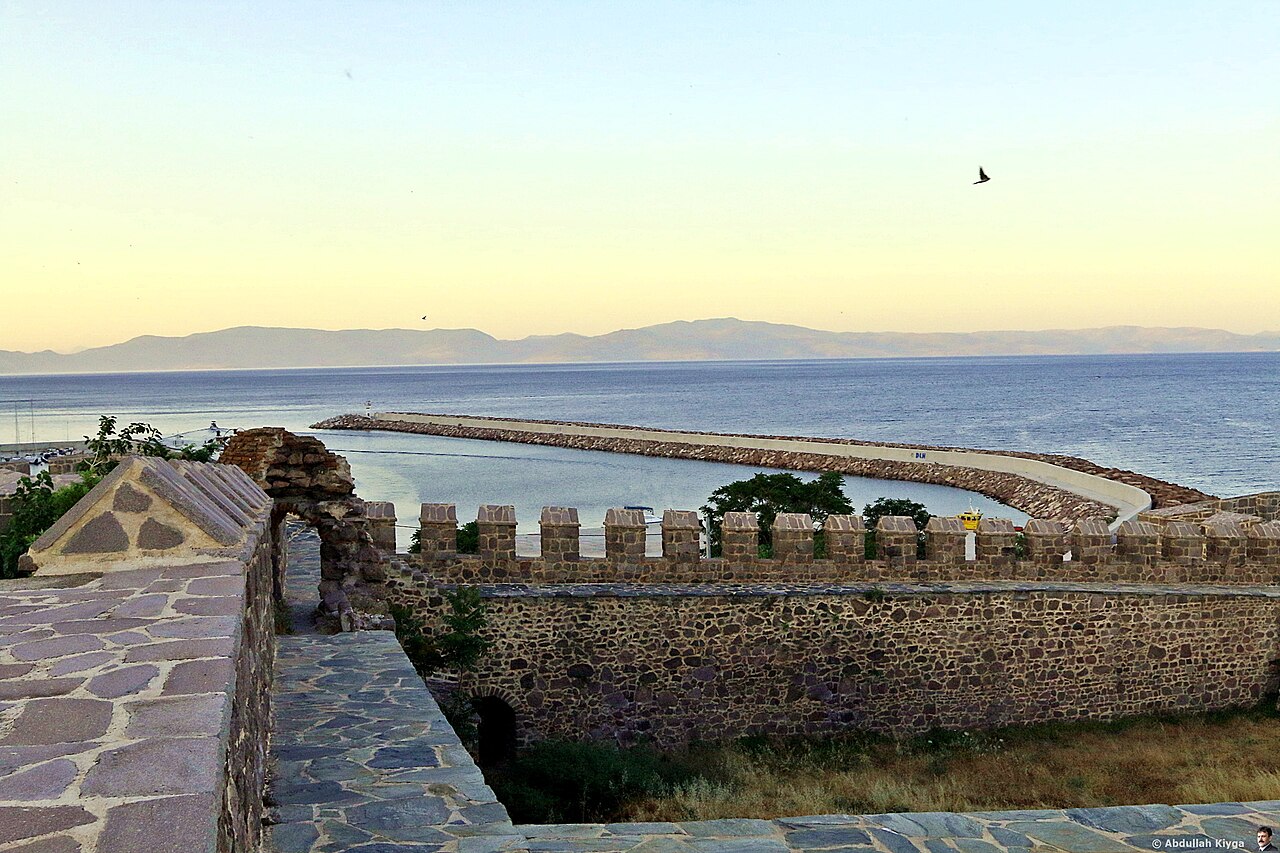
The castle’s location atop a steep rock formation offers panoramic views of the surrounding region, including the Aegean coastline. The combination of ancient Greek and Byzantine architectural elements makes Behramkale Castle a unique site that illustrates the layering of history and cultures in this part of Turkey.
Visiting Behramkale Castle and Assos archaeological site
The site of Behramkale Castle, together with the ruins of the ancient city of Assos, is accessible to visitors for a fee. The archaeological site includes not only the castle walls and temple remains but also other ancient structures such as residential buildings, a theater, and city walls from different historical periods.
The present-day village of Behramkale is known for its charming atmosphere and traditional architecture, making it an attractive destination for tourists interested in history and culture. The combination of natural beauty, archaeological significance, and the castle’s dramatic setting makes it a worthwhile visit for those exploring the Çanakkale region.
Preservation and cultural significance
Efforts to preserve the castle and the ancient city have helped maintain the site’s historical integrity. The castle is recognized as an important cultural heritage site, reflecting the complex history of the region from ancient Greek civilization through Byzantine and Ottoman periods.
Visitors can explore the castle’s defensive structures and the acropolis’s religious monuments, gaining insight into the military and spiritual life of the past inhabitants. The site’s layered history offers a tangible connection to multiple eras of Anatolian history.
Frequently asked questions (FAQ)
- When was Behramkale Castle built?
- Behramkale Castle was constructed during the Byzantine period, around the 10th century AD, on the ancient acropolis of Assos.
- What can visitors see at Behramkale Castle?
- Visitors can explore the remains of the Byzantine fortification walls, towers, and the ancient Temple of Athena ruins on the acropolis.
- Is Behramkale Castle accessible to the public?
- Yes, the castle and the archaeological site of Assos are open to visitors for a fee, allowing access to the historic ruins and scenic views.
- How did the castle get its name?
- The castle is named after the nearby village of Behramkale, which itself is often referred to as Assos, linking it to the ancient city beneath the castle.
- What is the historical significance of Assos?
- Assos was an important ancient Greek city founded in the 10th century BC, known for its cultural heritage, including the Temple of Athena and its connection to Aristotle.
Information
Address
Behram Köyü İç Yolu, Turkey
Loading map...
Visitor reviews
No reviews yet. Been here? Write the first review and help other travelers!
Write the first reviewVisited this castle? Share your experience
Your review helps other travelers and adds first-hand knowledge to our encyclopedia.