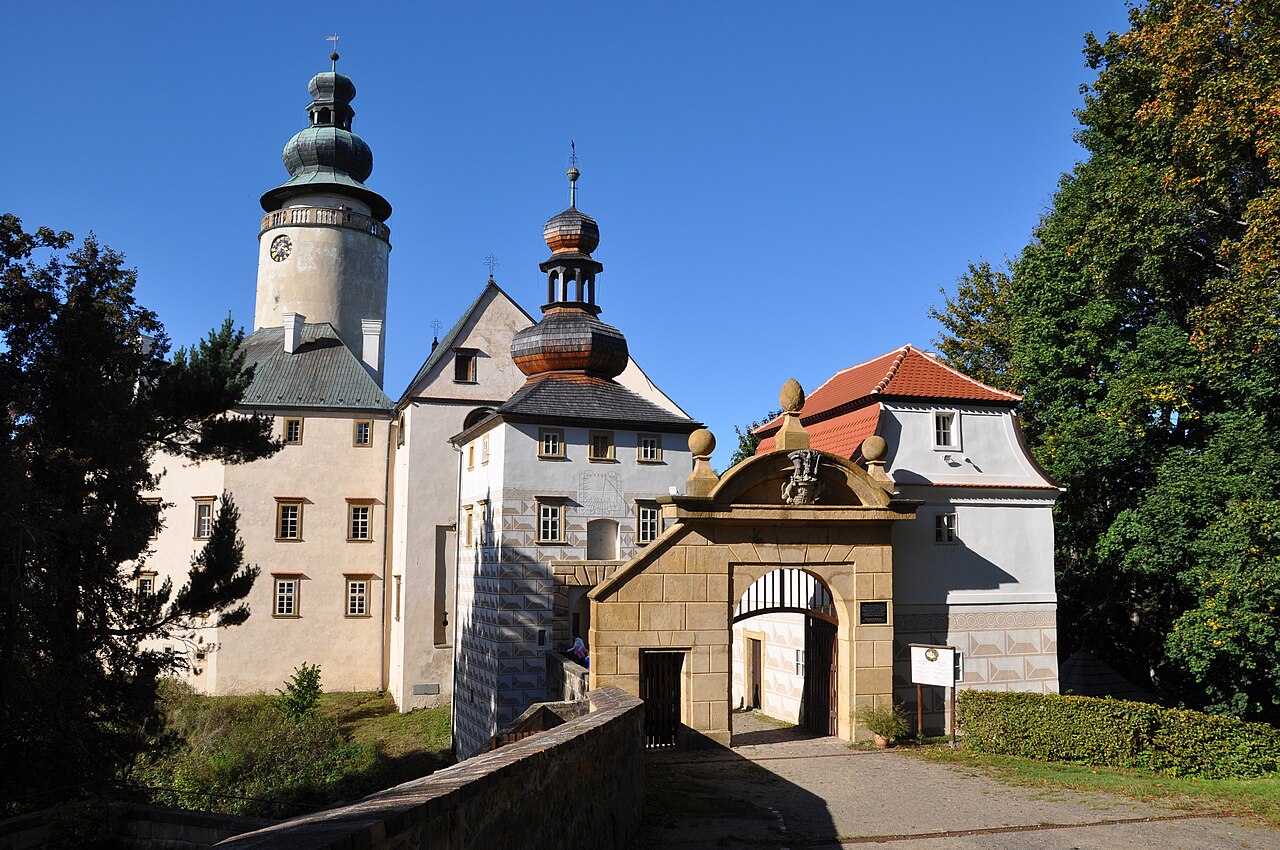
Oybin Castle
Oybin Castle stands as a striking example of a high medieval hill castle whose ruins crown the summit of Oybin hill in the region of Upper Lusatia, Germany. This 13th-century fortress and monastery complex is renowned for its scenic location atop a sandstone table mountain and its significant historical and architectural heritage. The castle’s origins as a guard station on a vital trade route between Bohemia and Lusatia reflect its strategic military importance from the outset.
The castle was likely founded in the early 13th century, with documentary evidence first mentioning it in 1291 under the name Moybin. Initially, it served as a stronghold for robber knights before being destroyed by forces from the nearby town of Zittau. It was swiftly rebuilt and fortified by Henry of Lipá between 1311 and 1316, who transformed it into a formidable bastion protecting the trade routes. The castle’s ownership transitioned to the Bohemian crown by 1346, marking its elevation in political significance.
The establishment of the imperial house and Celestine monastery
In 1364, the castle complex was enhanced by Emperor Charles IV, who commissioned the construction of the imperial house (Kaiserhaus) on the western side of the hill. This building served as a secluded retreat, reflecting the emperor’s desire for a private residence amidst the fortress. Shortly thereafter, the Celestine order established a monastery dedicated to the Holy Spirit in 1369. The adjacent Gothic church, built between 1366 and 1384, was constructed with input from the workshop of the renowned Prague master builder Matthias of Arras and Peter Parléř, linking the site architecturally to the great Gothic works of Prague.
The monastery housed a small community of monks, typically numbering six to twelve, including notable figures such as the inquisitor and prior Petrus Zwicker from 1395. The church’s interior still preserves remarkable Gothic paintings despite damage sustained over the centuries. The monastery and church were integral to the spiritual life of the castle complex until the Protestant Reformation.
Military significance and sieges during the Hussite Wars
Oybin Castle played a critical defensive role during the Hussite Wars in the early 15th century. The fortress endured two sieges in 1420 and 1429, successfully withstanding attacks due to its robust walls and commanding position atop steep rock formations. Its reputation as an impregnable fortress was solidified by these events. The castle also served as a secure storage site for valuable treasures, including parts of the St. Vitus treasure.
Archaeological excavations have uncovered a war wagon with sails at the foot of the hill, underscoring the castle’s association with the military conflicts of the period. These findings provide tangible evidence of the castle’s strategic importance and the intensity of the regional warfare.
The decline and destruction of the castle and monastery
Following the Reformation, the monastery was dissolved, and the site’s religious functions ceased. The Jesuits briefly occupied the premises from 1556 to 1562, removing many valuables to Prague. By 1574, the town of Zittau had acquired the castle and monastery lands, repurposing the buildings mainly for weapon storage.
In 1577, a lightning strike caused a devastating fire that destroyed much of the complex. Further damage occurred in 1681 when part of the cliff collapsed, taking a castle tower and burying the courtyard beneath rubble. These events marked the beginning of the castle’s long decline into ruin. By the 18th century, the site was largely abandoned and suffered from stone robbing, further accelerating its decay.
Romantic rediscovery and restoration efforts
The ruins of Oybin Castle experienced a revival of interest during the 19th century Romantic movement. Artists such as Johann Alexander Thiele and Caspar David Friedrich immortalized the dramatic ruins in their paintings, contributing to the castle’s cultural significance. Early scholarly studies by figures like Christian Adolph Peschcke and Moritz Oskar Sauppe laid the groundwork for archaeological and historical research.
Restoration began in 1829, initially focusing on clearing debris and later on structural stabilization, particularly of the imperial house in 1877. Improved transportation, including the unique narrow-gauge steam railway connecting Oybin to Zittau, facilitated increased visitor access. In 1879, Alfred Moschkau founded a private museum and promoted the site through publications, enhancing public awareness.
Despite losses of artifacts during World War II and sales in the 1930s, preservation efforts continued. Post-war excavations and conservation culminated in the early 1990s with significant uncovering, stabilization, and partial rebuilding of the ruins. Today, the site is open to the public, offering insight into its rich medieval past.
Architectural remains and visitor experience
The castle complex occupies the entire summit of Oybin hill, integrating natural sandstone formations with constructed fortifications. Visitors can explore the remains of the imperial house, the Gothic monastery church, and the defensive walls built on steep rocky terrain. The church, despite partial ruin, retains elements of its original Gothic style and interior paintings.
The monastery ruins have been adapted as a concert venue since the 1970s, celebrated for their excellent acoustics. A hilltop cemetery with gravestones, including that of Knight Peter of Debšice (d. 1550), connects the site to its historical inhabitants. The castle’s layout harmonizes with the natural rock formations, reflecting medieval defensive architecture that leveraged the terrain.
Additional features include a camera obscura on the summit, offering a unique visual experience. An information center at the base provides historical context, while the narrow-gauge steam railway adds a charming transportation option for visitors. The site remains a testament to the layered history of medieval fortifications, monastic life, and Romantic-era cultural heritage in Upper Lusatia.
Frequently asked questions (FAQ)
- How do I get to Oybin Castle?
- Oybin Castle is accessible by car and public transportation. The nearest train station is in Zittau, from where you can take a bus to Oybin. Once in Oybin, it's a short hike up to the castle, offering beautiful views along the way.
- What is the historical significance of Oybin Castle?
- Oybin Castle, built in the 13th century, played a crucial role in the region's defense and served as a royal residence. It is notable for its unique blend of Gothic and Romanesque architectural styles. The castle's ruins tell the story of its turbulent history, including its transformation into a monastery in the late Middle Ages.
- When was Oybin Castle built?
- Construction of Oybin Castle began in 1240, making it one of the oldest castles in the area. Over the centuries, it underwent various expansions and renovations, reflecting the architectural trends of the time. The castle was abandoned in the 18th century, and today it stands as a historical monument.
- Can I visit Oybin Castle year-round?
- Yes, Oybin Castle is open to visitors throughout the year, although access may be limited during winter months due to weather conditions. It's advisable to check the official website for any seasonal changes in visiting hours or special events. During the summer, guided tours are often available.
- Why is Oybin Castle a popular tourist attraction?
- Oybin Castle attracts visitors due to its stunning location on a rocky hilltop and its historical significance. The panoramic views of the surrounding landscape are breathtaking, making it a favorite spot for photography and hiking. Additionally, the castle's rich history and architectural beauty draw history enthusiasts from all over.
- Is it possible to take guided tours at Oybin Castle?
- Yes, guided tours are available at Oybin Castle, providing visitors with insights into its rich history and architectural features. These tours are usually offered during the peak tourist season and can be booked in advance. Check the castle's official website for tour schedules and pricing details.
- What are the opening hours for Oybin Castle?
- Oybin Castle typically opens at 10 AM and closes at 6 PM during the summer months, with reduced hours in the off-peak season. It's best to verify the exact hours before your visit, as they may vary depending on the time of year or special events. Always plan ahead to make the most of your visit.
- What are the ticket prices for Oybin Castle?
- Ticket prices for Oybin Castle vary depending on age and group size, with discounts often available for students and seniors. As of the latest information, adult tickets are around €5, while children may enter for a reduced price. Be sure to check for any special promotions or family packages.
- What nearby attractions should I visit while in Oybin?
- While visiting Oybin Castle, you can also explore the Oybin Monastery, which is located nearby and offers a glimpse into the spiritual history of the region. Additionally, the beautiful Oybin Forest provides excellent hiking opportunities and scenic views. Don't miss the charming village of Oybin itself, with its quaint shops and eateries.
Information
Website
Visit websiteSources & official resources
Verify the information above using these authoritative references.
Loading map...
Visitor reviews
No reviews yet. Been here? Write the first review and help other travelers!
Write the first reviewVisited this castle? Share your experience
Your review helps other travelers and adds first-hand knowledge to our encyclopedia.