Middleham Castle
Middleham Castle stands as a remarkable example of a Norman hill castle in the town of Middleham, North Yorkshire, England. Constructed in the late 12th century, around 1190, by Robert Fitzrandolph, the third Lord of Middleham and Spennithorne, it was built to replace an earlier timber motte and bailey fortification known as William's Hill. The castle's strategic location was chosen to guard the vital road connecting Richmond to Skipton as well as the surrounding Coverdale valley, highlighting its military and administrative importance during the medieval period.
Early history and Norman origins
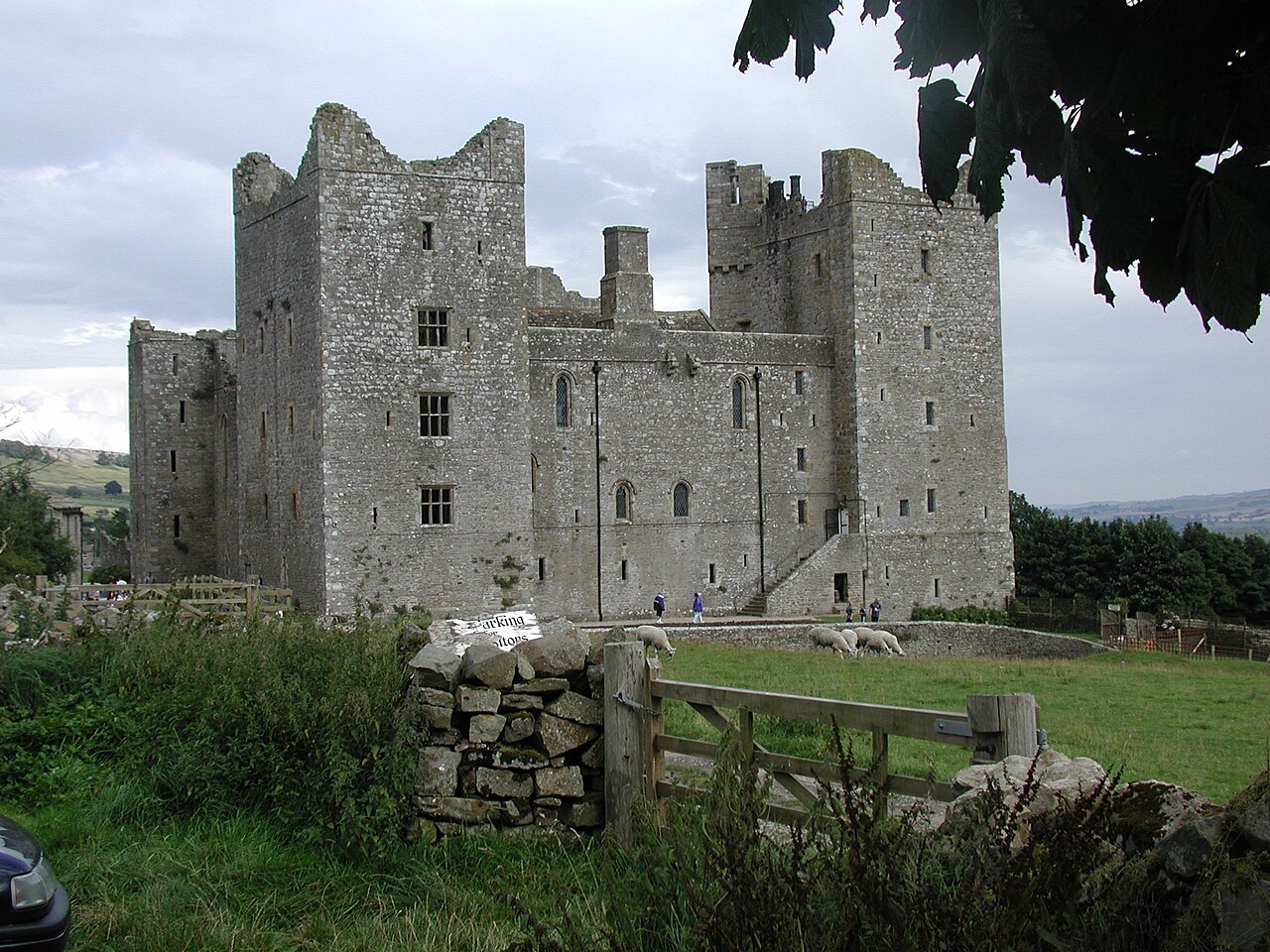
The initial construction phase of Middleham Castle featured a large rectangular stone keep and a surrounding curtain wall forming a strong defensive perimeter. The castle's design reflects typical Norman military architecture with a focus on robust stone fortifications supplanting earlier wooden structures. The keep, measuring approximately 105 feet by 78 feet, is one of the largest square keeps in England, rising two storeys with thick walls, corner and mid-wall turrets, and vaulted ground-floor chambers. Access was originally via a staircase to the first floor, a common Norman defensive feature, and a later-added chapel protected this entrance route.
The Neville family and the Wars of the Roses
In 1270, Middleham Castle passed into the hands of the powerful Neville family, who played a significant role in English politics and warfare throughout the late medieval period. The castle became a principal residence for the Nevilles, especially under Richard Neville, 16th Earl of Warwick, known as the "Kingmaker" during the Wars of the Roses. The castle's fortifications and residential buildings were expanded and enhanced during the 15th century to reflect both its defensive and domestic functions.
Richard, Duke of Gloucester's upbringing
One of the castle's most famous residents was Richard, Duke of Gloucester, later King Richard III, who was raised at Middleham under Warwick's guardianship. Richard married Anne Neville, Warwick's daughter, and made the castle his main residence. Their only son, Edward of Middleham, was born and died within the castle, lending the south-west turret the traditional name "Prince's Tower," though this association is not conclusively documented.
Architectural developments in the 15th century
The 15th century saw significant architectural enhancements under the Neville family. The castle's curtain walls were lined with palatial residential ranges connected to the keep by first-floor bridges, blending military fortification with noble domestic comfort. The great hall was altered by raising its ceiling, likely adding a clerestory or an additional chamber to increase light and space. The original gatehouse was replaced by a more formidable gatehouse tower at the north-east corner, reflecting evolving defensive needs.
Defensive features and layout
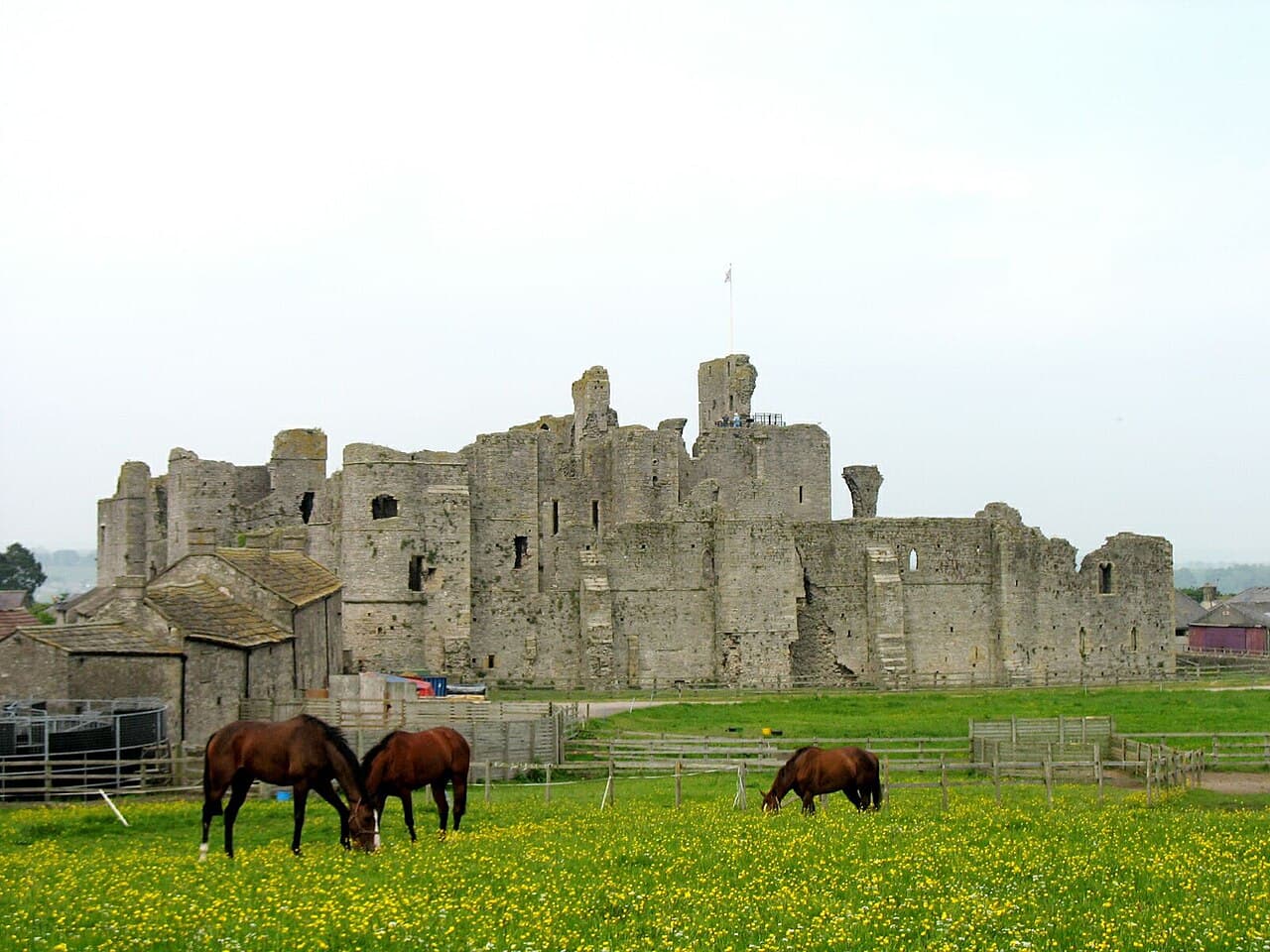
Middleham Castle's layout is compact and rectangular, with each side of the curtain wall extending about 250 feet. The walls, primarily constructed of stone, have endured wear over centuries, with some damage to battlements, window frames, and doorways. The castle also features two wells, underscoring its self-sufficiency during sieges. At its height, the castle could house around forty soldiers, emphasizing its role as both a military stronghold and noble residence.
Later history and decline
Following the death of Richard III at the Battle of Bosworth in 1485, Middleham Castle became royal property under Henry VII for over a century. In 1604, King James I sold the castle to Sir Henry Linley, who repaired and lived there until his death in 1610. The Wood family acquired it in 1662. During the English Civil War, the castle was garrisoned briefly but deemed indefensible by a 1644 parliamentary order. No battles occurred at the site, but it played a minor military role.
By the late 17th century, Middleham Castle fell into disrepair as stone was quarried for local building projects. The castle gradually became a ruin, losing much of its structural integrity. Preservation efforts began in the 20th century, and since 1984, the site has been managed by English Heritage. Today, it remains a Grade I listed ruin, attracting visitors interested in medieval history and architecture.
Visiting Middleham Castle today
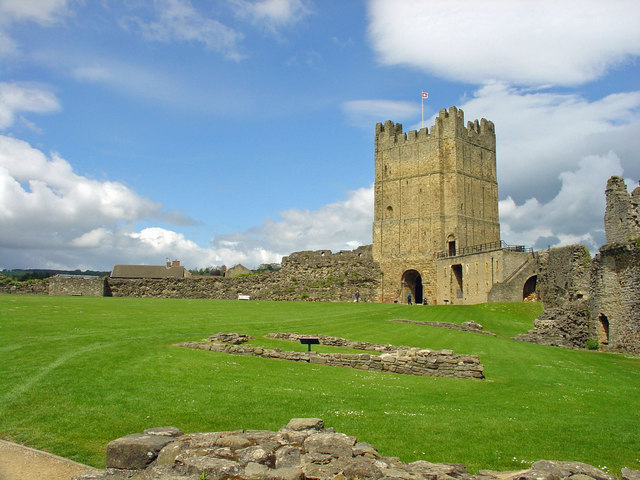
Visitors to Middleham Castle can explore the impressive ruins, including the vast Norman keep, the remains of the curtain walls, and the foundations of the 15th-century residential ranges. The spiral staircase in the south-east turret leads to the roof, offering panoramic views of the surrounding North Yorkshire countryside and the earlier motte site. Interpretive signage and guided tours provide insights into the castle's rich history, from its Norman origins to its role in the Wars of the Roses and beyond.
The castle's compact footprint and well-preserved defensive structures make it a prime example of medieval military architecture adapted for noble residence. Its connections to significant historical figures such as Richard III and the Neville family enhance its cultural importance. Middleham Castle remains a poignant symbol of England's turbulent medieval past and a valuable heritage site for education and tourism.
Frequently asked questions (FAQ)
- How do I get to Middleham Castle?
- Middleham Castle is located in the town of Middleham, North Yorkshire. It is accessible by car and local bus services from nearby towns such as Richmond and Leyburn. Parking is available near the castle.
- What are the opening hours for Middleham Castle?
- Middleham Castle is generally open to visitors during daylight hours, typically from 10:00 to 16:00. It is advisable to check ahead for seasonal variations or special closures.
- Is there an admission fee to visit Middleham Castle?
- The castle is managed by English Heritage, and admission fees apply. Adult tickets are usually around £7-£10, with concessions and family tickets available. English Heritage members often have free entry.
- What is the historical significance of Middleham Castle?
- Middleham Castle is historically significant as a major Norman fortress and the principal residence of Richard, Duke of Gloucester (later King Richard III). It was a key stronghold of the Neville family during the Wars of the Roses.
- Can I explore the interior of the keep?
- Visitors can explore the ruins of the keep, including the vaulted ground-floor chambers and the upper halls. Access to the roof is possible via the spiral staircase in the south-east turret, offering extensive views.
Photo gallery

Photo by CJW•Attribution
Information
Sources & official resources
Verify the information above using these authoritative references.
Loading map...
Visitor reviews
No reviews yet. Been here? Write the first review and help other travelers!
Write the first reviewVisited this castle? Share your experience
Your review helps other travelers and adds first-hand knowledge to our encyclopedia.