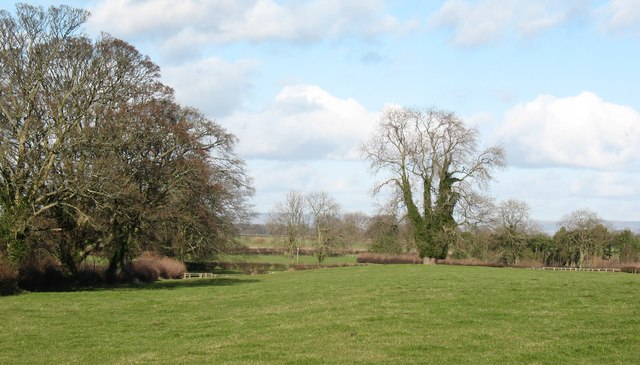
Hornby Castle
Hornby Castle in North Yorkshire is a remarkable example of a fortified manor house with origins dating back to the 14th century. Located on the edge of Wensleydale between Bedale and Leyburn, this Grade I listed building embodies centuries of English history through its architectural evolution and the lineage of its owners. Although much of the original complex has been demolished, the surviving south range provides a vivid window into the castle's past and the styles that have shaped it.
Medieval origins and early history
The castle's earliest foundations trace to the 13th century with the Neville family, prominent landholders in the region, establishing the site. The base of the castle’s rear tower, dating from this period, remains one of the oldest identifiable elements. By 1285, records show the property was owned by Margaret de Neville, confirming the family's early connection to Hornby.
Ownership later passed to the St Quintin family and subsequently to the Conyers family through marriage in the early 15th century. William Conyers, 1st Baron Conyers, undertook extensive rebuilding in the 15th century, preserving only the original 14th-century tower known as the St Quintins tower until its demolition in 1927. This period marked the castle's transition into a more fortified residence with significant architectural enhancements.
Tudor and stuart transformations
The 16th century brought further modifications under Sir Edward Stanley, 1st Baron Monteagle, who added the distinctive polygonal tower that remains a defining feature. The Stanley family played vital roles in national events, including the Rising of the North in 1536 and the Gunpowder Plot of 1605, linking the castle to pivotal moments in Tudor and Stuart England.
During the English Civil War, Hornby Castle was a contested site. In 1643, it was seized by Parliamentarian forces under Colonel Ralph Assheton, and later garrisoned by the Scottish army led by the Duke of Hamilton. Despite orders for slighting, the castle was spared complete destruction. The estate changed hands due to political allegiances, eventually returning to the Neville family before being sold to Robert Brudenell, 2nd Earl of Cardigan in 1663.
18th and 19th century remodeling and ownership
The 18th century saw the castle under the ownership of Colonel Charteris and later John Marsden, with remodeling reflecting contemporary tastes. In 1838, Admiral Sandford Tatham acquired the estate, and his nephew Pudsey Dawson commissioned a major reconstruction between 1847 and 1850. Renowned architects Sharpe and Paley were responsible for this extensive rebuilding, which significantly shaped the castle's modern appearance.
Further expansions were made by Paley and Austin from 1879 to 1882 during the tenure of John Foster, a local mill owner. The firm W. and R. Mawson contributed additional work in 1890. The Foster family retained ownership into the 20th century, overseeing alterations that included the creation of a courtyard and removal of the original main staircase.
Architectural features and layout
Hornby Castle's surviving structure is primarily built from coursed sandstone rubble with lead and stone slate roofs. The irregular layout comprises two-story buildings with battlemented parapets demonstrating influences of the Perpendicular Gothic style, noted for its vertical emphasis and ornate stonework.
The southwest-facing front entrance is symmetrically arranged with seven bays, including prominent projecting outer bays with angled bay windows. The central entrance porch rises three stories, flanked by an octagonal turret and a diagonal buttress, emphasizing its architectural prominence.
Behind the porch, two towers reflect different construction phases: a square tower with a partially blocked Venetian window and the taller polygonal tower from the 16th century. Windows throughout combine mullions and transoms, creating grids of smaller panes typical of the period.
Internally, the porch ceiling features foliated bosses, while the main hall boasts a spacious interior accessed via a Tudor arch framed by a timber screen with Gothic glazed panels. A sandstone fireplace mirrors this arch style. Late 19th-century stained glass windows add historic ambiance. The library contains exquisite woodwork attributed to Gillows, and upper rooms include a Gothic-style billiard room and a drawing room with a curved vaulted ceiling supported by pendents.
Grounds and ancillary structures
To the northeast lies an older courtyard enclosed by converted apartments, accessed through a gatehouse with a pointed arch. The castle is flanked by sandstone terraces from the 1800s, connected by descending steps and culminating in a semicircular bastion, a defensive feature.
Along the former entrance drive stood a lodge with a steep slate roof and embattled turret, evoking miniature battlements. Nearby gate piers feature carved roundels with green men and the Pudsey Dawson family crest. These external elements are Grade II listed, preserving the character of the castle's approach.
Later history and modern status
In the 20th century, much of the original castle complex was demolished, including the eastern range and the 14th-century St Quintins tower. The main doorway from the 16th century was preserved and is now part of the Burrell Collection in Glasgow. The surviving south range was purchased in 1936 by Major-General Walter E. Clutterbuck and remains a private residence.
The Clutterbuck family restored the park and introduced a small herd of bison, maintaining the estate's agricultural and heritage aspects. The gardens are occasionally open to the public, offering a glimpse into the castle's enduring legacy.
Historical significance and cultural heritage
Hornby Castle stands as a testament to the evolution of English fortified manor houses from the medieval through the late medieval and into the post-medieval period. Its architecture reflects a blend of Gothic and Tudor influences, shaped by notable families such as the Nevilles, Conyers, Stanleys, Darcys, and Fosters.
The castle's involvement in major historical events, including the English Civil War and political intrigues of the Tudor and Stuart eras, adds to its cultural importance. Today, Hornby Castle remains a significant heritage site, preserving architectural features and historical narratives that enrich the understanding of England's noble past.
Frequently asked questions (FAQ)
- What is the best time to visit Hornby Castle?
- Hornby Castle is a private residence with limited public access. The gardens are occasionally open during spring and summer, which is the best time to visit for pleasant weather and blooming landscapes.
- Is Hornby Castle open to the public?
- Hornby Castle is primarily a private home and is not regularly open to the public. However, the gardens may be accessible during special events or open days announced by the owners.
- What architectural styles are prominent at Hornby Castle?
- Hornby Castle features prominent Gothic and Tudor architectural elements, including battlemented parapets, Tudor arches, and decorative stonework characteristic of the Perpendicular Gothic style.
- How has Hornby Castle's structure changed over time?
- Originally a larger complex, much of Hornby Castle was demolished in the 20th century, leaving only the south range. Significant remodeling occurred in the 15th, 18th, and 19th centuries, shaping its current appearance.
- Are there any notable historical events associated with Hornby Castle?
- Hornby Castle was involved in key historical events such as the English Civil War and the political intrigues of the Tudor and Stuart periods, reflecting its strategic and noble significance.
Information
Sources & official resources
Verify the information above using these authoritative references.
Loading map...
Visitor reviews
No reviews yet. Been here? Write the first review and help other travelers!
Write the first reviewVisited this castle? Share your experience
Your review helps other travelers and adds first-hand knowledge to our encyclopedia.