Middelgrundsfortet
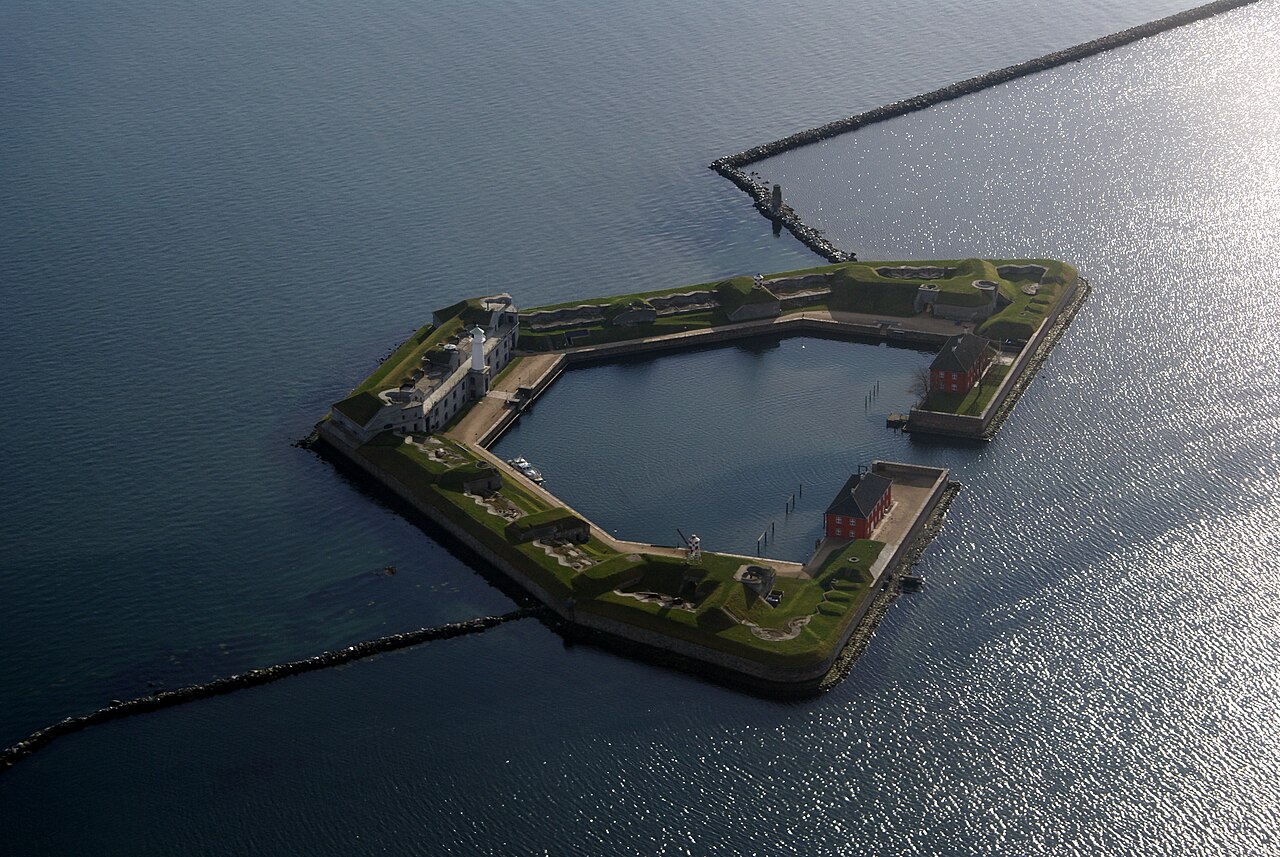
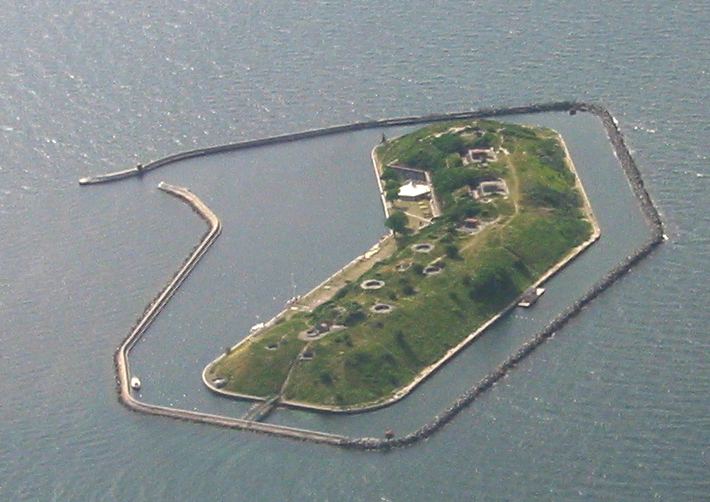
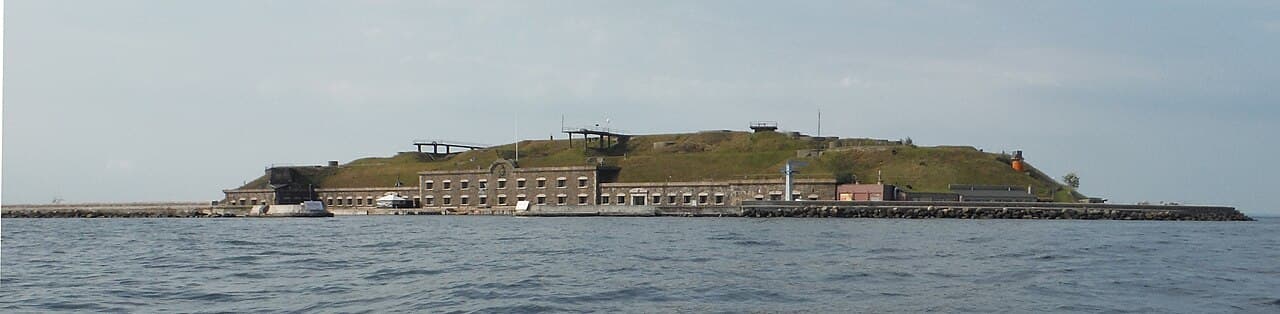
Middelgrundsfortet, also known as Ungdomsøen (The Youth Island) since 2015, is a remarkable sea fort situated on an artificial island in the Øresund strait between Copenhagen, Denmark, and Malmö, Sweden. Constructed between 1890 and 1894, this fortress was a key part of Copenhagen's maritime defense system, built to protect the entrance to the city's harbor. It holds the distinction of being the largest sea fortress in the world and remains the largest man-made island without abutment, covering an area of approximately 70,000 square meters, including wave breakers, with the fortress buildings themselves extending over around 15,000 square meters.
Construction and strategic importance
The fort was constructed on a seabed where the water depth reaches about 7 meters at the northern confluence of the straits Kongedybet and Hollænderdybet. This location was strategically chosen to control naval access to Copenhagen harbor. The island was created using materials partly excavated from the nearby Frihavnen (Freeport of Copenhagen), showcasing an impressive feat of engineering for the late 19th century. As a bastioned fortress, Middelgrundsfortet was designed with defensive structures typical of coastal fortifications, including thick walls, gun emplacements, and protective wave breakers to withstand naval bombardment and attacks.
Architectural features and military use
The fortress's design includes an extensive network of buildings and corridors, totaling approximately 15,000 square meters. These structures housed barracks, ammunition depots, command centers, and artillery batteries. Notably, a HAWK missile battery was installed on the island during the Cold War era, reflecting the fort's continued military relevance into the 20th century. The island's fortifications were equipped to defend against both naval and aerial threats, adapting over time to advances in military technology.
Artificial island engineering
The construction of Middelgrundsfortet as an artificial island was a significant engineering achievement. The island was built up from the seabed using rock and earth, reinforced with wave breakers to protect against the harsh marine environment. This method allowed for the creation of a stable platform capable of supporting heavy fortifications and military installations. The island's isolated position in the sea provided a natural defensive advantage, making it difficult for enemy forces to approach undetected.
Historical timeline and transformation
From its completion in the late 19th century, Middelgrundsfortet served as a critical component of Copenhagen's coastal defenses. It remained an active military installation until 1984, when the Danish military decommissioned the site. In 2002, the fortress was sold to a private investor who converted the island into a unique hotel complex featuring approximately 200 rooms connected by over 3 kilometers (2 miles) of corridors. This adaptive reuse preserved much of the fortress's original architecture while repurposing it for hospitality.
Current use as Ungdomsøen
In 2015, the island was acquired jointly by two Danish scout organizations and renamed Ungdomsøen (The Youth Island). It now functions as a camp and activity center for children and young people, providing a space for outdoor education, team-building, and cultural events. The transformation from a military fortress to a youth camp is a notable example of adaptive reuse of historical military sites for community and recreational purposes.
Access and visitor information
Middelgrundsfortet is accessible by ferry from Langelinie in Copenhagen, making it a unique destination reachable only by boat. The ferry service connects the city center with the island, facilitating visits for tourists and youth groups alike. The island's facilities support a variety of activities, including overnight stays, workshops, and outdoor adventures, all set within the historic fortress environment.
Cultural and heritage significance
The fortress is an important cultural landmark in Denmark, representing a period of military innovation and coastal defense strategy during the modern era. Its status as the world's largest sea fort and a pioneering artificial island highlights Denmark's maritime heritage and engineering capabilities. The preservation and adaptive reuse of Middelgrundsfortet contribute to public awareness of Denmark's military history and provide a tangible connection to the past.
Frequently asked questions (FAQ)
- How do I get to Middelgrundsfortet from Copenhagen?
- You can reach Middelgrundsfortet by ferry from Langelinie, located in central Copenhagen. The ferry service connects the city directly to the island, providing easy access for visitors.
- What is the historical significance of Middelgrundsfortet?
- Middelgrundsfortet was built in the 1890s as part of Copenhagen's sea fortifications and was the largest sea fortress in the world. It played a key role in coastal defense until it was decommissioned in 1984.
- Can I stay overnight on Middelgrundsfortet?
- Yes, after its conversion into a hotel complex, Middelgrundsfortet offers accommodations with around 200 rooms connected by extensive corridors. It now also serves as a youth camp, providing facilities for overnight stays.
- When was Middelgrundsfortet converted into Ungdomsøen?
- The island was purchased by two scout organizations in 2015 and transformed into Ungdomsøen, a camp and activity center for children and young people.
- What architectural features characterize Middelgrundsfortet?
- The fortress features bastioned defensive walls, extensive barracks, ammunition depots, and a HAWK missile battery installation, all built on a large artificial island with wave breakers.
Photo gallery

Information
Website
Visit websiteSources & official resources
Verify the information above using these authoritative references.
Loading map...
Visitor reviews
No reviews yet. Been here? Write the first review and help other travelers!
Write the first reviewVisited this castle? Share your experience
Your review helps other travelers and adds first-hand knowledge to our encyclopedia.