Flakfortet
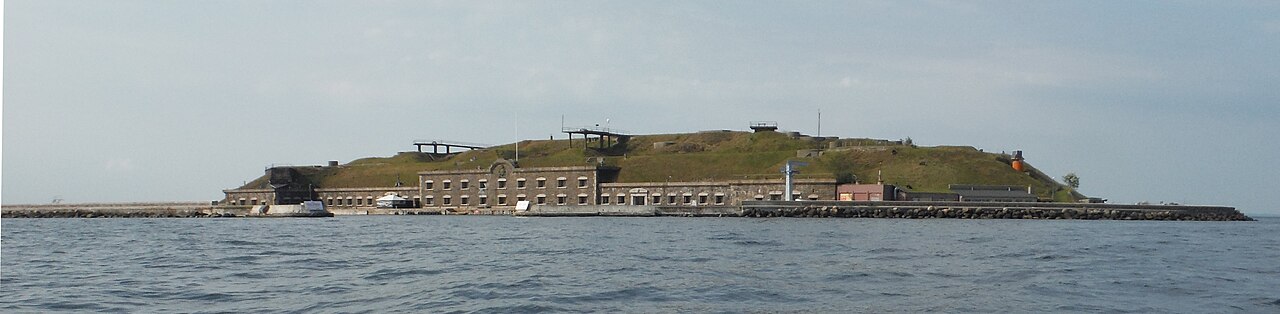
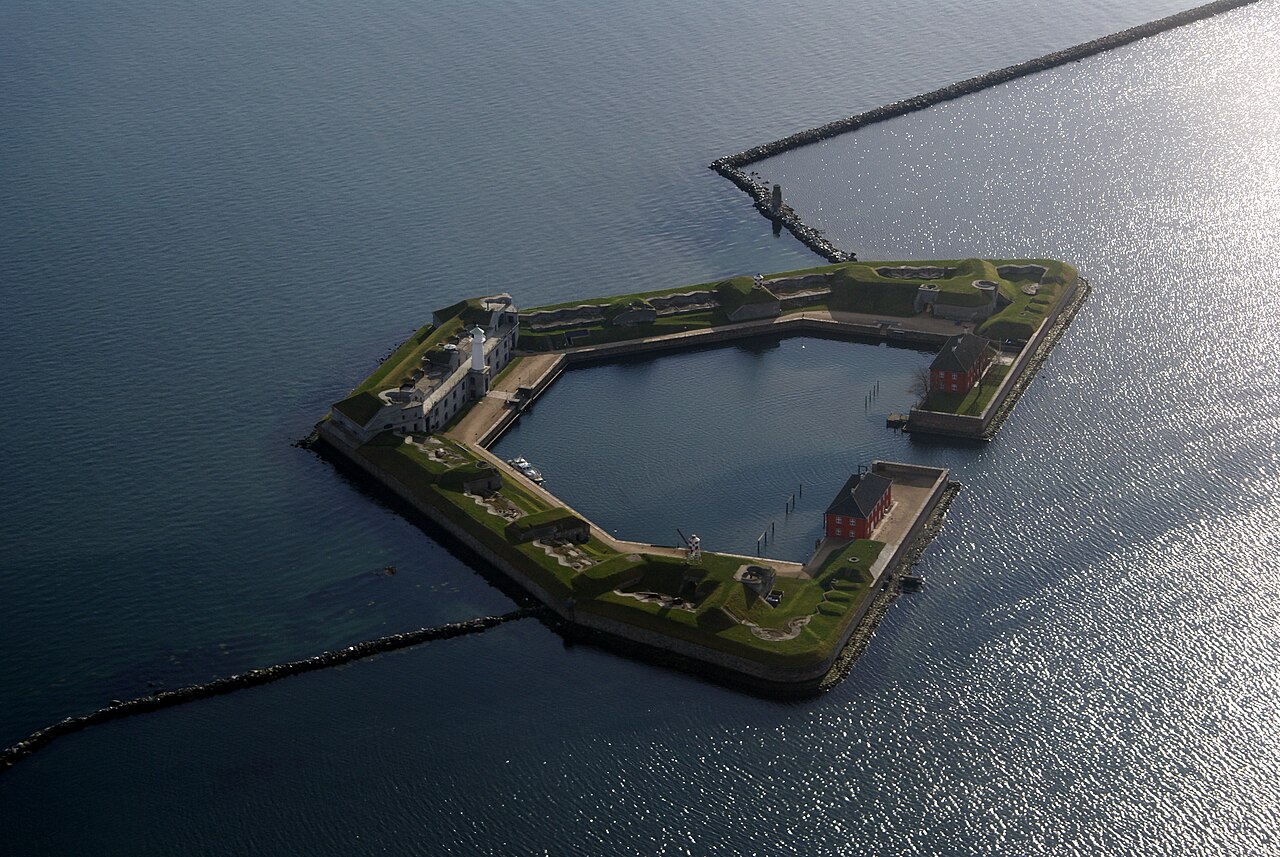
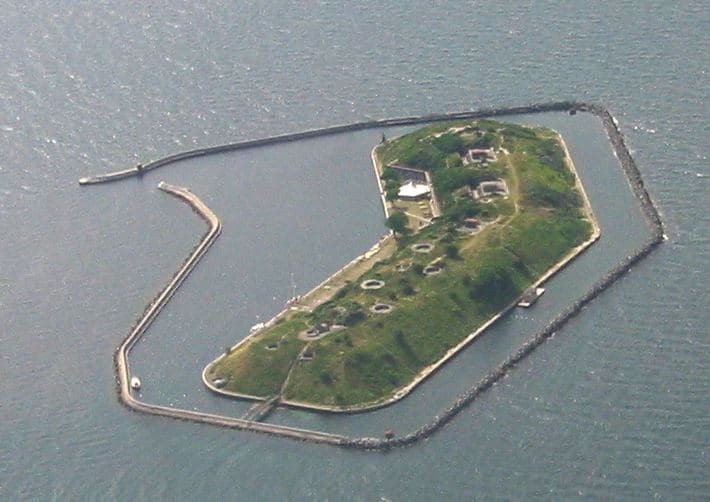
Flakfortet, meaning "sand-shoal fortress," is a modern bastioned fortress located on an artificial island known as Saltholmrev in the Øresund Strait, between Copenhagen and the island of Saltholm in Denmark. Constructed between 1910 and 1914, it is the last of three artificial sea forts built by the Danes to defend the entrance to Copenhagen's harbor. The other two forts are Trekroner Fort, the oldest, and Middelgrundsfortet. Flakfortet's strategic position allowed it to cover the Hollænderdybet channel between Middelgrundsfortet and Saltholm, as well as the Flinterenden channel between Sweden and Saltholm, protecting the vital maritime approach to the Danish capital.
Construction and engineering innovations
The creation of Flakfortet involved significant engineering achievements for its time. The island itself was built using large caissons of reinforced concrete, which were among the first uses of such structures in Denmark. These caissons were initially cast at the Lynetten quay on Refshale Island, with the final caissons being cast directly at Flakfortet. The island rises approximately 23 meters above sea level and covers an area of about 32,000 square meters. The robust construction was designed to withstand naval attacks and the harsh marine environment, making Flakfortet a durable bastioned fortress.
Military role and armament
Initially, Flakfortet was equipped with coastal artillery designed to repel enemy ships attempting to enter Copenhagen's harbor. Over time, its role evolved to focus more on anti-aircraft defense, reflecting changes in military technology and threats during the first half of the 20th century. The fort's guns were strategically placed to cover critical maritime channels, providing overlapping fields of fire with the other sea forts. Flakfortet remained an active military installation until 1968, when its defense functions were officially discontinued.
Architectural features and layout
As a bastioned fortress, Flakfortet features typical defensive elements such as thick concrete walls, bastions for artillery placement, and protected gun emplacements. The design reflects early 20th-century military architecture adapted for coastal defense, integrating reinforced concrete construction with traditional bastion layouts. The island's flat top supports various military buildings and facilities that housed personnel and equipment during its operational years.
Post-military use and current status
Since the cessation of its military use, Flakfortet has been repurposed for recreational and cultural activities. The island now hosts concerts, teambuilding events, and conferences. It includes a restaurant and yacht moorings, making it a popular destination for visitors during the summer months. A ferry service, operated by Spar Shipping, runs several trips daily from Nyhavn to the island, with a journey time of about 40 minutes each way. Additionally, an overnight hostel on the island accommodates visitors wishing to stay overnight.
Name and terminology
The name "Flakfortet" derives from the Danish word "flak," meaning sand shoal, referring to the shallow waters around the island. This is distinct from the German term "Flak," which refers to anti-aircraft artillery, despite the fort's later use for such weapons. The island is often simply called Flakfortet, with the original island name Saltholmrev used less frequently.
Access and visitor information
Visitors can reach Flakfortet by ferry during the summer season, with regular scheduled trips that make it accessible for day visits. The island's facilities and natural surroundings offer a unique experience combining military history with leisure. The presence of a hostel allows for extended stays, and the restaurant provides amenities for dining. Flakfortet's transformation from a strategic military bastion to a recreational site illustrates the adaptive reuse of historic coastal fortifications in Denmark.
Frequently asked questions (FAQ)
- How do I get to Flakfortet?
- You can reach Flakfortet by taking a ferry operated by Spar Shipping from Nyhavn in Copenhagen. The ferry runs five scheduled trips daily during the summer, with a journey time of about 40 minutes each way.
- What was Flakfortet's original military purpose?
- Flakfortet was built as a coastal defense bastioned fortress to protect the entrance to Copenhagen's harbor. Over time, it shifted focus to anti-aircraft defense before ceasing military operations in 1968.
- Can I visit Flakfortet year-round?
- Flakfortet is primarily accessible during the summer months when the ferry service operates. Visitors can enjoy recreational activities, dining, and overnight stays during this period.
- What architectural features are notable at Flakfortet?
- Flakfortet features reinforced concrete caissons, bastions for artillery, thick defensive walls, and gun emplacements typical of early 20th-century coastal fortifications.
- Is there accommodation available on Flakfortet?
- Yes, there is an overnight hostel on Flakfortet, allowing visitors to stay on the island and experience its unique setting beyond day visits.
Photo gallery

Information
Website
Visit websiteSources & official resources
Verify the information above using these authoritative references.
Loading map...
Visitor reviews
No reviews yet. Been here? Write the first review and help other travelers!
Write the first reviewVisited this castle? Share your experience
Your review helps other travelers and adds first-hand knowledge to our encyclopedia.