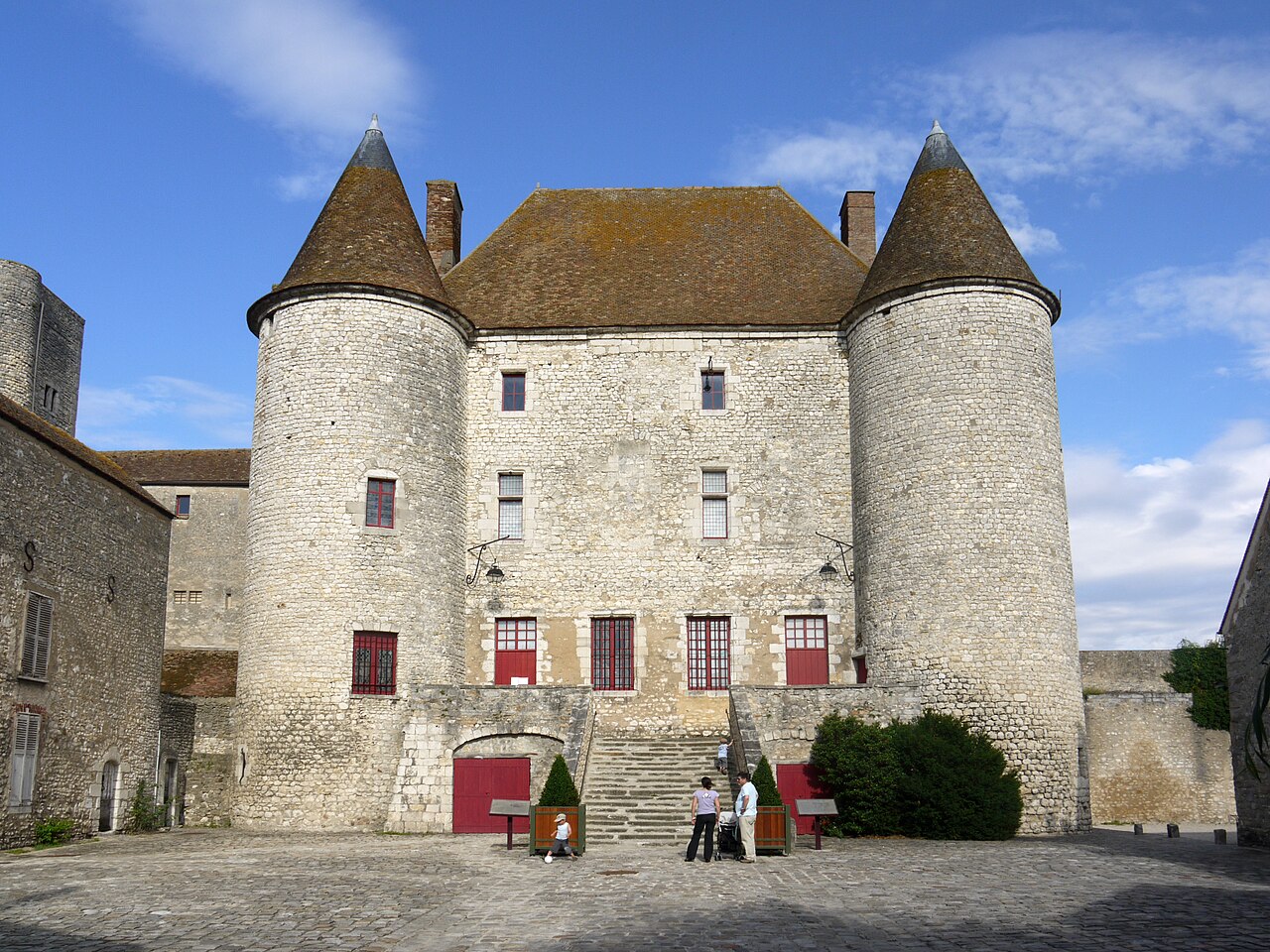
Mez-le-Maréchal Castle
Mez-le-Maréchal Castle, also known as Château de Mez-le-Maréchal, is a remarkable example of 13th-century French military architecture, situated in the woods east of the town of Dordives in the Loiret department of France. This castle embodies the Philippian style of fortification, named after King Philip II of France, reflecting the strategic and defensive architectural innovations of the early High Medieval period.
Constructed in the early 13th century by Henry I Clément, who succeeded his brother after the latter's death during the Siege of Acre in 1191, the castle was originally built atop or near the site of an earlier Roman structure, indicated by the proximity of an ancient Roman road encircling the site. This location was chosen for its strategic advantages, combining natural woodland cover with a commanding position for defense and control of the surrounding territory.
Historical background and royal connections
The Clément family maintained ownership of Mez-le-Maréchal Castle until the end of the 13th century, when the family line ended. In 1314, the castle was absorbed into the royal domain under Philip IV of France, also known as Philip the Fair. He bestowed the castle upon Clementia of Hungary, his daughter-in-law, who visited the castle on several occasions. Subsequently, by 1328, ownership passed to Philip VI of France, who gifted it to his wife, Joan of Burgundy. The castle served as a royal residence and was visited multiple times by Philip VI and his court.
During the Hundred Years' War, Mez-le-Maréchal Castle saw limited military action, with its most notable event being the capture by retreating English troops in 1427 during their withdrawal from Montargis. Despite this, the castle's primary role was as a symbol of royal authority and a reward for loyalty, often exchanged by French kings to secure the allegiance of influential military leaders up until the early 16th century.
Architectural features and design
Mez-le-Maréchal Castle exemplifies the Philippian military architectural style, characterized by a square enclosure fortified with round towers at each corner, a design that enhanced defense by eliminating blind spots and improving the ability to repel attackers. The main entrance is located on the north face, flanked and protected by two additional round towers, which served both as defensive strongpoints and as imposing gatehouses.
The use of round towers rather than square ones was a significant advancement in medieval fortification, as it better deflected projectiles and reduced vulnerabilities at the corners. The castle's walls and towers were constructed using local stone, and the layout reflects a balance between military utility and residential comfort, typical of noble residences of the period.
Possible roman origins and site context
There is evidence suggesting that the castle was built on or near a site with Roman origins, as indicated by the presence of an old Roman road encircling the castle. This highlights the long-term strategic importance of this location, which had been recognized since antiquity for its tactical advantages in controlling movement through the region.
Later history and preservation
Following its royal phase, Mez-le-Maréchal Castle passed through the hands of various noble families and was sold multiple times. It remained in use as a residence until the mid-18th century, after which it gradually fell into disrepair. Over time, the castle was neglected and used as a quarry by local inhabitants, leading to significant loss of its original fabric and features.
In 2016, the castle was acquired by Florian Renucci, the master mason behind the construction of Guédelon Castle, a modern project recreating a 13th-century castle using traditional techniques in Burgundy. This acquisition has sparked renewed interest in the site, with efforts aimed at preservation and potential restoration to safeguard its historical and architectural legacy.
Visiting mez-le-maréchal castle today
Currently, Mez-le-Maréchal Castle can be visited by appointment, although access to the interior is limited and requires prior arrangement. The castle's exterior remains an impressive testament to medieval military design, offering visitors a glimpse into the Philippian style fortifications and the complex history tied to the French monarchy and nobility.
Visitors interested in medieval architecture and French history will find Mez-le-Maréchal Castle a fascinating site, particularly due to its connections with significant historical figures such as Philip II, Philip IV, and Philip VI of France. Its enduring presence amidst the woods near Dordives adds to the atmospheric experience of exploring a genuine medieval fortress with centuries of history.
Nearby attractions and regional context
Located in the Loiret region, Mez-le-Maréchal Castle is part of a rich heritage landscape that includes other medieval castles, historic towns, and natural parks. The proximity to Dordives and the broader Centre-Val de Loire area makes it accessible for visitors exploring the cultural and historical sites of north-central France.
Exploring the castle alongside nearby attractions provides a comprehensive understanding of the region's medieval past and its evolution through the centuries, making it a valuable destination for history enthusiasts and scholars alike.
Frequently asked questions (FAQ)
- How do I arrange a visit to Mez-le-Maréchal Castle?
- Visits to Mez-le-Maréchal Castle are available by appointment only. It is recommended to contact the current owner or managing entity in advance to schedule a tour.
- What is the historical significance of Mez-le-Maréchal Castle?
- Mez-le-Maréchal Castle is significant for its 13th-century Philippian military architecture and its historical connections to French royalty, including Philip II, Philip IV, and Philip VI.
- When was Mez-le-Maréchal Castle built and by whom?
- The castle was built in the early 13th century by Henry I Clément, a Marshal of France and close associate of King Philip II.
- Can I see the interior of Mez-le-Maréchal Castle during a visit?
- Interior access is limited and requires prior arrangement. Visitors should confirm availability when scheduling their appointment.
- Why is Mez-le-Maréchal Castle called a Philippian style fortress?
- The castle exemplifies the Philippian style of military architecture, developed during the reign of Philip II of France, characterized by square enclosures with round corner towers for enhanced defense.
- Is Mez-le-Maréchal Castle accessible for visitors interested in medieval architecture?
- Yes, the castle offers a valuable experience for those interested in medieval military architecture and French history, especially given its royal associations and well-preserved fortifications.
- What other attractions can I visit near Mez-le-Maréchal Castle?
- The Loiret region offers numerous historic sites, including other medieval castles and cultural landmarks, making it an excellent area for exploring French medieval heritage.
Information
Opening hours
By appointment only
Current owner
Florian Renucci
Address
6210 Route de Bransles, France
Loading map...
Visitor reviews
No reviews yet. Been here? Write the first review and help other travelers!
Write the first reviewVisited this castle? Share your experience
Your review helps other travelers and adds first-hand knowledge to our encyclopedia.