Castle of Nemours

Castle of nemours
Nemours, France
High Medieval (11th–13th c.)
Well Preserved

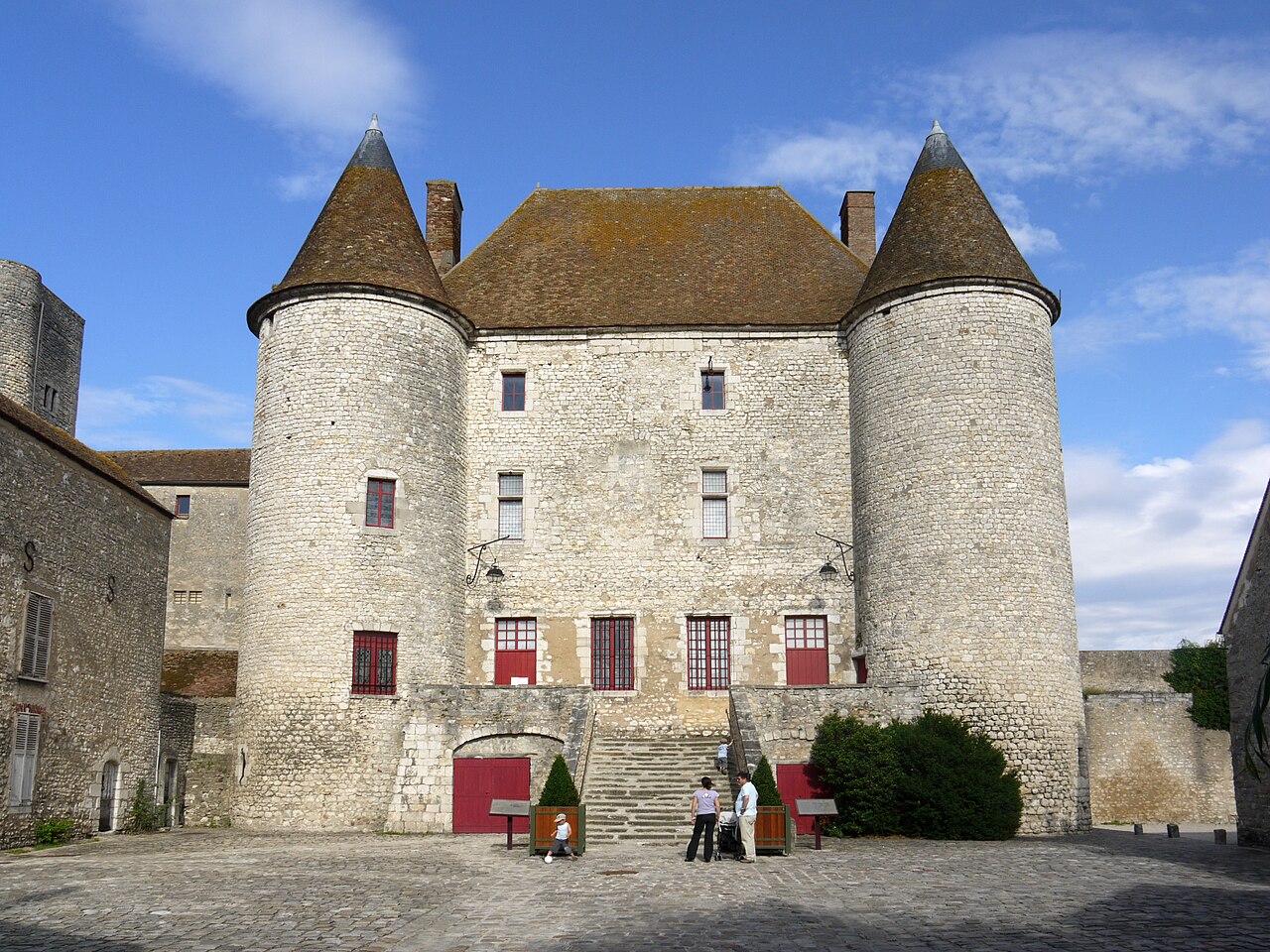
The castle of Nemours is a remarkable example of high medieval military architecture located in the town of Nemours, France, situated on the banks of the Loing river. This 12th-century fortress was originally constructed to control the strategic river crossing and to assert feudal power in the region south of Paris. Its position at the extreme southern edge of the Paris conurbation made it a significant defensive site during the Middle Ages.

Historical background and significance

The castle's origins date back to the 12th century, a period marked by frequent territorial disputes and the consolidation of feudal domains in France. The castle of Nemours was built as a stronghold to protect the surrounding lands and maintain control over the vital waterway of the Loing river, which was an important route for trade and military movements. Over the centuries, the castle witnessed various modifications and played a role in regional conflicts, reflecting the turbulent history of medieval France.

In the modern era, the castle underwent significant transformation when it was converted into a museum between 1903 and 1999. This adaptation preserved much of its medieval character while allowing it to serve as a cultural institution. The museum today is known for its extensive collections of pottery, which highlight the artistic heritage of the region.

Architectural features and layout

The castle of Nemours is a classic example of a high medieval fortress with robust defensive features. Its location on the riverbank provided natural protection on one side, complemented by thick stone walls and fortified towers on the others. The castle's design includes a keep, curtain walls, and a gatehouse, all typical of the period's military architecture.

One of the notable architectural elements is the remains of the former chapel, which was recognized for its historical value and added to the register of ancient monuments in 1926. This chapel would have served the spiritual needs of the castle's inhabitants and reflects the integration of religious structures within medieval fortifications.

Preservation and cultural importance

The castle's preservation has been a priority for French cultural authorities. It was officially designated a monument historique by the French Ministry of Culture in 1977, highlighting its importance as a heritage site. This status ensures ongoing protection and maintenance efforts to conserve its architectural integrity and historical significance.

Today, the castle of Nemours stands as a testament to medieval defensive architecture and feudal history in France. Its adaptation into a museum has allowed it to remain accessible to the public, offering educational opportunities and cultural enrichment through its exhibitions, particularly its renowned pottery collection.

Visiting the castle of nemours

The castle is open to visitors who wish to explore its medieval architecture and museum collections. Its location near Paris makes it an accessible destination for those interested in French history and medieval castles. Visitors can appreciate the blend of military and religious architectural elements, as well as the cultural artifacts housed within.

Faq about the castle of nemours

  • When was the castle of Nemours built? The castle was constructed in the 12th century during the high medieval period.
  • What is the architectural style of the castle? It is a high medieval fortress featuring typical elements such as a keep, curtain walls, and a fortified gatehouse.
  • Is the castle of Nemours open to the public? Yes, it has been transformed into a museum and is open for visitors interested in medieval history and pottery collections.
  • What collections can be seen at the museum? The museum houses significant collections of pottery that reflect the artistic heritage of the region.
  • What is the condition of the castle today? The castle is well preserved and protected as a monument historique by the French Ministry of Culture.
  • Are there any notable historical designations for the castle? Yes, the castle was designated a monument historique in 1977, and the remains of its chapel were registered as ancient monuments in 1926.

Frequently asked questions (FAQ)

How do I get to the Castle of Nemours?
The Castle of Nemours is easily accessible by public transport, with regular train and bus services connecting it to Paris and surrounding areas. If you are driving, there is parking available nearby, making it convenient for visitors coming from different regions.
What is the historical significance of the Castle of Nemours?
The Castle of Nemours dates back to the 12th century and played a crucial role in the defense of the region during the medieval period. Its strategic location enabled it to serve as a stronghold for various noble families throughout its history.
When was the Castle of Nemours built?
Construction of the Castle of Nemours began in the 12th century, with significant modifications and expansions occurring over the following centuries. The architectural style reflects the changes in military needs and artistic influences throughout medieval France.
Can I take guided tours of the Castle of Nemours?
Yes, guided tours are available at the Castle of Nemours, offering visitors insightful information about its history and architecture. These tours are typically available in multiple languages and can enhance your understanding of the castle's significance.
Why is the architecture of the Castle of Nemours notable?
The architecture of the Castle of Nemours is notable for its blend of medieval fortifications and Renaissance elements, showcasing the evolution of castle design over time. The castle features impressive towers, defensive walls, and beautifully preserved interiors that reflect its historical importance.
Is it possible to visit the Castle of Nemours year-round?
Yes, the Castle of Nemours is open to visitors year-round, although opening hours may vary by season. It is recommended to check the official website for the latest information on visiting hours and any seasonal events.
What are the ticket prices for the Castle of Nemours?
Tickets to the Castle of Nemours are reasonably priced, with discounts available for students, seniors, and children. Special family packages and group rates may also be offered, making it an affordable destination for all visitors.
What is the best time to visit the Castle of Nemours?
The best time to visit the Castle of Nemours is during the spring and early autumn months when the weather is pleasant and the gardens are in full bloom. Additionally, visiting during weekdays can help you avoid larger crowds and enhance your experience.
Are there nearby attractions to visit along with the Castle of Nemours?
Yes, there are several nearby attractions, including the picturesque town of Nemours itself, which offers charming streets and local shops. Additionally, the scenic banks of the Loing River and nearby parks provide excellent opportunities for leisurely walks after your visit to the castle.

Information

Hill Castle

Sources & official resources

Verify the information above using these authoritative references.

Loading map...

Visitor reviews

No reviews yet. Been here? Write the first review and help other travelers!

Write the first review

Visited this castle? Share your experience

Your review helps other travelers and adds first-hand knowledge to our encyclopedia.
Write a review

(5/5)

0/2000 characters

Your review will be visible after admin approval

Nearby castles

0.3 km
Nemours Castle — France castle

Nemours Castle

Nemours, France

Nemours Castle, located in the town of Nemours in the Seine-et-Marne département of Ile-de-France, is a remarkable example of a high medieval fortress that has evolved through centuries of French history. Situated on the banks of the Loing river, the castle's strategic position near a river ford was crucial for controlling local passage and trade routes. Today, it stands as a restored monument historique that houses a museum with notable collections of pottery, reflecting its cultural significance beyond military architecture. Early history and foundation The origins of Nemours Castle date back to around 1120, when the first stones were laid by a figure named Orson on the left bank of the Loing. Archaeological excavations in 1898 revealed Merovingian sarcophagi in the nearby Saint les Nemours area, indicating that the site had been inhabited since early medieval times. Prior to the castle's construction, a village occupied a hill on the left bank, while the first lords likely established a motte-and-bailey style stronghold on the right bank at a site known as "le chatelet." This early fortification capitalized on the nearby ford, essential for crossing the river before the later construction of a bridge. The rise of the lords of nemours The earliest recorded lord, Gauthier I de Villebéon, who served as chamberlain to King Louis VII, secured a communal charter in 1170. This charter formalized the town's status and governance, marking Nemours as a recognized administrative entity. The castle and town thus became a focal point of regional power during the high medieval period. Medieval conflicts and transformations Nemours Castle witnessed significant turmoil during the Hundred Years' War. In 1359, the town was burned by the forces of Jean de Grailly, the Captal de Buch, reflecting the intense military struggles between French and English factions. Later, in 1404, Nemours was elevated to a duchy-peerage, enhancing its noble prestige. However, the castle fell to English control in 1420, only to be liberated in 1437 by Jacques of Anjou, a key figure in restoring French rule. Architectural modifications in the late medieval era During the 15th century, the castle underwent important architectural changes under Jacques d'Armagnac. He introduced mullioned windows to the keep, transforming it from a purely defensive structure into a more comfortable residence. This reflects a broader trend in castle architecture of the period, where fortifications began to incorporate elements of domesticity and prestige. The treaty of nemours and religious wars Nemours Castle played a notable role in the French Wars of Religion. In 1585, the Treaty of Nemours was signed within its walls by Catherine de' Medici and the Duke of Guise. This treaty marked the ascendancy of the Catholic League and demanded the expulsion of Protestants from France. The castle thus stands as a witness to the religious and political conflicts that shaped early modern France, preceding the eventual resolution brought by King Henri IV's Edict of Nantes. 17th-century adaptations and later use In the mid-17th century, Nemours Castle transitioned from a military fortress to a civic building. Under Anne Hédelin, lieutenant general to the Duke of Orleans, the castle became a law court. Significant alterations were made, including the redesign of the castle entrance to open onto the main courtyard, featuring a monumental staircase (perron). These changes reflect the castle's adaptation to new administrative functions in the early modern period. Architectural features and layout The castle's layout is dominated by a girdled keep composed of four round towers and a square watchtower that overlooks the Loing valley. This combination of defensive towers provided comprehensive surveillance and protection. The main courtyard is encircled by medieval houses, which contribute to the historic fabric of the town center alongside communal mills, the church, and the clerical district. Defensive elements The castle's fortifications exemplify typical high medieval military architecture, with thick walls and strategically placed towers designed to repel sieges. The river and its ford added a natural defense line, enhancing the castle's security. The presence of a chapel, now partly in ruins but protected as an ancient monument since 1926, indicates the integration of religious functions within the castle complex. Museum and cultural significance Between 1903 and 1999, the castle was transformed into a museum, showcasing collections primarily focused on pottery. This cultural adaptation has preserved the castle's heritage and opened it to public appreciation. The designation as a monument historique by the French Ministry of Culture in 1977 underscores its importance as a heritage site. Visiting nemours castle today Visitors to Nemours Castle can explore its well-preserved medieval architecture and enjoy the museum's collections. The castle's location in the Ile-de-France region makes it accessible from Paris, offering a glimpse into the region's feudal past and architectural evolution. The surrounding historic town center further enriches the visitor experience with its authentic medieval ambiance. Access and amenities The castle is open to the public with visiting hours typically accommodating daytime tours. The museum provides educational exhibits on the castle's history and the region's cultural heritage. Visitors are encouraged to explore the castle's towers, courtyard, and the remnants of the chapel, gaining insight into medieval life and architecture.

High Medieval (11th–13th c.)
Details
8 km

Château de Bourron

Bourron-Marlotte, France

Château de Bourron is a notable example of a Renaissance castle located in Bourron-Marlotte, France. The castle as it stands today dates primarily from the 16th century, though the site itself has a much older history, with the first recorded mention of a castle here dating back to 1367. This long-standing heritage reflects the castle's deep roots in French medieval and early modern history. Early history and ownership The estate of Bourron was originally owned by the denis de chailly family from 1145 until around 1465. This family was part of the prominent Viscount of Melun lineage, which held significant military and noble influence in the Brie region. During this period, the estate was connected to important historical events, including the campaigns of Joan of Arc to reclaim France from English control during the Hundred Years' War. Later, the castle came into the possession of Charles de Melun, who met a tragic fate when he was executed in 1368 by order of King Louis XI for assisting a state prisoner to escape. This event marked a turbulent chapter in the castle's history, reflecting the often dangerous politics of the French nobility in the late Middle Ages. Renaissance transformation under the sallard family In 1502, ownership transferred to Olivier de Sallard, a falconer of Brabant origin who served the Dukes of Burgundy and later became the Great Falconer of France under King Louis XI. The Sallard family was naturalized by King Charles VIII, allowing them to establish a lasting lineage at Bourron for over two centuries. By the mid-16th century, financial difficulties led to the division of the estate between Olivier’s descendants, Jehan and François Sallard. François' marriage to Diane Clausse, daughter of a royal finance secretary, brought a significant dowry that enabled the family to expand their holdings and undertake major building projects. It was during this period, likely between 1562 and 1574, that the medieval fortress was replaced by the current château, reflecting the Renaissance architectural style popular in France at the time. This transformation marked a shift from a purely defensive stronghold to a more elegant and residential noble estate, incorporating the refined aesthetics and structural innovations of the Renaissance. Life in the 17th and 18th centuries The 17th century was a relatively peaceful era for Château de Bourron. The Sallard family frequently resided there, while family members served as officers in the King's French Guards, indicating their continued prominence at court and in military circles. In October 1725, the castle gained historical significance as the residence of the dethroned King Stanislas Leszczyński of Poland, who stayed there during his exile. This event ties the château to wider European political history and the complex dynastic struggles of the 18th century. The french revolution and aftermath The French Revolution brought upheaval to Château de Bourron. In 1794, revolutionary forces from Nemours plundered the castle, destroying symbols of the feudal system such as the entrance gate bearing seigneurial arms, the pigeon house, and the defensive ditches. The Marquess of Bourron, then a widow living in Paris, narrowly escaped death due to the fall of Robespierre. Local villagers protected the Marquess's youngest daughter, Adélaïde-Luce, effectively safeguarding the estate during this turbulent period. However, financial difficulties persisted into the early 19th century. In 1806, the estate was sold to a creditor due to debts but was soon repurchased by Adélaïde-Luce and her husband, the Marquis of Montgon, who worked to restore the domain. 19th century transitions and modern ownership The 19th century saw several changes in ownership. The Montgon family attempted to rebuild the estate, acquiring parcels of land to reassemble the domain. The château was sold multiple times: in 1849 to the Montgons, in 1862 to the Brandoix family, and in 1878 to the Piollencs. Later in 1878, the domain was acquired by the Montesquiou-Fezensac family, who remain the owners to this day. Their stewardship has preserved the château as a significant heritage site, maintaining its historical and architectural integrity. Architectural features and style Château de Bourron exemplifies Renaissance architecture with its elegant proportions and refined decorative elements. The castle replaced the older medieval fortress, transitioning from a defensive structure to a noble residence. Typical features include symmetrical façades, classical motifs, and large windows that allowed more light into the living spaces, contrasting with the narrow openings of medieval fortifications. The estate also historically included functional elements such as a pigeon house and defensive ditches, though these were damaged during the Revolution. The castle's layout and design reflect the evolving needs and tastes of the French nobility during the Renaissance and early modern period. Cultural significance and heritage Château de Bourron holds cultural importance as a witness to several key periods in French history, from medieval times through the Renaissance and into the modern era. Its connections to notable figures like Joan of Arc, Louis XI, and King Stanislas Leszczyński highlight its role in broader historical narratives. Today, the château remains a private residence but is recognized for its architectural and historical value. The preservation efforts by the Montesquiou-Fezensac family ensure that this Renaissance castle continues to represent an important chapter in the heritage of the Île-de-France region.

Renaissance (15th–17th c.)
Details
13.8 km

Château de Challeau

Villecerf, France

The Château de Challeau refers to two distinct castles located in the neighbouring communes of Dormelles and Villecerf in France. These castles represent different historical periods and architectural styles, reflecting the evolution of French castle construction from the high medieval period through the Renaissance. The medieval Château de Challeau: fortification without a keep The original Château de Challeau was constructed in the 11th to 12th centuries as a fortified building typical of the high medieval era. Unlike many castles of the period, it notably lacked a central keep (donjon). Instead, its defense relied on a robust curtain wall approximately 6 meters high and 1.3 meters thick, enclosing an area roughly 30 by 24 meters. This wall was reinforced by rounded watchtowers positioned at the corners, providing vantage points for surveillance and defense. Inside the enclosure, permanent buildings were minimal, with evidence suggesting the presence of only temporary shelters rather than substantial residential or administrative structures. This unusual design may indicate a primarily military function, emphasizing defense over habitation. During the 15th century, the castle underwent modifications amid the Hundred Years War, reflecting the ongoing military significance of the site. After the French Revolution, the property was confiscated and sold to Guillot de Blancheville. In 1937, descendants of the original owners reclaimed the castle and initiated restoration efforts to preserve its medieval remains. The Renaissance Château de Challeau: a royal mistress's residence A second Château de Challeau was built near Fontainebleau in the 1540s, commissioned for Anne de Pisseleu, duchesse d'Étampes, who was the mistress of Francis I of France. This château was designed by the prominent architect Pierre Chambiges, known for his work on royal residences. Chambiges later designed the first Château de la Muette with a similar architectural approach. The Renaissance château at Challeau embodied the elegant style and comfort befitting a royal courtier, marking a departure from the austere military focus of the earlier medieval fortress. Ownership and historical significance Anne de Pisseleu's niece, Marguerite Hurault, sold the estates of Dormelles and Challeau to Pierre Le Charron, a courtier of King Henry IV, in the 17th century. The château was subsequently altered to serve as the residence of Gabrielle d'Estrées, a notable figure in French history. It is also linked to the famous writer Voltaire, who composed his epic poem La Henriade while at the château. Louis XIII later authorized Claude Le Charron to rename the castle as the Château de Saint-Ange, commemorating his tenure as the French ambassador to the Castel Sant'Angelo in Rome. Destruction and legacy The Renaissance château was destroyed in 1803. Subsequently, a new building was constructed on the grounds, also known as the Château de Saint-Ange. The ruins of the original structures, along with the surrounding park, were granted protected status in 1951, recognizing their cultural and historical importance. Architectural features and preservation The medieval fortress's curtain walls and corner towers remain significant examples of early castle fortification techniques that eschewed the conventional keep. The Renaissance château, though lost, is remembered for its association with royal figures and its architect Pierre Chambiges, who contributed to the development of French Renaissance château design. Today, the site offers insight into the transition from medieval military architecture to Renaissance residential elegance. The conservation efforts have preserved the medieval ruins and the landscape, allowing visitors and historians to appreciate the layered history of the Château de Challeau.

High Medieval (11th–13th c.)
Details

