Castle of Koroni
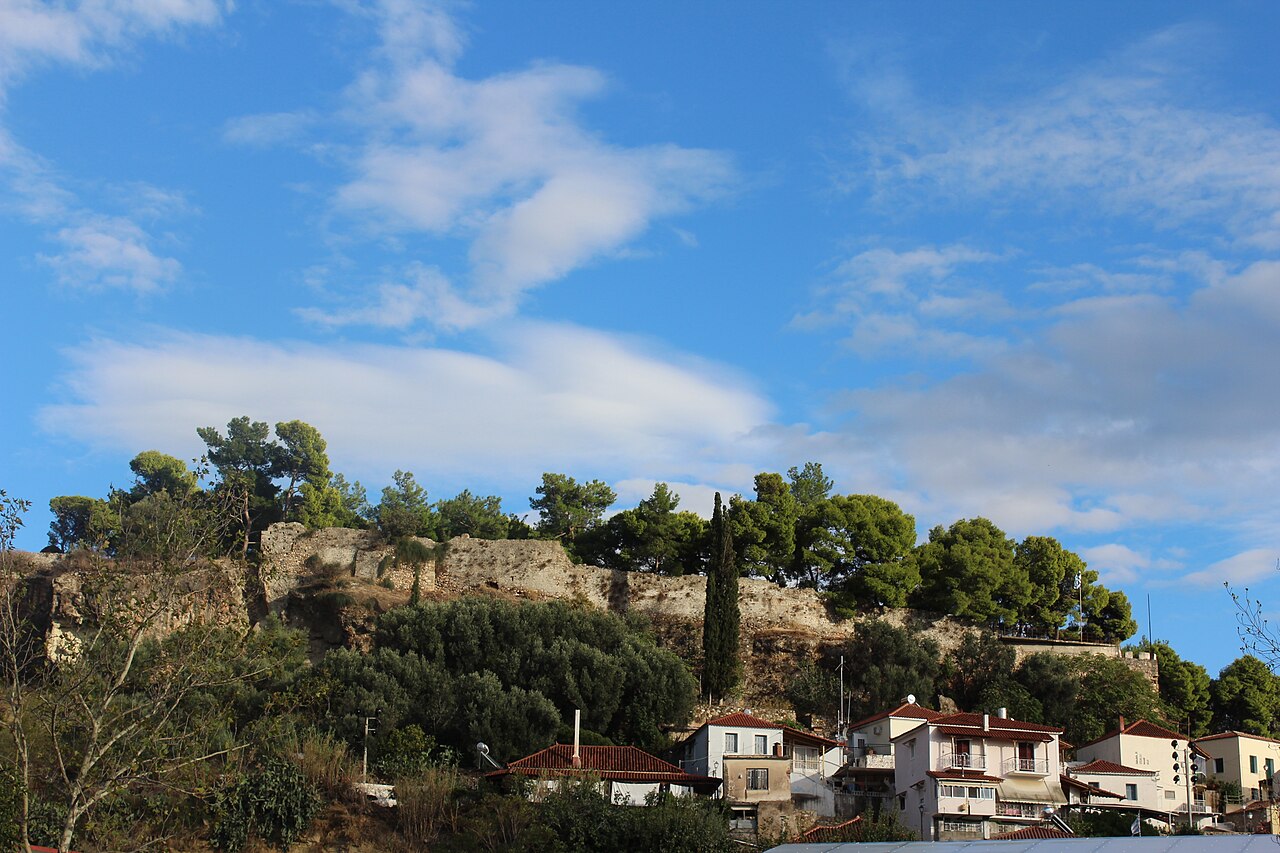
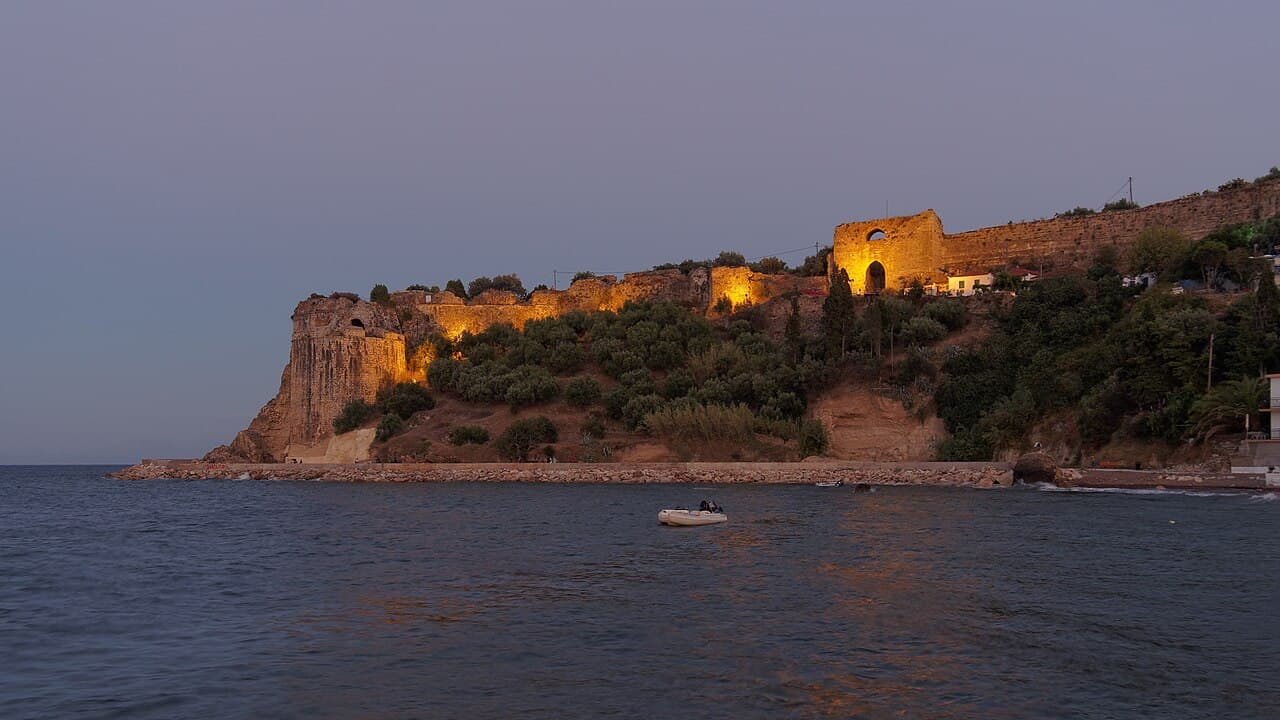
The Castle of Koroni stands as a prominent hill castle in the municipality of Koroni, located in the Peloponnese region of Greece. Its origins trace back to the Byzantine period, with initial construction on the site of an ancient acropolis during the 6th or 7th centuries AD. The castle occupies a strategic position overlooking the harbor and the surrounding landscape, reflecting its long-standing military and commercial significance.
Historical background and strategic importance
The site of Koroni is historically linked to the ancient city of Asini, one of the seven cities mentioned by Homer as offered by Agamemnon to Achilles during the Trojan War. This connection underscores the area's importance from antiquity through the medieval era. The Byzantines initially built the fortress to secure the region against invasions and pirate raids.
Following the Fourth Crusade and the fall of Constantinople in 1204, the Venetian Republic seized Koroni, incorporating it into the Principality of Achaea by 1205. Under Venetian control, Koroni flourished as a vital naval and commercial outpost, facilitating trade in luxury goods such as silk and kermes dye. It also served as a key stop for pilgrims en route to the Holy Land.
The Venetians undertook extensive rebuilding and fortification projects over the following century, including the construction of a large eastern building and a distinctive double semicircular bastion on the northeast side to protect the harbor from naval threats. Throughout the 14th century, Koroni was a hub for Venetian maritime operations, defending convoys against Genoese rivals and pirates.
Conflicts and changing control
The castle's strategic location made it a target for the Ottoman Empire, which launched repeated attempts to capture it from 1337 onward. Despite paying tribute to the Ottomans, Venice maintained control until 1500, when Ottoman forces captured Koroni following a decisive naval battle near Modon during the Second Ottoman-Venetian War.
In 1532, a combined fleet led by Admiral Andrea Doria and allied with Emperor Charles V briefly recaptured Koroni. However, the Ottomans regained it in 1534 after a siege led by Yahya Pashazade Mehmed Bey, allowing the Spanish defenders to retreat peacefully. Under Ottoman rule, the fortress housed a garrison of about 300 soldiers and featured a mixed population of Muslims, Christians, and Jews.
The Ottomans reinforced the castle's southern and southeastern defenses with two large circular bastions to strengthen protection against naval attacks. Venice briefly reclaimed Koroni in 1685 during the campaigns of Admiral Francesco Morosini, holding it until 1715 when it was returned to Ottoman control by treaty.
The castle suffered significant damage during the Ottoman siege of 1770, with bombardments affecting its fortifications. Its military importance declined in the 18th century, though Koroni remained a regional center for exporting silk and olive oil. By the early 19th century, the port's defenses were no longer adequate.
During the Greek War of Independence, Greek forces attempted to seize the castle but were unsuccessful until 1828, when French forces under Marshal Nicolas Joseph Maison liberated it. Subsequently, Koroni experienced population decline and a shift of inhabitants toward the castle hill and nearby beach areas.
Architectural features and fortifications
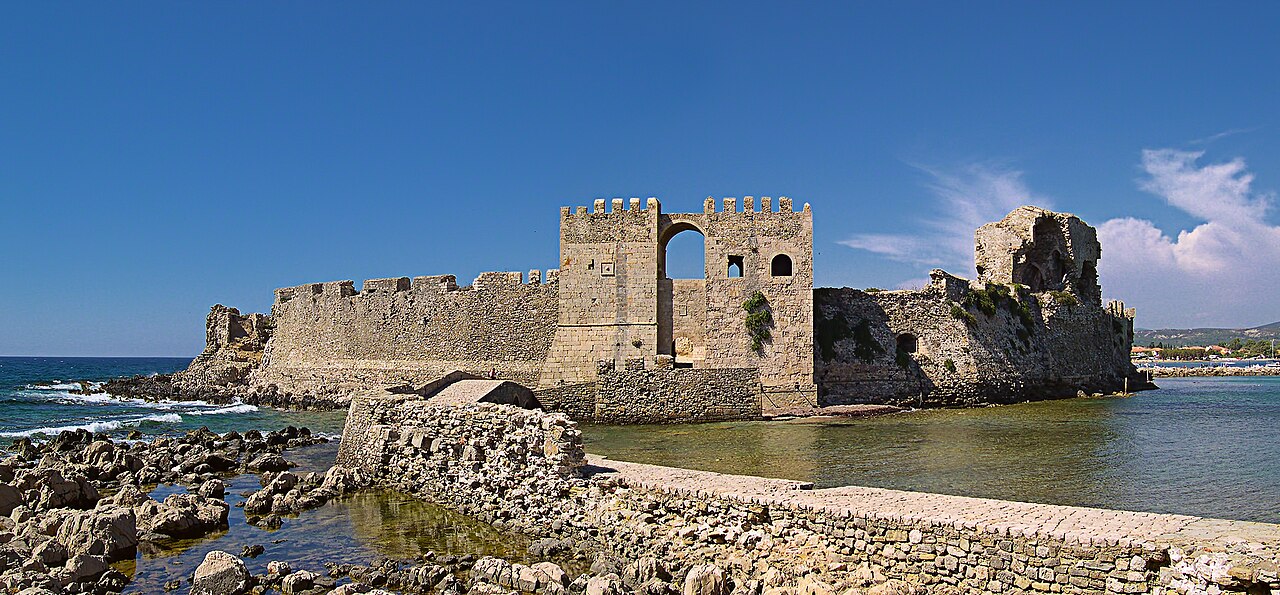
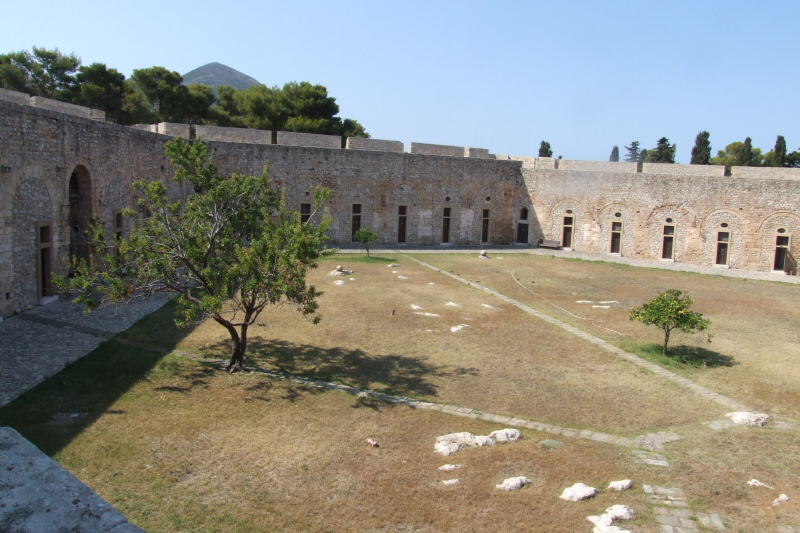
The Castle of Koroni occupies a roughly triangular area, enclosed by strong defensive walls punctuated by square towers and powder magazines used for storing gunpowder. The fortifications reveal a complex layering of Byzantine, Venetian, and Ottoman construction phases.
The castle's main entrance is set within a large square bastion featuring a pointed arch and a guardroom above with a narrow vertical slit for archers or musketeers, designed to defend the gateway. Historically, the entrance also displayed monumental pilastered gateways and a relief of the Lion of Saint Mark, symbolizing Venetian authority.
The original Byzantine fortress occupied the highest hilltop, while the Venetians expanded the castle eastward with robust walls and the notable double semicircular bastion guarding the northeast harbor side. The Ottomans added a second line of walls on the southeastern side, including two large circular bastions, one of which was demolished later by Venetian commander Morosini.
On the western edge stands a Venetian bastion dating to 1463, one of the oldest surviving parts of the fortifications. This bastion underwent several modifications during later Venetian control, especially between 1685 and 1715.
One northern bastion was deliberately destroyed by German forces during World War II, leaving only ruins in that section.
Religious and cultural heritage within the castle
Within the fortress are several notable religious buildings that reflect the site's layered history. The Byzantine Church of Hagia Sophia is a three-aisled basilica supported by rows of columns, built atop the remains of an ancient temple to Apollo and an earlier Christian church, indicating continuous sacred use.
The Saint Charalambos Church, originally dedicated to Saint Rocco and constructed during the second Venetian period, is a modest one-story building with a wooden roof. It has served various religious roles, including as a Catholic church, a mosque during Ottoman rule, and now an Orthodox Christian church, illustrating the religious transitions in Koroni.
The Panaghia Eleistria Church, built around 1900 with a simple wooden roof, is dedicated to Koroni's patron saint and represents ongoing religious traditions into the modern era.
Additional cultural features include Venetian cisterns for rainwater collection and the ruins of a Turkish bath, evidencing daily life during Ottoman occupation. A marble column known as the Resalto commemorates Greek fighters who died during an unsuccessful siege in 1824, highlighting the castle's role in the Greek War of Independence.
The Old Calendarist Monastery of the Holy Forerunner (Timios Prodromos) at the western end of the castle precinct dates from the early 20th century, reflecting more recent religious activity within this historic site.
Frequently asked questions (FAQ)
- How do I get to the Castle of Koroni?
- The Castle of Koroni is located on a hill overlooking the town of Koroni in the Peloponnese region of Greece. It is accessible by local roads from the town center, with walking paths leading up to the fortress.
- What are the main historical periods represented at the Castle of Koroni?
- The castle features construction and modifications from the Byzantine, Venetian, and Ottoman periods, reflecting its complex history from the 6th century through the 18th century.
- Can I visit the religious buildings inside the Castle of Koroni?
- Yes, several churches within the castle grounds, including the Byzantine Church of Hagia Sophia and Saint Charalambos, are accessible to visitors and illustrate the site's layered religious history.
- When was the Castle of Koroni built?
- The original fortress was built during the 6th or 7th centuries AD by the Byzantines on the site of an ancient acropolis.
- Is the Castle of Koroni well preserved?
- The castle is partially preserved, with many fortifications and buildings still standing, although some sections, like a northern bastion, remain in ruins due to damage from World War II.
Photo gallery

Information
Loading map...
Visitor reviews
No reviews yet. Been here? Write the first review and help other travelers!
Write the first reviewVisited this castle? Share your experience
Your review helps other travelers and adds first-hand knowledge to our encyclopedia.