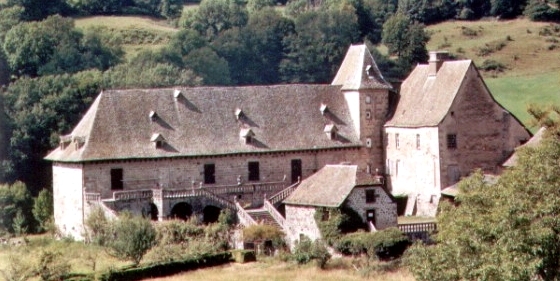
Messilhac Castle
Messilhac Castle, locally known as Château de Messilhac, is a remarkable example of a high medieval hill castle that evolved into a refined Renaissance residence. Located on a commanding rocky promontory overlooking the Goul valley in the Cantal department of France, it was originally constructed in the 12th century by the noble Bénavent family. This strategic location marked the border between the Viscounty of Carlat and Haute-Auvergne, underscoring the castle's military and territorial significance in the medieval period.
Early history and medieval architecture
The initial construction of Messilhac Castle centered around a keep—the present-day west tower—surrounded by a defensive enclosure wall featuring several towers, of which only two survive today. The castle was designed to control the surrounding valley and protect the borderlands of the Viscounty of Carlat. A small village once existed beneath the castle, though it has since disappeared, indicating the castle's role as a local feudal center.
During the high medieval period, the castle's fortifications were typical of the era, with thick walls, battlements, and towers designed for defense. The west tower served as the main donjon, elevated and fortified with machicolations—stone openings allowing defenders to drop projectiles on attackers. The castle's dry moat and irregular perimeter wall adapted to the natural contours of the rocky plateau, enhancing its defensive capabilities.
Historical conflicts and ownership
In 1414, Messilhac Castle was seized by Renaud de Murat amid his conflict with Bernard VII, Count of Armagnac. This event highlights the castle's strategic importance during the turbulent feudal conflicts of the early 15th century. After Murat's death in 1418, the castle reverted to its original owners, reaffirming its place within the established noble hierarchy.
The castle remained in the hands of the Bénavent family, who later adopted the name Montamat after acquiring another nearby castle. Through marriage, the estate passed to the Chapt de Rastinhac family and subsequently to the De Greil family, maintaining continuous ownership within related noble lines until 1943, when it was sold for the first time outside the family.
Architectural evolution in the 15th and 16th centuries
The 15th century brought significant architectural modifications to Messilhac Castle. The eastern tower was rebuilt or added in the Gothic style, featuring vaulted rooms and defensive elements. The main residential building was constructed, initially with narrow windows for defense and a northern entrance likely protected by a wooden drawbridge. The west donjon was heightened and equipped with machicolations, mirroring the eastern tower's defensive features. A Gothic vaulted oratory was added on the upper floors, reflecting both defensive and residential functions.
In 1531, Jean de Montamat initiated a Renaissance transformation of the castle, blending comfort with style. The south façade was adorned with decorative mullioned windows and sculptural ornamentation typical of the Renaissance. The original spiral staircase was replaced by a straight stone staircase inspired by Italian Renaissance design. The vestibule featured flamboyant Gothic rib vaults, demonstrating a harmonious blend of Gothic and Renaissance architectural elements.
Later modifications and preservation
The late 18th century saw the addition of a new wing on the castle's north side, built against the original defensive enclosure, which then served as the castle's northern outer wall. This addition marked a shift from purely defensive architecture toward residential comfort and adaptation to changing needs.
During the 19th and early 20th centuries, parts of the original enclosure wall were dismantled or leveled, reflecting changing attitudes toward medieval fortifications and the castle's evolving function.
Recognized for its historical and architectural significance, Messilhac Castle was listed as a historic monument in 1921. Its interiors, featuring preserved French-style ceilings and large fireplaces, have been showcased in cultural works such as Bertrand Tavernier's film, highlighting the castle's well-preserved Renaissance character.
Architectural features and layout
The castle sits atop an elongated rocky plateau, enclosed originally by an irregular defensive wall that conformed to the site's natural topography. The perimeter included a dry moat protecting the donjon and adjacent low buildings that housed servants and soldiers.
Today, two original square towers remain: a 13th-century tower at the southeastern corner and the "oubliette" tower to the northwest, which is now connected to the main building by an 18th-century wing. These towers are topped with covered battlements featuring machicolations, and corner watch turrets (échauguettes) provide additional surveillance points.
The principal residential building, constructed in 1531, is a three-story structure with four rooms per floor. It retains original Renaissance architectural elements, including mullioned windows on the south façade, fusiform Renaissance columns framing the entrance, and doors exhibiting transitional Gothic-Renaissance styles.
Defensive features such as thick machicolations crowning the towers and remnants of a covered chemin de ronde on the south and north façades remain visible. Corbels along the southern wall supported this defensive walkway, emphasizing the castle's martial origins.
The ground floor rooms reveal their historical uses: the dining room was once a stable, the western donjon a tack room, and the eastern section housed kitchens. These functional spaces illustrate the castle's role as a self-sufficient feudal stronghold.
Cultural significance and current status
Messilhac Castle is a rare example of Renaissance architecture in the Cantal region, preserving many original features such as ceilings, fireplaces, and sculptural decorations. Its continuous ownership by the same noble lineage until the mid-20th century adds to its historical authenticity.
Currently, the castle is privately owned and open to visitors for a fee during the summer months, offering an opportunity to explore its rich history and architectural evolution. Its picturesque setting and well-preserved structures make it a notable heritage site in the Hauts-de-France region.
Visitors should note that the castle has experienced temporary closures, such as during the COVID-19 pandemic, but it remains a valued cultural landmark accessible to the public during designated times.
Frequently asked questions (FAQ)
- What is the historical significance of Messilhac Castle?
- Messilhac Castle, located in Raulhac, France, dates back to the 12th century and showcases the architectural evolution of medieval fortifications. It played a crucial role in regional defense and has witnessed various historical events that shaped the area.
- When was Messilhac Castle built?
- The construction of Messilhac Castle began in the 12th century, with various renovations and additions made over the centuries. Its enduring presence highlights the castle's importance in the region's history and architecture.
- Is it possible to visit Messilhac Castle?
- Yes, visitors can explore Messilhac Castle and its surrounding grounds. The castle is open to the public during specific hours, and guided tours may be available to enhance your experience.
- What are the opening hours for Messilhac Castle?
- Messilhac Castle typically opens from 10 AM to 6 PM during the peak tourist season, but hours may vary in the off-season. It is advisable to check the official website or contact the castle for the most current information before your visit.
- Can I bring my family to visit the castle?
- Absolutely! Messilhac Castle is a family-friendly destination, offering educational opportunities for children and adults alike. The grounds provide ample space for exploration and learning about the castle's rich history.
- What is the best time to visit Messilhac Castle?
- The best time to visit Messilhac Castle is during the spring or early fall when the weather is pleasant and the tourist crowds are smaller. This allows for a more enjoyable experience as you explore the castle and its beautiful surroundings.
- Are there any nearby attractions to visit?
- Yes, there are several attractions near Messilhac Castle, including picturesque hiking trails and charming villages that reflect the local culture. Visitors can also explore nearby historical sites for a more comprehensive experience of the region.
- How much do tickets cost for Messilhac Castle?
- Ticket prices for Messilhac Castle vary depending on age and group size, with discounts often available for children and seniors. It is best to check the official website for detailed pricing information and any special offers.
- Is Messilhac Castle accessible for visitors with disabilities?
- Messilhac Castle is committed to providing access for all visitors, although some areas may have limitations due to the historical architecture. It is recommended to contact the castle in advance to inquire about specific accessibility options and accommodations.
Information
Website
Visit websiteSources & official resources
Verify the information above using these authoritative references.
Loading map...
Visitor reviews
No reviews yet. Been here? Write the first review and help other travelers!
Write the first reviewVisited this castle? Share your experience
Your review helps other travelers and adds first-hand knowledge to our encyclopedia.