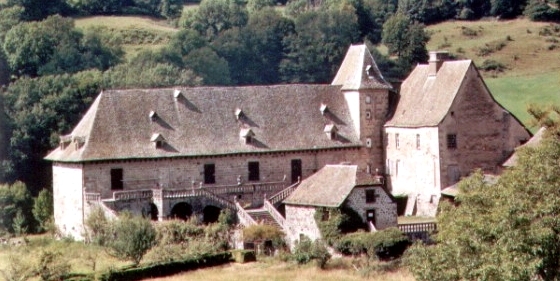
Castel Noël Castle
Castel Noël Castle, also known locally as Château de Castel Noël, is a historic medieval fortress located north of the hamlet of Cussagols in the Aveyron department of southern France. This castle has its origins in the 11th century, when it was originally known as Calhac or Cailhac and was owned by the Viscounts of Carlat. The strategic location of the castle in the rugged terrain of Aveyron provided a defensive stronghold for the viscounts during the High Medieval period.
Early history and original construction
The first documented mention of the castle dates back to the 11th century, establishing it as a significant feudal seat in the region. Initially called Calhac or Cailhac, the castle was part of the territorial holdings of the Viscounts of Carlat, an influential noble family in medieval France. The original structure would have been typical of early medieval fortifications, likely featuring a simple keep and defensive walls designed to withstand local conflicts and raids.
14th-century rebuilding and architectural transformation
During the 14th century, the castle underwent a major rebuilding campaign that transformed its appearance and defensive capabilities. It was during this time that the castle was renamed "Castelnovel," meaning "new castle," a name that later evolved into Castel Noël. The most notable architectural feature from this period is the keep, which dates back to this reconstruction phase. The keep, a central fortified tower, was a crucial defensive element, serving both as a last refuge during sieges and as a symbol of lordly power.
Structural features of the keep
The keep at Castel Noël is characteristic of 14th-century military architecture with thick stone walls and a robust, rectangular plan. This tower was designed to provide a commanding view of the surrounding landscape, enabling defenders to spot approaching enemies from a distance. Its elevated position and sturdy construction made it difficult to assault, reflecting the turbulent nature of the period marked by frequent conflicts such as the Hundred Years' War.
15th-century expansions and enhancements
In the 15th century, another significant phase of construction took place. This period saw the addition of the main building, which expanded the castle's residential and administrative functions. The architectural style of this phase incorporated elements typical of late medieval fortifications, balancing defense with increased domestic comfort. The main building likely included halls, chambers, and service areas necessary for the daily life of the castle's inhabitants.
Siege of 1594 and later history
Castel Noël Castle was besieged and captured in 1594, a time of religious and political upheaval in France during the Wars of Religion. Despite this violent episode, the castle remained structurally intact, demonstrating its strong defensive design. The last member of the Carlat family, Marc Antoine de Carlat, died around 1685, after which the castle was leased to various tenants.
Survival through the French Revolution and 19th-century alterations
During the French Revolution in 1793, revolutionary forces seized the castle. Remarkably, the fortress survived this period with minimal damage, the only notable loss being the destruction of a coat of arms above the gate, a common revolutionary act against symbols of nobility.
In the second quarter of the 19th century, the castle came into the possession of Antoine Chapt de Rastignac, a French general who served during the Revolution and the Empire. He implemented significant modifications to the structure, including the removal of the roof of the keep and reducing its height by about one-third. Additionally, two towers flanking the main building were demolished, altering the castle's silhouette and defensive profile.
Architectural style and classification
Castel Noël Castle is primarily classified as a hill castle due to its elevated position overlooking the surrounding landscape. Its architectural style reflects a blend of High and Late Medieval military construction techniques. The castle's robust stone keep and fortified walls exemplify medieval defensive architecture, while the later additions incorporate more residential elements typical of the 15th century.
Current status and access
Today, Castel Noël Castle remains a private residence and is not open to the public. Despite this, the castle's impressive keep and surviving medieval structures continue to attract interest from historians and enthusiasts of medieval architecture. The castle stands as a testament to the region's feudal past and the architectural evolution of fortified residences in southern France.
Notable features and legacy
The castle's most striking feature is undoubtedly the 14th-century keep, which, despite the 19th-century modifications, retains much of its original medieval character. The castle's survival through centuries of conflict, including sieges and revolutionary turmoil, highlights its robust construction and strategic importance. Castel Noël also offers insights into the transition from purely military fortifications to more complex residential castles during the late medieval period.
Frequently asked questions (FAQ)
- Is Castel Noël Castle open to the public for visits?
- Castel Noël Castle is currently a private residence and is not open to the public for visits. Visitors can view the castle from a distance but cannot enter the property.
- What is the historical significance of Castel Noël Castle?
- Castel Noël Castle has historical significance as a medieval fortress originally built in the 11th century and rebuilt in the 14th and 15th centuries. It was owned by the Viscounts of Carlat and witnessed important events such as sieges and survival through the French Revolution.
- What are the main architectural features of Castel Noël Castle?
- The castle features a 14th-century keep with thick stone walls and a robust rectangular plan, typical of High Medieval military architecture. The 15th-century main building adds residential and administrative spaces, reflecting late medieval castle design.
- When was Castel Noël Castle rebuilt and renamed?
- The castle was rebuilt during the 14th century and renamed "Castelnovel," meaning "new castle," which later became Castel Noël. This rebuilding included the construction of the keep.
- What changes were made to the castle in the 19th century?
- In the 19th century, Antoine Chapt de Rastignac removed the roof of the keep, lowered its height by about one-third, and demolished two towers flanking the main building, significantly altering the castle's appearance.
Information
Current owner
Private owner
Loading map...
Visitor reviews
No reviews yet. Been here? Write the first review and help other travelers!
Write the first reviewVisited this castle? Share your experience
Your review helps other travelers and adds first-hand knowledge to our encyclopedia.