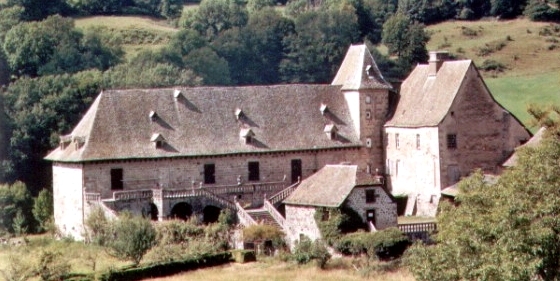
Brommat Tower
Brommat Tower, known locally as Château de Brommat, is a notable example of a late medieval tower house located in the village of Brommat within the Aveyron department of southern France. Despite often being referred to as a castle, Brommat Tower is architecturally a fortified residence rather than a full-scale castle. It stands as a significant relic of the region's feudal and religious history.
Historical background and origins
The current tower house was constructed in the 15th century on the site of an earlier fortification dating back to the early 14th century. This earlier structure was likely a defensive outpost or fortified manor connected to the abbey of Conques, which owned the land. The abbey used the site primarily for agricultural purposes, overseeing the surrounding territory and ensuring protection of its holdings.
The village of Brommat itself is historically linked to the abbey, with the tower positioned adjacent to the local church, which dates from the 12th century but was rebuilt during the 15th century renovations. This proximity highlights the intertwined religious and feudal authority in the area during the medieval period.
Architectural features and structure
Brommat Tower exemplifies the typical characteristics of a tower house from the late medieval period. Its design focuses on verticality, with thick defensive walls and few openings to enhance protection. The tower's compact footprint was practical for defense and residential use, combining living quarters with fortification.
The structure likely included multiple floors with vaulted chambers, narrow windows for archers, and a fortified entrance. The tower's robust stone construction reflects the need for security during a period marked by local conflicts and upheavals.
Role during the French Wars of Religion
In 1582, during the turbulent years of the French Wars of Religion, the village of Brommat suffered an attack and pillaging by villagers from the neighboring Mur-de-Barrez. This event underscores the instability and factional violence that affected even small rural communities in France during this era.
While the tower itself may have served as a refuge or defensive position, the attack illustrates the challenges faced by such fortified residences amid widespread religious and social conflict.
Later history and preservation
By the 18th century, Brommat Tower had fallen into disrepair, and parts of the structure were demolished due to its dilapidated state. This partial demolition reflects changing military and residential needs as well as economic factors influencing upkeep.
In recent years, the tower has undergone restoration efforts aimed at preserving its historical fabric. It has been integrated into a small village park, allowing visitors to appreciate its historical significance and architectural form from the outside.
Currently, Brommat Tower is accessible only externally, as the interior is not open to the public. Its quiet village setting and preserved exterior offer a glimpse into the region's medieval past.
Significance and cultural heritage
Brommat Tower represents a late medieval fortified residence typical of the rural areas in southern France. Its connection to the abbey of Conques and proximity to the local church reflect the blend of religious influence and feudal authority prevalent in the medieval period.
The tower's survival, despite partial demolition and centuries of change, provides valuable insight into the architectural and social history of the Aveyron region. It stands as a modest but important monument illustrating the evolution of defensive domestic architecture in France.
Frequently asked questions (FAQ)
- What is Brommat Tower and where is it located?
- Brommat Tower is a 15th-century late medieval tower house located in the village of Brommat, in the Aveyron department of southern France.
- Can visitors enter Brommat Tower?
- Currently, Brommat Tower can only be visited externally. The interior is not open to the public, but the tower is part of a small village park that allows visitors to view its historic exterior.
- What historical events affected Brommat Tower?
- In 1582, during the French Wars of Religion, the village of Brommat was attacked and pillaged by villagers from nearby Mur-de-Barrez, illustrating the local conflicts of that period.
- What architectural style characterizes Brommat Tower?
- Brommat Tower is a typical example of a late medieval tower house, featuring thick stone walls, narrow windows, and a vertical, compact design meant for defense and residence.
- How has Brommat Tower been preserved?
- The tower was partially demolished in the 18th century due to its dilapidated state but has since undergone restoration and is now incorporated into a village park for public viewing.
Information
Loading map...
Visitor reviews
No reviews yet. Been here? Write the first review and help other travelers!
Write the first reviewVisited this castle? Share your experience
Your review helps other travelers and adds first-hand knowledge to our encyclopedia.