Ashby de la Zouch Castle
Ashby de la Zouch Castle stands as a remarkable example of medieval fortification and noble residence in Leicestershire, England. Originally established on the site of the manor known as Ascebi in the Domesday Book of 1086, the castle evolved over several centuries into a significant hill castle with fortified structures and extensive grounds. Its history intertwines with prominent noble families, royal visits, and pivotal events such as the English Civil War, making it a site of both architectural and historical importance.
Early origins and noble ownership
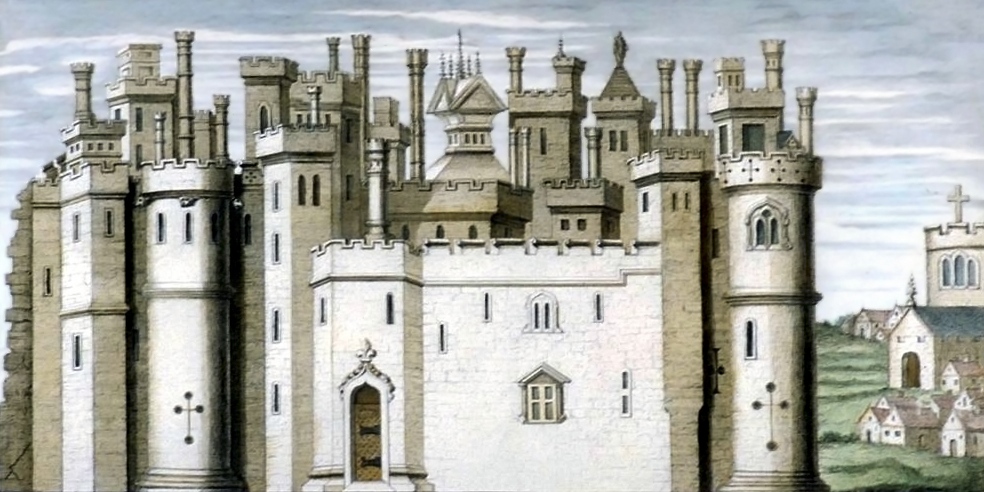
The manor of Ascebi passed through several aristocratic lineages, including the Belmeis and La Zouche families, before coming under royal control in 1461 after the execution of James Butler, Earl of Ormond. Shortly thereafter, in 1462, William Hastings, a trusted ally of King Edward IV, acquired the estate. Hastings embarked on an ambitious project to transform the manor into a fortified castle, receiving royal permission in 1474 to fortify the manor and enclose extensive parkland of about 3,000 acres. By 1483, two large towers and auxiliary buildings had been constructed, although Hastings’s execution that year curtailed his direct involvement.
Architectural development and castle design
The castle’s design reflected the late 15th-century transition from purely defensive structures to more comfortable noble residences with fortified elements. The plan envisioned four large towers surrounding inner buildings within a curtain wall, but only two towers were completed. The Great Tower, built of grey sandstone, rises approximately 75 feet and features four storeys in the main block with an attached seven-storey turret. This tower housed a guarded entrance with a portcullis, a stone-vaulted kitchen, and well-appointed chambers including a parlour, lord’s room, and withdrawing chamber with large windows overlooking the gardens.
A notable feature of the Great Tower is the treasure chamber accessible only by ladder, emphasizing the security concerns of the period. The Kitchen Tower, constructed of yellow sandstone at the north-west corner, contains a vaulted kitchen with walls nearly 9 feet thick and a height of 34 feet, equipped with multiple hearths, an oven, and a water well. Above it, a large chamber likely served as a winter parlour. An underground passage built during the Civil War connected the Kitchen Tower to the Great Tower, facilitating secure movement.
Adjacent to the Kitchen Tower, a two-storey service range housed essential household functions such as the buttery and pantry, separated by a covered passage designed for fire safety. The Great Hall, originally part of the medieval manor, was adapted with arches and a central hearth, featuring a raised dais for the lord and guests. This hall was later heightened and modernized in the late 17th century. Nearby, the Great Chamber provided additional entertaining space with a parlour and upper chamber, while rooms for senior household staff lay to the north.
The castle also included a large chapel measuring 60 by 21 feet, built of durable grey sandstone, with an altar on a raised dais. The chapel connected to the Great Tower through an inner courtyard enclosed by now-lost buildings, creating a private religious precinct. Part of the chapel remains in use as a burial site for the Hastings family.
Gardens, parks, and landscape features
South of the castle lies formal gardens dating from around 1530, covering approximately 0.8 hectares. These gardens feature two sunken sections separated by a walkway, with the eastern sunken area thought to imitate military bastions and originally containing a circular brick tower. The gardens were enclosed by a brick wall, of which only the south-east portion survives. Two brick towers at the garden’s southern corners, shaped as a clover leaf and octagonal respectively, likely served as banqueting houses for private dining and leisure.
Beyond the formal gardens is an area known as "the wilderness," designed as compartmentalized gardens with water features such as ponds. Within this wilderness stands "the Mount," a triangular building constructed in the early 1600s, now serving as a private residence.
The castle’s deer park began as a 60-acre enclosed area near the fortress and was expanded by William Hastings into the Little Park, covering about 340 acres. The locations of two other planned parks, Great Park and Prestop Park, remain uncertain.
Historical significance and royal connections
Ashby de la Zouch Castle hosted several notable royal figures, including Henry VIII in 1503, Queen Anne, Princess Elizabeth, and Prince Henry in 1603, James I between 1612 and 1617, and Charles I in 1634. The castle also served as a political prison for Mary, Queen of Scots in 1569, reflecting its strategic and political importance.
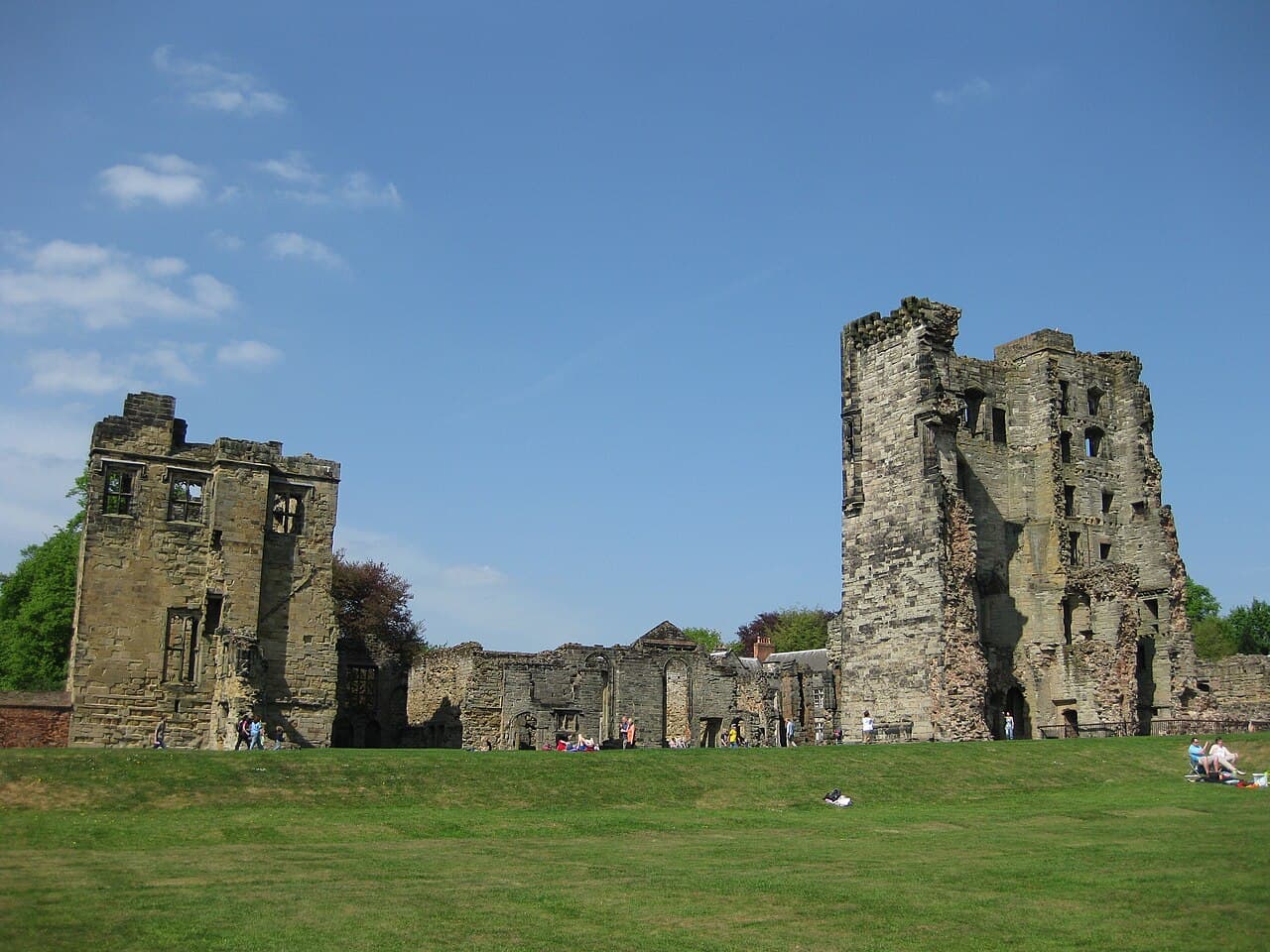
During the English Civil War, the castle was a Royalist stronghold under Henry Hastings, a military commander and younger son of the Hastings family. After enduring a siege, the castle surrendered to Parliamentary forces in 1646. Concerned about further Royalist use, Parliament ordered the castle to be slighted in 1648, employing gunpowder and undermining to damage the two main towers severely.
Post-war adaptation and conservation efforts
Following the Civil War, parts of the ruined castle were adapted into a residence known as Ashby Place, occupied by the Hastings family until their move to Donington Hall. The castle gained literary fame in the 19th century through its appearance in Walter Scott’s novel Ivanhoe, which inspired renewed public interest and conservation efforts.
Archaeological investigations began around 1900, leading to early 20th-century restoration work. In 1932, the Ministry of Works took responsibility for the site, stabilizing the ruins and opening the gardens to the public. Today, Ashby de la Zouch Castle is managed by English Heritage as a protected monument with Grade I listed status, preserving its ruins and gardens as a testament to England’s medieval and early modern heritage.
Architectural remnants and visitor experience
The castle ruins are located near the modern town center and prominently feature the two principal towers and adjoining buildings forming a courtyard. Visitors can explore the Great Tower with its impressive height and intricate interior spaces, the Kitchen Tower with its vaulted kitchen and thick walls, and the service range that reveals the domestic workings of a noble household.
The surviving Great Hall and Great Chamber offer insight into the castle’s social and ceremonial functions, while the chapel’s remaining corner connects visitors to the spiritual life of its former inhabitants. The formal gardens and "wilderness" area provide a peaceful setting that complements the dramatic ruins.
Interpretive signage and guided tours help visitors understand the castle’s complex history, architectural innovations, and its role in England’s turbulent past. The site remains a valuable destination for those interested in medieval architecture, royal history, and landscape design.
Frequently asked questions (FAQ)
- How do I get to Ashby de la Zouch Castle?
- Ashby de la Zouch Castle is conveniently located in the town of Ashby-de-la-Zouch in the United Kingdom. You can reach the castle by car, with parking available nearby, or by using public transport, with the nearest train station being Ashby-de-la-Zouch, followed by a short walk.
- What is the historical significance of Ashby de la Zouch Castle?
- Ashby de la Zouch Castle, built in the late 15th century, played a vital role during the English Civil War. It has significant connections to the historical figure of the Earl of Leicester and showcases the turbulent history of the region.
- When was Ashby de la Zouch Castle built?
- Construction of Ashby de la Zouch Castle began in 1473 and was completed in the late 16th century. The castle was initially built as a residence and later transformed into a fortified structure during periods of conflict.
- Can I explore the castle grounds?
- Yes, visitors are welcome to explore the castle grounds, which include impressive ruins and beautiful gardens. There are informative displays throughout the site to enhance your visit and provide insight into the castle's history.
- Why is Ashby de la Zouch Castle popular among tourists?
- Ashby de la Zouch Castle attracts tourists due to its rich history, stunning architecture, and picturesque setting. The castle also hosts various events and activities throughout the year, making it a vibrant place for visitors of all ages.
- Is it possible to access the castle with a wheelchair?
- Yes, Ashby de la Zouch Castle strives to be accessible to all visitors. While some areas may have limited access due to the historical nature of the site, there are paths and facilities designed to accommodate wheelchair users.
- What are the opening hours for Ashby de la Zouch Castle?
- The opening hours for Ashby de la Zouch Castle vary by season, typically opening from 10 AM to 5 PM during the summer months and reducing hours in winter. It's advisable to check the official website for the most current hours before planning your visit.
- What is the ticket price for visiting Ashby de la Zouch Castle?
- Ticket prices for Ashby de la Zouch Castle are generally affordable, with discounts available for children, students, and seniors. Visitors can often find family tickets and special offers, so checking the official site prior to your visit is recommended.
- What are some nearby attractions to Ashby de la Zouch Castle?
- Nearby attractions include the charming market town of Ashby-de-la-Zouch, with its variety of shops and restaurants. Additionally, the beautiful countryside of the National Forest and other historic sites like the Ashby Canal offer great opportunities for exploration.
Photo gallery

Information
Website
Visit websiteSources & official resources
Verify the information above using these authoritative references.
Loading map...
Visitor reviews
No reviews yet. Been here? Write the first review and help other travelers!
Write the first reviewVisited this castle? Share your experience
Your review helps other travelers and adds first-hand knowledge to our encyclopedia.