Meersburg Castle
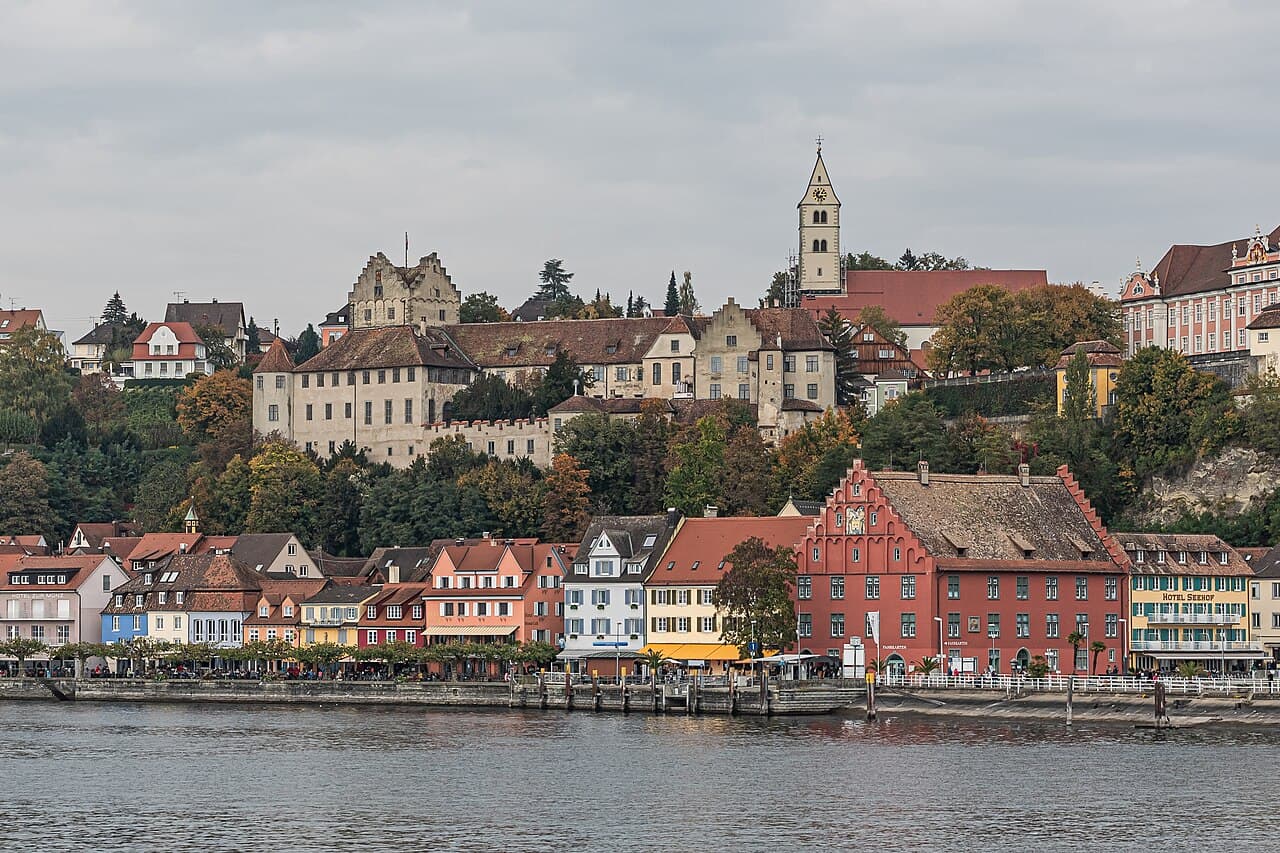
Meersburg Castle, also known as the Alte Burg (The Old Castle), stands as one of the most historically significant and oldest inhabited castles in Germany. Perched on a rocky outcrop overlooking Lake Constance (Bodensee) at approximately 440 meters above sea level, the castle's imposing silhouette dominates the town of Meersburg. Its central tower, known as the Dagobertturm, is traditionally believed to date back to the 7th century, although the original early medieval structure is no longer visible. This tower forms the heart of the castle complex, which has evolved over centuries into a remarkable example of medieval and Renaissance architecture.
The castle's strategic location on a hillside provided a commanding view of the lake and surrounding region, making it a vital defensive and administrative center throughout its history. Today, Meersburg Castle is a major cultural landmark, offering visitors a glimpse into medieval life through its well-preserved rooms, original frescoes, and period furnishings. The castle also provides panoramic views of the town, lake, and distant Alpine peaks.
Early origins and historical significance
The exact origins of Meersburg Castle are subject to historical debate, with two main theories regarding its foundation. One tradition attributes the construction of the central Dagobert Tower to Merovingian King Dagobert I around 630 AD. This theory is supported by a 16th-century source and was popularized in the 19th century by Joseph von Laßberg, a notable collector and resident of the castle. Historical records indicate that Dagobert I was active in the Lake Constance region during this period, involved in the Christianization efforts of the Alamanni people. A charter issued by Frederick Barbarossa in 1155 references earlier boundaries established by Dagobert, suggesting his influence in the area.
However, architectural analysis of the large roughly squared stones at the base of the tower suggests they could belong either to the early medieval period or to the 12th to early 13th century. The second theory posits that the castle was actually founded during the high medieval period, around the early 1100s, coinciding with a wave of castle building in the Lake Constance region. The first documented mention of "Merdesburch" dates to 1147, with earlier references to local figures possibly connected to the settlement but not definitively to the castle itself.
Medieval development and episcopal residence
By the mid-13th century, Meersburg Castle had become a residence and administrative seat for the Prince-Bishops of Constance. It played a crucial role in regional governance and ecclesiastical affairs. The castle's fortifications and living quarters were expanded and improved over the centuries to meet the needs of its occupants.
Siege of 1334 and early firearm use
One of the castle's most notable historical events occurred in 1334 during a contested election for the bishopric of Constance. Two candidates, Baron Nikolaus I of Kenzingen and Albrecht of Hohenberg, vied for the position, leading to a siege of Meersburg Castle by Imperial forces supporting Albrecht. This siege is historically significant as the first recorded use of gunpowder artillery in Germany. Despite the introduction of cannons, the castle's defenses proved resilient, and the siege ended when Emperor Louis IV withdrew to address other conflicts.
Later medieval and early modern period
In 1414, Emperor Sigismund stayed at Meersburg Castle while attending the Council of Constance, highlighting the castle's importance in imperial and church politics. From 1526, Bishop Hugo von Hohenlandenberg made the castle his permanent residence, adding architectural features such as the distinctive crow-stepped gable to the Dagobert Tower. The castle remained the bishopric's primary seat until the 18th century.
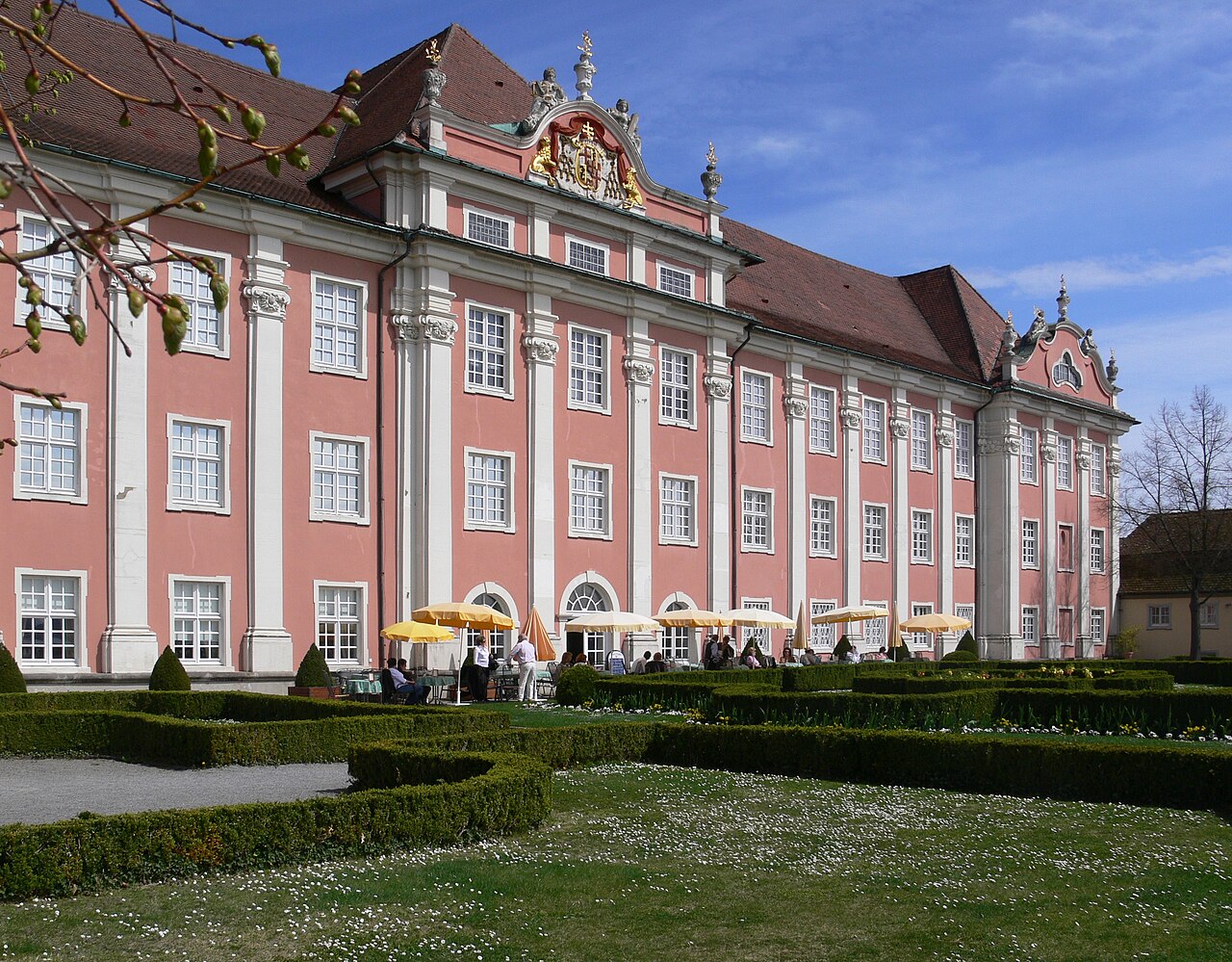
During the Thirty Years' War, Swedish forces attacked Meersburg Castle in 1647, causing damage primarily to the roof timbers. In response to changing architectural tastes and needs, the bishops constructed the New Castle nearby in the early 18th century as a more modern residence, relegating the old castle to administrative functions after 1750.
Secularization and cultural revival in the 19th century
The secularization of 1803 transferred ownership of Meersburg Castle from the church to the Grand Duchy of Baden. The castle served as a government office and court until 1836. In 1838, it was sold to the private collector Joseph von Laßberg and his wife Maria Anna von Droste-Hülshoff. Their stewardship preserved the castle and transformed it into a cultural hub.
Significantly, the renowned German poet Annette von Droste-Hülshoff lived in Meersburg Castle from 1841 until her death in 1848. During her residence, she composed many important literary works, making the castle a site of cultural as well as historical importance.
Architectural features and castle layout
Meersburg Castle is a hill castle characterized by a complex of structures built around the central Dagobertturm. The tower's base features large roughly squared stones, a masonry style known as bossage ashlar, which is typical of medieval fortifications. The tower was heightened in the early 16th century and capped with a crow-stepped gable, adding Renaissance stylistic elements to the medieval core.
The castle complex comprises over thirty furnished rooms, including a heated dining hall (Dürnitz), palas (main living quarters), armory, knights’ hall, dungeon, two chapels, stables, and a northern bastion. The castle chapel, dedicated to St. John the Baptist and built in 1390, was transferred to the town in 1849 with the stipulation that it and its furnishings remain intact.
Interior highlights include a Renaissance hall housing a treasury, a 19th-century prison cell, and a torture chamber located in the tower's lowest part, reflecting medieval judicial practices. The castle's battlements and defensive walls have been preserved and restored, contributing to its imposing presence.
Restoration and preservation efforts
Significant restoration work has been undertaken to preserve Meersburg Castle's structural integrity and historical character. In the 1990s, the roof was renewed to protect against weather damage. More recent efforts between 2018 and 2019 focused on repairing the south façade's plaster, sandstone window frames, and battlements. A modern drainage system was installed in the castle garden to control moisture and prevent deterioration.
Visitor experience and cultural significance
Portions of Meersburg Castle are open to the public for self-guided tours, allowing visitors to explore its richly decorated rooms, historic artifacts, and architectural features. The climb up the Dagobert Tower offers expansive views across Meersburg, Lake Constance, the city of Constance, and the distant Alps, making it a popular destination for tourists and history enthusiasts.
The castle's dual role as a museum and a private residence adds to its unique charm. It remains a testament to the region's medieval heritage and the evolving history of castle architecture in southern Germany.
Frequently asked questions (FAQ)
- What is the historical significance of Meersburg Castle?
- Meersburg Castle is one of the oldest inhabited castles in Germany, with origins dating back to the 7th century. It has played a crucial role in the history of the region, serving as a residence for various noble families and a strategic military stronghold during the Middle Ages.
- When was Meersburg Castle built?
- The current structure of Meersburg Castle was primarily constructed in the 13th century, although its foundation dates back much earlier. Over the years, it has undergone several renovations, reflecting the architectural styles of different eras.
- Can I visit Meersburg Castle year-round?
- Yes, Meersburg Castle is open to visitors throughout the year, although specific areas may have restricted access during winter months. It’s advisable to check the official website for any seasonal changes in opening hours and special events.
- What are the opening hours for Meersburg Castle?
- Meersburg Castle typically opens at 9:00 AM and closes at 5:00 PM, but hours can vary depending on the season. During peak tourist seasons, the castle may extend its hours, so be sure to confirm on their website before your visit.
- Is Meersburg Castle accessible for visitors with mobility issues?
- While Meersburg Castle is a historical site with some steep pathways and stairs, efforts have been made to improve accessibility. Certain areas may be challenging to navigate, but there are options available for those with mobility concerns to enjoy parts of the castle.
- When is the best time to visit Meersburg Castle?
- The best time to visit Meersburg Castle is during the spring and early autumn months when the weather is pleasant and the landscape is beautiful. Additionally, visiting during these times allows you to avoid the summer crowds, enhancing your experience.
- What are the ticket prices for Meersburg Castle?
- Ticket prices for Meersburg Castle typically range from €8 for adults, with discounts available for children and seniors. Family tickets and group rates may also be offered, so it’s worth checking the official website for the most current pricing.
- Are there any nearby attractions to visit while in Meersburg?
- Yes, while visiting Meersburg Castle, you can also explore the charming old town of Meersburg, the beautiful Lake Constance, and the nearby Zeppelin Museum in Friedrichshafen. These attractions make for a delightful day of sightseeing in the area.

Information
Website
Visit websiteSources & official resources
Verify the information above using these authoritative references.
Loading map...
Visitor reviews
No reviews yet. Been here? Write the first review and help other travelers!
Write the first reviewVisited this castle? Share your experience
Your review helps other travelers and adds first-hand knowledge to our encyclopedia.