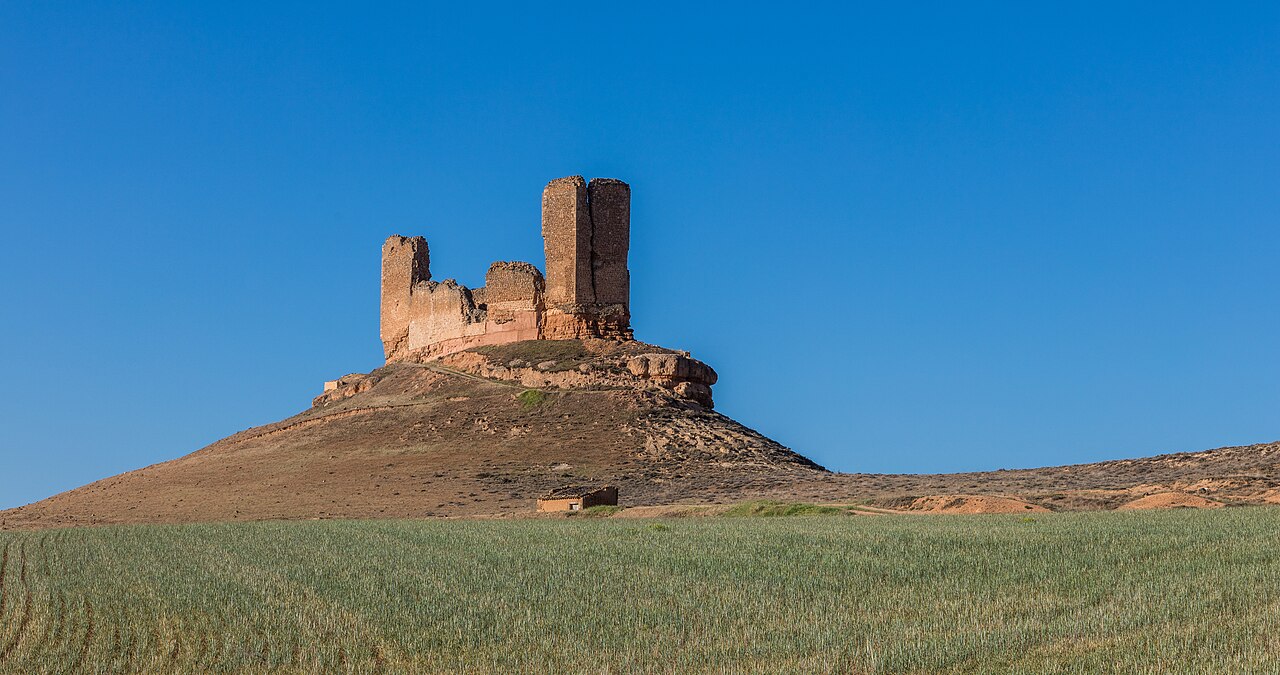
Medinaceli Castle

Medinaceli Castle: medieval fortress in Spain's Jalón valley
Medinaceli, Spain
Late Medieval (14th–15th c.)
Partially Preserved

Medinaceli Castle stands as a significant medieval fortress located in the historic town of Medinaceli, Spain. Originally constructed in the 9th century during the period of Muslim rule, it underwent major reconstruction in the 15th century, which shaped much of its current form. Though only limited remains survive today, the castle's strategic position atop a hill overlooking the Jalón River valley made it a pivotal military site throughout the Late Medieval period.

Strategic location and historical significance

Medinaceli Castle's location commands the natural passageway between the kingdoms of Aragon and the Castilian Plateau. This position made it a contested stronghold in the centuries-long conflicts between Muslim and Christian forces on the Iberian Peninsula. The castle was part of the defensive network controlling access through this valley, which was a vital corridor for trade and military campaigns.

One of the most enduring legends associated with the castle involves Al-Mansur, the powerful Muslim military leader known as the "Invincible." According to tradition, after his defeat and death at the Battle of Calatañazor in 1002, Al-Mansur was buried within an Arabic citadel inside Medinaceli Castle. However, archaeological evidence for this citadel or his tomb has not been found, and the castle today shows no visible remains from this early Islamic structure.

Medieval architecture and reconstruction

The castle as it stands today largely reflects the 15th-century reconstruction efforts during the Late Medieval period. This phase introduced typical defensive features of the time, including thick stone walls, battlements, and towers designed to withstand siege warfare. The castle's design would have included a keep or donjon, curtain walls, and a fortified gatehouse, though much of this has not survived intact.

Despite the limited physical remains, historical records and the castle's layout suggest it was a hill castle type, utilizing the natural elevation for defense. The reconstruction likely incorporated elements of Gothic military architecture, common in Spanish castles of the period, emphasizing verticality and robust fortifications.

Cultural and literary connections

Medinaceli Castle also holds cultural significance due to its association with El Cid, the famed Castilian nobleman and military leader. The city and castle were under Muslim control when El Cid took over the region during his campaigns. The castle and its surroundings feature in medieval chronicles and epic poems, notably the Cantar del Mío Cid, which immortalizes El Cid's exploits in the Iberian Reconquista.

According to historian Menéndez Vidal, one of the minstrels who contributed to the Cantar del Mío Cid may have originated from Medinaceli or its vicinity, linking the castle to Spain's rich literary heritage. This connection enhances the castle's historical value beyond its military role.

Current condition and preservation

Today, Medinaceli Castle is classified as having partially preserved remains. While much of the original structure has been lost to time, ongoing restoration efforts have stabilized the site and made it accessible to visitors interested in medieval history. The castle's ruins offer insight into the military architecture and regional conflicts of medieval Spain.

Visitors to Medinaceli can explore the castle's elevated position, which provides panoramic views of the surrounding valley and landscape. The site serves as a tangible link to the complex history of Christian-Muslim interactions during the Middle Ages and the cultural transformations that shaped modern Spain.

Frequently asked questions (FAQ)

What is the historical significance of Medinaceli Castle?
Medinaceli Castle, dating back to the 12th century, is an important example of medieval military architecture in Spain. It showcases the strategic importance of the region during the Reconquista, serving as a defensive fortress against invading forces.
When was Medinaceli Castle built?
Construction of Medinaceli Castle began in the late 11th century and was completed in the 12th century. Over the centuries, it has undergone various renovations and modifications, reflecting the architectural styles of different periods.
Can I visit Medinaceli Castle?
Yes, Medinaceli Castle is open to visitors, allowing you to explore its impressive walls and stunning views of the surrounding landscape. Guided tours are often available to enhance your experience and provide deeper insights into the castle's history.
What are the opening hours for Medinaceli Castle?
Medinaceli Castle typically opens daily, but hours may vary depending on the season. It is advisable to check the official website or contact local tourism offices for the most current information before your visit.
Is it possible to access Medinaceli Castle with mobility issues?
Medinaceli Castle has some accessibility features, but due to its historic nature, certain areas may be challenging to navigate for individuals with mobility issues. It is recommended to inquire in advance about specific accommodations or guided options available.
What is the best time to visit Medinaceli Castle?
The best time to visit Medinaceli Castle is during the spring and fall when the weather is mild, and the scenery is particularly beautiful. Visiting during these seasons also helps you avoid the summer crowds, allowing for a more enjoyable experience.
Are there any nearby attractions to visit while in Medinaceli?
Yes, in addition to Medinaceli Castle, you can explore other nearby attractions such as the Roman aqueduct and the charming town of Medinaceli itself, which features beautiful architecture and quaint streets. These sites offer a rich glimpse into the area's history and culture.
What are the ticket prices for Medinaceli Castle?
Ticket prices for Medinaceli Castle are generally affordable, with discounts available for students and seniors. It is advisable to check the official website for the latest pricing information and any special promotions.

Information

Hill Castle

Loading map...

Visitor reviews

No reviews yet. Been here? Write the first review and help other travelers!

Write the first review

Visited this castle? Share your experience

Your review helps other travelers and adds first-hand knowledge to our encyclopedia.

Write a review

(5/5)

0/2000 characters

Your review will be visible after admin approval

Nearby castles

14.4 km

Arcos de Jalón Castle

Arcos de Jalón, Spain

Arcos de Jalón Castle is a late medieval fortress located in the town of Arcos de Jalón, Spain. Dating from the 14th century, this castle was built on the site of an earlier Arab fortress, reflecting the turbulent history of the region during the Reconquista and the power struggles within the Kingdom of Castile. The castle is notable for its strategic position atop a high and narrow hill that physically divides the town into two parts, providing a commanding view of the surrounding landscape and natural defense advantages.The castle's rectangular floor plan is somewhat irregular, adapting to the rugged topography of the hill. Its thick stone walls incorporate horizontal rows of brick and finely cut ashlar stones, with visible stonecutter’s marks on the corners, demonstrating the skilled craftsmanship of its builders. A robust keep is attached directly to the castle walls, serving as the last defensive refuge and symbol of feudal authority.Historical significance and conflictsArcos de Jalón Castle played a role in the political conflicts of the 14th century. It was besieged during the civil war between supporters of King Pedro I of Castile and the rebel forces led by Fernán Gómez de Albornoz, who supported Pedro's half-brother, Enrique de Trastamara. This siege highlights the castle's military importance in the power struggles that shaped medieval Spain.Architectural features and construction techniquesWall structure and materialsThe castle's walls are remarkable for their double-lined brick construction, a technique primarily intended for structural stability but which also creates striking reddish lines contrasting with the stonework. This method is characteristic of Mudejar architecture, reflecting the influence of the Muslim artisans and builders who lived in the region during the Middle Ages. The presence of Mudejar elements in a military fortress is unusual and adds to the castle's architectural interest.Keep and defensive elementsThe keep attached to the walls was originally taller than the current remains suggest. Inside, traces of the internal structures that divided the tower into multiple floors can still be seen. The castle has only one entrance, positioned high above ground level for defensive purposes, along with two loophole windows designed for archers to defend the fortress while minimizing exposure.Layout and fortificationsAlong the perimeter of the fortress, the foundations of walls and several towers that once reinforced the castle's defenses are visible. These towers would have provided vantage points for surveillance and defense against attackers. The irregular shape of the castle allowed it to conform closely to the contours of the hill, maximizing the natural defenses provided by the terrain.Mudejar influence and cultural contextThe castle's construction technique, especially the use of brick lining within stone walls, is a clear indication of Mudejar influence. This style developed from the coexistence of Christian and Muslim cultures in medieval Spain, particularly in regions like Aragon where a significant Muslim population remained after the Reconquista. The castle stands as a testament to this cultural blending, combining traditional military architecture with decorative and structural elements derived from Islamic art and building methods.Current condition and visitor experienceToday, Arcos de Jalón Castle is classified as partially preserved. While much of the original structure remains in ruins, key features such as the keep, walls, and foundations can still be explored. Visitors can appreciate the castle's unique architectural details and its dramatic setting overlooking the town. The site offers insight into the military and cultural history of the region during the late medieval period.Access to the castle involves navigating the steep hill on which it stands, which adds to the sense of its historical defensive purpose. Interpretive signage and guided tours may be available locally to enhance understanding of the castle's historical context and architectural significance.

Late Medieval (14th–15th c.)
Details
19.9 km
Montuenga Castle — Spain castle

Montuenga Castle

Montuenga de Soria, Spain

Montuenga Castle is a notable high medieval hill castle located in Montuenga de Soria, within the province of Soria, Spain. Strategically positioned on a steep and elongated hill, the castle overlooks the village and commands the natural passage between the central plateau of Spain and the strategic basin of the Ebro River. This location made it a critical defensive stronghold controlling access between the historic kingdoms of Castile and Aragon. Historical significance and strategic role Montuenga Castle formed part of a defensive line along the Jalón River, a vital natural corridor in the region. Its placement allowed control over movements along this route, which was essential during periods of conflict such as the Castilian Civil War. The castle's dominance over the surrounding landscape provided military advantage in monitoring and defending against incursions. The castle's history is deeply intertwined with the turbulent medieval politics of the Iberian Peninsula, particularly the disputes between the kingdoms of Castile and Aragon. Its location near the border region meant that it was frequently contested and played a role in the broader conflicts shaping medieval Spain. Architectural features and remains The surviving structure of Montuenga Castle consists primarily of two polygonal towers situated at opposite ends of the hilltop, connected by curtain walls. These walls and towers reflect typical high medieval military architecture designed for both defense and surveillance. The castle's elongated layout follows the natural shape of the hill, maximizing the use of the terrain for defensive purposes. The steep slopes surrounding the castle add to its defensibility, making direct assault difficult. Although largely in ruins today, the castle's remains provide valuable insight into medieval fortification techniques and the strategic importance of hilltop castles in Spain. Geographical context and access Montuenga de Soria lies approximately 105 kilometers from Madrid and is part of the municipality of Arcos de Jalón, with the town of Arcos de Jalón about 5 kilometers away. The castle's elevated position offers commanding views of the surrounding landscape, including the Jalón River valley and the routes leading toward both Castile and Aragon. The location was chosen specifically for its natural defensive advantages and its control over the important communication and trade routes between these historic regions. Preservation and current condition Today, Montuenga Castle is classified as a ruined hill castle. The remains, while fragmentary, are significant for understanding the military architecture of the high medieval period in this part of Spain. Conservation efforts focus on stabilizing the existing structures to prevent further deterioration. Visitors to the site can explore the ruins and appreciate the castle's commanding position and historical importance, although facilities and detailed interpretive materials may be limited due to its remote location and condition. Architectural style and construction period The castle's construction dates broadly to the high medieval period, reflecting the typical fortification methods of the time. Its polygonal towers and connecting walls are characteristic of military architecture designed to adapt to the natural topography, emphasizing defense and visibility. The style is primarily utilitarian, focusing on functionality rather than ornamental features, which is common for castles built in strategic border regions during the Middle Ages.

High Medieval (11th–13th c.)
Details
22.8 km

Castle of Riba de Santiuste

Riba de Santiuste, Spain

The Castle of Riba de Santiuste stands as a significant hill castle in Spain, with origins tracing back to the 9th century during the Andalusian period. Built by Muslim forces, its primary purpose was to defend the region against advancing Christian kingdoms from the north. This fortress played a crucial role in the turbulent frontier zone of the Early Middle Ages, where Taifa kingdoms and Christian realms frequently clashed. Historical context and strategic importance Located in the municipality of Riba de Santiuste, the castle was part of a wider defensive network, including a nearby watchtower at Cerrillo de la Horca. This system was designed to secure strategic control over the surrounding territory. In 917, the castle notably served as a refuge during raids led by Ordoño II of León, highlighting its defensive value for local inhabitants. The castle's history reflects the broader shifts of the Reconquista. In 1085, Alfonso VI of León captured the fortress, marking a key transition from Muslim to Christian control. Subsequently, in 1129, Alfonso VII granted the castle and village to the Bishopric of Sigüenza. The bishop at the time, Bernardo de Agén, undertook significant renovations and expansions, strengthening the castle's defenses to meet evolving military needs. During the 15th century, the castle became a focal point of regional conflict. In 1451, forces loyal to Infante Juan of Navarre seized it, using the stronghold to threaten the nearby town of Sigüenza. The following year, troops under Bishop Fernando de Luján recaptured the castle, restoring ecclesiastical authority. The castle remained under church control until its destruction in 1811 amid the Peninsular War, when it was deliberately demolished during military confrontations with French forces. Architectural features and layout Perched atop a steep rocky outcrop overlooking the village and the Salado River valley, the castle's design closely adapts to the natural terrain. Its elongated enclosure measures approximately 90 by 12 meters, with walls constructed from roughly cut stone blocks known as sillarejo. This gives the fortress a solid and austere appearance typical of early medieval military architecture. The defensive perimeter is characterized by high battlemented walls interspersed with towers of varying sizes. The main entrance is located on the northern side, accessible via a narrow path running alongside the wall. Inside the enclosure, two cisterns (aljibes) are present, designed to collect and store rainwater, an essential feature for sustaining the castle during sieges. The internal layout divides into three large compartments with further subdivisions indicating smaller rooms arranged into two main sections. The southern portion, facing the village, includes a trapezoidal courtyard enclosed by battlemented walls that slope gently downward from a main tower. This courtyard is flanked by two twin towers at opposite corners, connected by a closing wall. This advanced defensive structure was intended to impede attackers and provide vantage points for observing the slope below. Extending northward from the northern tower, the castle's defenses enclose an elongated triangular area ending in a distinctive pentagonal tower shaped like a spur. This feature adds a unique architectural element to the fortress, enhancing its defensive capabilities. Later history and preservation efforts Following its destruction in the early 19th century, the castle remained in ruins for over a century. In 1973, the Spanish state auctioned the site, which was purchased by a private individual who initiated restoration efforts. Later, the castle was used temporarily by the cultural organization Nueva Acrópolis, reflecting its ongoing cultural significance. Recognizing its historical and architectural value, the castle was declared a Bien de Interés Cultural in 1992, a designation that protects important cultural heritage sites in Spain. Despite its relatively smaller size and signs of deterioration compared to other regional castles, the Castle of Riba de Santiuste remains an important archaeological and historical site, illustrating the medieval feudal fortifications that once controlled the surrounding landscape. Architectural significance and regional context The castle exemplifies early medieval military architecture with subsequent modifications from the late 12th and early 13th centuries. Its use of sillarejo stone masonry and the adaptation to the rocky terrain demonstrate practical defensive design tailored to the local environment. The combination of battlemented walls, towers, and water storage systems such as cisterns highlights the strategic planning involved in sustaining long-term defense. Within the broader context of Spanish castles, the Castle of Riba de Santiuste reflects the complex history of the Iberian Peninsula during the Middle Ages, marked by cultural exchanges and military confrontations between Muslim and Christian powers. Its preservation offers valuable insights into the evolution of fortification techniques and the shifting political landscape of medieval Spain. Defensive structures and military role The castle's twin towers and pentagonal spur tower are notable defensive features that provided overlapping fields of fire and enhanced protection against siege tactics. The trapezoidal courtyard allowed defenders to organize and deploy forces effectively within the enclosure. The castle's position on a steep outcrop further increased its defensibility, making direct assaults challenging for attackers. Cultural heritage and tourism Today, the Castle of Riba de Santiuste is recognized as a cultural landmark, attracting visitors interested in medieval history and architecture. Its status as a Bien de Interés Cultural ensures ongoing preservation efforts and promotes awareness of Spain's rich historical heritage. Visitors can explore the remains, gaining a tangible connection to the region's past and the enduring legacy of medieval fortifications.

Early Medieval (5th–10th c.)
Details