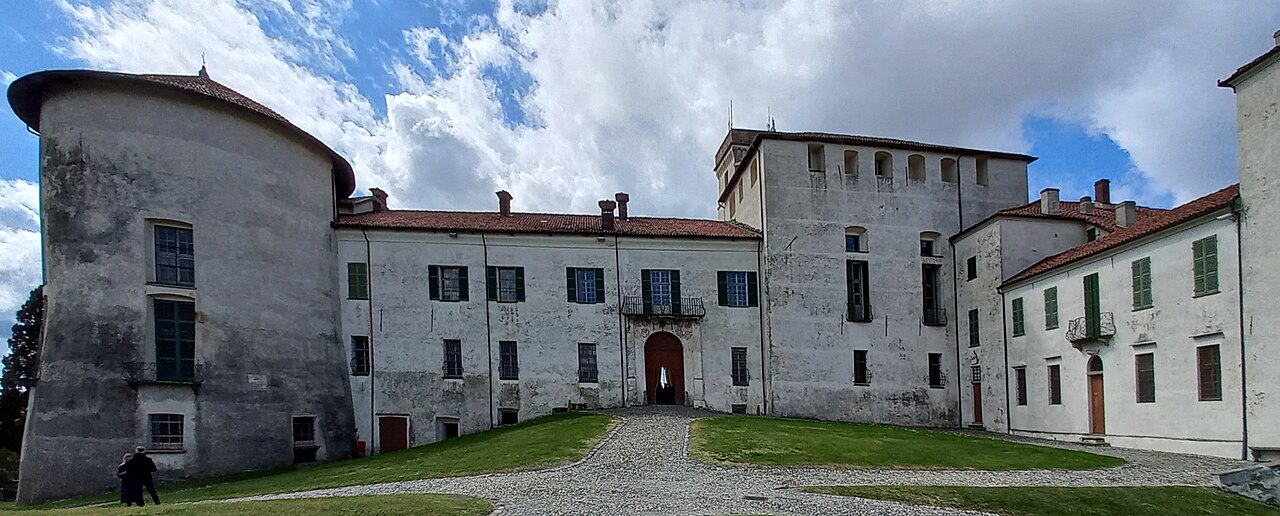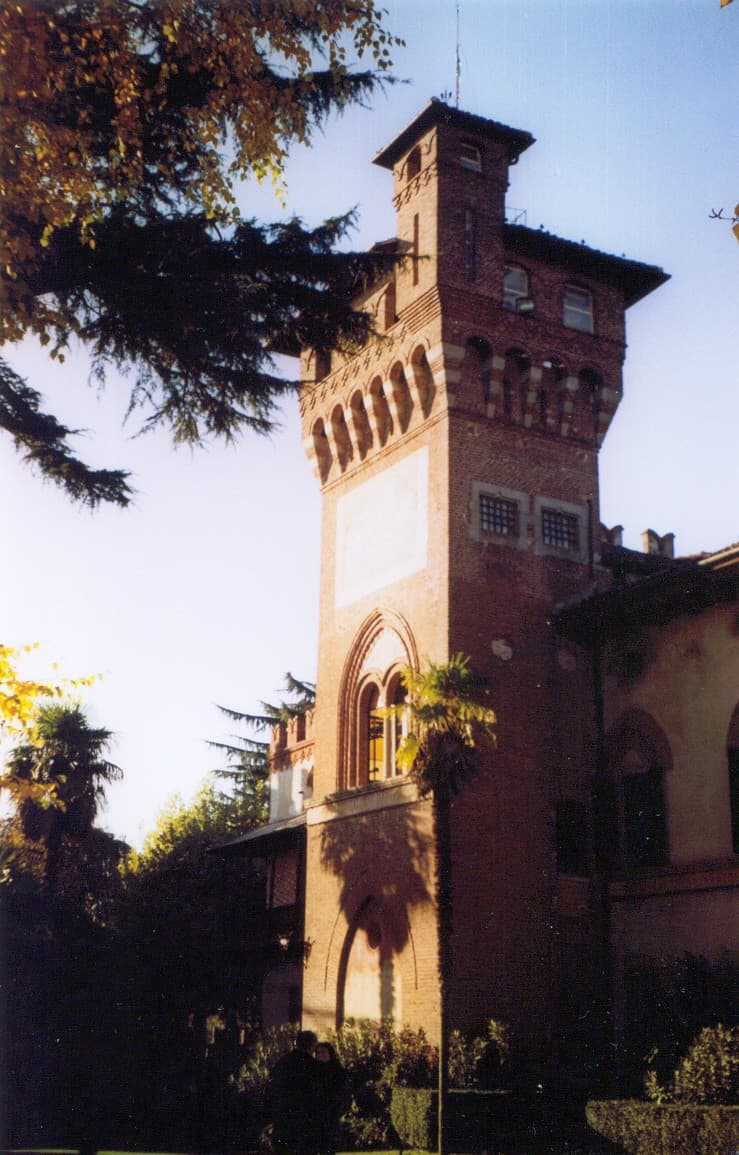
Mazzè Castle, located in Mazzè, Piedmont, Italy, is a historic fortress with origins tracing back to the Roman era. Built upon the remains of an ancient Roman fort, the site gained strategic importance following a decisive Roman victory in 141 BCE. The castle's evolution spans over a millennium, reflecting various architectural styles and historical roles, culminating in significant 19th-century neogothic renovations that define its current appearance.
Historical background and early origins
The site of Mazzè Castle first rose to prominence during the Roman Republic when consul Appius Claudius Pulcher defeated the indigenous Salassi tribe in 141 BCE. To secure the vital bridge over the nearby Dora Baltea river, Pulcher established a fortress, marking the beginning of the site's military significance. This early fortification laid the groundwork for the castle complex that would develop over the following centuries.
During the early medieval period, around the 11th century, the castle and its lands were granted as a fief to the noble Valperga family by Emperor Henry IV. The Valpergas made Mazzè their seat, maintaining control for approximately 740 years until their extinction in 1840. This long tenure saw the construction and expansion of two main fortifications: the Small Castle, completed in 1313 as a residential domicile, and the Large Castle, built in 1430 as a defensive stronghold with facilities for servants, armory, and storage.
Architectural evolution and neogothic renovations
Throughout the 16th and 17th centuries, the castle transitioned from a primarily military fortress to a lavish noble residence. The Large Castle underwent extensive enhancements, including the addition of elaborately decorated halls and frescoes by artists such as Romolo Bernardi and Giovanni Battista Berodjo. These artistic features reflected the tastes and prestige of the Valperga family during the Renaissance and Baroque periods.
Following the Valperga family's extinction, the castle passed through several aristocratic hands, including the Gandolfi Alliaga and Brunetta d’Usseaux families. The latter commissioned significant 19th-century neogothic renovations under architect Giuseppe Velati Bellini. These renovations included raising battlemented walls and towers, adding a new east wing with baths, and constructing a crenellated guesthouse on the western terrace. The Small Castle was also modernized with enclosed battlements and enlarged windows, blending fortress elements with residential comfort.
Military and political significance
Mazzè Castle played various military and political roles over the centuries. In 1641, during the Thirty Years’ War, it served as a French headquarters. Later, it functioned as a command post during the 1859 Second Italian War of Independence. In 1925, Benito Mussolini used the castle for military exercises. Notably, the castle was the site where German forces surrendered to Allied troops on May 2, 1945, marking a pivotal moment at the close of World War II.
Castle layout and notable interiors
The castle complex comprises two main parts: the Large Castle to the west and the Small Castle to the east. The Large Castle is arranged around a noble courtyard with a rectangular layout and contains two floors housing twelve halls dating from the 15th to the 19th centuries. Among its distinguished rooms is the Great Armory Hall, featuring 15th-century wooden ceiling beams and displays of period weapons and armor.
The Throne Room is notable for its frescoes by Romolo Bernardi, decorative inlays by Carlo Arboletti, and a large stone fireplace crafted by the Catella brothers. Other remarkable interiors include the Music Room with ceiling decorations by Giovanni Battista Berodjo, the Baroque Rose Room adorned with knightly medallions, and the Golden Room, which features an 18th-century mosaic floor and frescoes by the Gallari brothers. The Gothic-style Dining Hall is distinguished by its painted vaulted ceiling, showcasing the castle's artistic heritage.
The Small Castle originally served as the Valperga family residence. Architect Giuseppe Velati Bellini modernized it in the 19th century by enclosing battlemented walls with a covered terrace, enlarging windows for increased light, and restoring the square tower overlooking the building. These changes balanced the castle's defensive character with residential needs.
Grounds, gardens, and surrounding features
The castle grounds include a spacious parade ground known as the Piazza d’Armi and landscaped gardens featuring rare plant species. These areas offer expansive views of the surrounding Po Valley plain, the Dora Baltea river valley, the Vercelli countryside, the Monferrato hills, and the distant Ligurian Alps.
Nearby lies the Oasi del Bosco Parco, an ecological reserve with restored ancient mule tracks, a small temple called the "Spring of Love," a bamboo grove, and ruins of a church dedicated to St. Mary Magdalene dating from 1230 CE. The castle's 15th-century entrance tower remains largely intact, providing access to the upper floors of the Large Castle via a staircase.
Underground museum and archaeological significance
Beneath the castle is an extensive underground Museum of Torture spanning approximately 500 square meters. This subterranean complex includes exhibition halls displaying instruments related to the Inquisition, a Celtic crypt dating to the 10th century BCE, 14th-century prison cells and cold storage rooms, a 15th-century mortuary chapel, and Roman cisterns from the 2nd century BCE. These features attest to the site's long and varied historical significance.
Preservation and current status
After suffering damage and plundering in the 20th century, the castle was restored over two decades by the Salino family, reopening to the public in 1986. The property changed hands in 2012 when Russian businessman Mikhail Lyubchenko acquired it. The Small Castle became a private residence, while the Large Castle remained open to visitors until 2019. The castle is currently well preserved, reflecting its layered history and architectural evolution.
Frequently asked questions (FAQ)
- How do I get to Mazzè Castle?
- Mazzè Castle is located in the picturesque town of Mazzè, Italy, and can be easily reached by car or public transport. If you are traveling by train, the nearest station is in Chivasso, from where you can take a local bus or taxi to the castle.
- What is the historical significance of Mazzè Castle?
- Mazzè Castle dates back to the 12th century and has been a vital part of the region's history, serving as a defensive stronghold. It reflects the feudal architecture of the period and has witnessed numerous historical events, making it a significant landmark in Italian heritage.
- When was Mazzè Castle built?
- The construction of Mazzè Castle began in the 12th century, around the year 1150. Over the centuries, it has undergone various renovations and restorations, preserving its medieval charm while adapting to changing architectural styles.
- Can I visit Mazzè Castle?
- Yes, Mazzè Castle is open to visitors, offering a chance to explore its historic grounds and learn about its rich history. Guided tours are available, allowing you to fully appreciate the architecture and stories behind the castle.
- Why is Mazzè Castle famous?
- Mazzè Castle is famous for its well-preserved architecture and its role in local history as a strategic military site. The castle's unique design and stunning views of the surrounding countryside attract history enthusiasts and photographers alike.
- Is it possible to host events at Mazzè Castle?
- Yes, Mazzè Castle can be rented for special events such as weddings and corporate functions. Its beautiful setting and historical ambiance make it a popular choice for memorable occasions.
- What are the opening hours for Mazzè Castle?
- Mazzè Castle is typically open to the public from Tuesday to Sunday, with varying hours depending on the season. It is recommended to check the official website for the most current opening times before planning your visit.
- What are the ticket prices for Mazzè Castle?
- Ticket prices for Mazzè Castle are generally affordable, with discounts available for students and seniors. Children under a certain age may enter for free, but it's best to confirm the latest pricing details on the official site before your visit.
- What is the best time to visit Mazzè Castle?
- The best time to visit Mazzè Castle is during the spring and fall when the weather is mild and the surrounding landscape is particularly beautiful. Additionally, these seasons tend to have fewer crowds, allowing for a more enjoyable experience.
- Are there any nearby attractions to visit along with Mazzè Castle?
- Yes, there are several nearby attractions, including the charming town of Chivasso and various vineyards in the region. Exploring the local area can enhance your visit, offering a taste of Italian culture and stunning scenery.
Photo gallery

Information
Website
Visit websiteSources & official resources
Verify the information above using these authoritative references.
Loading map...
Visitor reviews
No reviews yet. Been here? Write the first review and help other travelers!
Write the first reviewVisited this castle? Share your experience
Your review helps other travelers and adds first-hand knowledge to our encyclopedia.