Castello di Moncrivello
The Castello di Moncrivello stands as a remarkable example of a fortified medieval stronghold that evolved into a noble residence, located in the municipality of Moncrivello in the Piedmont region of Italy. Its origins date back to around the year 1000, when it was initially constructed by medieval inhabitants as a defensive structure to control the surrounding territory. Over the centuries, the castle witnessed significant transformations reflecting the shifting political and social landscape of northern Italy.
Early history and medieval fortifications
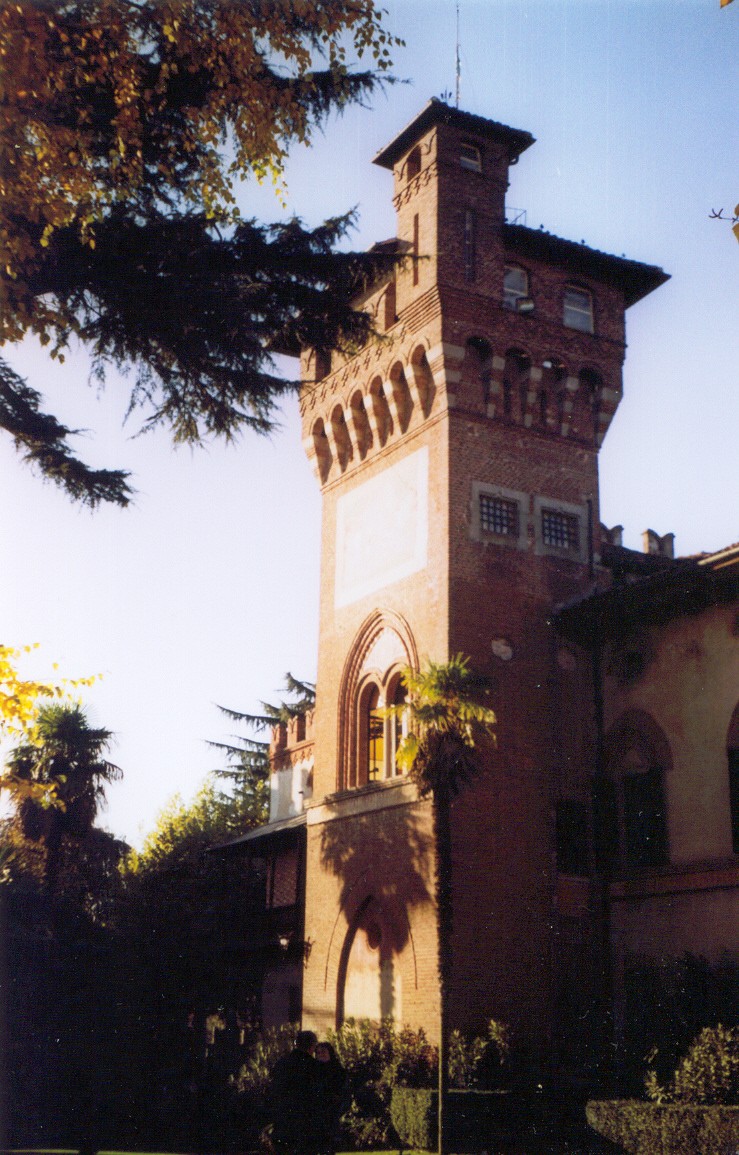
Initially established as a strategic hill castle, the site was developed into a rocca during the 13th century, a type of fortified castle designed primarily for military defense. This period saw the construction of robust stone walls and a large quadrangular tower, which became the centerpiece of the castle's defensive system. The tower, built with sturdy masonry and featuring brick-framed windows, was equipped with machicolations—openings in the battlements that allowed defenders to repel attackers by dropping objects or pouring substances below.
In 1243, the castle came under the control of the Marquises of Monferrato, a powerful noble family influential in the region. Later, in the 14th century, authority passed to the Bishops of Vercelli, who granted the castle as a fief to the counts of the Fieschi family. This arrangement lasted until 1399, when a popular uprising against Antonio Fieschi resulted in the castle's transfer to Amadeus VIII, Duke of Savoy. Throughout this time, the castle maintained its military function, serving as a stronghold in the complex feudal and territorial disputes of the period.
Transformation into a noble residence in the 15th century
The 15th century marked a significant turning point for the Castello di Moncrivello. Under the influence of Yolande of Valois, wife of Amadeus IX and daughter of Charles VII of France, the fortress underwent extensive renovations to transform it into a comfortable and elegant noble residence. Yolande resided in the castle until her death in 1478, overseeing enhancements that softened the castle's military austerity while preserving its defensive capabilities.
Architectural modifications included the construction of defensive walls featuring swallowtail battlements, a distinctive Italian crenellation style that combined defense with aesthetic appeal. Inside, the castle was fitted with a helical staircase facilitating efficient vertical movement between floors, coffered ceilings with intricately recessed panels adding artistic depth to the chambers, and terracotta fireplaces providing warmth and decorative focal points. These features reflected Renaissance tastes and the castle's new role as a noble residence.
The castle also hosted significant dynastic events, such as the marriage of Carlo I of Savoy to Bianca of Monferrato, who later served as regent of the Savoy state. Subsequently, Carlo III of Savoy gifted the castle to his wife, Beatrice of Portugal, marking the castle's continued association with prominent noble families, although its prominence began to wane.
Later history and decline
During the 17th century, the castle's ownership changed hands amid the ongoing conflicts between France and Spain, reflecting the turbulent political climate of the region. From 1692, it belonged to the Del Carretto family, who maintained possession until a devastating fire struck in either 1817 or 1825, causing significant damage to the structure.
Following the fire, the castle experienced a period of decline and neglect. It was not until 1972 that private owners initiated restoration efforts aimed at preserving the castle's historical and architectural heritage. Recognizing its cultural importance, the castle was designated a national monument in 1908, ensuring legal protection and fostering conservation initiatives.
Architectural features and preservation
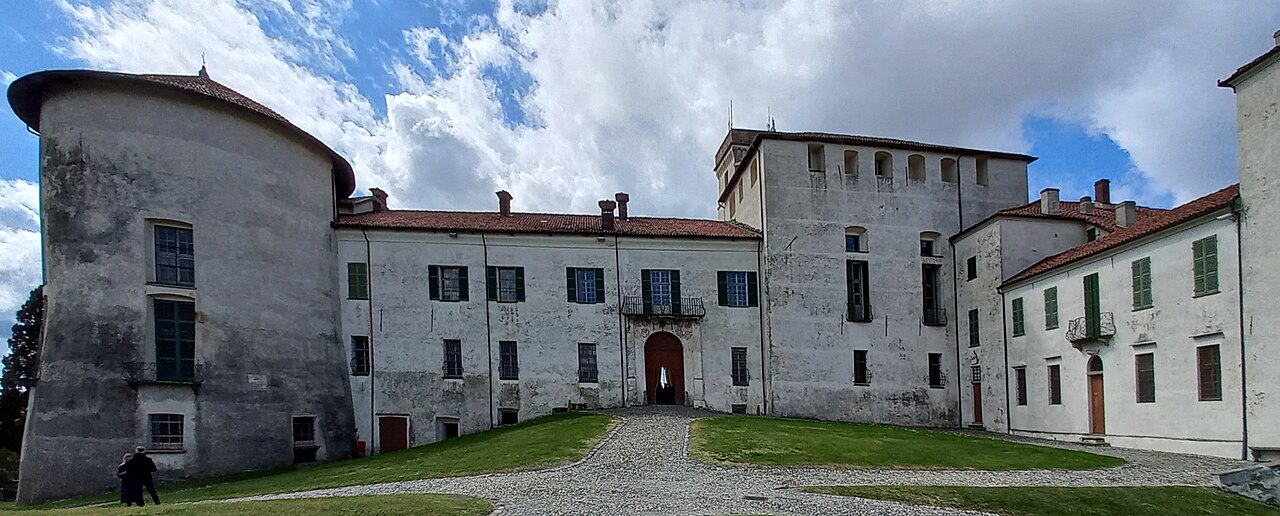
The Castello di Moncrivello today preserves a fascinating blend of its medieval military origins and Renaissance residential adaptations. The large quadrangular tower remains a dominant feature, showcasing the robust masonry techniques of the medieval period. Its machicolations and carriage passage leading into the central courtyard illustrate the castle's defensive and functional design.
The surrounding defensive walls with their characteristic swallowtail battlements reflect the 15th-century renovations under Yolande of Valois, combining defensive utility with elegant design. Inside, the castle's interior spaces retain elements such as the helical staircase, coffered ceilings, and terracotta fireplaces, all of which highlight the castle's transformation into a noble residence.
Restoration efforts have carefully preserved these features, allowing visitors to appreciate the castle's layered history and architectural evolution. The castle's status as a hill castle with a complex history spanning from the Early Medieval to the Renaissance period makes it a significant cultural landmark in the Piedmont region.
Visiting Castello di Moncrivello
Today, the Castello di Moncrivello offers a unique glimpse into Italy's medieval and Renaissance heritage. Visitors can explore the castle's imposing tower, defensive walls, and elegant residential quarters, gaining insight into the lives of the noble families who shaped its history. The castle's preservation enables an immersive experience of architectural and historical significance, making it a valuable destination for those interested in Italian castles and noble residences.
Frequently asked questions (FAQ)
- How do I get to Castello di Moncrivello?
- Castello di Moncrivello is located in the municipality of Moncrivello in Piedmont, Italy. It is accessible by car via local roads from nearby cities such as Vercelli and Turin. Public transportation options may be limited, so driving is recommended for visitors.
- What are the opening hours for visiting the castle?
- Visiting hours for Castello di Moncrivello can vary, so it is advisable to check in advance with the current private owners or local tourist information. Typically, the castle may be open for tours on weekends or by appointment.
- Can I tour the interior of the castle?
- Tours of the interior of Castello di Moncrivello are sometimes available, especially during special events or by prior arrangement. Visitors should contact the owners or local tourist offices to confirm access and tour availability.
- What architectural styles are present in the castle?
- Castello di Moncrivello features a mix of medieval and Renaissance architectural styles. Its original military structures include robust masonry and machicolations, while later additions showcase Renaissance elements such as coffered ceilings and terracotta fireplaces.
- Why is the castle historically significant?
- The castle is historically significant for its evolution from a medieval fortress to a noble residence connected to prominent figures such as Yolande of Valois and the House of Savoy. It also played a role in regional power struggles during the Middle Ages and Renaissance.
Information
Sources & official resources
Verify the information above using these authoritative references.
Loading map...
Visitor reviews
No reviews yet. Been here? Write the first review and help other travelers!
Write the first reviewVisited this castle? Share your experience
Your review helps other travelers and adds first-hand knowledge to our encyclopedia.