Mazuelo de Muñó Castle
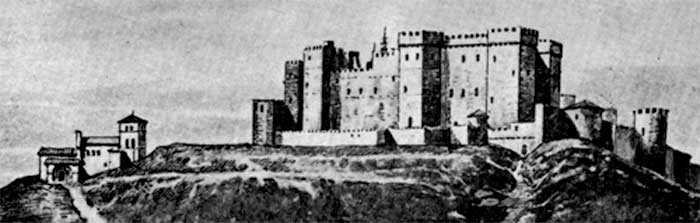
Mazuelo de Muñó Castle stands as a significant example of a late medieval fortified tower in the village of Mazuelo de Muñó, Spain. Constructed in the 14th century, this castle embodies the military and residential architecture typical of the Kingdom of Castile during a period marked by feudal conflict and noble power consolidation. The castle’s enduring stone structure, despite the loss of its interior to fire in 1923, continues to reflect the historical and architectural legacy of the region.
Historical context and noble lineage
The origins of Castillo de Mazuelo de Muñó are closely tied to the influential Carrillo family, prominent local lords during the reign of King Pedro I of Castile. The construction of the tower is attributed to either Juan Alfonso Carrillo in the mid-14th century or his son Pedro Carrillo in the early 15th century. Both figures played key roles in the administration and defense of the area, with Pedro Carrillo notably serving as chief merino, a royal official responsible for overseeing justice and administration. This dual function of the castle as a noble residence and a defensive stronghold highlights its strategic importance within the feudal system.
Ownership of the castle passed through several generations, reflecting the interwoven alliances of Castilian nobility. After Leonor Carrillo, the estate was inherited by her grandson Pedro Carrillo de Toledo. Through marriage, the castle became linked to the powerful House of Alba when Pedro’s daughter, Mencía Carrillo Palomeque, married Fernando Álvarez de Toledo y Sarmiento, the first Count of Alba de Tormes. Following Fernando’s death in 1466, Mencía sold the property to Sancho de Rojas Manrique, lord of Monzón and Cabia, initiating an approximately eighty-year period of Rojas family stewardship.
Renaissance repairs and architectural features
Between 1541 and 1546, the castle changed hands to Andrés Ortega de Cerezo, a cantor at Burgos cathedral, who incorporated it into a mayorazgo, a hereditary estate designed to preserve family wealth and property. Ortega commissioned significant repairs led by master stonemason Juan de Vallejo. These renovations enhanced the castle’s defensive capabilities and ensured the structural integrity of the tower. Although Ortega died before completion, his will stipulated that his nephew, Pedro Ortega Cerezo de Torquemada, continue and finish the restoration work.
The castle’s architecture is characterized by a fortified tower house design, combining residential quarters with defensive features. The main tower is surrounded by a barbican, an outer defensive wall that provided an additional layer of protection against attackers. Constructed from carefully laid stone blocks, the masonry demonstrates the skill and techniques of medieval and Renaissance craftsmen, particularly evident in the mid-16th-century restorations.
Decline, fire, and preservation efforts
By the 18th century, ownership had passed to Joaquín de la Cerda y Torquemada, Marquis of La Rosa, and later to José de Saavedra y Salamanca, Marquis of Viana, who maintained the property into the early 20th century. The castle remained inhabited until 1923, when a devastating fire destroyed much of the interior, ending its use as a residence.
Despite the interior loss, the castle’s exterior stone structure survived. Subsequent restoration and stabilization efforts have preserved the tower’s imposing vertical walls and the surrounding barbican. These efforts culminated in the castle receiving formal protection as a cultural monument in 1991, ensuring its conservation as a valuable heritage site.
Architectural significance and current state
The surviving elements of Mazuelo de Muñó Castle provide important insight into the design and function of a medieval fortified residence in Castile. The tower’s robust stone walls and defensive barbican exemplify the architectural strategies employed to balance habitation with military defense. Although detailed interior layouts and decorative elements have not been documented, the castle’s form and location underscore its role as a local stronghold and noble residence.
Today, the castle remains a prominent landmark within the village of Mazuelo de Muñó, symbolizing the region’s medieval past and the historical continuity of noble estates in Spain. Its preservation allows visitors and scholars to appreciate the architectural and historical narratives embedded in its stone walls.
Historical importance within castilian heritage
Mazuelo de Muñó Castle reflects the complex social and military fabric of Castile during the late medieval period. The castle’s association with notable noble families, including the Carrillos, the House of Alba, and the Rojas, illustrates the interconnections of power, landownership, and defense mechanisms in medieval Spain. Its endurance through centuries and survival despite fire damage highlight the resilience of such fortified structures and their lasting cultural significance.
As a protected cultural monument, the castle contributes to the understanding of feudal society, architectural evolution, and regional history in Castile. It stands as a testament to the strategic importance of fortified towers and the role of noble families in shaping the historical landscape.
Frequently asked questions (FAQ)
- When was Mazuelo de Muñó Castle built?
- Mazuelo de Muñó Castle was constructed in the 14th century during the late medieval period, reflecting the architectural style of that era.
- What is the architectural style of Mazuelo de Muñó Castle?
- The castle is a fortified tower house typical of late medieval Castilian architecture, featuring a surrounding barbican and robust stone masonry.
- Can visitors explore the interior of Mazuelo de Muñó Castle?
- The interior of the castle was destroyed by a fire in 1923, so visitors can primarily view the exterior structure and the surrounding barbican.
- Who were the original builders of the castle?
- The castle was built by the noble Carrillo family, likely by Juan Alfonso Carrillo or his son Pedro Carrillo, important local lords in the 14th and 15th centuries.
- What is the historical significance of Mazuelo de Muñó Castle?
- The castle illustrates the feudal and noble history of Castile, having been owned by notable families such as the Carrillos, the House of Alba, and the Rojas family.
Information
Loading map...
Visitor reviews
No reviews yet. Been here? Write the first review and help other travelers!
Write the first reviewVisited this castle? Share your experience
Your review helps other travelers and adds first-hand knowledge to our encyclopedia.