Maultasch Castle
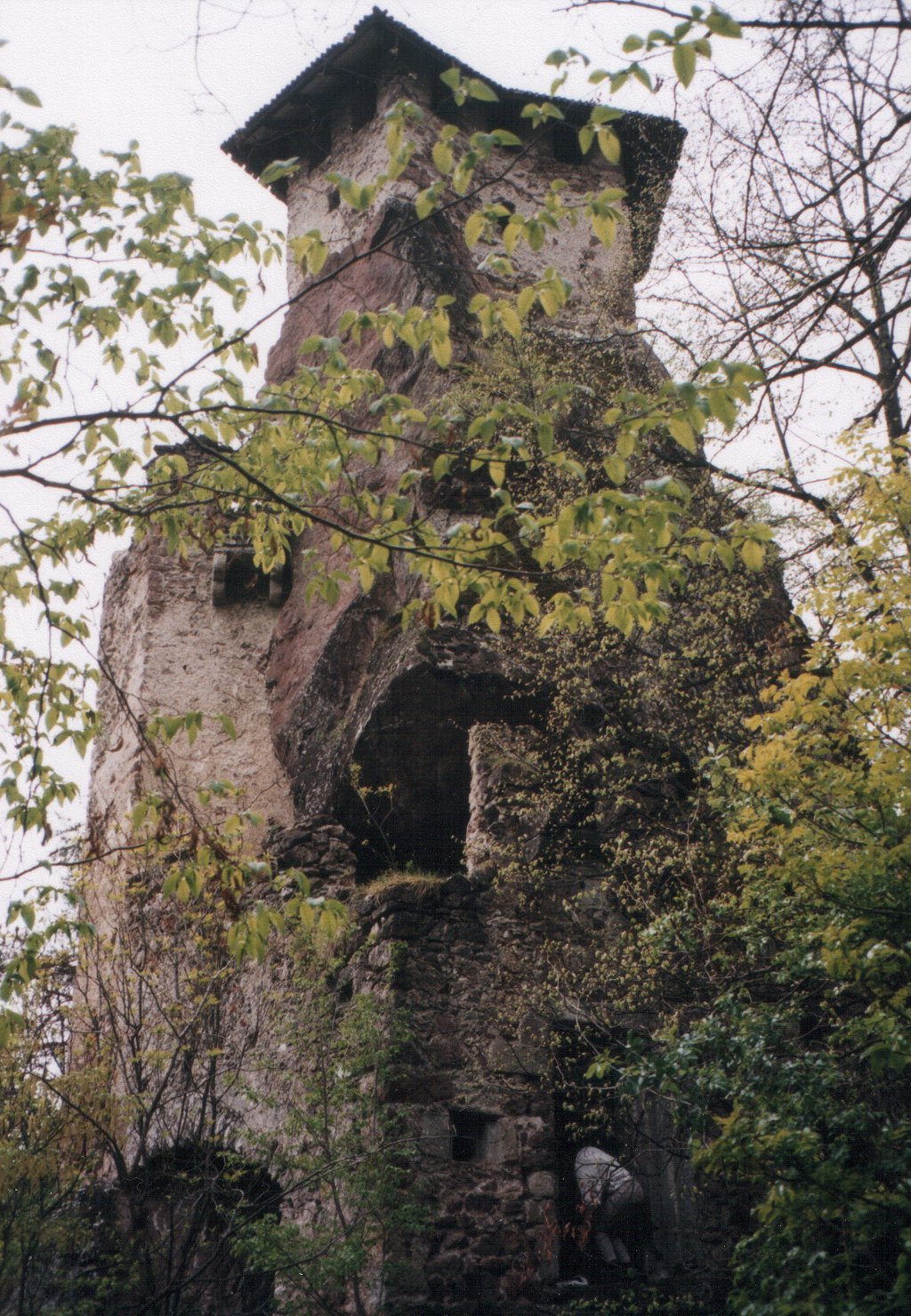
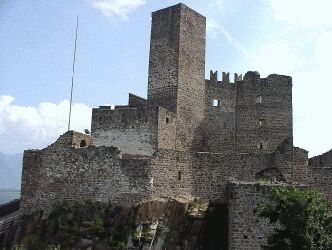
Maultasch Castle, also known as Castel Neuhaus, is a notable medieval ruin located above the town of Terlano (Terlan) in northern Italy. This high medieval fortress was first mentioned in 1228 and served as a strategic border castle for the Counts of Tyrol. Positioned on a hill overlooking the Adige valley, the castle's most prominent feature today is its imposing donjon, which rises sharply into the sky and remains visible from afar despite the ruinous state of the rest of the structure.
Historical context and significance
The castle was likely constructed to protect the Tyrolean lands from the influence and incursions of the Counts of Bolzano. Its location allowed it to control and monitor the valley below, a vital trade and transit route. During the 13th century, just below the castle, a customs station was established to regulate commerce and collect tolls, underscoring the castle's role in regional economic control.
Despite its initial importance, the castle's strategic value diminished over time, particularly after Meinhard, Duke of Carinthia, occupied Bolzano. This occupation weakened the castle's defensive relevance and led to the gradual decline of its prominence in the region.
The legend of Margarete Maultasch and the castle's name
The castle is popularly associated with Margarete Maultasch, the Countess of Tyrol, who ruled in the 14th century. Although there is no direct documentary evidence confirming her residence at Castel Neuhaus, local tradition suggests she favored spending time there. This association has led to the common use of the name "Maultasch Castle" in reference to the ruins. Margarete's nickname, "Maultasch," meaning "bag mouth," refers to her distinctive facial features, and her historical notoriety has added a layer of romantic intrigue to the castle's story.
Ownership and architectural evolution
Between 1382 and 1559, the castle was home to the Lords of Niedertor of Bolzano. Subsequently, the Lords of Wolkenstein, who also owned the nearby Castel Trostburg, took residence until 1733. The castle experienced periods of consolidation and partial renovation under the ownership of the Counts of Enzenberg, who sought to maintain its structure despite its declining military role.
Architecturally, the castle is characterized by its hill castle classification, with a fortified donjon that served as the main defensive stronghold. The surrounding walls and remnants of ancillary buildings reflect typical high medieval military architecture designed for defense and control rather than residential comfort.
Current condition and visitor experience
Today, Castel Neuhaus stands as a partially preserved ruin, with the donjon as its most striking surviving element. The site has become a popular destination for tourists and locals alike, especially those interested in medieval history and hiking. The castle is accessible via the Margarete Trail in Terlano, a well-marked path suitable for families and casual walkers.
Visitors can explore the ruins and enjoy panoramic views of the Adige valley and surrounding alpine landscape. Interpretive signs provide historical context, enhancing the educational value of the visit. The castle's blend of natural beauty and historical significance makes it a favored spot for excursions in the region.
Architectural features and defensive elements
The most prominent feature of Maultasch Castle is its donjon, a tall, rectangular tower that served as the last line of defense and residence for the lord. The donjon's height and robust construction allowed defenders to observe and repel attackers effectively. The castle's walls, although now mostly in ruins, once enclosed a courtyard and various service buildings necessary for sustaining a garrison.
The castle's position atop a hill provided natural defense advantages, including steep slopes that hindered enemy approach and clear sightlines for early warning. The nearby customs station complemented the castle's role in controlling trade and movement through the valley.
Legacy and cultural importance
Maultasch Castle remains an important cultural landmark in the South Tyrol region. Its connection to the historical figure of Margarete Maultasch adds a human dimension to its story, linking the site to broader narratives of medieval politics and regional power struggles. The castle also contributes to the understanding of medieval fortification strategies in alpine border areas.
Efforts to preserve the ruins and promote the site as a tourist attraction help maintain local heritage and provide educational opportunities. The castle's setting within the scenic landscape of northern Italy enhances its appeal for visitors interested in both history and nature.
Frequently asked questions (FAQ)
- How do I reach Maultasch Castle from Terlano?
- Maultasch Castle is accessible via the Margarete Trail starting in Terlano, which is a well-marked hiking path suitable for families and casual walkers. The trail leads uphill to the castle ruins with scenic views along the way.
- What is the historical significance of Maultasch Castle?
- Maultasch Castle served as a strategic border fortress for the Counts of Tyrol in the 13th century, controlling trade routes in the Adige valley and playing a role in regional power struggles. It is also associated with Countess Margarete Maultasch, adding historical intrigue.
- Can I explore the interior of the castle ruins?
- Visitors can explore the exterior ruins and the donjon of Maultasch Castle. While much of the interior structures are in ruin, the site offers informative signage and panoramic views of the surrounding landscape.
- Is Maultasch Castle suitable for family visits?
- Yes, the castle is reachable by an easy hiking trail called the Margarete Trail, making it suitable for families with children. The site offers a safe and educational environment for visitors of all ages.
- When is the best time to visit Maultasch Castle?
- The best time to visit is during the warmer months from late spring to early autumn when the hiking trails are accessible and the weather is favorable for outdoor exploration.
Information
Loading map...
Visitor reviews
No reviews yet. Been here? Write the first review and help other travelers!
Write the first reviewVisited this castle? Share your experience
Your review helps other travelers and adds first-hand knowledge to our encyclopedia.