Hocheppan Castle
Hocheppan Castle stands prominently on a steep rocky spur above the village of Missian, a district of Eppan (Appiano sulla strada del vino) in South Tyrol, Italy. This high medieval hill castle is one of the most significant fortresses in southern South Tyrol, renowned for its strategic location, well-preserved defensive structures, and exceptional Romanesque chapel adorned with rare frescoes. Built around 1130, the castle has witnessed centuries of regional power struggles, architectural evolution, and cultural development.
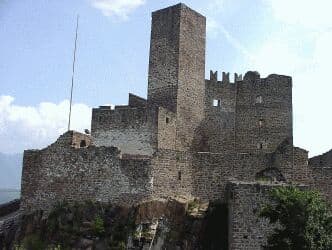
The castle's imposing donjon, or bergfried, is a unique pentagonal tower, a rarity in Tyrolean fortifications, symbolizing the military and aristocratic strength of its original builders. Overlooking the broad Adige valley, Hocheppan offers commanding views of the surrounding landscape and other medieval castles along the river, emphasizing its historical role as a defensive stronghold and administrative center.
Historical background and significance
The site of Hocheppan Castle has a history extending back approximately two millennia, with archaeological evidence indicating fortifications dating to the era of the ancient Rhaetian tribes. This early occupation highlights the strategic importance of the location long before the medieval fortress was established.
The medieval castle itself was likely constructed shortly after 1200, with the earliest documentary mention in 1211 under the Latin name "in castro de Epan." It was probably founded by Count Ulrich II of Appiano (also known as Eppan) to replace an earlier family seat, believed to be Freudenstein Castle, which was destroyed in 1158 following a punitive expedition led by Henry the Lion, Duke of Saxony, against the Appiano counts after they ambushed a papal embassy.
By 1315, Hocheppan came under the ownership of the Counts of Tyrol and was subsequently granted as a fief to various noble families, including the Counts Fuchs von Fuchsberg. The castle also served as the center of a judicial district, a role documented in 1490 and governed by a statute from 1650, underscoring its administrative importance in the region.
In the 19th century, ownership passed to Martin Teimer von Wildau in 1834, followed by acquisition by the Counts Enzenberg in 1911, who undertook consolidation and partial restoration efforts. More recently, in 2016, the municipality of Appiano purchased the castle, recognizing its cultural and historical value.
Architectural features and defensive structures
Castle layout and fortifications
Hocheppan Castle is a classic example of a hill castle, constructed on a naturally defensible rocky outcrop. The complex evolved over several centuries, reflecting changes in military technology and architectural styles. The northern gate is fortified with a sophisticated system of foreworks and guard towers, primarily dating from the late Middle Ages and the 16th century. These outer defenses were designed to thwart direct assaults and incorporate adaptations for early firearms.
A notable feature is the semicircular rondel tower facing inward, which was part of the castle's response to the introduction of gunpowder weaponry. This tower, along with other bastions, enhanced the castle's ability to withstand artillery attacks, marking a transition in fortification design during the late medieval period.
The pentagonal bergfried
At the heart of the castle stands the pentagonal bergfried, a rare architectural form in Tyrol. This tall main tower served as the last refuge during sieges and as a symbol of the lord's power. Despite suffering structural damage from a significant crack in its masonry, the bergfried has been carefully restored to maintain its imposing presence and historical integrity.
Residential and administrative buildings
The castle palace adjacent to the bergfried remains substantially preserved, offering insights into the living quarters and administrative functions of the fortress. These buildings illustrate the dual military and domestic roles of the castle, accommodating the noble family and their retinue while serving as a local seat of power.
The romanesque chapel: artistic and cultural treasure
The castle's chapel, dating from around 1131, is a small rectangular building incorporated into the castle's structure rather than standing separately. Architecturally, it is distinguished by having three apses embedded within the thickness of one of its short walls, along with a side entrance. This design is unusual and highlights the chapel's significance within the fortress complex.
Known as the "Sistine Chapel of the Alps", the chapel's interior walls are adorned with exceptionally well-preserved Romanesque frescoes. These murals are remarkable not only for their religious themes but also for their inclusion of secular and allegorical imagery. Biblical scenes coexist with depictions of the "foolish virgins", a "dumpling eating woman", and a rare hunting scene, offering a unique glimpse into medieval symbolism and daily life.
On the exterior, frescoes possibly illustrate the legend of King Theodoric, a figure from medieval Germanic lore. The combination of sacred and secular imagery makes the chapel a vital cultural and artistic monument, attracting art historians and visitors alike.
The kreideturm and surrounding defenses
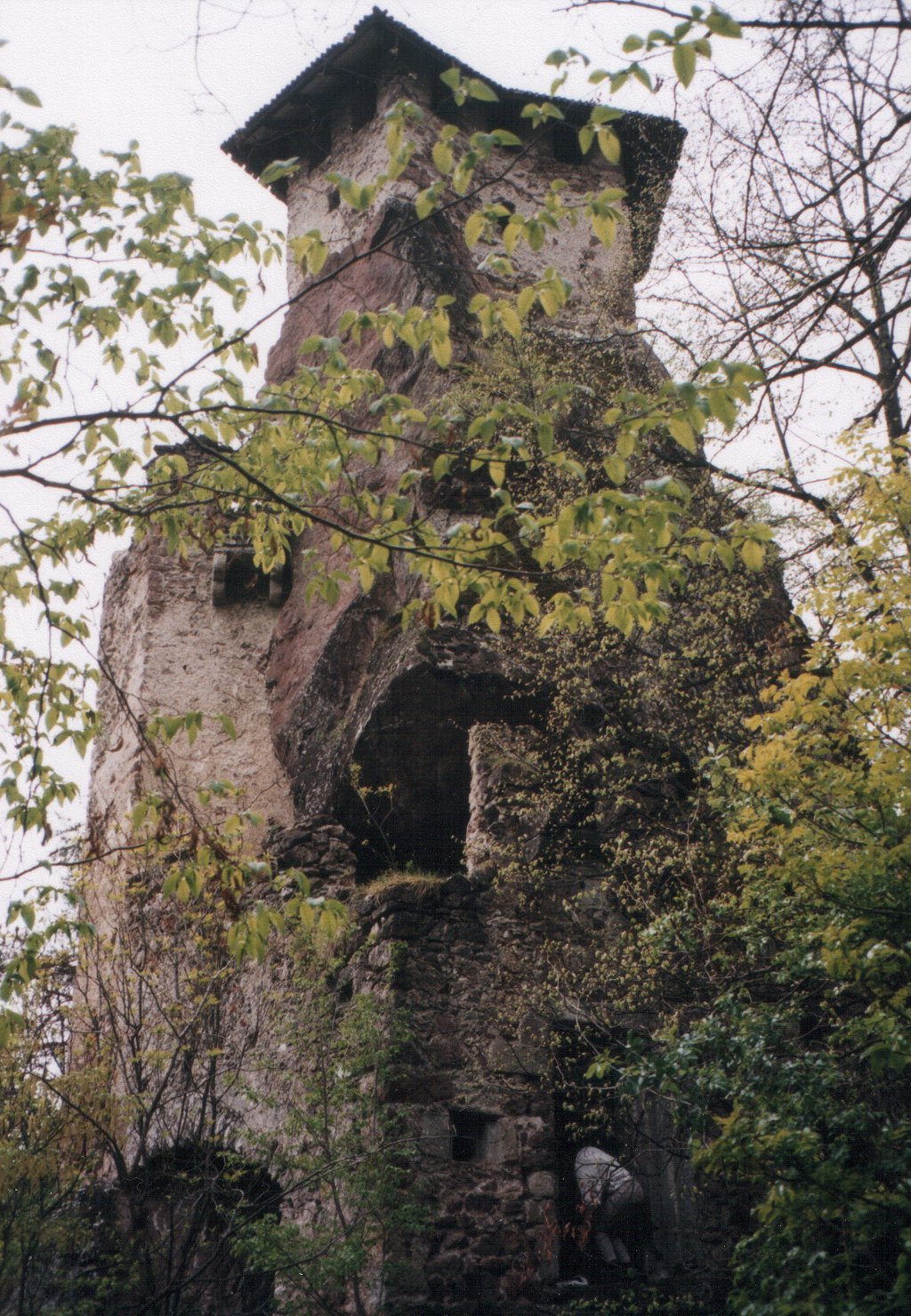
Approximately a ten-minute walk from the main castle stands the Kreideturm or Chalk Tower, a 13th-century quadrangular tower coated in white plaster. Its elevated entrance and the remnants of a surrounding ring wall indicate its defensive purpose as a strategic outpost and signal tower.
The tower's design includes a former arched opening that once led to a wooden battlement walkway, now lost. Historically, the Kreideturm was used to send signals via chalk fires, visible for many kilometers, enhancing the castle's communication capabilities across the region.
Current status and visitor experience
Today, Hocheppan Castle is well preserved thanks to ongoing consolidation and partial restoration work. The castle is open to the public during the summer season, with guided tours allowing visitors to explore its historic structures and the remarkable Romanesque chapel.
Visitors can enjoy panoramic views of the Adige valley and surrounding castles, while the castle tavern offers traditional meals and refreshments, enriching the cultural experience. The availability of keys to the chapel from the castle's refreshment point enables close appreciation of its artistic treasures.
Hocheppan Castle remains a vital link to the medieval heritage of South Tyrol, combining military architecture, aristocratic history, and exceptional art in a stunning alpine setting.
Frequently asked questions (FAQ)
- How do I get to Hocheppan Castle?
- Hocheppan Castle is located in Eppan, Italy, and can be accessed by car or public transport. The nearest train station is in Bolzano, from where you can take a bus or taxi to reach the castle. There are also marked walking paths for those who prefer a scenic hike.
- What is the historical significance of Hocheppan Castle?
- Hocheppan Castle dates back to the 12th century and is an important example of medieval architecture in the South Tyrol region. It served as a residence for the local nobility and played a strategic role in the region's defenses. The castle's rich history is reflected in its well-preserved structures and artifacts.
- When was Hocheppan Castle built?
- Hocheppan Castle was constructed around the year 1150. Over the centuries, it has undergone various renovations and expansions, reflecting different architectural styles. Today, it stands as a testament to the medieval history of the area.
- Can I take guided tours of Hocheppan Castle?
- Yes, guided tours are available at Hocheppan Castle, providing visitors with insights into its history and architecture. Tours typically include access to key areas of the castle, such as the chapel and living quarters. It’s advisable to check the official website for tour schedules and availability.
- Why is Hocheppan Castle a popular destination for visitors?
- Hocheppan Castle is popular due to its stunning panoramic views of the surrounding vineyards and mountains, as well as its historical significance. The architecture and well-preserved interiors attract history enthusiasts and photographers alike. Additionally, the castle hosts various cultural events throughout the year.
- Is it possible to visit Hocheppan Castle with children?
- Yes, Hocheppan Castle is family-friendly and can be visited with children. The castle's grounds provide plenty of space for kids to explore, and the guided tours are designed to engage visitors of all ages. Be sure to check for any special family programs or activities that may be available during your visit.
- What are the opening hours for Hocheppan Castle?
- Hocheppan Castle is typically open to visitors from April to October, with specific opening hours that may vary by season. It is recommended to check the official website or contact the castle directly for the most current hours of operation before planning your visit. Keep in mind that the castle may close on certain public holidays.
- What are the ticket prices for visiting Hocheppan Castle?
- Ticket prices for Hocheppan Castle are generally affordable, with discounts available for students and seniors. Children under a certain age may enter for free. For the latest pricing information, including any special rates for groups or events, please refer to the official website.
- What are some nearby attractions to Hocheppan Castle?
- Nearby attractions include the picturesque town of Eppan, the South Tyrolean Wine Road, and several hiking trails that showcase the region's natural beauty. Visitors can also explore other castles in the area, such as Sigmundskron Castle. These attractions make for a wonderful day trip when combined with a visit to Hocheppan Castle.
Photo gallery

Information
Website
Visit websiteSources & official resources
Verify the information above using these authoritative references.
Loading map...
Visitor reviews
No reviews yet. Been here? Write the first review and help other travelers!
Write the first reviewVisited this castle? Share your experience
Your review helps other travelers and adds first-hand knowledge to our encyclopedia.