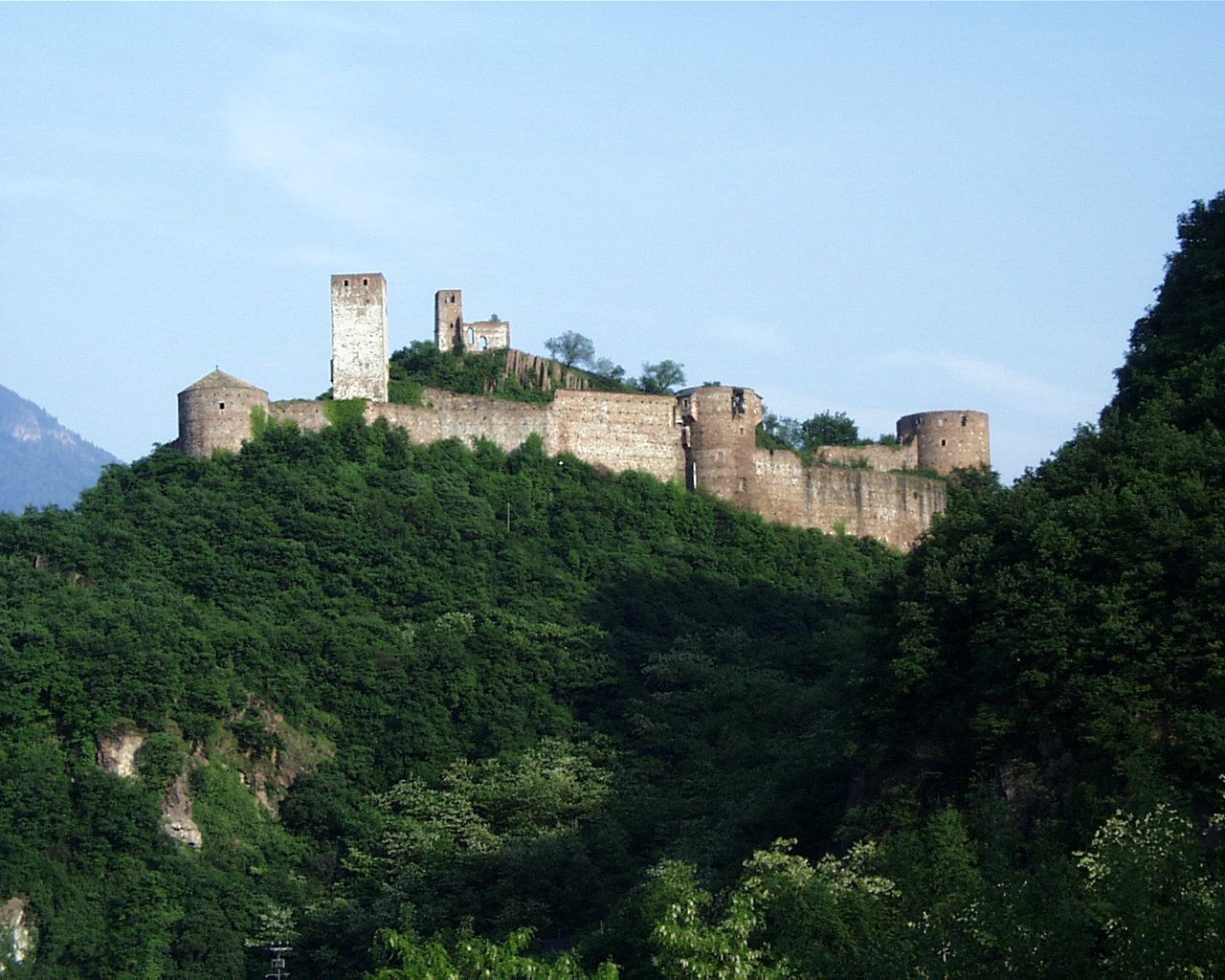
Greifenstein Castle Ruins
Greifenstein castle, located in Terlano, Italy, is a significant high medieval fortress first documented in 1158. This castle played a notable role in the turbulent regional conflicts of the 12th and 13th centuries. Its strategic position in the Tyrolean region made it a valuable stronghold during the power struggles between secular and ecclesiastical authorities.
Early history and medieval conflicts
The castle was originally constructed in the high medieval period, serving as a fortified residence for the noble family of Greifenstein. Its earliest mention in 1158 indicates its importance in the local feudal hierarchy. However, the castle suffered significant damage in the second half of the 13th century amid the wars between Count Meinhard II of Tyrol-Gorizia and the Bishop of Trent. These conflicts were part of broader struggles for territorial control in the region, reflecting the complex political landscape of medieval northern Italy and the adjacent Alpine territories.
Ownership changes and reconstruction
After the destruction, the castle underwent reconstruction and eventually passed into the hands of the lords of Starkenberg. This transfer occurred following the death of the last member of the Greifenstein family, who was killed in the Battle of Sempach in 1386. The Starkenberg family maintained the castle as a defensive and administrative center, continuing its role in regional power dynamics.
Sieges and conquest in the 15th century
Greifenstein castle faced further military challenges in the early 15th century. It was besieged twice by Duke Frederick IV of Austria-Tyrol, first in 1418 and again in 1423. The castle's defenses held for several weeks during these sieges, demonstrating its robust fortifications characteristic of high medieval military architecture. Despite these efforts, the castle was ultimately conquered in 1426, marking a significant shift in control to the Habsburg family, who expanded their influence across the region.
Architectural features and current condition
Today, Greifenstein remains as ruins, with remnants that offer insight into its original high medieval design. The castle's layout included typical defensive elements such as thick stone walls, a fortified gatehouse, and towers designed for surveillance and protection. Although much of the structure has been lost to time and conflict, the ruins still convey the scale and strategic importance of the fortress.
Cultural and historical significance
Greifenstein castle ruins are an important cultural landmark in the region, reflecting the complex history of medieval Tyrol and northern Italy. The site attracts historians and visitors interested in medieval military architecture and the feudal history of the area. Its story encapsulates themes of noble lineage, territorial warfare, and the shifting allegiances that shaped the medieval European landscape.
Frequently asked questions (FAQ)
- When was Greifenstein castle first mentioned in historical records?
- Greifenstein castle was first mentioned in historical records in the year 1158, marking its significance in the high medieval period.
- What caused the destruction of Greifenstein castle in the 13th century?
- The castle was largely destroyed during the wars between Count Meinhard II of Tyrol-Gorizia and the Bishop of Trent in the second half of the 13th century.
- Who owned Greifenstein castle after the Greifenstein family?
- After the last member of the Greifenstein family died in the Battle of Sempach in 1386, the castle became the property of the lords of Starkenberg.
- What happened during the sieges of Greifenstein castle in the early 15th century?
- Greifenstein castle was besieged by Duke Frederick IV of Austria-Tyrol in 1418 and 1423, holding out for weeks before being conquered in 1426 by the Habsburg family.
- What is the current condition of Greifenstein castle?
- Today, Greifenstein castle lies in ruins, with remaining structures that reflect its high medieval architectural style.
Information
Loading map...
Visitor reviews
No reviews yet. Been here? Write the first review and help other travelers!
Write the first reviewVisited this castle? Share your experience
Your review helps other travelers and adds first-hand knowledge to our encyclopedia.