Matrera Castle
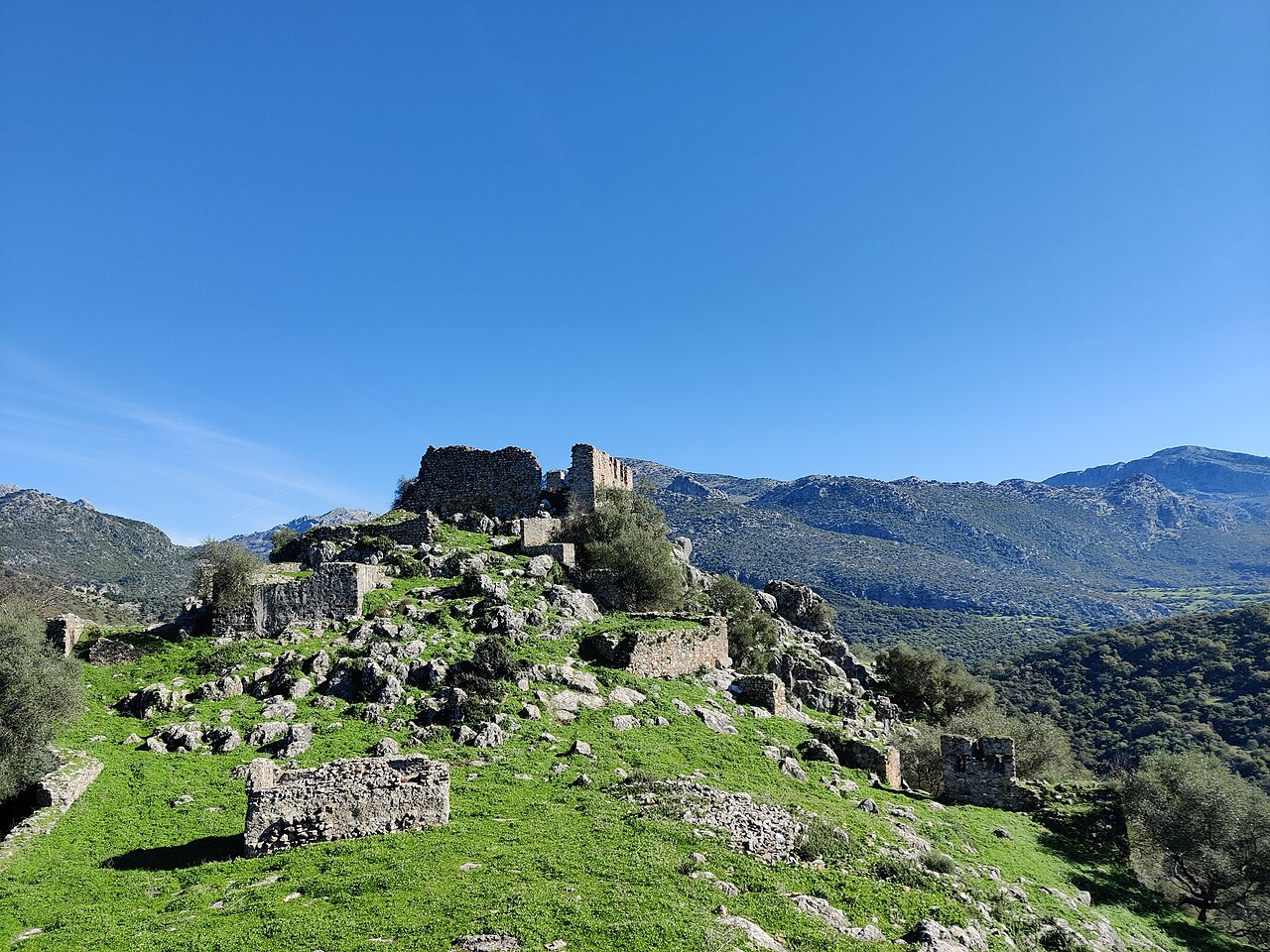
Matrera Castle, located in Villamartín, Spain, is a prominent early medieval hill castle originally constructed in the 9th century by the Muslim leader Omar ibn Hafsún. Its primary purpose was to defend the city of Iptuci, the most advanced urban center within the Cora de Ronda during the period of al-Andalus. The castle occupies the summit of Mount Pajarete at an altitude of 523 meters, a site with evidence of human settlement dating back to Antiquity.
Historical significance and military role
The strategic importance of Matrera Castle is underscored by its turbulent history amid the shifting frontiers between Muslim and Christian realms in medieval Spain. In the 13th century, the fortress was conquered by Ferdinand III of Castile, who undertook substantial reconstruction efforts to reinforce its defenses. However, control of the castle oscillated, returning briefly to Muslim hands in the early 14th century before being permanently recaptured by Alfonso XI in 1341. Its location on the volatile border of the Kingdom of Granada made it a frequent target of military action, enduring sieges by Muslim forces in 1408 and again in 1445.
Beyond its military function, Matrera Castle was involved in one of Spain’s longest legal disputes over ownership and land rights, lasting approximately 270 years. This prolonged conflict highlights the castle’s continued significance in regional politics and property matters well beyond its active military use.
Architectural features and restoration
The castle’s layout features a large walled enclosure that surrounds a central courtyard known as the patio de armas. The perimeter walls extend over 500 meters and are reinforced by several defensive towers strategically placed along the curtain walls. Access to the interior is granted through two main fortified gates: the Puerta del Sol on the eastern side and the Puerta de los Carros on the western side, each flanked by towers that served as strongpoints for defense.
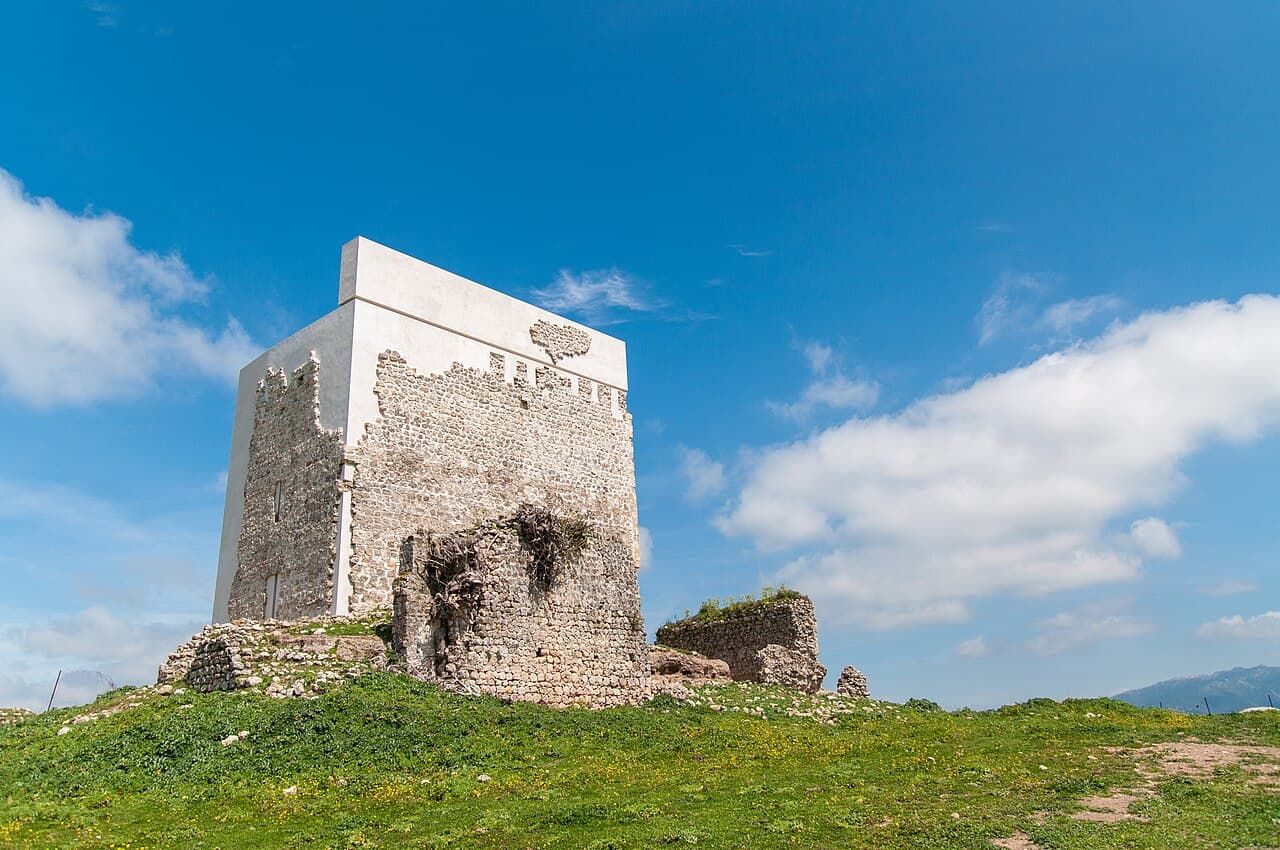
The most notable architectural element is the keep or torre del homenaje, positioned on the northern edge of the fortress. Prior to restoration, the castle was largely in ruins, with only fragments of walls standing. The keep suffered a significant collapse in 2013 due to prolonged neglect and weather damage. Restoration work initiated in 2010 and completed in 2015 was led by architect Carlos Quevado. The project aimed to stabilize and rebuild parts of the castle using lime plaster matching original samples found on site, combined with large, plain stone blocks to reestablish the castle’s original mass and silhouette. This approach preserved the historic footprint while clearly differentiating new construction from medieval masonry, employing a distinctive neo-brutalist style.
Despite controversy over the modern elements introduced during restoration, the work was recognized for its sensitive preservation strategy and received an architectural award in 2016. Today, the castle presents a blend of original medieval fabric and contemporary interventions, maintaining structural integrity and enhancing visitor understanding of its historical form.
Cultural heritage and current status
Matrera Castle was declared a national monument in 1949 and later designated as a Bien de Interés Cultural (Heritage of Cultural Interest) in 1985, underscoring its cultural and historical value within Spain. The castle remains privately owned and is occasionally noted for nearby military helicopter activity, reflecting its ongoing strategic relevance in the region.
The site is accessible to visitors who can explore the extensive curtain walls, defensive towers, and the restored keep, gaining insight into the castle’s role as a frontier fortress during the Middle Ages. Its location atop Mount Pajarete offers commanding views of the surrounding landscape, emphasizing its historical function as a military lookout and stronghold.
The castle in the context of frontier warfare
During the Middle Ages, Matrera Castle was part of the complex border defenses known as the Moorish Border or Band, which separated the Christian kingdoms from the Muslim Kingdom of Granada. Its repeated sieges in the 15th century highlight the ongoing conflicts that shaped the political landscape of southern Spain. The fortress’s design reflects the military architecture typical of frontier castles, with robust walls, strategically placed towers, and fortified gates designed to withstand prolonged assaults.
Architectural style and influences
The castle’s original construction reflects the early medieval military architectural style prevalent in al-Andalus, characterized by functional defensive features rather than ornamental elements. The restoration introduced modern materials and techniques that contrast with the medieval masonry, creating a dialogue between past and present architectural approaches. This blend of styles provides a unique case study in conservation philosophy, balancing authenticity with structural necessity.
Frequently asked questions (FAQ)
- What is the best time to visit Matrera Castle?
- The best time to visit Matrera Castle is during the spring and autumn months when the weather is mild and the landscape around Mount Pajarete is particularly scenic. Summers can be hot, so early morning visits are recommended during that season.
- Is Matrera Castle accessible to visitors year-round?
- Matrera Castle is generally accessible to visitors throughout the year, but it is advisable to check local conditions or private ownership access policies before planning a visit, as opening hours may vary.
- What notable architectural features can be seen at Matrera Castle?
- Visitors can explore the large walled enclosure, the central courtyard known as the patio de armas, the two main fortified gates Puerta del Sol and Puerta de los Carros, and the restored keep or torre del homenaje, which combines medieval masonry with modern restoration elements.
- Why was the restoration of Matrera Castle controversial?
- The restoration was controversial due to the use of modern materials and a neo-brutalist style that contrasted sharply with the original medieval masonry. Some heritage groups criticized the approach for not maintaining historical authenticity, while others praised it for preserving the castle's structural integrity.
- How did Matrera Castle's location influence its historical role?
- Situated atop Mount Pajarete, Matrera Castle commanded strategic views over the surrounding borderlands between Christian and Muslim territories. This location made it a key military stronghold in frontier warfare and a frequent target during sieges in the 15th century.
Photo gallery

Information
Sources & official resources
Verify the information above using these authoritative references.
Loading map...
Visitor reviews
No reviews yet. Been here? Write the first review and help other travelers!
Write the first reviewVisited this castle? Share your experience
Your review helps other travelers and adds first-hand knowledge to our encyclopedia.