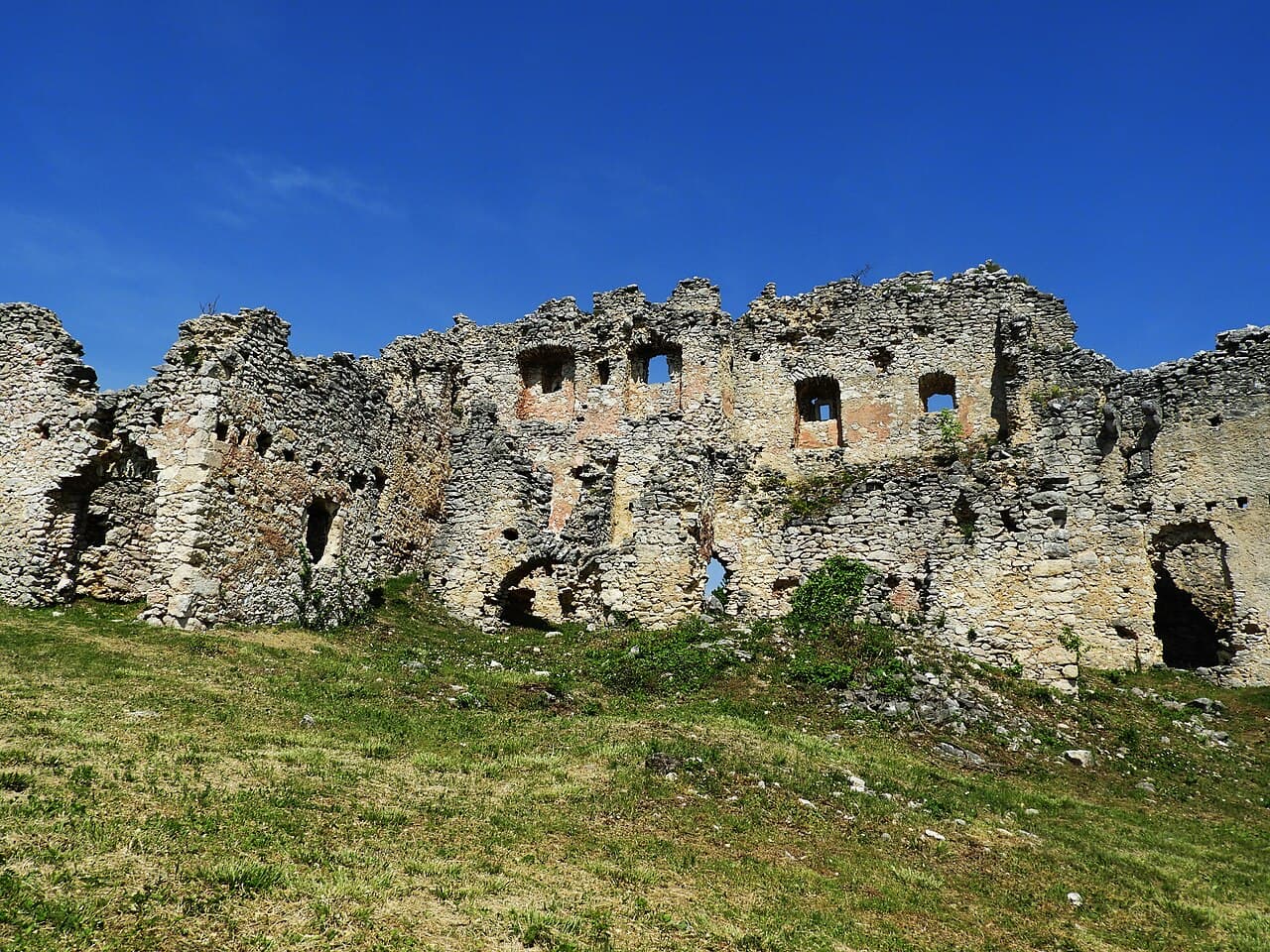
Milengrad Castle
Milengrad Castle is a significant medieval hill castle located near the village of Zajezda in the municipality of Budinščina, within the Krapina-Zagorje County of Croatia. Constructed around 1250 during the reign of King Béla IV of Hungary and Croatia, the fortress was part of a strategic defensive effort following the devastating Mongol invasion of 1241–1242. This castle played a crucial role in the military and feudal landscape of the region throughout the High Medieval period.
Historical context and ownership
The origins of Milengrad are closely tied to the aftermath of the Mongol invasion, which exposed the vulnerability of the Hungarian-Croatian kingdom's defenses. King Béla IV initiated a widespread castle-building campaign to fortify the realm, and Milengrad was among these newly constructed fortresses designed to protect vital routes and settlements.
In 1303, the castle was granted by King Charles Robert to the Cseszneky family as compensation for their loss of Ipolyvisk Castle. The Cseszneky counts soon sold Milengrad to Ban Mikcs, who in turn transferred it in 1309 to the Herkffy family. The castle remained in their possession for over two centuries, until a marriage in 1536 united the Herkffy and Patačić families, making Milengrad a shared property. The Herkffy family line ended in the 17th century, and the Patačić family held the castle until the 19th century.
Architectural features and structure
Milengrad exemplifies the typical hill castle design of the High Medieval period, strategically positioned on elevated terrain approximately 2 kilometers northwest of Zajezda village. Its location provided commanding views of the surrounding landscape, essential for early warning and defense against invaders.
The castle's fortifications originally included robust stone walls, defensive battlements, and a series of towers that enhanced its defensive capabilities. The layout likely featured a central keep or donjon serving as the last line of defense and residence of the lord. Surrounding the keep, a curtain wall enclosed the inner courtyard, which contained essential service buildings and living quarters.
Given the castle's medieval origins, its architecture would have combined Romanesque and early Gothic elements, typical of fortifications built in the mid-13th century in this region. Thick walls, narrow windows for archers, and a fortified gatehouse were characteristic features designed to withstand sieges.
Decline and ruin
Milengrad's strategic importance persisted through centuries marked by frequent conflict, especially during the Ottoman wars in Europe. The castle endured several attacks and sieges, which, combined with natural disasters such as earthquakes, led to significant structural damage.
By the late 17th century, parts of the castle had collapsed, and in 1683, it was officially recorded as arx diruta, meaning a castle in ruins. The decline was accelerated by the extinction of the Herkffy family and the eventual fading of the Patačić lineage in the 19th century, leaving the fortress abandoned.
Current condition and cultural significance
Today, Milengrad remains a ruined medieval fortress, with remnants of its walls and towers still visible amidst the natural landscape. The site offers valuable insights into medieval military architecture in Croatia and the broader region.
As a cultural heritage site, Milengrad attracts historians, archaeologists, and visitors interested in the High Medieval period and the defensive strategies employed against invasions such as those by the Mongols and Ottomans. Its ruins stand as a testament to the turbulent history of the area and the evolution of castle construction.
Visiting Milengrad
Milengrad is accessible to visitors interested in exploring medieval ruins and the natural beauty of the Krapina-Zagorje County. While the castle is in a state of ruin, the site offers hiking opportunities and panoramic views of the surrounding countryside.
Visitors should be prepared for uneven terrain and limited facilities, as the castle has not undergone extensive restoration. It is advisable to check local tourism information for access details and any guided tours that may provide deeper historical context.
Nearby attractions
The region around Milengrad includes several other historical sites and natural parks, making it a worthwhile destination for those interested in Croatian heritage and outdoor activities.
Frequently asked questions (FAQ)
- When was Milengrad Castle built and by whom?
- Milengrad Castle was built around 1250 during the reign of King Béla IV of Hungary and Croatia, following the Mongol invasion to strengthen regional defenses.
- What led to the decline of Milengrad Castle?
- The castle declined due to repeated warfare with the Ottomans and damage from an earthquake, leading to its ruinous state by 1683.
- Can visitors access Milengrad Castle today?
- Yes, visitors can explore the ruins of Milengrad Castle, though they should be prepared for uneven terrain and limited facilities.
- What families owned Milengrad Castle historically?
- Milengrad was owned by the Cseszneky family, Ban Mikcs, the Herkffy family, and later the Patačić family through marriage alliances.
- What architectural style characterizes Milengrad Castle?
- Milengrad Castle features architectural elements typical of the High Medieval period, combining Romanesque and early Gothic defensive designs.
Photo gallery

Information
Loading map...
Visitor reviews
No reviews yet. Been here? Write the first review and help other travelers!
Write the first reviewVisited this castle? Share your experience
Your review helps other travelers and adds first-hand knowledge to our encyclopedia.



