Varazdin Castle
Varazdin Castle stands as a prominent symbol of Croatian medieval architecture and history, located in the city of Varaždin. This hill castle was originally constructed in the 14th century and evolved over several centuries, reflecting a complex layering of architectural styles and historical influences. Its strategic position and fortified design made it a key defensive stronghold against invasions, particularly from the Ottoman Empire, while its later adaptations reveal shifts in military technology and aesthetic preferences.
The castle’s earliest documented mention dates back to 1181, under the name "castrum Garestin," when it functioned as the administrative center of Varaždin County within the medieval Hungarian kingdom. The fortress endured significant damage during the Mongol invasion of the 13th century, after which King Béla IV ordered its reconstruction as part of a broader campaign to restore the kingdom’s defenses. This early phase established the castle’s foundational role in regional governance and military strategy.
Medieval origins and gothic transformation
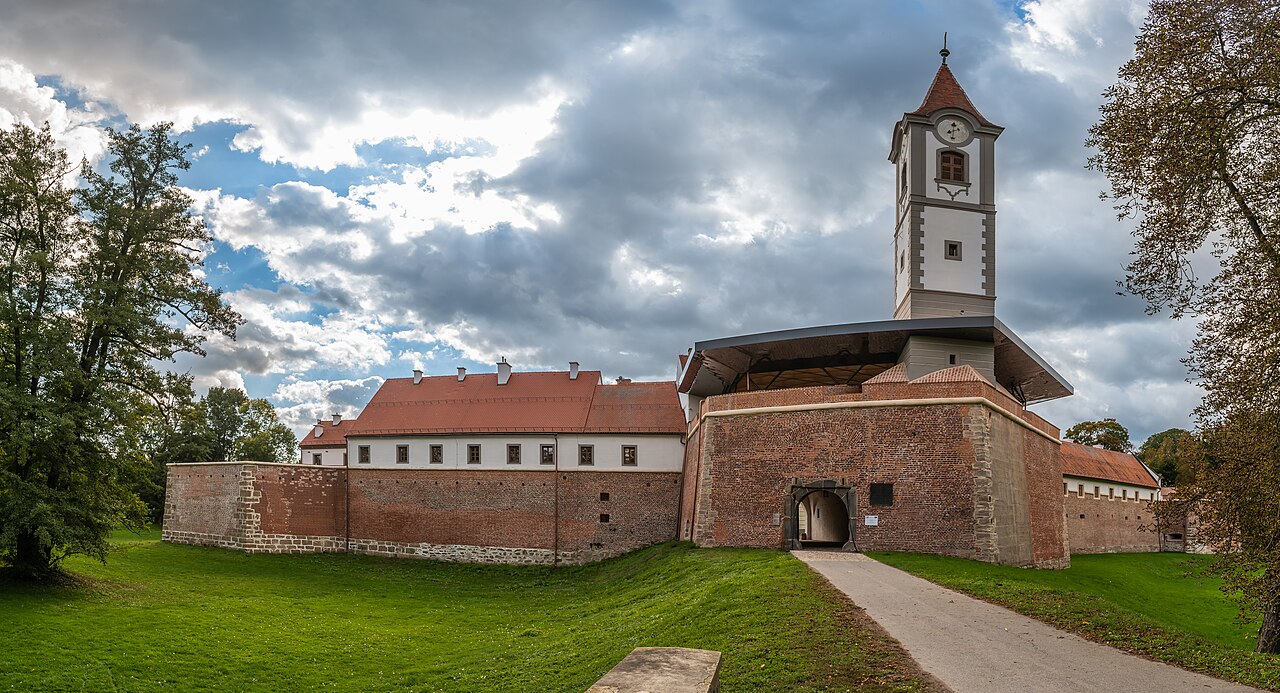
During the late 14th century, the fortress came under the ownership of the Counts of Celje, a powerful noble family who undertook substantial rebuilding efforts in the Gothic style. They constructed key defensive elements including the main tower and a granary, which remain significant surviving medieval features. These stone structures exemplify the castle’s original military purpose and architectural character prior to Renaissance modifications.
Renaissance rebuilding and military enhancements
By the mid-15th century, the growing threat of Ottoman expansion necessitated further fortifications. In 1544, under the guidance of the Italian architect Domenico dell’Allio, the castle underwent a major transformation into a Renaissance fortress. This phase introduced elegant arcades and corridors oriented toward inner courtyards, blending residential comfort with defensive functionality. The addition of rectangular bastions at the corners of the castle enhanced its ability to withstand artillery attacks, reflecting advanced military architecture of the period.
The castle’s moat, once filled with water, and its rounded towers were integral to its defense system. The watchtower served as the main gatehouse, accessed by a double drawbridge, emphasizing controlled entry and security. These features illustrate the castle’s dual role as a noble residence and a military bastion during the turbulent 16th century.
Baroque modifications and decline of military use
In the 17th and 18th centuries, as the Ottoman threat waned, the castle’s military importance diminished. The Erdődy family, who owned the castle from the late 16th century until the early 20th century, introduced Baroque-style alterations. These included ornamental enhancements and the installation of a statue of St. John of Nepomuk in the castle’s forecourt, reflecting the period’s religious and artistic sensibilities.
Urban expansion in the 19th century led to the removal of many outer defenses and earthworks, although the castle’s core structure remained intact. This transition marked the castle’s shift from a defensive fortress to a cultural and historical monument within the growing city of Varaždin.
Modern use and preservation
Since 1925, Varazdin Castle has housed the Varaždin City Museum, which preserves and displays a rich collection of historic artifacts including documents, glassware, clocks, ceramics, and weapons. The museum’s exhibits are arranged chronologically, showcasing styles from the Renaissance through Baroque, Rococo, and Empire periods, offering visitors insight into the region’s artistic and cultural evolution.
The castle is recognized as a protected cultural monument of national significance and was included on Croatia’s tentative list for UNESCO World Heritage status in 2005. Ongoing research and restoration efforts ensure the preservation of its architectural integrity and historical value.
Architectural features and site layout
The castle’s layout reflects its layered history, with surviving elements from the Gothic period such as the main defensive tower and granary, alongside Renaissance additions like the two-story arcaded wings and bastions. The moat, though partially filled in, still outlines the original defensive perimeter. The watchtower gatehouse remains a prominent feature, now serving as the museum entrance.
The castle’s fortifications were designed to adapt to evolving military technology, transitioning from medieval stone walls to bastioned defenses capable of resisting cannon fire. The combination of residential and military architecture illustrates the castle’s role as both a noble seat and a defensive stronghold.
Defensive structures
- Rounded towers constructed in the 15th century provided flanking fire and observation points.
- Bastions built in the late 16th century reinforced the castle against artillery attacks.
- The moat, historically water-filled, enhanced the castle’s isolation and defense.
- The watchtower gatehouse controlled access via a double drawbridge, a key security feature.
Residential and ceremonial spaces
The Renaissance palace section introduced spacious arcaded corridors and courtyards that served both functional and aesthetic purposes. Baroque additions by the Erdődy family included decorative elements and religious statuary, reflecting changing tastes and the castle’s evolving role.
Historical significance and cultural heritage
Varazdin Castle embodies the historical and cultural development of northern Croatia, illustrating the region’s strategic importance from the medieval period through the early modern era. Its transformation from a medieval fortress to a Renaissance residence and later Baroque-modified monument traces broader European architectural and political trends.
The castle’s role as a military bastion during the Ottoman wars and its later function as a noble residence highlight its multifaceted significance. Today, it serves as a cultural hub through the Varaždin City Museum, connecting visitors with the region’s rich heritage and architectural legacy.
Recognition and preservation efforts
The castle is officially protected as a cultural monument of national importance in Croatia. Its inclusion on the tentative UNESCO World Heritage list underscores its value as a heritage site. Conservation initiatives continue to safeguard its structural and historical integrity, ensuring that Varazdin Castle remains a vital link to Croatia’s past.
Frequently asked questions (FAQ)
- How do I visit Varazdin Castle?
- Varazdin Castle is open to the public as it houses the Varaždin City Museum. Visitors can explore the castle and its collections during the museum's opening hours, which typically run daily, but it's best to check the official website for current times.
- What architectural styles are visible at Varazdin Castle?
- The castle features a blend of Gothic, Renaissance, and Baroque architectural styles, reflecting its long history of construction and renovation from the 14th to the 18th centuries.
- When was Varazdin Castle built?
- Construction of Varazdin Castle began in the 14th century, with significant rebuilding phases in 1454 and later in the 16th century under architect Domenico dell’Allio.
- Is Varazdin Castle accessible for people with disabilities?
- While the castle has been restored and adapted for visitors, some historic areas may have limited accessibility due to architectural constraints. Visitors with mobility issues should contact the museum in advance for specific information.
- Why is Varazdin Castle historically significant?
- Varazdin Castle served as a key defensive fortress against Ottoman invasions and was the administrative center of Varaždin County. Its architectural evolution reflects important historical and military developments in Croatia.
- Are there any special exhibitions at Varazdin Castle?
- The Varaždin City Museum hosts permanent collections including historic documents, glassware, ceramics, and weapons, as well as rooms furnished in styles from Renaissance to Empire. Temporary exhibitions are occasionally held, showcasing local history and culture.
Information
Current owner
Varaždin City Museum
Website
Visit websiteAddress
Šetalište Josipa Jurja Strossmayera 1
Sources & official resources
Verify the information above using these authoritative references.
Loading map...
Visitor reviews
No reviews yet. Been here? Write the first review and help other travelers!
Write the first reviewVisited this castle? Share your experience
Your review helps other travelers and adds first-hand knowledge to our encyclopedia.