Martinsburg Castle
Martinsburg Castle in Lahnstein, Germany, stands as a notable example of a late medieval toll castle constructed around 1324. Strategically positioned on the Rhine bank in Oberlahnstein, this fortress was built primarily to control and collect tolls from river traffic, a common practice among powerful regional authorities in the Middle Ages. The castle was part of the Electorate of Mainz's efforts to secure economic and military influence along the Rhine, one of Europe's most important waterways.
Historical context and purpose
The castle's foundation in the early 14th century coincided with a period of increasing territorial consolidation and economic regulation within the Holy Roman Empire. Martinsburg Castle functioned as a toll station, which was a critical source of revenue and control. Its location in Oberlahnstein allowed the Electorate of Mainz to monitor river traffic effectively, ensuring tolls were collected from passing merchants and travelers. The castle was integrated with the town's fortifications, reflecting its dual military and administrative roles.
Architectural features and layout
The hexagonal tower
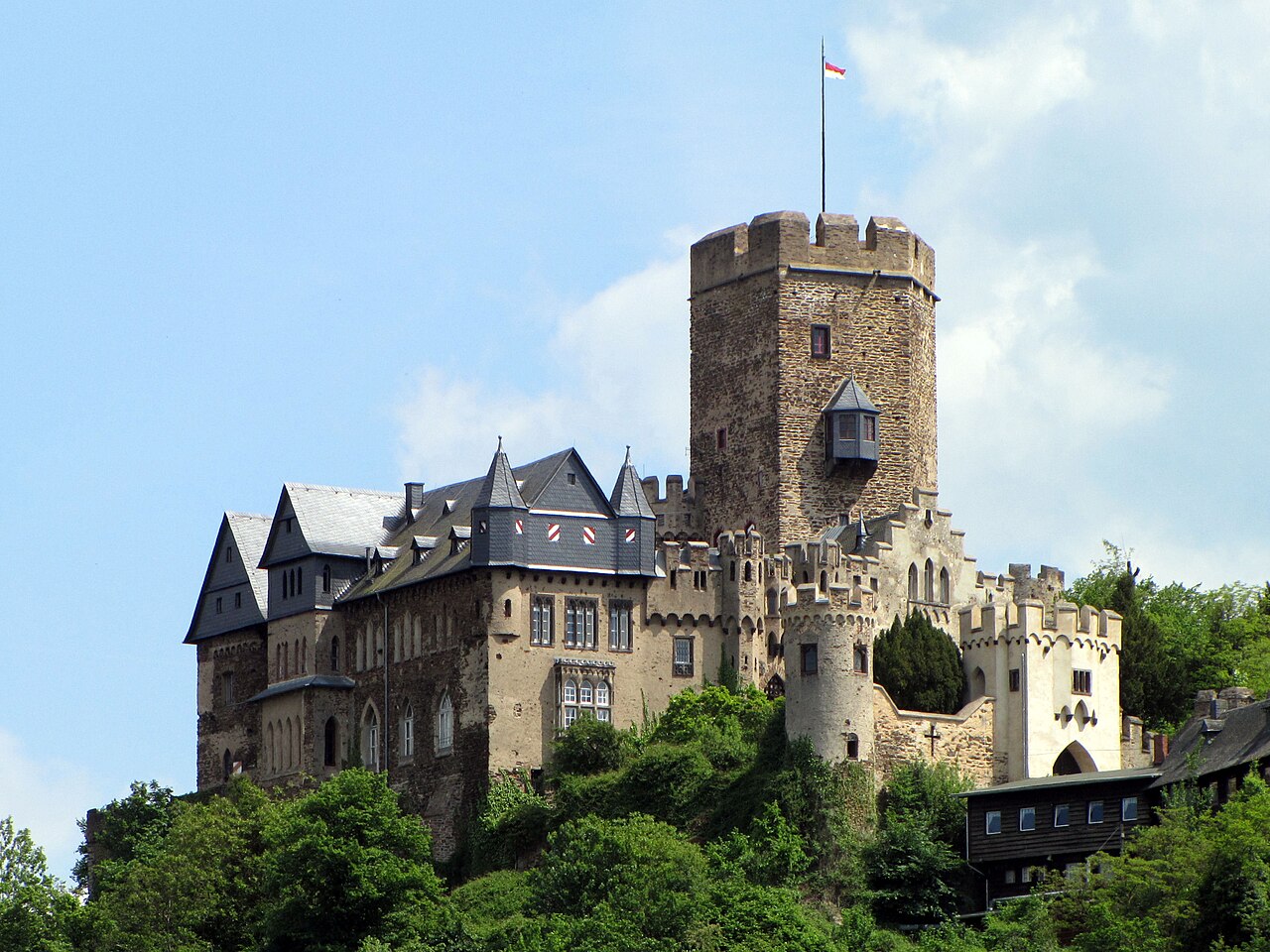
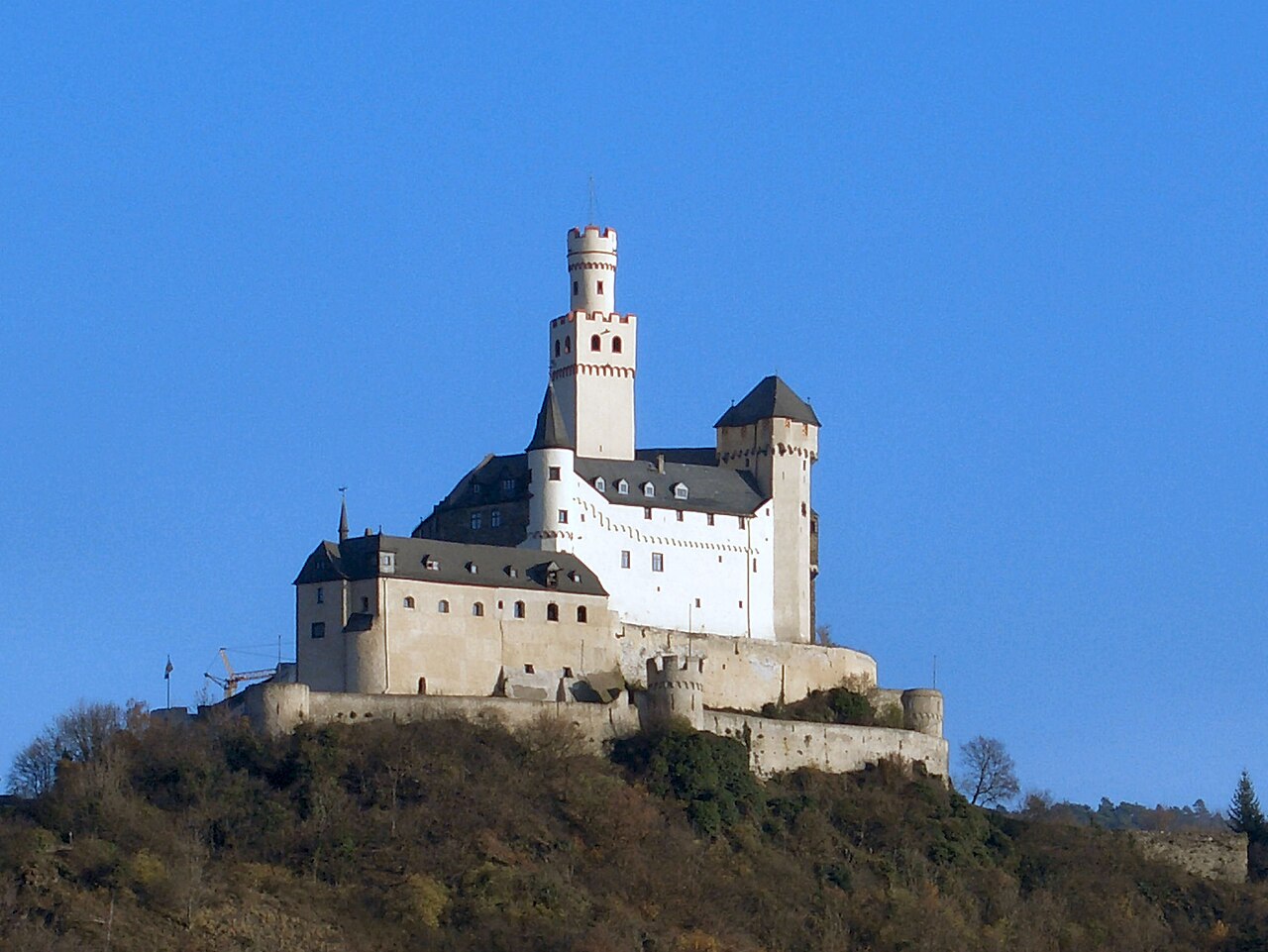
The most striking architectural feature of Martinsburg Castle is its powerful hexagonal tower, which dominates the structure. This tower was designed for both defense and surveillance, providing a commanding view of the Rhine and surrounding areas. Its shape is unusual for the period, as most towers were circular or rectangular, highlighting the castle's unique design tailored to its specific strategic needs.
Gate and emblematic details
The pointed gate located in the east wall is notable for its intricate cast iron oriel bearing an emblem dated to 1395. This decorative feature combines functional and symbolic elements, serving as both an entrance and a display of authority. The oriel's craftsmanship reflects the Gothic style prevalent in the region during the late medieval period.
Wings and residential quarters
The castle's north wing likely housed the main living quarters, providing space for the castle's administrators and guards. The apartment tower in the northwest, originally built in the 14th century, underwent modifications in the 18th century, indicating continued use and adaptation over several centuries. The south wing also exhibits Gothic architectural elements, consistent with the castle's original construction period.
Baroque additions
Between 1719 and 1721, Archbishop Franz Lothar von Schönborn commissioned significant expansions, adding the southwest and west wings. These additions incorporated Baroque elements, blending with the existing Gothic structure. The main tower, dating from the late 14th century, features small console stones outside its windows designed for fold-down wooden shutters, a practical defensive feature. The roof, dating from the 18th century, reflects the architectural updates from this period.
Preservation and current status
Today, Martinsburg Castle is well preserved, retaining much of its late medieval and Baroque character. Its combination of defensive and residential architecture offers valuable insights into the evolution of castle design in the Rhineland region. The castle remains a significant cultural landmark in Lahnstein, attracting visitors interested in medieval history and architecture.
Architectural significance and style
The castle exemplifies Gothic architectural style with later Baroque modifications. Its robust defensive features, including the hexagonal tower and fortified walls, illustrate military architectural trends of the late medieval period. The Baroque wings reflect the tastes and functional needs of the early 18th century, demonstrating how castles were adapted over time to changing political and social circumstances.
Visiting Martinsburg Castle
Visitors to Martinsburg Castle can explore its historic structures and learn about its role in the region's medieval and early modern history. The castle's location on the Rhine offers scenic views and a tangible connection to the river's historical importance as a commercial artery. Interpretive materials and guided tours help contextualize the castle's architecture and historical function.
Frequently asked questions (FAQ)
- What is the historical significance of Martinsburg Castle?
- Martinsburg Castle, built in the 13th century, is a remarkable example of medieval architecture and has played a crucial role in the region's history. It served as a strategic fortification and residence for various noble families, reflecting the political dynamics of the time. The castle also offers insights into feudal life and the evolution of military architecture in Germany.
- When was Martinsburg Castle built?
- Martinsburg Castle was constructed in the early 13th century, around the year 1250. Its establishment marked the beginning of its long-standing significance in the Lahnstein region. Over the centuries, the castle has undergone various renovations that showcase the architectural styles of different eras.
- Can I visit Martinsburg Castle?
- Yes, Martinsburg Castle is open to visitors throughout the year. The castle offers guided tours that provide an in-depth look at its history and architecture. Be sure to check the official website for specific visiting hours and any special events that may be taking place during your visit.
- What are the opening hours of Martinsburg Castle?
- Martinsburg Castle typically opens its doors to visitors from 10 AM to 5 PM daily. However, opening hours may vary seasonally or during holidays, so it's advisable to verify the current schedule before planning your visit. Extended hours may be offered during peak tourist seasons.
- Is it possible to access Martinsburg Castle with mobility assistance?
- Yes, Martinsburg Castle strives to provide accessibility for all visitors. While some areas may have limited access due to the castle's historic structure, there are designated paths and ramps that facilitate entry. It's recommended to contact the castle staff in advance to inquire about specific accessibility options available during your visit.
- What is the best time to visit Martinsburg Castle?
- The best time to visit Martinsburg Castle is during the spring and early autumn months when the weather is mild, and the surrounding landscapes are particularly beautiful. These seasons also feature fewer crowds, allowing for a more enjoyable experience. Additionally, special events and festivals may take place during these times, enhancing your visit.
- What are the ticket prices for visiting Martinsburg Castle?
- Ticket prices for Martinsburg Castle are generally affordable, with discounts available for students, seniors, and children. Adult tickets typically range around €5, while children under a certain age may enter for free. Group rates are also available, making it a budget-friendly option for families and tour groups.
- Are there any nearby attractions to visit after Martinsburg Castle?
- Yes, after visiting Martinsburg Castle, you can explore several nearby attractions, including the picturesque Old Town of Lahnstein and the beautiful Rhine River. The area is also home to charming hiking trails and other historical sites, such as the nearby Marksburg Castle. These attractions make for a perfect day trip in the scenic region.
Information
Loading map...
Visitor reviews
No reviews yet. Been here? Write the first review and help other travelers!
Write the first reviewVisited this castle? Share your experience
Your review helps other travelers and adds first-hand knowledge to our encyclopedia.