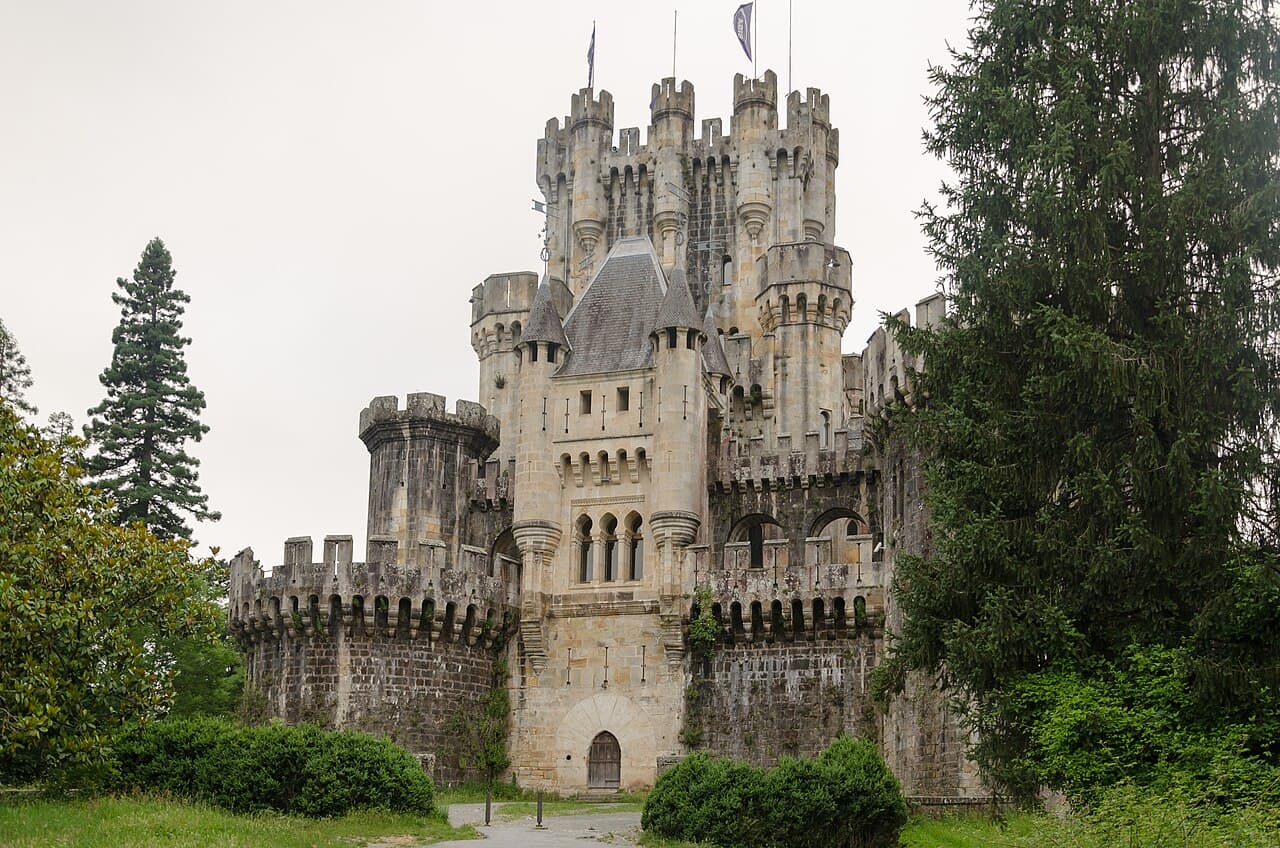
Butron Castle
Butrón Castle stands as a striking example of medieval military architecture in the Basque Country, Spain. With origins tracing back to the mid-13th century, this castle has played a pivotal role in shaping the regional history of Vizcaya through centuries of conflict and noble power struggles. Its imposing silhouette and romantic restoration make it a unique landmark that captures the imagination of visitors and historians alike.
Early origins and medieval development
The earliest known structure on the site of Butrón Castle was a primitive tower house constructed in the mid-13th century. This initial fortification served as a residence and defensive stronghold for the local lords. By the mid-14th century, the V Lord of Butrón undertook significant expansions, transforming the tower house into a more substantial castle complex. This development included the addition of fortified walls, multiple towers, and defensive battlements, reflecting the turbulent nature of the period.
During this time, the castle functioned as a key bastion for the noble family that controlled the territory. Its strategic location and robust construction allowed the lords to exert military and political influence over the surrounding lands. The castle's architecture from this period exhibits typical medieval defensive features, such as crenellated parapets, arrow slits, and a fortified gatehouse.
Historical significance and conflicts
For over three centuries, Butrón Castle was at the heart of continuous bloody battles between rival noble families and opposing factions in Vizcaya. These conflicts were often fueled by territorial disputes and power struggles that shaped the region's feudal landscape. The castle's reputation as an impregnable fortress made it a symbol of authority and military strength.
The nobles of Butrón relied heavily on the castle's defensive capabilities and the valor of their troops to maintain control. The castle’s fortifications were tested in numerous skirmishes and sieges, underscoring its importance as a military stronghold during the late medieval period.
Decline and abandonment
With the cessation of hostilities in the early 16th century, the strategic importance of Butrón Castle diminished. The end of the battles between the opposing sides led to a gradual abandonment of the fortress. Over time, the castle fell into disrepair, its walls and towers succumbing to the ravages of time and neglect.
This period of decline lasted several centuries, during which the castle remained largely unused and deteriorated significantly. The lack of maintenance and the changing political landscape contributed to the castle's ruinous state by the 19th century.
Romantic restoration in the 19th century
In the late 19th century, Butrón Castle underwent a significant restoration that revived its grandeur and transformed it into the form visible today. This restoration was influenced by the romantic neo-Gothic architectural movement, which sought to preserve and idealize medieval structures with an emphasis on picturesque aesthetics.
The restoration incorporated new elements such as decorative turrets, battlements, and ornamental stonework, blending historical authenticity with romantic fantasy. The castle's current appearance reflects this 19th-century vision, making it a captivating example of neo-Gothic revival architecture in Spain.
Today, Butrón Castle is recognized not only for its historical and architectural significance but also as a cultural symbol of the Basque heritage. It attracts visitors interested in medieval history, architecture, and the dramatic stories of noble families that once shaped the region.
Architectural features and layout
The castle's layout is characterized by a concentric design with multiple defensive walls and towers arranged to provide comprehensive protection. Key features include a prominent keep, surrounded by curtain walls with battlements and arrow slits for archers. The gatehouse is fortified with a portcullis and defensive towers, enhancing the castle's security.
Inside the walls, the castle contains a central courtyard, residential chambers, a great hall, and storage facilities. The use of stone masonry and robust construction techniques exemplify medieval military engineering adapted to the local terrain and climate.
Cultural importance and tourism
Butrón Castle serves as a testament to the turbulent history of Vizcaya and the Basque Country. Its romantic restoration and picturesque setting have made it a popular destination for tourists and history enthusiasts. The castle often hosts cultural events, exhibitions, and guided tours that highlight its architectural features and historical narratives.
Visitors can explore the castle's towers, battlements, and courtyards while learning about the noble families who once commanded its walls. The castle's blend of medieval fortification and 19th-century romanticism offers a unique experience that bridges history and art.
Frequently asked questions (FAQ)
- When was Butrón Castle originally built?
- Butrón Castle originated as a tower house in the mid-13th century and was expanded into a castle in the mid-14th century.
- What architectural style characterizes Butrón Castle?
- The castle features a romantic neo-Gothic style due to its extensive 19th-century restoration.
- Why was Butrón Castle abandoned in the 16th century?
- The castle was abandoned after the end of regional noble conflicts in the early 16th century, leading to its decline.
- What makes Butrón Castle architecturally significant?
- Its concentric defensive design, fortified gatehouse, and blend of medieval and neo-Gothic elements highlight its architectural importance.
- Can visitors tour Butrón Castle today?
- Yes, Butrón Castle is open to visitors and often hosts cultural events and guided tours showcasing its history and architecture.
Photo gallery

Information
Loading map...
Visitor reviews
No reviews yet. Been here? Write the first review and help other travelers!
Write the first reviewVisited this castle? Share your experience
Your review helps other travelers and adds first-hand knowledge to our encyclopedia.

