Marstrand
Marstrand fortress, located on the island town of Marstrand in Sweden, stands as a remarkable example of a bastioned fortress from the Renaissance period. Its strategic position on the west coast made it a vital military and naval stronghold, especially after the province of Bohuslän was ceded to Sweden in 1658 following the Treaty of Roskilde. This fortress embodies the evolution of military architecture in the 17th and 18th centuries, reflecting the shifting tides of Scandinavian power struggles.
Historical context and strategic importance
Following the Treaty of Roskilde on 26 February 1658, when the Danish king Frederick III ceded Bohuslän to the Swedish king Charles X Gustav, Sweden gained control over a crucial maritime gateway. Recognizing the importance of Marstrand's port for controlling access to the Kattegat and protecting the Swedish west coast, King Charles X Gustav ordered the construction of defensive fortifications. Initially, these were simple earth and timber works designed to quickly secure the area against Danish-Norwegian counterattacks.
The peace established by Roskilde was short-lived. In 1659, a Norwegian invasion attempted to retake Marstrand but was repelled. This event accelerated the fortification efforts, leading to the replacement of the temporary earthworks with a permanent stone fortress. The fortress construction was completed in 1667, featuring stone walls enclosing an inner courtyard with facilities for the garrison and a quadrangular tower at the southern corner.
Architectural features and construction phases
Initial construction and design
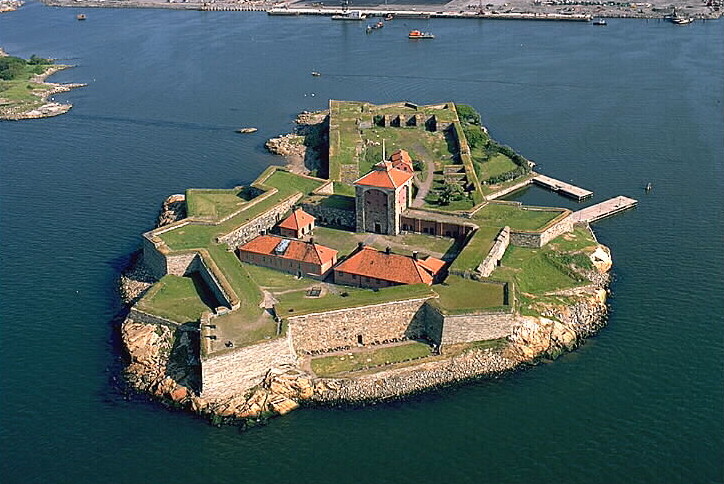
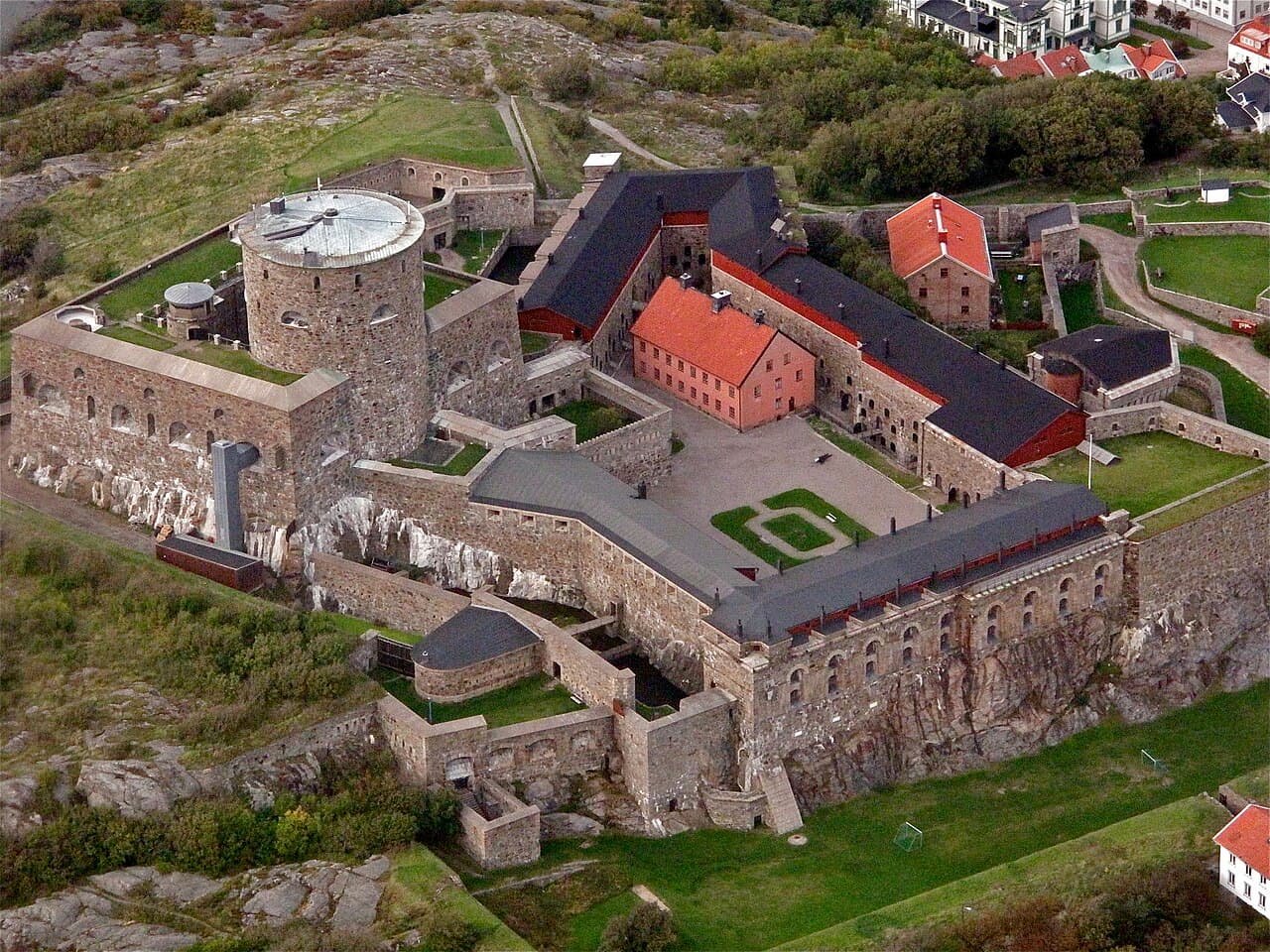
The fortress was built as a bastioned fortress, a style that emerged in the Renaissance to counter the increasing power of artillery. Its design incorporated angled bastions to provide overlapping fields of fire, reducing blind spots and enhancing defensive capabilities. The main structure included thick stone walls, a central courtyard, and a prominent tower that served both as a lookout and a last defensive refuge.
Modifications after sieges
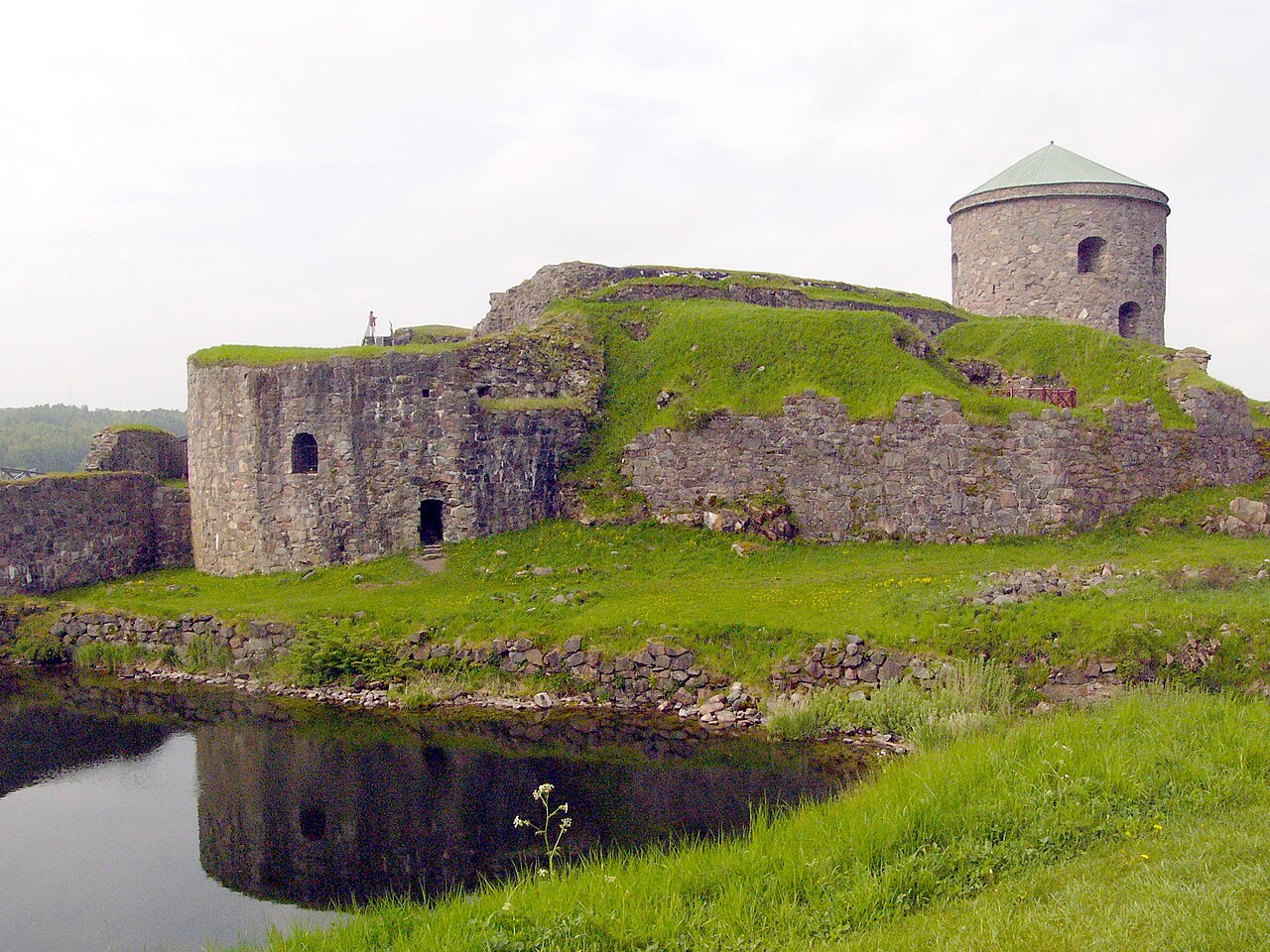
In 1677, a combined force of 5,000 Norwegian and Danish troops under Ulrik Frederik Gyldenløve captured Marstrand after a three-week siege. The defenders surrendered due to a shortage of drinking water, and the fortress tower was damaged during the fighting. The fortress remained under Danish control for two years until the Treaty of Lund returned it to Sweden. Upon regaining the fortress, the Swedish authorities undertook significant upgrades, adding outer walls, water-filled moats, and ditches to strengthen its defenses. The damaged tower was rebuilt with a distinctive cylindrical shape, enhancing its resilience against artillery.
Later military history and usage
Marstrand fortress faced another attack in 1719 by allied Norwegian and Danish forces led by Jensen Vessel Tordenskjold. They occupied the town and fortress for about a year before Sweden reclaimed it. Subsequent fortification efforts continued, but labor shortages led to the use of prisoners as forced laborers. A legal decree formalized this practice, and by the mid-19th century, over 200 prisoners were housed at the fortress. One of the most famous inmates was the thief Lasse-Maja (Lars Larson Malin), sentenced in 1813 to lifelong labor. His culinary skills earned him a position in the officers' kitchen, and he was eventually pardoned in 1839.
In 1854, concerns over wartime security and the large prisoner population prompted authorities to transfer inmates to Elfsborg fortress. The military garrison at Marstrand was officially disbanded on 1 May 1882. In the early 20th century, the Swedish Navy repurposed the fortress as a boys' naval school, which operated until 1937.
Current status and visitor information
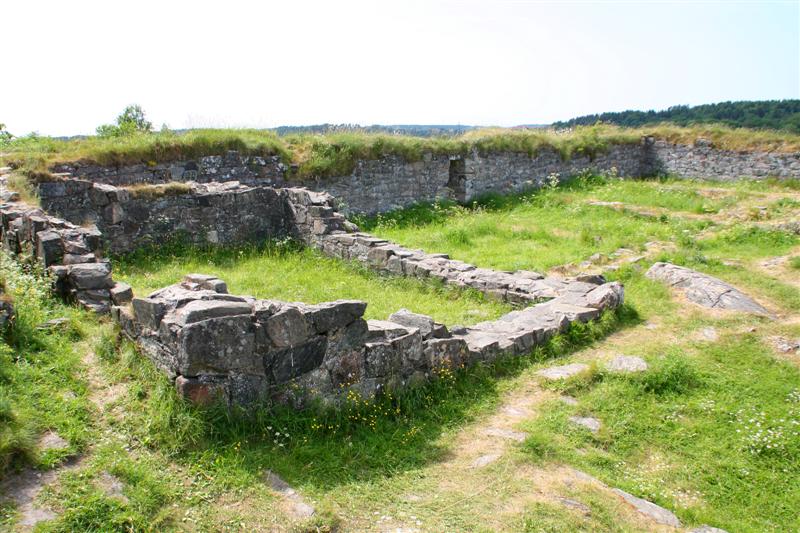
Today, Marstrand fortress is restored and serves a dual role. During winter months, it functions as a military training center, while in summer it is open to tourists. Visitors can explore the fortress's well-preserved bastions, walls, and towers, gaining insight into its rich military heritage and architectural evolution. The fortress's location on the island offers stunning views of the surrounding sea and the town of Marstrand, making it a popular destination for history enthusiasts and travelers alike.
Architectural significance and legacy
Marstrand fortress exemplifies the Renaissance bastioned fortress design adapted to the Scandinavian context. Its thick stone walls, angled bastions, and water defenses illustrate the military engineering advances of the 17th century. The fortress's history of sieges, occupations, and reconstructions reflects the turbulent geopolitical landscape of the Nordic region during this era. As a preserved heritage site, it offers valuable insights into the defensive strategies and architectural innovations that shaped coastal fortifications in Northern Europe.
Key architectural elements
- Stone curtain walls with embrasures for artillery
- Angled bastions for flanking fire
- Central courtyard housing garrison quarters and support buildings
- Cylindrical tower rebuilt after 1677 siege, serving as a keep and observation post
- Water-filled moats and ditches enhancing defense against infantry assaults
These features collectively demonstrate the fortress's role as a formidable maritime defense installation and a symbol of Swedish sovereignty over the Bohuslän region.
Frequently asked questions (FAQ)
- When was Marstrand fortress built and why?
- Marstrand fortress was constructed between 1659 and 1667 following Sweden's acquisition of Bohuslän in 1658 to protect the strategic port of Marstrand.
- Can visitors tour Marstrand fortress today?
- Yes, Marstrand fortress is open to tourists during the summer months, offering access to its bastions, walls, and towers with informative displays about its history.
- What architectural style characterizes Marstrand fortress?
- Marstrand fortress is a bastioned fortress designed in the Renaissance style, featuring angled bastions and stone walls optimized for artillery defense.
- What role did prisoners play in the fortress's history?
- Prisoners were used as forced labor during 18th and 19th-century fortification works, with a legal decree sanctioning their involvement as part of their sentences.
- Is Marstrand fortress still used by the military?
- Yes, the fortress is used as a military training center during the winter months, maintaining its strategic and functional significance.

Information
Current owner
Swedish military
Loading map...
Visitor reviews
No reviews yet. Been here? Write the first review and help other travelers!
Write the first reviewVisited this castle? Share your experience
Your review helps other travelers and adds first-hand knowledge to our encyclopedia.