Ragnhildsholmen Castle Ruin
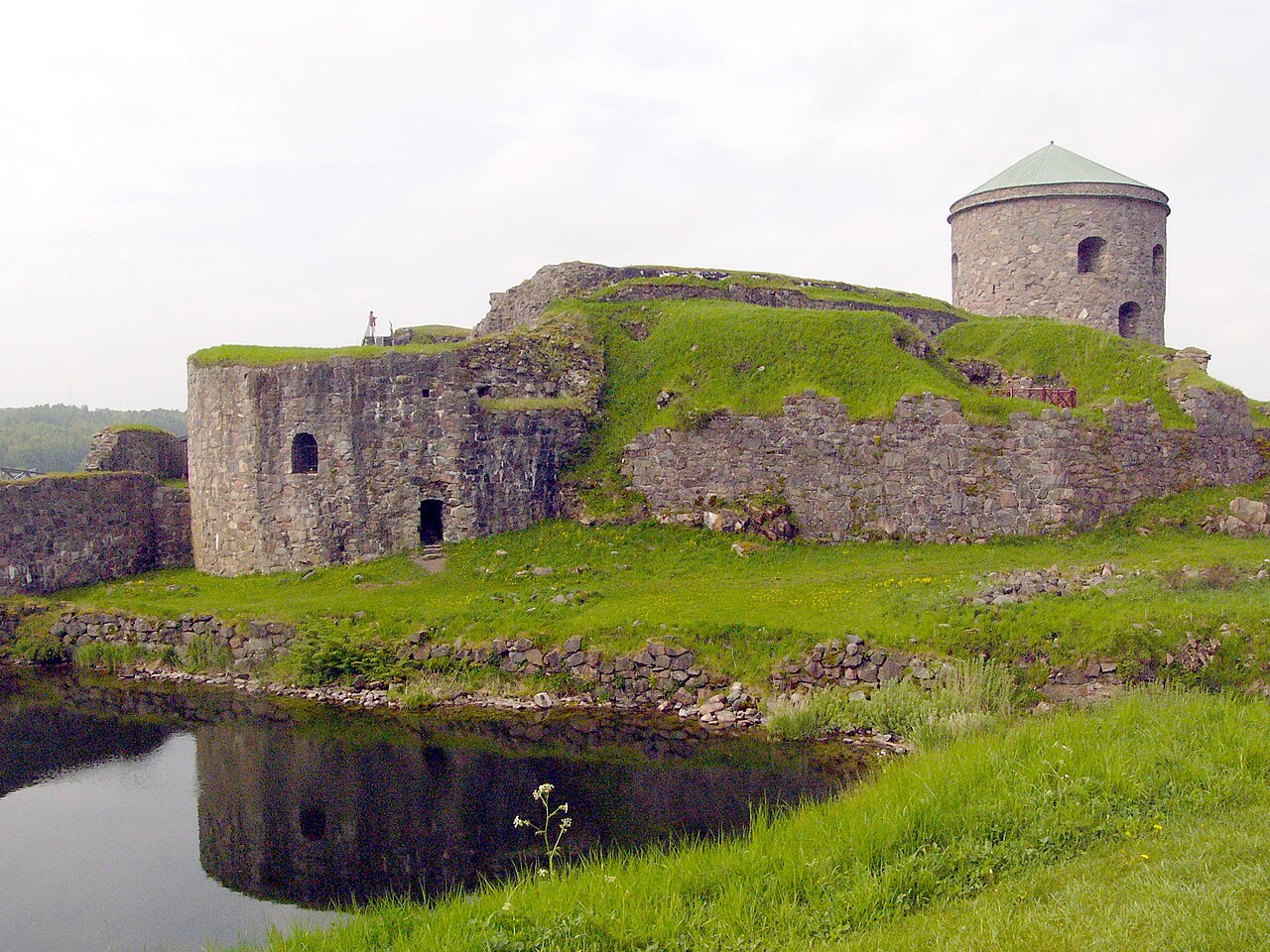
Ragnhildsholmen castle ruin stands as a remarkable relic of medieval Scandinavian fortification, located on a small island in the Nordre älv river near Gothenburg, Sweden. This 13th-century fortress was originally constructed under the direction of the Norwegian king Håkon IV Håkonsson and played a pivotal role in the military and political landscape of the region during the Middle Ages. Its strategic location on an island provided natural defensive advantages, controlling river access and serving as a key stronghold for the Kingdom of Norway.
The fortress's history is intertwined with the complex relations between the Norwegian and Swedish crowns during the late medieval period. Initially built to secure Norwegian interests, Ragnhildsholmen later came under Swedish control through a political alliance sealed by the marriage of Duke Erik of Sweden to Ingeborg, daughter of King Håkon V. This alliance, however, deteriorated, leading to military confrontations including a failed siege by King Håkon V in 1308. The fortress was eventually overshadowed by the construction of the nearby Båhus Fortress, which became the dominant regional stronghold.
Historical significance and political context
Ragnhildsholmen’s establishment as a fortified site dates back to the mid-13th century, with the earliest records from 1257. It served not only as a military bastion but also as a prison and refuge. Notably, the fortress detained the former chancellor Bjarne Lodinsson in 1302, highlighting its role in political imprisonment. The fortress also provided sanctuary to displaced nobility and royalty, including Swedish King Valdemar Birgersson and Queen Sofia Eriksdatter in the 1270s, and later Danish outlaws allied with Count Jakob of Halland in the 1280s.
The fortress changed hands multiple times due to ongoing conflicts and political negotiations such as the Peace of Oslo. These power struggles between Norway and Sweden reflected the broader regional tensions of the era. The fortress’s strategic importance was recognized by both sides, but after its destruction by fire around 1315, much of its stone was repurposed for the construction of Båhus Fortress, marking the end of Ragnhildsholmen’s military relevance.
Architectural features and fortifications
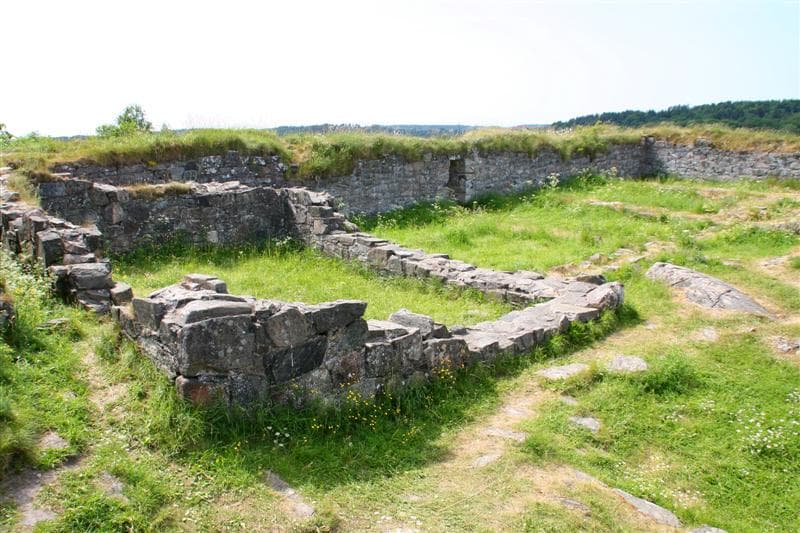
The remains of Ragnhildsholmen reveal a compact yet formidable medieval fortress. The stronghold was enclosed by a nearly rectangular stone curtain wall measuring approximately 36 by 40 meters, enclosing around 1,500 square meters. The walls were built with exceptional thickness, about 2.65 meters, designed to resist siege weaponry and assaults. Surrounding the stone walls were additional earthworks and moats, enhancing the fortress’s defensive capabilities by leveraging the natural landscape including the adjacent river and marshlands.
A dominant architectural element was the large rectangular tower on the northeast side, measuring roughly 18 by 11 meters. This tower served both defensive and surveillance functions, overseeing the river approach and the surrounding terrain. The fortress’s main gate faced northwest, protected by an outer defensive work on the southeast side. A smaller secondary door, or sally port, located on the southwest side, allowed defenders to launch surprise sorties against besiegers. Both entrances were later sealed with brickwork, a modification indicating changes in defensive strategies over time.
Excavations have uncovered vaulted doorways and window openings demonstrating advanced medieval masonry techniques. Some openings were deliberately bricked up using medieval bricks, evidencing adaptations in the fortress’s defensive design. A reconstructed brick wall inside the fortress, rebuilt in 1931 using original salvaged bricks, offers insights into the construction methods employed during its active use.
Archaeological discoveries and restoration efforts
The site of Ragnhildsholmen was rediscovered in the 19th century, sparking archaeological interest that led to excavations in 1881 and 1882 under the leadership of archaeologist Wilhelm Berg. These excavations revealed a wealth of artifacts including coins, weapons, tools, clothing accessories, and household items. These finds provide valuable evidence of the daily life within the fortress, illustrating its role as both a military installation and a residence for commanders and prisoners alike.
Following the excavations, the site suffered from stone removal and natural decay until restoration efforts began in the 1930s. Today, the ruins, though fragmentary, remain a protected historical site and a sanctuary for local wildlife, including various bird species. The preservation of Ragnhildsholmen offers a tangible connection to medieval Scandinavian history and the turbulent political dynamics of the region.
Visiting ragnhildsholmen today
Visitors to Ragnhildsholmen castle ruin can explore the remains of this medieval fortress set amidst a scenic natural environment. The site’s location on a small island within the Nordre älv river provides a unique setting combining history and nature. While the ruins are not extensive, the site offers interpretive information about the fortress’s history, architecture, and archaeological significance.
The area surrounding the ruins is a haven for birdwatchers and nature enthusiasts, as the fortress ruins have become a sanctuary for diverse wildlife. Visitors are encouraged to respect the fragile environment while appreciating the cultural heritage preserved at Ragnhildsholmen.
Accessibility and visitor information
Access to the island and ruins may require a short walk or boat trip depending on the season and water levels. There are no extensive visitor facilities on-site, so visitors should plan accordingly. The best time to visit is during the warmer months when the weather is favorable for outdoor exploration and wildlife observation.
Nearby attractions
Ragnhildsholmen is located near the town of Kungälv, which offers additional historical sites such as the well-preserved Båhus Fortress, a larger medieval fortress built to replace Ragnhildsholmen. The region also features scenic landscapes along the Göta älv river and opportunities for hiking and cultural tourism.
Frequently asked questions (FAQ)
- How do I get to Ragnhildsholmen Castle Ruin?
- You can reach Ragnhildsholmen Castle Ruin by taking public transport to Gothenburg and then following local signage for the castle. The castle is located on an island, so a short boat ride may be necessary to access the ruins. Walking paths from the nearest dock make it easy for visitors to explore the area.
- What is the historical significance of Ragnhildsholmen Castle Ruin?
- Ragnhildsholmen Castle was built in the late 14th century and served as a strategic fortification for the region. It played a crucial role in the defense of Gothenburg and has witnessed numerous historical events over the centuries. The ruins today are a testament to Sweden's medieval architecture and military history.
- When was Ragnhildsholmen Castle Ruin constructed?
- The construction of Ragnhildsholmen Castle began in the late 1300s, with significant expansions occurring in the following decades. It was primarily used as a fortress until the late 17th century when its military importance declined. Today, it stands as a remarkable relic of Sweden's rich past.
- Can I visit Ragnhildsholmen Castle Ruin year-round?
- Yes, Ragnhildsholmen Castle Ruin is accessible to visitors year-round. However, the best time to visit is during the warmer months, from late spring to early autumn, when the weather is more favorable for exploring the outdoor ruins. Keep in mind that accessibility may vary in winter due to weather conditions.
- Why is Ragnhildsholmen Castle Ruin a popular tourist attraction?
- Ragnhildsholmen Castle Ruin attracts visitors due to its historical significance and stunning location on the island. The picturesque scenery combined with the castle's intriguing history makes it a favored spot for both locals and tourists. The ruins provide a unique opportunity to explore Sweden’s medieval heritage in a serene natural setting.
- Is it possible to take guided tours of Ragnhildsholmen Castle Ruin?
- Yes, guided tours are often available during the peak tourist season, providing visitors with in-depth knowledge about the castle's history and architecture. These tours can enhance your experience by offering insights that you might not discover on your own. It's advisable to check ahead for availability and any special events.
- What are the opening hours for Ragnhildsholmen Castle Ruin?
- Ragnhildsholmen Castle Ruin is open to the public year-round, but specific opening hours can vary based on the season. Typically, the site is more accessible during daylight hours, and it is recommended to visit during the day to fully appreciate its beauty. Check local tourism websites for the latest information on hours and any special events.
- Are there any nearby attractions to visit while at Ragnhildsholmen Castle Ruin?
- Yes, nearby attractions include the beautiful natural landscapes of the surrounding archipelago and other historical sites in Gothenburg. You can also explore hiking trails and enjoy local wildlife, making it an excellent spot for nature enthusiasts. The city of Gothenburg itself offers a variety of museums, parks, and cultural experiences just a short distance away.
- What are the ticket prices for visiting Ragnhildsholmen Castle Ruin?
- Visiting Ragnhildsholmen Castle Ruin is generally free of charge, making it a budget-friendly destination for all visitors. However, if you opt for a guided tour or special events, there may be a fee associated with those experiences. Always check local resources for the most current pricing and any special offers.
Photo gallery

Information
Website
Visit websiteSources & official resources
Verify the information above using these authoritative references.
Loading map...
Visitor reviews
No reviews yet. Been here? Write the first review and help other travelers!
Write the first reviewVisited this castle? Share your experience
Your review helps other travelers and adds first-hand knowledge to our encyclopedia.