New Alvsborg Fortress
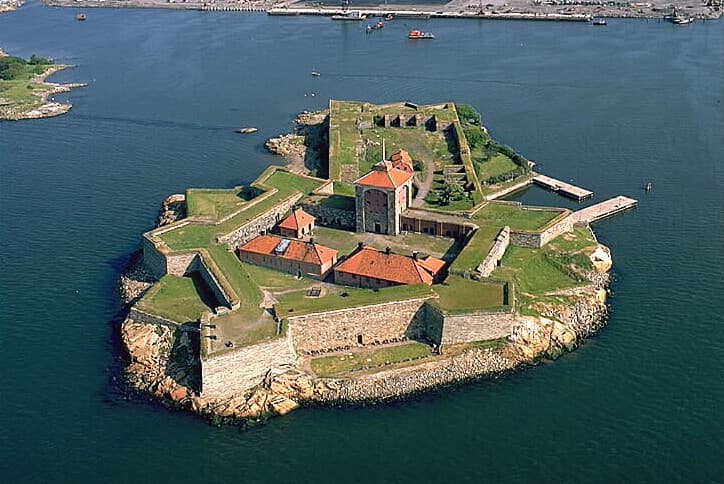
New Älvsborg Fortress, also known as Nya Älvsborg or simply Älvsborg Fortress, is a prominent 17th-century sea fortress strategically located on Kyrkogårdsholmen in Älvsborgsfjorden, at the mouth of the Göta River near the entrance to the port of Gothenburg, Sweden. This fortress was built to protect Sweden's vital access to the Atlantic Ocean and to defend the burgeoning city of Gothenburg from naval threats, particularly from Denmark. Its construction marks a significant phase in the military fortifications of Sweden during the Renaissance period, reflecting the era's advanced defensive architecture and strategic maritime importance.
Historical background and strategic importance
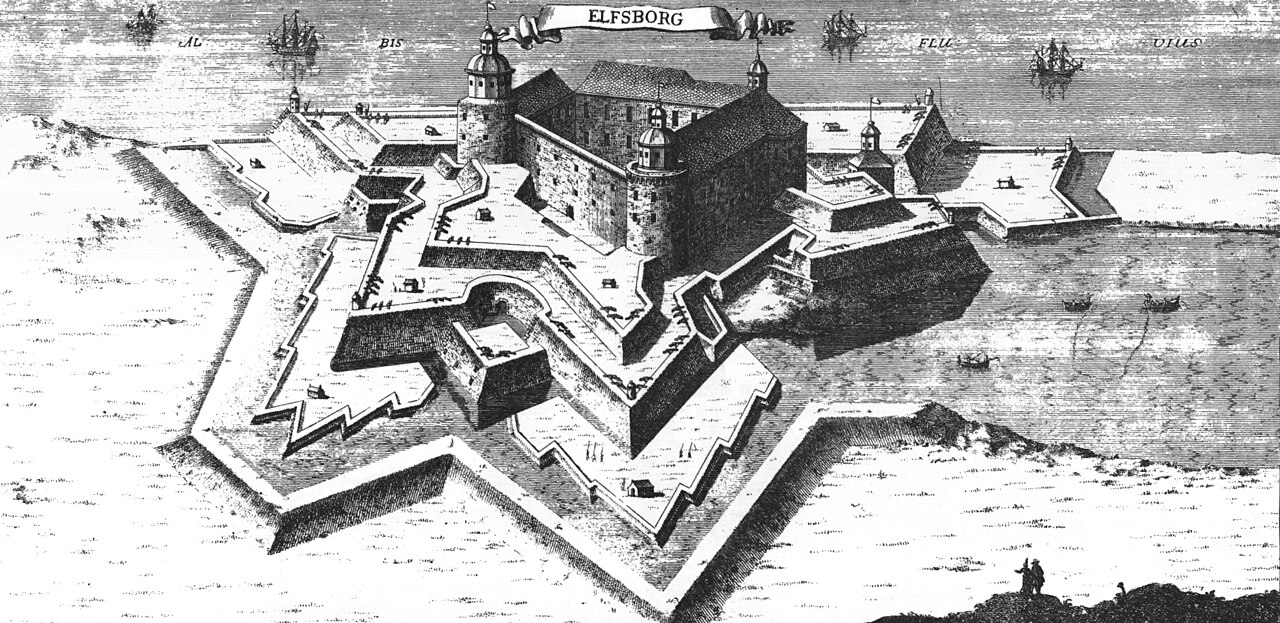
The origins of New Älvsborg Fortress trace back to the early 17th century, with the initial establishment in 1621 under King Gustavus Adolphus of Sweden. This fortress replaced earlier fortifications, including the Old Älvsborg Castle, which had been situated further upriver at Klippan since the 14th century. The Old Älvsborg had become obsolete due to changes in military technology and shifting strategic needs. The new fortress was constructed on what were originally two separate islets, which later became joined, with the main fortress occupying the southern islet and a hornwork positioned on the northern islet.
The fortress was built primarily to defend the entrance to Gothenburg, a city founded in 1621 as a critical trading and naval hub. The location was chosen for its control over the Göta River estuary, the main waterway leading into the city and the surrounding region of Västra Götalands län. The fortress played a key role in guarding against Danish naval incursions during the turbulent 17th and early 18th centuries, including the Scanian War (1675-1679) and the Great Northern War (1717-1719), where it successfully withstood sieges and attacks but was never captured by enemy forces.
Architectural features and design
New Älvsborg Fortress exemplifies the Renaissance military architecture style, characterized by robust bastions, thick stone walls, and strategic placement for optimal defense. The fortress includes several bastions, with the most notable being the Havsfrun bastion on the southwestern cape, which once featured a lighthouse guiding ships safely into Gothenburg harbor. This lighthouse was a square tower visible up to 2.5 nautical miles, aiding navigation along important sea routes such as from Vrångö and Vinga.
The fortress's defensive layout includes a narrow channel that once separated the two islets, functioning as a marina in earlier times. The design incorporates elements typical of Renaissance fortresses, such as angled bastions to deflect cannon fire and wide moats or water barriers to hinder enemy approach. The hornwork on the northern islet provided an additional layer of defense, extending the fortress's control over the fjord and river entrance.
Military history and usage
Throughout its active military history, New Älvsborg Fortress was a critical asset in Sweden's coastal defense system. It was involved in key military actions during the Scanian War, where it helped defend Gothenburg against repeated Danish assaults. During the Great Northern War, it faced naval attacks led by the famous Danish-Norwegian admiral Peder Tordenskjold, yet it remained impregnable.
In the 18th century, as the fortress's military importance declined due to advances in warfare and changes in strategic priorities, it was repurposed as a prison until 1866. Later, during World War I, New Älvsborg served as a mine depot, contributing to the defense of Gothenburg's port against potential naval threats.
Legacy and preservation
New Älvsborg Fortress is part of a continuum of fortifications named Älvsborg that have guarded the entrance to Gothenburg over centuries. It should not be confused with the Old Älvsborg Fortress, whose ruins remain near the Carnegie pier, nor with the later defense installations collectively known as Älvsborg's fortress, including the Oscar II fort built into Västerberget in the early 20th century.
Since January 25, 1935, New Älvsborg has been recognized as a state building monument, highlighting its cultural and historical significance. It remains one of Sweden's 11 official salute stations, where the Armed Forces perform ceremonial salutes on national holidays and royal birthdays.
Today, the fortress stands well preserved, offering visitors a glimpse into Sweden's rich military heritage and the evolution of coastal defense architecture. Its location on the islets provides dramatic views of the Göta River and the surrounding archipelago, making it a significant landmark in Gothenburg's maritime landscape.
New Älvsborg's influence beyond Sweden
The fortress's name extended beyond Sweden when, in 1643, a settlement in New Sweden (present-day Delaware, North America) was named Fort Nya Elfsborg in its honor. This colonial outpost reflected Sweden's ambitions in the New World but was abandoned by 1655. This connection illustrates the fortress's symbolic importance as a representation of Swedish power and expansion during the 17th century.
Frequently asked questions (FAQ)
- What is the historical significance of New Alvsborg Fortress?
- New Alvsborg Fortress, built in the 17th century, played a crucial role in protecting the city of Gothenburg from naval attacks. It served as a key military stronghold during various conflicts, particularly during the Swedish-Danish wars, reflecting the strategic importance of Gothenburg in Sweden's maritime history.
- When was New Alvsborg Fortress built?
- Construction of New Alvsborg Fortress began in 1687 and was completed in 1697. The fortress was designed to replace the older Alvsborg, which had been destroyed, and it was strategically positioned at the mouth of the Göta Älv river to guard against potential invasions.
- Can I visit New Alvsborg Fortress?
- Yes, New Alvsborg Fortress is open to visitors, and guided tours are available to enhance your experience. Visitors can explore the fortress grounds, learn about its history, and enjoy views of the surrounding waters.
- What are the opening hours for New Alvsborg Fortress?
- The fortress is generally open to visitors from May to September, with specific hours varying by day. It is recommended to check the official website for the most accurate and up-to-date information regarding opening hours and any special events.
- Is it possible to access New Alvsborg Fortress by public transport?
- Yes, New Alvsborg Fortress can be accessed via public transport options in Gothenburg. Ferries operate from the city center to the fortress, providing a scenic route to your destination.
- What are the ticket prices for visiting the fortress?
- Ticket prices for New Alvsborg Fortress are affordable, with discounts available for students and seniors. Children under a certain age may enter for free, making it a great option for family outings.
- When is the best time to visit New Alvsborg Fortress?
- The best time to visit New Alvsborg Fortress is during the summer months, from June to August, when the weather is pleasant and all facilities are fully operational. Additionally, this season often features special events and activities that enhance the visitor experience.
- What nearby attractions can I visit after New Alvsborg Fortress?
- After visiting New Alvsborg Fortress, you can explore attractions such as the Gothenburg Maritime Museum and the picturesque Haga district, known for its charming wooden houses and cafes. The nearby Gothenburg Archipelago also offers stunning natural scenery and outdoor activities.
- How do I get more information about events at New Alvsborg Fortress?
- For information on upcoming events at New Alvsborg Fortress, it's best to visit their official website or check local tourism boards. They often provide updates on special tours, exhibitions, and seasonal events that enhance the visitor experience.
Photo gallery

Information
Loading map...
Visitor reviews
No reviews yet. Been here? Write the first review and help other travelers!
Write the first reviewVisited this castle? Share your experience
Your review helps other travelers and adds first-hand knowledge to our encyclopedia.